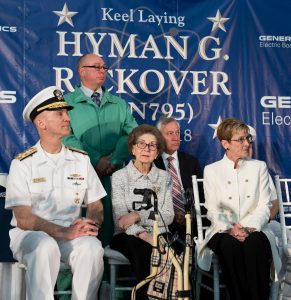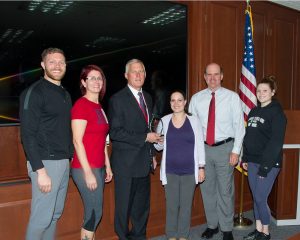

Fred Harris pioneered the transformation of Electric Boat’s design/build processes.
The Electric Boat team recently learned of the passing of a former employee and significant leader in General Dynamic’s Marine businesses. Fred Harris died Friday, October 24, at the age of 80.
Fred Harris was an Electric Boat legend; one of our most memorable and influential leaders. Fred was known at Electric Boat as the “father of the Virginia-class submarine program.” Fred’s thorough knowledge of ship design and construction processes, implementation of cutting-edge modular design and build practices, and his relentless drive to raise the bar in achieving new standards of excellence earned him a succession of promotions at Electric Boat, including vice president and Virginia-class program manager, vice president of Programs and senior vice president of Programs. He also served as president of General Dynamics NASSCO and General Dynamics Bath Iron Works.
Fred served as an officer with both the U.S. Naval Reserve and the U.S. Merchant Marines, having received his commission in 1967 upon his graduation from Maine Maritime Academy. In the Merchant Marines, Fred sailed on various U.S. flag vessels, most notably aboard the SS Transglobe—the most decorated American merchant ship of the Vietnam War. Following his sailing career which he completed as chief engineer, he entered Babson College where he received his MBA in 1972, graduating with distinction. Soon after graduation, Fred began his shipbuilding career as a senior systems engineer for Electric Boat in the Trident nuclear submarine project.
In the early days of the Virginia-class design effort, Fred pioneered the transformation of Electric Boat’s design/build processes. The Virginia submarine was the first ship designed to be manufactured using modular construction processes. Our traditional “drawing board approach” was replaced with state-of-the-art integrated computer-driven 3D visualization and production control processes. Embedding experienced shipbuilder “know-how” into the design process improved design quality and reduced construction time and cost. Fred raised the standards for submarine program excellence, resulting in the Virginia Submarine Program receiving the Packard Award for Program Excellence. Many of the tools and techniques he developed are still in use today.
If you’ve consulted the EB Writing Guide, checked on status of actions using a Commitment Report or attended a Program Breakfast Club, you will recognize Fred’s legacy. In addition to shaping Electric Boat’s program-management approach, Fred left an enduring mark on our workforce as he shaped and mentored many of our past and current leaders.
Fred Harris is survived by his wife Peggy, his two children and three grandchildren.
Delivering the Future
Some imagine the future. We deliver it now.
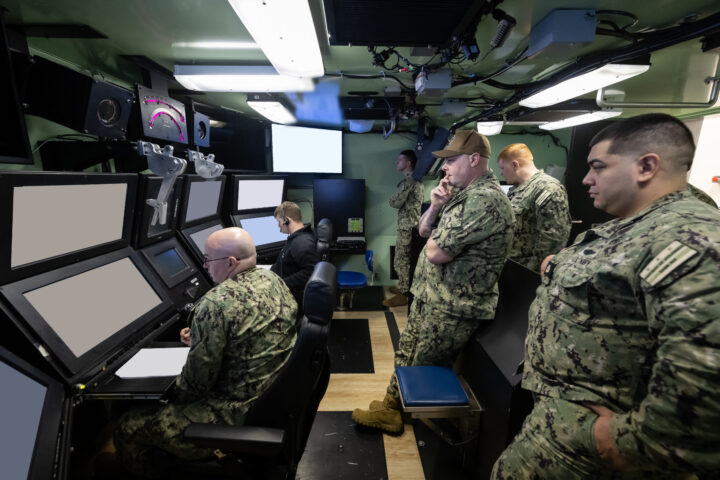
State-of-the-Art Simulator Prepares District of Columbia Crew for its Mission
As construction of the District of Columbia (SSBN 826) continues apace in EB’s South Yard Assembly Building, the sailors who will soon be at the controls are spending hours in a dynamic, high-tech simulator learning the intricacies of operating the 21,000-ton, first-in-class boomer. The Columbia Ship Control Operator Trainer (CSCOT) is a replica of the...Continue reading→
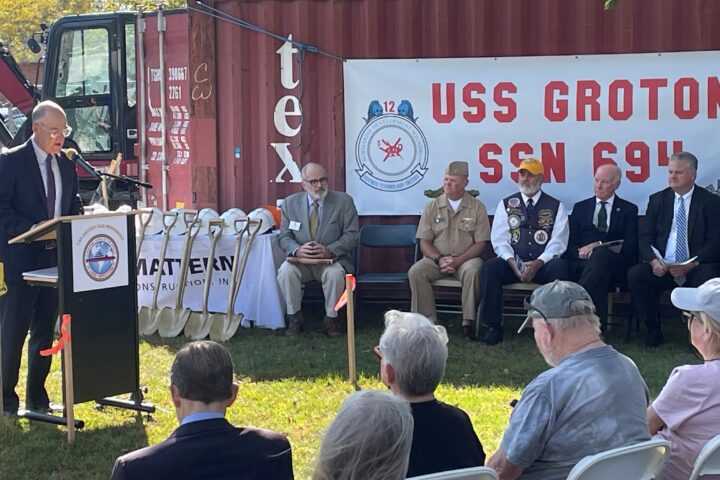
Groundbreaking Ceremony Marks Start of USS Groton Sail Monument
Fifty years after the USS Groton (SSN‑694) first launched, dozens gathered outside the Groton Public Library Oct. 9 to celebrate the groundbreaking of the USS Groton Sail Monument. The $6.6 million project—three decades in the making—will honor the men and women who design, build, operate and maintain the Navy’s submarines, as well as the families...Continue reading→

A Celebration of Heart, Community and Victory
2026 American Heart Association Eastern Connecticut Heart Walk Recap Saturday, October 3, 2026 | UConn Avery Point The 2026 American Heart Association Eastern Connecticut Heart Walk at UConn Avery Point was nothing short of extraordinary. Under bright autumn skies, 26 incredible Electric Boat teams and 151 walkers came together with passion, purpose, and unstoppable energy...Continue reading→
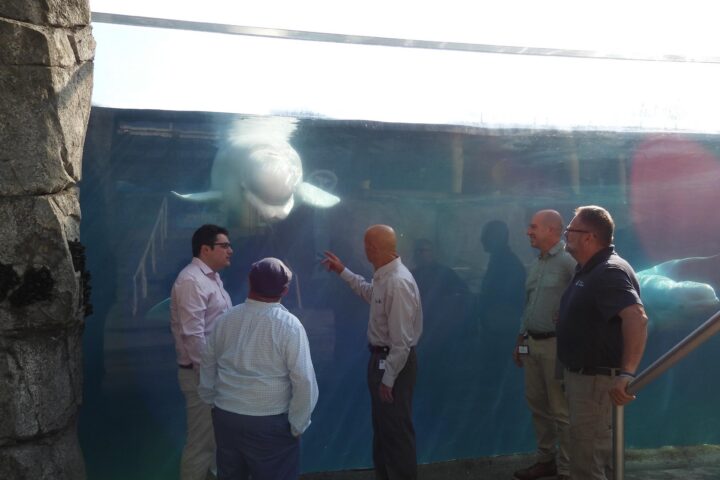
Quonset Point Donation Will Help Keep Mystic Aquarium’s Belugas Cool
Juno, the Mystic Aquarium’s convivial, photo-bombing Beluga whale, will continue swimming in cool comfort thanks to an unlikely chain of events that began 40 miles east in an Electric Boat industrial building at Quonset Point. That’s where EB’s Russ Tatro and Chris Logan were going over plans with a vendor, Carrier Corp., to replace Building...Continue reading→
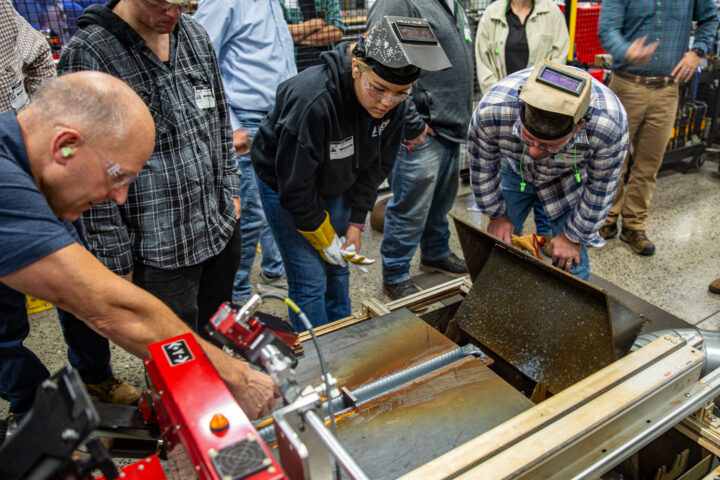
EB Team Visits Hypertherm as Part of Drive Toward Modern, Efficient Shipbuilding
A team from Groton and Quonset Point headed to New Hampshire-based Hypertherm Associates this week to get a closer look at a modern automated plasma gouging process designed to streamline hull fabrication. The visit was part of a broader effort across Electric Boat to bring more advanced, state‑of‑the‑art manufacturing tools into the shipyard. EB plans...Continue reading→
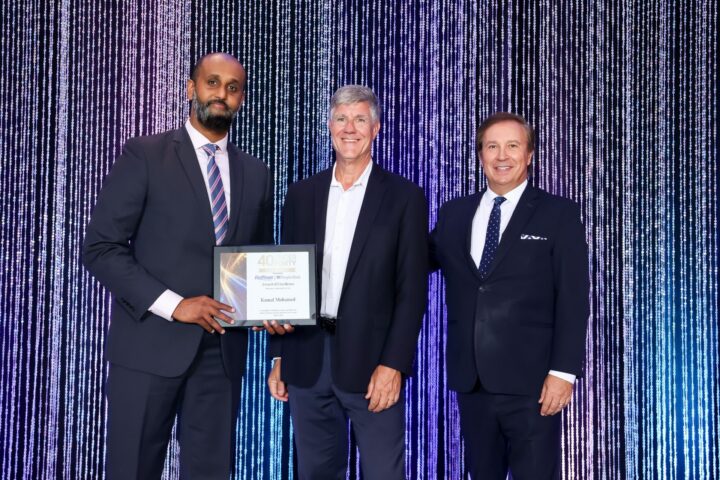
Kamal Mohamed Recognized as 2026 Hartford Business Journal 40 Under Forty Award Recipient
The Hartford Business Journal (HBJ) 40 Under Forty Awards recognize outstanding young professionals in the Greater Hartford area who are excelling in their industries through their leadership roles. They are driven by success, motivated by challenges and are role models for their peers. These individuals are part of an outstanding class of upcoming business leaders...Continue reading→
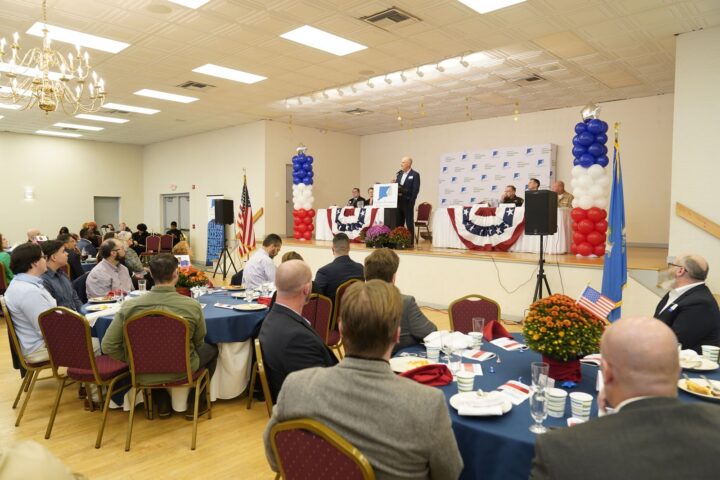
Electric Boat Joins Regional Leaders for Military Appreciation Breakfast
Electric Boat employees joined military and community leaders for the Chamber of Commerce of Eastern Connecticut’s annual Military Appreciation Breakfast on Sept. 30 at Ocean Beach Park’s Port ‘N’ Starboard. The event provided more than 120 complimentary seats to active-duty service members from the Navy, Coast Guard and Connecticut National Guard. General Dynamics Electric Boat...Continue reading→

One Week Left—Let’s Claim the Torch! AHA Eastern Connecticut Heart Walk: Final Countdown
We are just one week away from the 2026 AHA Eastern Connecticut Heart Walk on October 3, 2026, at UConn Avery Point and this is our moment to finish strong. We’ve built incredible momentum, and now we’re within striking distance of something big. Right now, Electric Boat is holding second place, behind Mohegan Sun by...Continue reading→
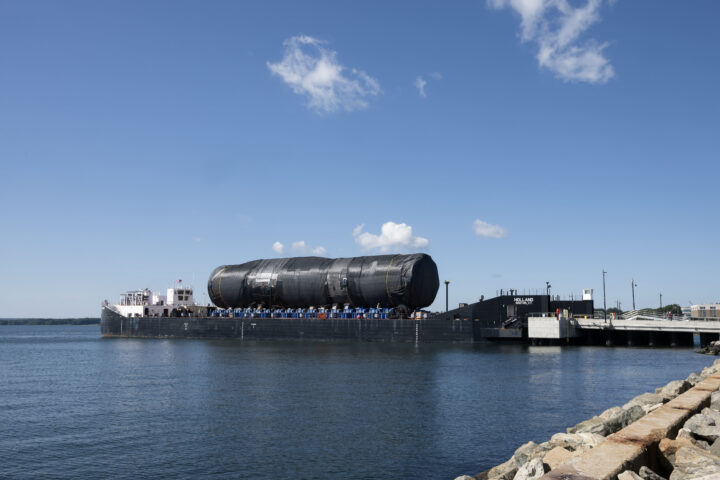
803 Section 2B/5 Transported from Quonset Point to Groton
PCU Arizona’s (SSGN 803) Section 2B/5 was successfully delivered to Groton from Quonset Point. At 184 feet in length, this section – which includes the Virginia Payload Module (VPM) – is the largest Virginia-class shipment ever transported. Arizona, the first submarine to incorporate VPM, will be about 460 feet long upon final construction. Section 2B/5...Continue reading→