
Hi everyone; today is Thursday, April 22nd and marks the 51st celebration of Earth Day in the United States. Back in 1970, Senator Gaylord Nelson championed the creation of Earth Day to raise awareness of the need for regulatory and legal mechanisms to protect the environment. In December of that year the U.S. Environmental Protection Agency was created.
Today I’m joined by Matt Luxton, our VP and General Counsel whose team includes EB’s Environmental, Health and Safety team to talk about EB’s Environmental programs. For many reasons, it’s critical that in our operations we do our part to be responsible stewards of the environment. Along with enabling us to be good neighbors, it’s important because our facilities are located on the Thames River and Narragansett Bay, both important navigable waters for commerce, recreation and sea life. I know I personally appreciate the ready access to water and everything that Southern New England has to offer.
Matt, welcome back to the podcast. Let’s talk about our history of environmental stewardship, which actually predates the U.S. Environmental Protection Agency (EPA).
Thanks Kevin. Yes, we’ve had an Environmental Resources Management department since the mid- 1960’s here in Groton, and we of course stood one up when we opened Quonset Point in the mid- 1970’s, so we do pre-date the EPA. Being good stewards of our natural environment directly supports EB’s core values and ultimate mission. We are committed to minimizing the impact to our natural environment from our work processes and the products we design and build. Electric Boat has been certified to the ISO14001 environmental management standard since 2003, and we were newly certified in 2018 to the upgraded, more-stringent standard for ISO14001 which places greater emphasis on management and employee involvement and engagement.
I think that maintaining our ISO14001 certification is a great demonstration of the commitment and accountability that we have for our performance to our employees, customers, neighbors, stakeholders and our business partners.
When folks talk about their environmental awareness, a lot of talk is about reusing, reducing and recycling. Let’s talk about that because I think we can give some examples of each; let’s start with recycling.
For example, here in Groton, we have recently reused 30,000 tons of impacted soils as part of our expansion down in the South Yard Assembly area. This option eliminated the need to load and drive trucks over the ground and deposit the soils in a landfill which greatly reduced our environmental footprint.
In Groton we are also collecting and recycling garnet which we use for surface preparation of metal parts. We are recycling that for reuse in other industries, again, eliminating the need to deposit this material in a landfill.
At Quonset Point, we capture and process all (over 100,000 gallons/year) of the industrial wastewater generated at the facility. That’s the equivalent of taking 6,000 showers per year.
All good things that we’re doing on a routine basis…another major component of our environmental effort is focused on mitigating air pollution, and this is pretty exciting to me as well. We’ve got some highlights there; let’s talk about that.
By the end of 2020, Electric Boat had invested over $30 million in fume mitigation up at Quonset Point. This equipment was installed in six buildings comprising 720,000 square feet of operational area. This mitigation system provides a healthier environment for our employees, and it reduces the emissions from hot work and other processes by 70%.
In 2019 and 2020 here in Groton, we’ve replaced all of our boilers with four new energy-efficient gas-fired boilers, some of which dated back to 1965, if you can believe that. The new boilers provide a 41% reduction in greenhouse gas emissions—which is equivalent to taking 19,000 vehicles off the road for one year.
So we get a double benefit there—benefit for our employee working at the new facilities up at Quonset and also a benefit to the environment. Thanks Matt, for that. We’ve made significant capital investments—those are ongoing right now, about $1.8 billion with significant help from General Dynamics and the Navy. All of that is helping to ensure we’ve got greater environmental sustainability and that’s evident in some of the streamlined shipbuilding processes for Columbia. Let’s talk about some of the elements of that streamlined process.
When you think about it, having a streamlined process just means that you’re going to be using less natural resources: energy, air emissions, all of that. So having a dedicated South Yard Assembly Building where we’re consolidating everything into one location is obviously going to lead to a much greater environmental reduction for the company. We’re also going to be launching the Columbia using a floating dry dock as opposed to the graving dock process which means less water discharges. When you think about these new buildings, we’re installing world-class energy-efficient equipment as part of bringing these systems and buildings online.
All very interesting things we’re doing, and I think our posture on this is something that many people don’t understand. Matt, let’s talk about anything else that comes to mind with regard to sustainability.
Most people don’t realize it, but EB has been a voluntarily participant in the EPA’s Resource Conservation and Recovery Act Corrective Action Program for over 25 years. We sample, we remediate, and we monitor all of our facilities. By the end of 2020, Electric Boat had remediated over 20,000 tons of soil. I’ll be honest, up at Quonset Point, most of that soil and those contaminants were not of our doing, they were from previous tenants of our property. Again, it demonstrates how seriously we take our role as an environmental steward.
In terms of improving our facility cleanliness and reducing storm-water contaminants, we’ve purchased a regenerative air sweeper that we use to clean our facilities to reduce contamination on the facilities floors that ultimately may end up making its way into the waterways.
Thanks Matt. I want to give a special shout-out to the Environmental team—they are doing some great work—and recognize that we all have a role to play in environmental protection. There are obviously things any one of us can do at home and at work to conserve energy and to reduce, reuse and recycle on a routine basis. I appreciate everyone’s effort in that regard. We need to continue to be good stewards of our environment as we grow our business.
Thanks everyone for listening; we’ll talk again soon.
Delivering the Future
Some imagine the future. We deliver it now.
State-of-the-Art Simulator Prepares District of Columbia Crew for its Mission
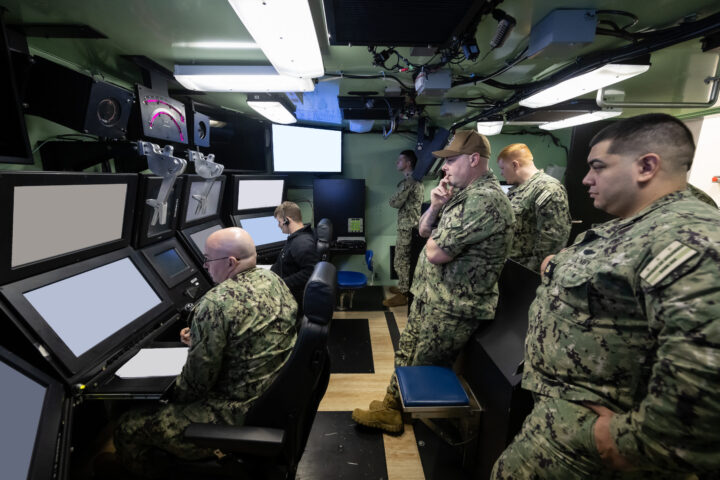
As construction of the District of Columbia (SSBN 826) continues apace in EB’s South Yard Assembly Building, the sailors who will soon be at the controls are spending hours in a dynamic, high-tech simulator learning the intricacies of operating the 21,000-ton, first-in-class boomer. The Columbia Ship Control Operator Trainer (CSCOT) is a replica of the...Continue reading→
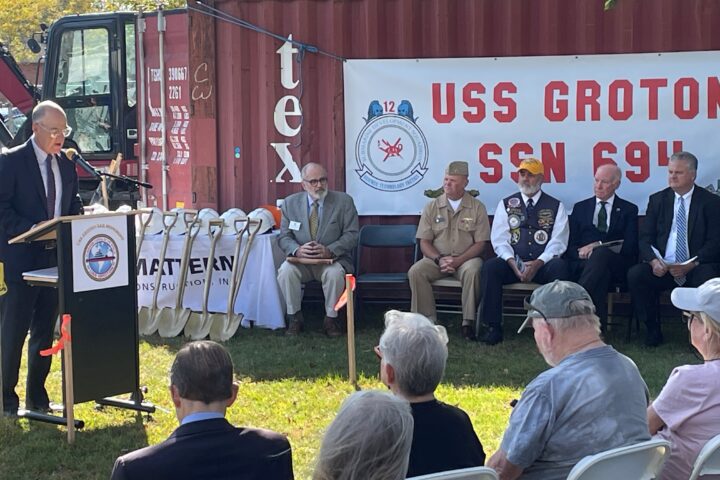
Groundbreaking Ceremony Marks Start of USS Groton Sail Monument
Fifty years after the USS Groton (SSN‑694) first launched, dozens gathered outside the Groton Public Library Oct. 9 to celebrate the groundbreaking of the USS Groton Sail Monument. The $6.6 million project—three decades in the making—will honor the men and women who design, build, operate and maintain the Navy’s submarines, as well as the families...Continue reading→

A Celebration of Heart, Community and Victory
2026 American Heart Association Eastern Connecticut Heart Walk Recap Saturday, October 3, 2026 | UConn Avery Point The 2026 American Heart Association Eastern Connecticut Heart Walk at UConn Avery Point was nothing short of extraordinary. Under bright autumn skies, 26 incredible Electric Boat teams and 151 walkers came together with passion, purpose, and unstoppable energy...Continue reading→
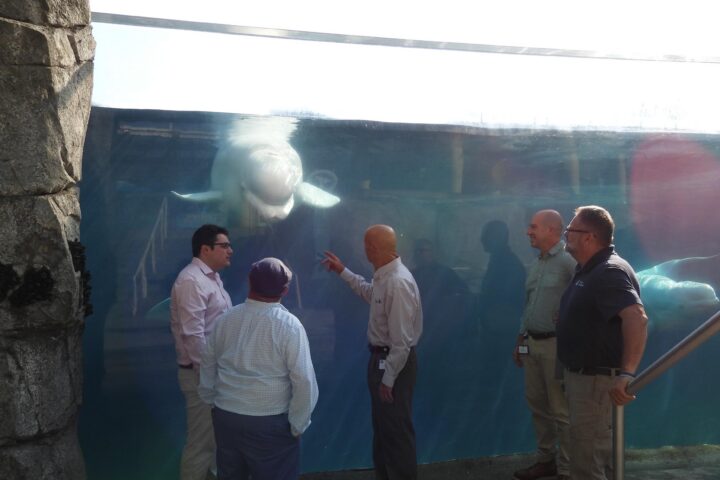
Quonset Point Donation Will Help Keep Mystic Aquarium’s Belugas Cool
Juno, the Mystic Aquarium’s convivial, photo-bombing Beluga whale, will continue swimming in cool comfort thanks to an unlikely chain of events that began 40 miles east in an Electric Boat industrial building at Quonset Point. That’s where EB’s Russ Tatro and Chris Logan were going over plans with a vendor, Carrier Corp., to replace Building...Continue reading→
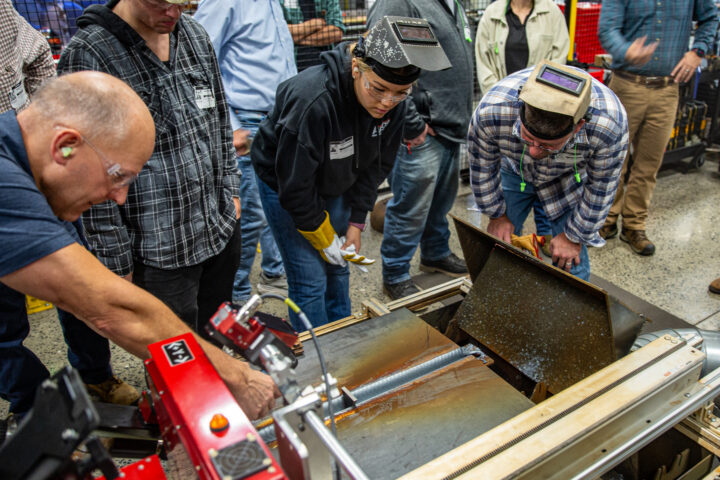
EB Team Visits Hypertherm as Part of Drive Toward Modern, Efficient Shipbuilding
A team from Groton and Quonset Point headed to New Hampshire-based Hypertherm Associates this week to get a closer look at a modern automated plasma gouging process designed to streamline hull fabrication. The visit was part of a broader effort across Electric Boat to bring more advanced, state‑of‑the‑art manufacturing tools into the shipyard. EB plans...Continue reading→
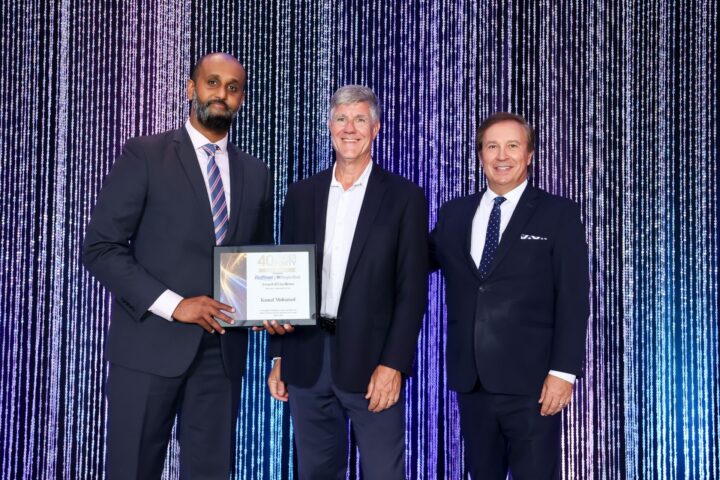
Kamal Mohamed Recognized as 2026 Hartford Business Journal 40 Under Forty Award Recipient
The Hartford Business Journal (HBJ) 40 Under Forty Awards recognize outstanding young professionals in the Greater Hartford area who are excelling in their industries through their leadership roles. They are driven by success, motivated by challenges and are role models for their peers. These individuals are part of an outstanding class of upcoming business leaders...Continue reading→
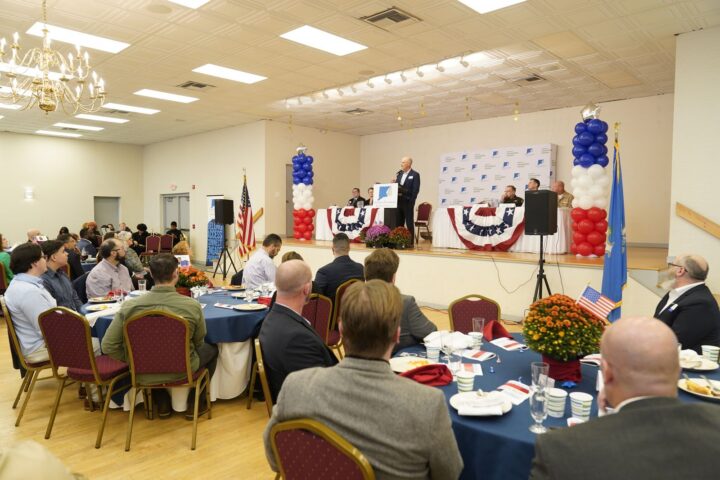
Electric Boat Joins Regional Leaders for Military Appreciation Breakfast
Electric Boat employees joined military and community leaders for the Chamber of Commerce of Eastern Connecticut’s annual Military Appreciation Breakfast on Sept. 30 at Ocean Beach Park’s Port ‘N’ Starboard. The event provided more than 120 complimentary seats to active-duty service members from the Navy, Coast Guard and Connecticut National Guard. General Dynamics Electric Boat...Continue reading→

One Week Left—Let’s Claim the Torch! AHA Eastern Connecticut Heart Walk: Final Countdown
We are just one week away from the 2026 AHA Eastern Connecticut Heart Walk on October 3, 2026, at UConn Avery Point and this is our moment to finish strong. We’ve built incredible momentum, and now we’re within striking distance of something big. Right now, Electric Boat is holding second place, behind Mohegan Sun by...Continue reading→
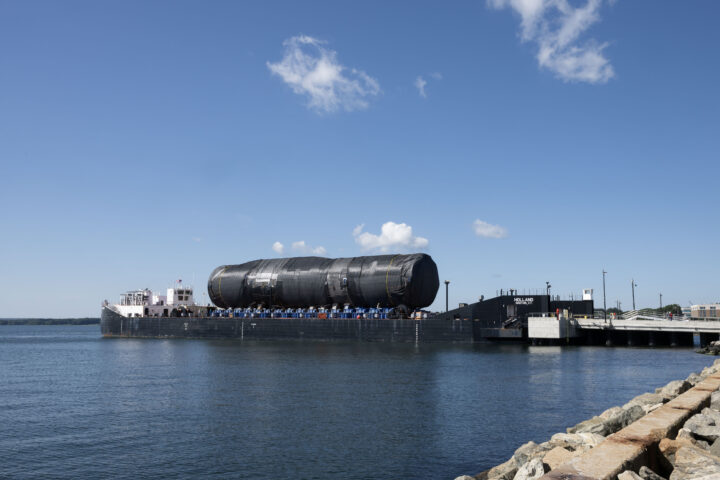
803 Section 2B/5 Transported from Quonset Point to Groton
PCU Arizona’s (SSGN 803) Section 2B/5 was successfully delivered to Groton from Quonset Point. At 184 feet in length, this section – which includes the Virginia Payload Module (VPM) – is the largest Virginia-class shipment ever transported. Arizona, the first submarine to incorporate VPM, will be about 460 feet long upon final construction. Section 2B/5...Continue reading→