
Hi everyone, this is Kevin. You’re listening to this podcast on Friday, May 1. We recorded today’s podcast on Thursday afternoon, April 30. At the time we recorded, we had one additional positive COVID-19 case here at EB. This individual works at Quonset Point (QP) and has not been at work since April 24 and had a child who was ill with COVID-19. As of now we’ve got 37 confirmed cases, and 24 employees have since returned to work.
For today’s podcast I’m talking with our director of Environmental, Health and Safety, Paul Marsiglio. When I arrived at EB in October, I challenged Paul and the operations teams in Groton and QP to improve our safety performance. At the end of last year, our injury rates at EB were twice what I experienced when I was at NASSCO, and we also had four significant injuries last year. Since then, we’ve re-focused on safety and the results have been really encouraging, both before COVID-19 hit and as we moved through the pandemic.
So Paul, welcome to the podcast. Tell me a little bit about the additional safety programs we’ve implemented and what your team is doing to keep us safe?
Paul Marsiglio (PM): Good afternoon everyone. After we had the four significant injuries last year, we stepped back and developed a response down into five different areas. One was our “Stop the Drop” theme. One of our employees had been severely injured when a plate fell on him. We created a training with the theme of “Stop the Drop” to make sure we control all loose material and tools, and ensure all open holes are covered. We also looked at to-and-from injuries. About 33% of our employees were getting hurt, with more than half losing time for simply walking to and from their job, before they even got to their assigned work area. That includes trips and falls, missing a step and the like. Working with training, we put out a “To and From” video along with a communication blitz to help people be more aware of being safe getting to and from their jobs.
Next, operations created the “Clear and Safe” program, in which all supervisors are reviewing their job assignments and breaking them down into low-, medium- or high- risk categories and making sure that the pre-job briefs are provided accordingly. We also instituted a zero-injury goal, and quite frankly it was a little bit tough to take because we knew we probably wouldn’t get past a month into the year without an injury. But the message behind the zero-injury goal was strong: no injury is acceptable. We re-focused on preventing electrical shocks, again working with the training department and operations. The training was presented to all of our operations folks. We now check quarterly for electrical issues including bad extension cords and bad tooling; the result is that we’ve reduced our electrical shocks by half.
KG: I think that work has been really important. I’m a big believer that if you train on what safety looks like, getting people to acknowledge and understand what safe looks like, is key. Tell me a little bit about what some of the impacts are that we’ve seen thus far this year?
This year more people are going home safe than ever before in the history of Electric Boat. It’s all about our people. Our Recordable Instance Rate (RIR) is down 37% from where we were at this time last year, and our Lost Workday Injury Rate (LWIR) is down 34%. Those are incredible numbers. Last year was the first full year that our Significant Injury and Fatality (SIF) program was put in place. The idea behind the SIF rate and program is that studies have shown that companies that have good safety rates have near-misses buried that will come out at some point and cause a significant injury. We call them Level 3 events, or events that you might just think to shrug off because there was no injury or material issue. We’ve dropped the SIF rate 67% from the end of 2019. When you look at the numbers in these three categories, we’re trending in a very positive direction.
KG: That’s fantastic to hear. Sending people home in the same shape they came in is critically important. We’re now on historic ground—we’ve never been this low from a safety incidence rate certainly in operations in either QP or Groton. I’m really encouraged to hear that, and I think we need to keep the pressure on here. People will sometimes get a little skeptical about those numbers saying, well we’re in a COVID-19 crisis response now and that’s why the numbers are being artificially driven down.
PM: No, not at all. OSHA has a set formula that normalizes numbers across the industry. The formula is very simple, it’s based on 100 people working 200,000 hours per year. You take the number of injuries times 200,000 and you divide it by the numbers worked. With the absenteeism a little bit higher than it’s been normally, the hours are down. That’s figured in based on the formula. It is true that with the blue and gold shifts that Groton operations has instituted, employees are spread out more, it’s less congested and that provides a better opportunity to eliminate employees working one above the other. The tele-working has been a big plus for resolving the parking issues and people sustaining to and from injuries.
KG: To your point, we were seeing strong safety performance, down 38% or thereabouts before our COVID response, weren’t we?
PM: Yes, we pulled the numbers from January through March 1, and then March 2 through last Saturday. The numbers are almost identical in terms of the numbers of injuries; the hours are down a little bit, but everything is pretty much the same. The numbers for the first two months were incredibly low. We’re cautiously optimistic, as we move out of the fourth month of the year that those numbers will continue to be positive.
KG: What do you think is driving this overall?
PM: There’s been a strong, renewed emphasis by senior leadership and you have been abundantly clear that safety is the number one priority. You’ve also made it clear it’s a value we must adhere to. It’s due to several factors: first, the message that the only goal that’s appropriate is zero injuries. Second, there is accountability and ownership by supervisors through the safety badge cards they’ve been updating each month so they know exactly where they stand by team. We also have team safety calendars where each crew updates the calendar daily so they know how they did the day before. Overall, visibility and accountability has just been incredible of late.
KG: I think we need to continue in this vein. Particularly when it comes to safety, it’s about accountability to each other. We established core values last year; the first of those is valuing our people. I can think of no better way to value each other in terms of the way we operate as a business than to make sure we are looking out for each other from a safety perspective. Let’s talk about what you and your team and other members of our COVID response team have done to continue to help ensure the safety of our employees during our safety response.
PM: I’d like to break that down into three areas: facilities and purchasing worked together to obtain portable hand washing and sanitizing stations that we spread throughout QP and Groton operations to ensure that our shipbuilders have adequate availability to wash their hands, not just sanitize them with Purell. The facilities team has been incredible. They’ve increased the number of cleanings and disinfections that they’ve done. Operations has re-deployed employees from different trades to help out. We’ve brought on contractors to sanitize areas that have been deemed as symptomatic, and we’ve adjusted our work schedules to allow for a deep cleaning between shifts. At the tool cribs, we‘ve put in a program in to sanitize tools in and out of the crib, and the IT department is sanitizing our laptops for re-deployment.
The second area I’d like to talk about is PPE (personal protective equipment). There’s been an extensive drain on all of the supplies in the United States for PPE. The medical community is looking for it; essential businesses are looking for it. We’ve had to ensure our shipbuilders are protected and provided the PPE they need, and we also want to support the local communities when they’re asking for help. We were able to help Rhode Island Hospital, King County hospital in Warwick, and L&M Hospital in New London, along with making sure our inventories didn’t affect our employees.
Purchasing has been phenomenal; they’ve been able to identify additional suppliers for PPE. We’ve also identified surgical masks as an option to be used in the shipyard—that’s something we’ve never used before. That helps us with the lack of N95 dusk masks that are not available right now. I also want to give a shout out to the EB employees who have made over 3,000 masks. The sail loft cuts the material, the department 252 upholstery shop is sewing the masks together, and department 246 laggers are also sewing and making the masks. Department 251 painters and the respirator laundry are washing and sanitizing and packaging each one of them. It’s been an incredible effort by that team to also support our shipbuilders. Hand sanitizer is another issue we’ve had problems obtaining. We’ve found two distilleries who’ve re-tooled to make 70% alcohol sanitizers and disinfectants. We’ve been able to obtain hundreds of gallons of those as well.
The third area is our commitment to our mission and customer. The 792 boat (Vermont), which we just delivered two weeks ago: during this crisis, we had to go through three work periods and three sea trials. We needed help and the planning department volunteered 15 employees to help us. We had to do temperature screening 24/7 through the Easter weekend to ensure the crew and our employees were safe either working or serving on that ship. So a shout-out to the planning department for helping us out.
For the 793 (Oregon) rollout we had to make sure that the folks working in close proximity were protected from spreading this virus. A temporary standing order was put in place by operations with all employees instructed to maintain six-foot social distancing as much as they could. They were all outfitted with facial masks and coverings, specifically the N95. I’m proud to say that event went off injury-free and there were no new cases or no new symptomatic employees that came out of that event. That event covered two full days over the Easter weekend. The last piece I’d like to talk about is the 768, the USS Hartford. They were having issues over at the Subase. We had a team that was deployed to help work out some issues. The team consisted of outside machinists and a number of engineers. They agreed to be outfitted with PPE. Dr. Andrews and Dr. Hurley provided the appropriate PPE to perform the work. They completed their work and rode the boat to allow the USS Hartford to complete its mission.
The last key event I’d like to mention is the work by QP to complete sections 6 and 7 on the Idaho (SSN 799) to get those delivered to Groton on time. That opens up more work for our employees and allows employees to be brought back from furlough. So shout out to the QP team.
Overall, I just want to emphasize the fact that without the efforts of purchasing, facilities, operations, planning and the medical teams, we would not have been able to come through this very difficult time for us all.
KG: Thanks Paul, some of those accomplishments are really amazing to think about given everything that we were up against with our COVID-19 crisis response. You spent a lot of time looking at safety over the years. What do you think we’ve learned from our COVID response that we can continue to practice as we get to this idea of a new normal?
PM: The biggest thing I think is when the company and union leadership sat down to talk about different work schedules and to come through some of the issues COVID-19 has presented. None of us had a playbook for this, and the interface between the company and the unions, the give and take, the way the emphasis was put on the safety of the employees, was incredible. I’m really hoping that continues forward. I think working from home is something to consider moving forward, for the right jobs. It limits congestion, work-life balance is taken into consideration, it reduces the parking issues we have, but again, it has to be for the right jobs. Revised work schedules are a big deal. Spreading people out, allowing them to do their jobs, I’m hopeful that those types of variations in schedules will be looked at and continued in the future as well.
KG: We’ve got a great start to 2020. I don’t want to go backwards, especially when it comes to safety. What do you think we can do to help sustain a positive safety performance for the rest of 2020?
PM: It’s pretty simple. We all have to follow the safety rules. There is PPE required for jobs for a reason. We have to ensure that supervisors are doing thoughtful, open pre-job briefs and that they are engaging their employees. Look out for one another. We want to embrace the 200% accountability strategy—we ask employees to be 100% accountable to themselves and 100% accountable for their co-worker. If everyone is working together and looking out for one another, that’s 90% of where we need to be. If you see something, say something.
Safety is a team sport, and everybody has to play their part: the unions, the employee, management, supervisors, safety professionals, all of us, we need to be on the same page. We only have one goal, and that’s obvious to me in the 12 years I’ve been on this job. We do and truly believe that we want our people to go home in the same condition they came in. But our actions have to show that. We can’t let schedule override safety. We need to make sure people are listened to. All of us, at every level, all have to be able to speak freely, and then we have to take action on those comments.
KG: Thanks Paul. I think we’ve done a heck of a job this year with our safety performance. I’ve never seen such an improvement in such a short period of time, and that’s a testament to the work that you’re doing, and, as you indicated, how all of us are working together across the board to make it a safe workplace for everyone. I appreciate your time and let’s stay focused on this through 2020 and beyond.
Thank you for listening and please stay healthy and safe.
Kevin
Delivering the Future
Some imagine the future. We deliver it now.
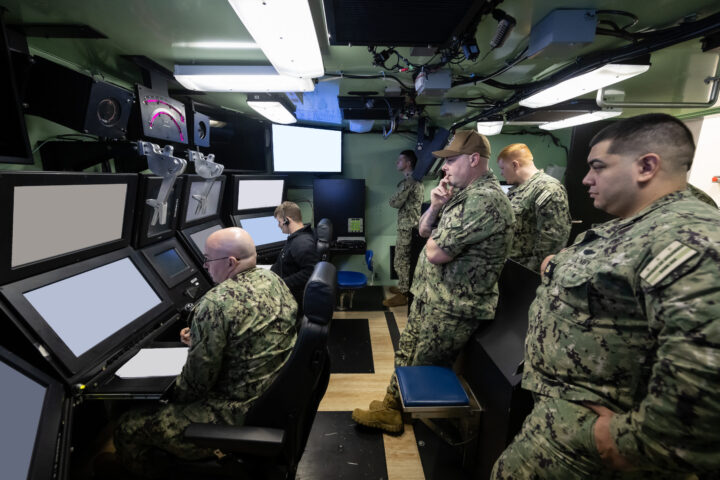
State-of-the-Art Simulator Prepares District of Columbia Crew for its Mission
As construction of the District of Columbia (SSBN 826) continues apace in EB’s South Yard Assembly Building, the sailors who will soon be at the controls are spending hours in a dynamic, high-tech simulator learning the intricacies of operating the 21,000-ton, first-in-class boomer. The Columbia Ship Control Operator Trainer (CSCOT) is a replica of the...Continue reading→
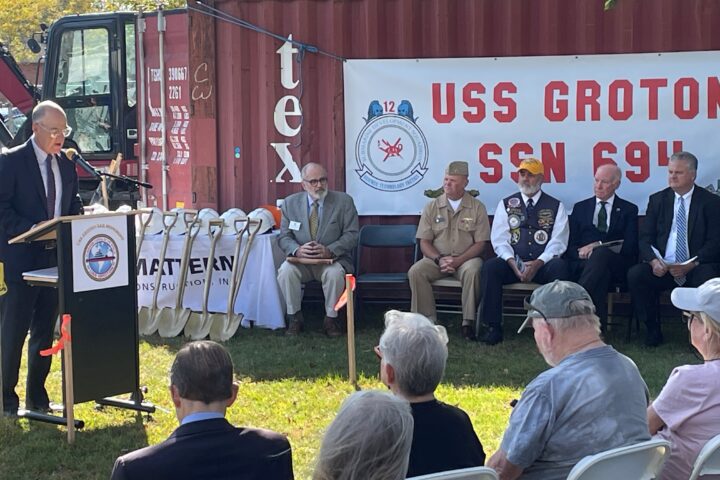
Groundbreaking Ceremony Marks Start of USS Groton Sail Monument
Fifty years after the USS Groton (SSN‑694) first launched, dozens gathered outside the Groton Public Library Oct. 9 to celebrate the groundbreaking of the USS Groton Sail Monument. The $6.6 million project—three decades in the making—will honor the men and women who design, build, operate and maintain the Navy’s submarines, as well as the families...Continue reading→

A Celebration of Heart, Community and Victory
2026 American Heart Association Eastern Connecticut Heart Walk Recap Saturday, October 3, 2026 | UConn Avery Point The 2026 American Heart Association Eastern Connecticut Heart Walk at UConn Avery Point was nothing short of extraordinary. Under bright autumn skies, 26 incredible Electric Boat teams and 151 walkers came together with passion, purpose, and unstoppable energy...Continue reading→
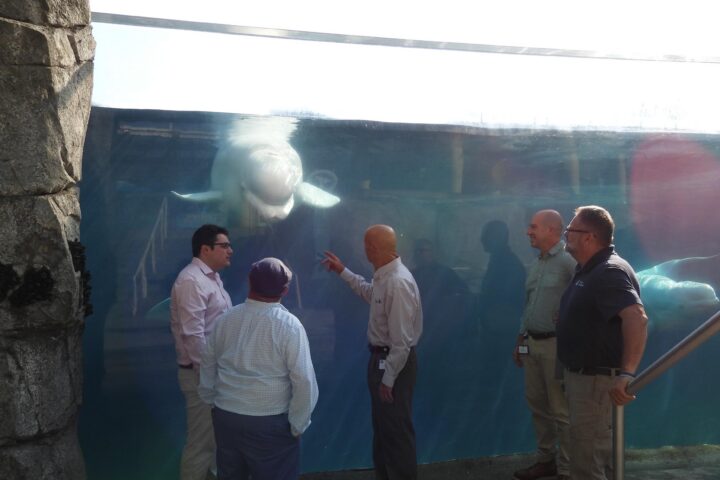
Quonset Point Donation Will Help Keep Mystic Aquarium’s Belugas Cool
Juno, the Mystic Aquarium’s convivial, photo-bombing Beluga whale, will continue swimming in cool comfort thanks to an unlikely chain of events that began 40 miles east in an Electric Boat industrial building at Quonset Point. That’s where EB’s Russ Tatro and Chris Logan were going over plans with a vendor, Carrier Corp., to replace Building...Continue reading→
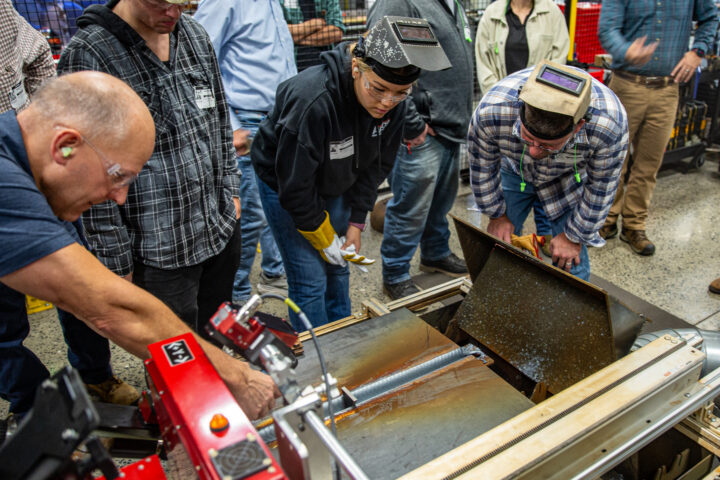
EB Team Visits Hypertherm as Part of Drive Toward Modern, Efficient Shipbuilding
A team from Groton and Quonset Point headed to New Hampshire-based Hypertherm Associates this week to get a closer look at a modern automated plasma gouging process designed to streamline hull fabrication. The visit was part of a broader effort across Electric Boat to bring more advanced, state‑of‑the‑art manufacturing tools into the shipyard. EB plans...Continue reading→
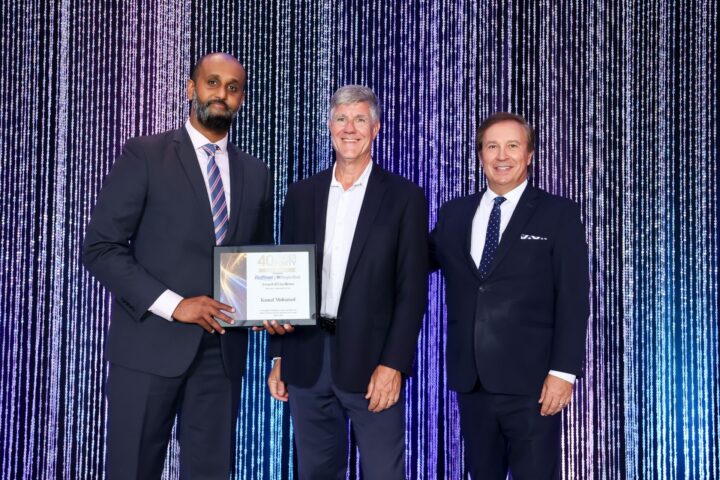
Kamal Mohamed Recognized as 2026 Hartford Business Journal 40 Under Forty Award Recipient
The Hartford Business Journal (HBJ) 40 Under Forty Awards recognize outstanding young professionals in the Greater Hartford area who are excelling in their industries through their leadership roles. They are driven by success, motivated by challenges and are role models for their peers. These individuals are part of an outstanding class of upcoming business leaders...Continue reading→
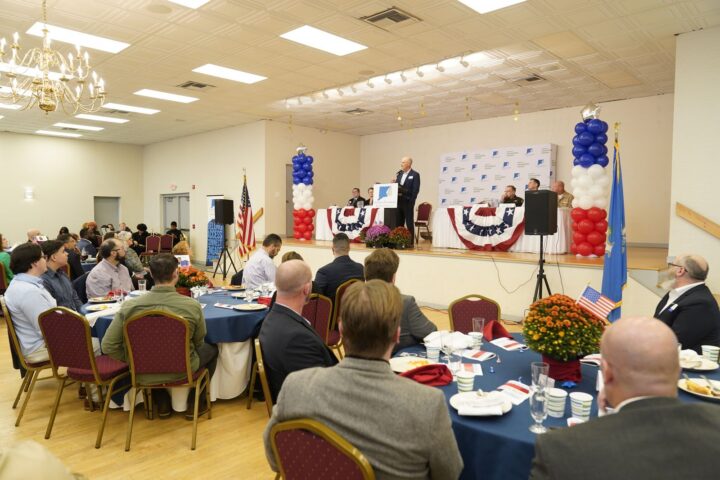
Electric Boat Joins Regional Leaders for Military Appreciation Breakfast
Electric Boat employees joined military and community leaders for the Chamber of Commerce of Eastern Connecticut’s annual Military Appreciation Breakfast on Sept. 30 at Ocean Beach Park’s Port ‘N’ Starboard. The event provided more than 120 complimentary seats to active-duty service members from the Navy, Coast Guard and Connecticut National Guard. General Dynamics Electric Boat...Continue reading→
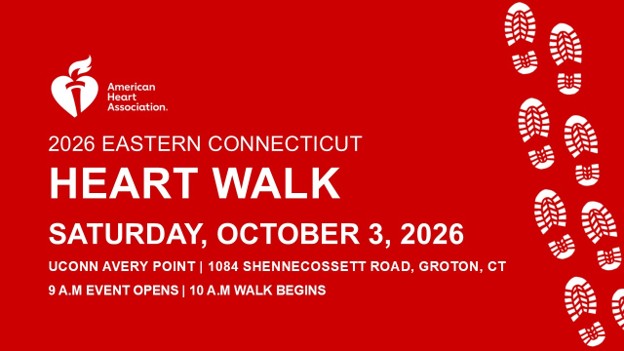
One Week Left—Let’s Claim the Torch! AHA Eastern Connecticut Heart Walk: Final Countdown
We are just one week away from the 2026 AHA Eastern Connecticut Heart Walk on October 3, 2026, at UConn Avery Point and this is our moment to finish strong. We’ve built incredible momentum, and now we’re within striking distance of something big. Right now, Electric Boat is holding second place, behind Mohegan Sun by...Continue reading→
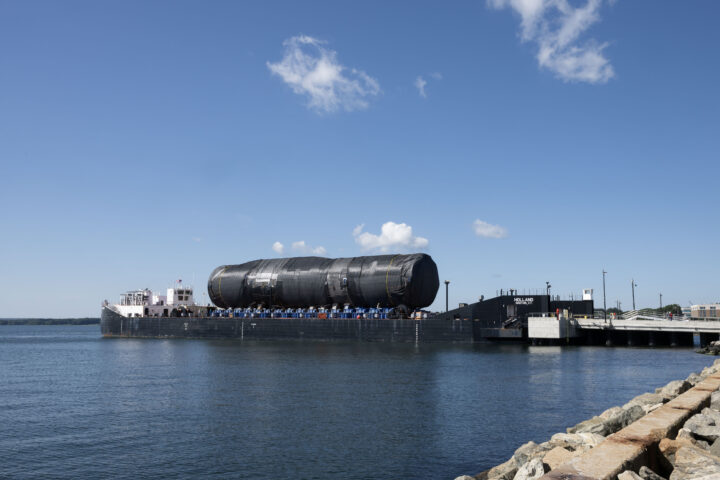
803 Section 2B/5 Transported from Quonset Point to Groton
PCU Arizona’s (SSGN 803) Section 2B/5 was successfully delivered to Groton from Quonset Point. At 184 feet in length, this section – which includes the Virginia Payload Module (VPM) – is the largest Virginia-class shipment ever transported. Arizona, the first submarine to incorporate VPM, will be about 460 feet long upon final construction. Section 2B/5...Continue reading→