
Good afternoon everyone, today is Monday, April 27. (Click here for podcast.) We’ve had no additional positive cases since my last podcast this past Friday, April 24. Of the 35 confirmed cases at Electric Boat, 24 employees have now returned to work.
Today we’re trying something a little bit different. I asked Ken Jeanos, EB’s Chief Information officer, to talk a little bit about how we’re adjusting and adapting our information technology infrastructure to support a lot more work from home as a result of the COVID-19 pandemic.
So Ken, welcome to the podcast.
Ken Jeanos (KJ) – Good afternoon Kevin, thank you very much for the opportunity.
Kevin Graney (KG) – you joined us back in November, coming from Panasonic. Why don’t you share a little more about your background?
KJ – I joined EB in November 2019, and it’s been a wild ride since I came aboard. I left Panasonic after 25 years where I had various roles ranging from operations to supply chain planning. Most recently I was the Chief Information Security Officer and Chief Information Officer there for North America.
KG – Ken, you had a few months to get your feet wet and then you got thrown into the deep end of the pool with our COVID-19 response. What have you and the EBIT team faced in getting us through the first 6 -7 weeks of our crisis response?
KJ – The good news is that we started early and tried to be a little forward thinking. We saw the challenges around the infrastructure we have at EB—it wasn’t necessarily built for a remote workforce, which posed a lot of questions related to our ability to deploy and have bandwidth for systems to be able to run remotely. Culturally, it’s just not an environment that had been ready for such a workforce. So we’ve been trying to address those challenges as we go and work closely with both the IT team and the business units to see how we could address their needs.
KG – I think you’re absolutely right in the way we’re configured and our culture. From my perspective, knowing EB as long as I have, I think it’s always been difficult to meet a couple of key parameters. One of them is the security requirements, given the work we do. Typically the computing power that our design and engineering workforce needs to have available at their fingertips makes it really difficult to work from home. Can you talk a little bit about security and the computing power and how those represented challenges to you and your team?
KJ – Let me address security first. As I said earlier, at Panasonic I was the Chief Information Security officer, but security where I came from versus security here is an apple versus an orange. I understand the much tighter restrictions and need for us to protect our information at Electric Boat. Whatever we were going to design, we had to make sure it was going to meet these very high standards and not put any of our information at risk. Related to the drain by high-usage systems, we started to take an inventory and tried to deploy as fast as possible and as many as possible the areas that would not put that much drain on our bandwidth.
KG – As I recall, when you got here and began looking at our infrastructure, we were doing a work from home pilot. How did that pilot set us up to respond to the COVID-19 pandemic?
KJ – The pilot worked in that it provided a protocol for enabling traditional laptop users to work remotely. We had approximately 95 – 100 people in the pilot, and we were able to leverage that understanding to deploy and support the first phase or two of our implementation strategy for COVID-19. It told us what the restrictions would be for moving forward and how we could address those.
KG – Tell me a little bit about that from a bandwidth perspective—when we began the pilot, you said we had about 95 people participating. I imagine the impact on bandwidth for a small pilot like that wasn’t particularly significant, was it?
KJ – No, it was not. Again, we were running at about one-half a gig bandwidth out of our two data centers. That was non-existent on the scale of us monitoring that. The pilot participants also weren’t necessarily hitting some of the highest draining applications we had. It was the perfect group to at least get us a bit used to deploying working from home, but it left a lot of open questions with regard to the rest of the groups we’d need to rollout to.
KG – When we look at our pre-COVID world, say February, how many people do you think we actually had working remotely on a continuous basis?
KJ – It was predominantly just those 100 people working from home consistently. We probably had another 1,000 or more laptops configured or deployed by people who travel, or leaders who log on after hours or on the weekend. It was of very limited scope.
KG – So pretty small numbers and not hard for the existing infrastructure to accommodate. Then we have this global pandemic, and we’re put into a whole new world where we need to get a lot of people working remotely, almost immediately. What were some of the challenges?
KJ – Bandwidth, of course—we had in the back of our mind what the potential effect would be. A second challenge was procuring laptops. When COVID-19 became known, everyone was scrambling to secure assets. We had an order for 500 laptops coming in from Dell. On March 3, a tornado hit Tennessee and did damage to the warehouse, so our product was damaged and had to be re-manufactured. The good news was that we had some inventory on hand, so when we started to ramp up implementation of work from home, we exhausted the inventory we had and got creative to look at other inventories in stock. For example, inventories that were put aside for our summer interns were instead deployed to enable people to work from home.
KG – Let’s talk a little bit more about the bandwidth as we started to deploy those laptops. What happened?
KJ – Quickly the bandwidth reached close to the maximum of our half a gig. Concurrently, when we started placing orders for product, we went to our provider of telecommunication services and we were able to implement a full gig versus one-half a gig in both our data centers in New London and Norwich, which allowed us to really start ramping it up. At the same time, we made a decision quickly that we would need even more than that if we were going to try to enable more people to work from home. We put an order in and did the work to double it. We are working towards a May 8 date to increase the one gig to two, which would allow us to put our infrastructure in good shape for additional expansion.
KG – We went from half a gig in each of our data centers to two gigs in each of our data centers in just about a month and a half?
KJ – That’s correct; well, two gigs in Norwich and still one gig in New London. New London doesn’t get as much internet traffic, so we didn’t need to upgrade that. But our Norwich center, where most of our traffic goes through, will be two gig, targeting May 8.
KG – That’s a significant increase in our capacity. As we started to deploy more laptops and we started to get the bandwidth to accommodate that, what were we able to do in terms of getting employees equipped and working from home? How did the numbers change?
KJ – In the first couple of weeks, it went up very quickly. We went from the 100 we had deployed prior to March 18 and by the end of that week we were up to 1,600 people working from home; it continues to grow every day. It’s slowed down a little bit now as we try to increase the bandwidth, but to put it into perspective, in that five-week time frame, we’ve gone from under 100 to just under 4,000 people who can or have worked from home at least a few days since we enabled them.
KG – that is really impressive. I saw a stat today that said about 22% of our workforce is now capable of being able to work remotely, which is pretty significant when you consider where we were just a month and a half ago.
Ken, tell me a little bit about “Use Your Own Device (UYOD)”—what does that mean, how does it work and how does it help you from an asset and bandwidth capability?
KJ – We put together a tiger team at the end of March with the challenge of finding a way for people to work from home using their own devices. The challenge was that the software systems that engineering and design use take up a lot of resources, and they work locally on their machines inside the building. We needed to get a solution that lets us access that information and let all of the compiling and running of that software stay local inside of our internal network, but then feed the information back and forth to the person who is working remotely. We went through many scenarios and options, we reached out to our General Dynamics friends and asked what they were doing, and then our team came up with a solution, working closely with our internal security group. They put together a proposal and asked to do a pilot.
KG – So we initiated this pilot about two weeks ago, as I recall. We had some early success, correct?
KJ – The pilot was scheduled to run for five business days and after three days, my team contacted me and said they were confident that the solution is working and asked me to present to you that we could move from pilot to deployment mode the following Monday. They also set an aggressive target of wanting to put in 40 – 50 people per day starting on Monday with a target of 200 people or more by the end of the week.
KG – How did your team do?
KJ – We hit 198 people by Friday, inclusive of the pilot people. As of today we have another 400 people who have been engaged and have begun to configure their own home devices. We are in the process of enabling them to be able to work from home. We continue to scale up.
KG – So if I’m someone who doesn’t have the capability yet to work from home but I’ve got a computer at home, how sophisticated does that computer need to be? What are the specs I’ll need to consider?
KJ – the main requirement is it has to be a Microsoft device and it has to be running Windows 10. If you have an earlier version of Windows, our team will work with you to upgrade to Windows 10. We’ve worked with Microsoft to allow us to do that. There’s no cost to the employee for the upgrade. We then have several other questions we ask around firewalls and security. Once the employee meets those specs and requirements, they can be deployed in days to be able to get on EB’s internal network.
KG – So the big benefit to this is it will enable our designers to be able to work from home—I think that could be a great source of relief to many folks. Tell me more about that. What are we doing with the design workforce to make sure they’re equipped to work from home?
KJ – The UYOD solution uses a remote protocol and that remote protocol could be used by using your own home device. But if someone doesn’t have a Windows device or any device at home, we are procuring additional laptops that would come through the remote protocol. We’d be able to get them up and able to work from home. This pilot and this first rollout is for the Teamcenter/NX application and we are working on the solution for CATIA. CATIA needs a little bit of a different technology solution to be employed. So we are working on that concurrently. Right now the rollout of UYOD for those groups is predominantly the Teamcenter/NX solution.
KG – As I understand it, based on the metrics I’ve seen from March 18, we’ve had about 3,600 – 4,000 employees take advantage of work from home, correct?
KJ – When you add UYOD along with the traditional work from home, we are right around the 4,000 number. I have the expectation to be able to support somewhere in the 5,000 – 5,500 with, of course looking at how we can make that number even higher to continue to allow people to work from home.
KG – If I’m somebody who’s interested in finding out whether I can get that capability, what do I need to do?
KJ –You can submit a service request to the IT department, and we’ll get back to you with the specifications and get the process going. Right now we’re working on publishing the specs on the EB intranet. We’ll also send a notice out through EBIT.
KG – I’m sure that by department, particularly for the design and engineering team, there’s a prioritization taking place to make sure we’re getting as many folks as we can connected with this technology, but unfortunately we cannot do everyone at once. There are some priorities we need to establish.
Ken, thanks for taking the time, one, to introduce yourself to everybody and for taking the time for the podcast. I think what we’re doing with regard to our response to COVID-19 as it enables social distancing and a remote work from home capability, that’s all very exciting and to be honest with you, it becomes part of the new normal for our business. What was less than 100 people working from home remotely prior to this pandemic hitting is now up to 4,000 people in just about 5 – 6 weeks. That’s impressive. On behalf of the entire EB team and myself, thanks to you and your team for moving heaven and earth to try and accommodate our business as rapidly as you have. It’s a great job.
KJ – thank you very much Kevin, I appreciate it.
Thanks for listening everyone. I want to make sure I continue to implore upon you to please stay healthy and safe. If you don’t feel good, please don’t come to work. Thanks for listening and we’ll talk again later in the week.
Kevin
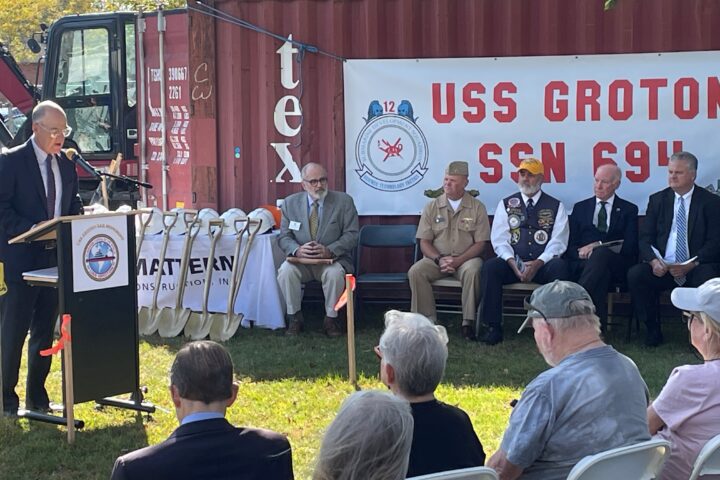
Groundbreaking Ceremony Marks Start of USS Groton Sail Monument
Fifty years after the USS Groton (SSN‑694) first launched, dozens gathered outside the Groton Public Library Oct. 9 to celebrate the groundbreaking of the USS Groton Sail Monument. The $6.6 million project—three decades in the making—will honor the men and women who design, build, operate and maintain the Navy’s submarines, as well as the families...Continue reading→

A Celebration of Heart, Community and Victory
2026 American Heart Association Eastern Connecticut Heart Walk Recap Saturday, October 3, 2026 | UConn Avery Point The 2026 American Heart Association Eastern Connecticut Heart Walk at UConn Avery Point was nothing short of extraordinary. Under bright autumn skies, 26 incredible Electric Boat teams and 151 walkers came together with passion, purpose, and unstoppable energy...Continue reading→
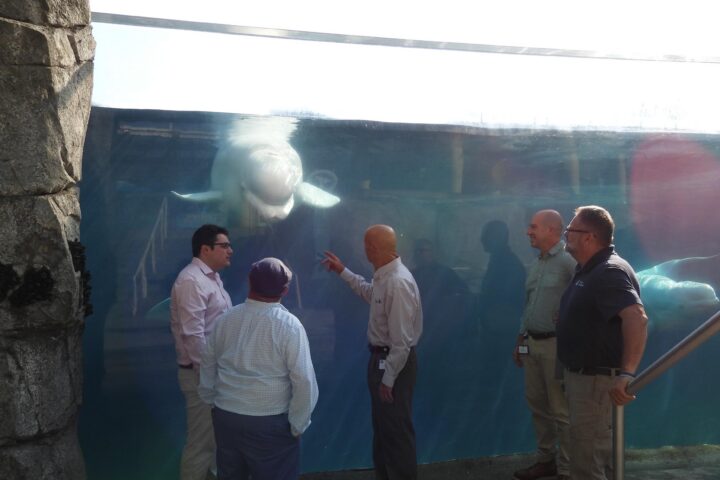
Quonset Point Donation Will Help Keep Mystic Aquarium’s Belugas Cool
Juno, the Mystic Aquarium’s convivial, photo-bombing Beluga whale, will continue swimming in cool comfort thanks to an unlikely chain of events that began 40 miles east in an Electric Boat industrial building at Quonset Point. That’s where EB’s Russ Tatro and Chris Logan were going over plans with a vendor, Carrier Corp., to replace Building...Continue reading→
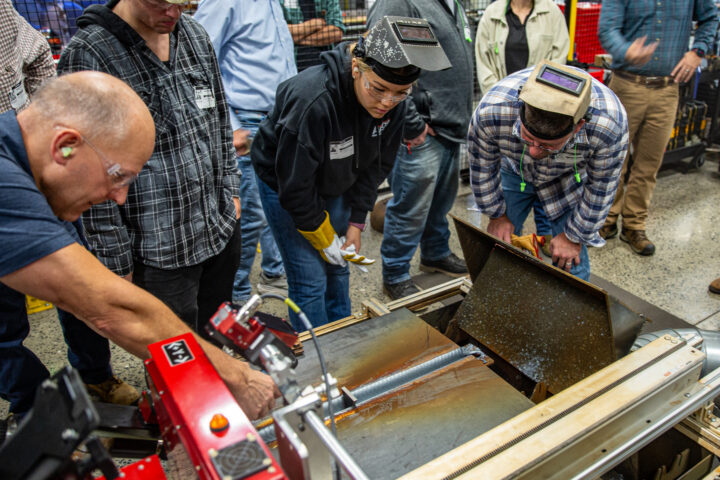
EB Team Visits Hypertherm as Part of Drive Toward Modern, Efficient Shipbuilding
A team from Groton and Quonset Point headed to New Hampshire-based Hypertherm Associates this week to get a closer look at a modern automated plasma gouging process designed to streamline hull fabrication. The visit was part of a broader effort across Electric Boat to bring more advanced, state‑of‑the‑art manufacturing tools into the shipyard. EB plans...Continue reading→

Kamal Mohamed Recognized as 2026 Hartford Business Journal 40 Under Forty Award Recipient
The Hartford Business Journal (HBJ) 40 Under Forty Awards recognize outstanding young professionals in the Greater Hartford area who are excelling in their industries through their leadership roles. They are driven by success, motivated by challenges and are role models for their peers. These individuals are part of an outstanding class of upcoming business leaders...Continue reading→
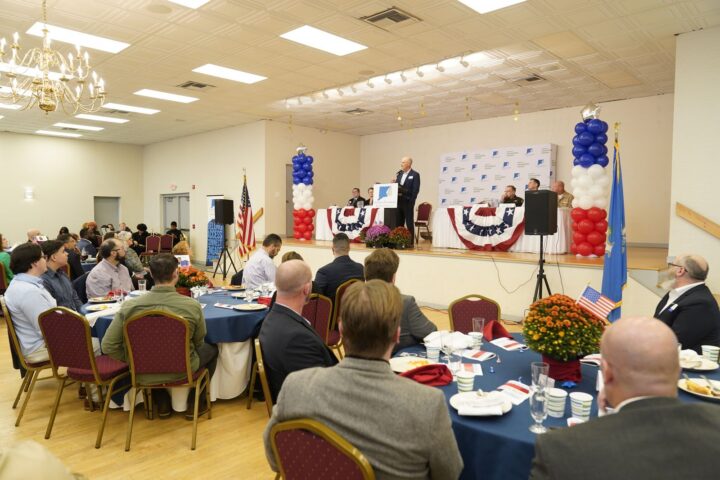
Electric Boat Joins Regional Leaders for Military Appreciation Breakfast
Electric Boat employees joined military and community leaders for the Chamber of Commerce of Eastern Connecticut’s annual Military Appreciation Breakfast on Sept. 30 at Ocean Beach Park’s Port ‘N’ Starboard. The event provided more than 120 complimentary seats to active-duty service members from the Navy, Coast Guard and Connecticut National Guard. General Dynamics Electric Boat...Continue reading→

One Week Left—Let’s Claim the Torch! AHA Eastern Connecticut Heart Walk: Final Countdown
We are just one week away from the 2026 AHA Eastern Connecticut Heart Walk on October 3, 2026, at UConn Avery Point and this is our moment to finish strong. We’ve built incredible momentum, and now we’re within striking distance of something big. Right now, Electric Boat is holding second place, behind Mohegan Sun by...Continue reading→
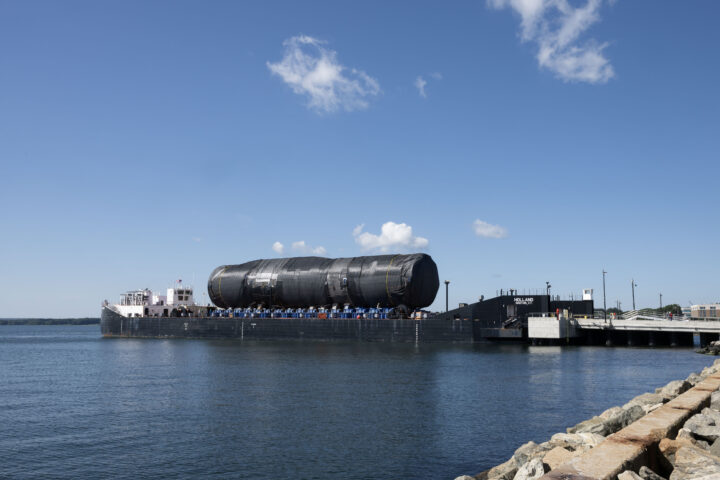
803 Section 2B/5 Transported from Quonset Point to Groton
PCU Arizona’s (SSGN 803) Section 2B/5 was successfully delivered to Groton from Quonset Point. At 184 feet in length, this section – which includes the Virginia Payload Module (VPM) – is the largest Virginia-class shipment ever transported. Arizona, the first submarine to incorporate VPM, will be about 460 feet long upon final construction. Section 2B/5...Continue reading→

Remembering September 11
On September 11, 2001, the Twin Towers of downtown Manhattan’s World Trade Center and the Pentagon in Washington, D.C., were targeted in a series of coordinated attacks that would leave an everlasting imprint on our country’s psyche. As the events unfolded on that Tuesday morning, nearly 3,000 people lost their lives, over 600 were injured...Continue reading→
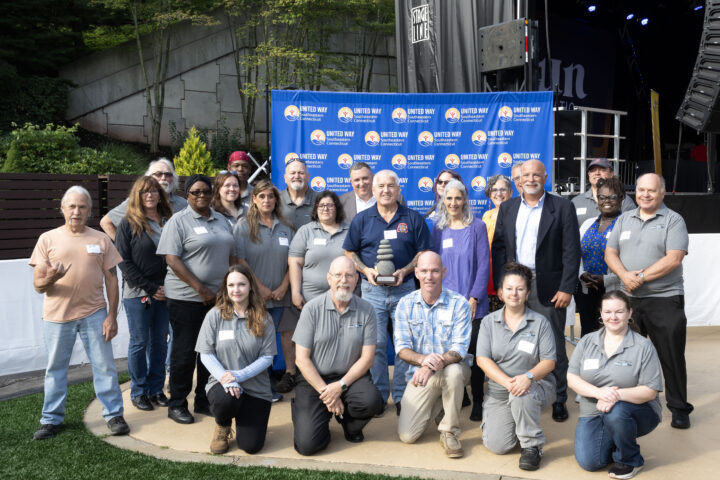
EBECSA Celebrates 75 Years — Nominate EB Employees Past and Present for Recognition
This year, the Electric Boat Employees’ Community Services Association (EBECSA) proudly celebrates its 75th anniversary. EBECSA was founded in 1951 by EB employees who wanted to create a dedicated, organized way to support nonprofit health and human service agencies in the communities where we live and work. What began as a small employee‑driven effort has...Continue reading→