
K. Graney Podcast – 60th Anniversary of USS Thresher Loss
Hi everyone; it’s Kevin. Today is Thursday, April 6. On Monday, April 10, we’ll mark sixty years since the loss of the nuclear-powered submarine USS Thresher. During its initial dive to test depth on April 10, 1963, the submarine was lost with 129 U.S. Navy sailors, Portsmouth Naval Shipyard and civilian company employees on board. It’s important that we take time each year to tell the Thresher story as a reminder of why we design, build and maintain submarines to be as safe as they can be.
On the morning of April 9, 1963, the men aboard Thresher waited to head out on sea trials that would prove the new capabilities added to the ship at the Portsmouth Naval Shipyard during the boat’s nine-month post-shakedown availability. The men were looking forward to a party two days later to celebrate the 63rd anniversary of the U.S. Navy Submarine Force. Wives and children waved to their loved ones as the boat departed, and life would never be the same for any of them.
On her way out to the dive point, Thresher made several shallow dives in practice for her dive to test depth and performed them perfectly. Late that evening, Thresher completed the final leg of her journey to the dive point 220 miles off of Cape Cod in 8,400 feet of water. LT CDR John Wesley Harvey prepared his crew to take Thresher to test depth.
The next morning, Thresher began her controlled dive in 100-foot increments. As she submerged, Thresher sent routine messages to her escort ship, USS Skylark, as she progressed to depth. But at 9:17 a.m., Skylark received an unexpected and garbled message, “…minor difficulties, have positive up-angle, attempting to blow.” At 9:18 a.m., Skylark received the message “exceeding test depth,” and then detected a high-energy low-frequency noise characteristic of an implosion. At approximately 9:18 a.m., USS Thresher was lost.
Despite the Navy’s rigorous investigation following the loss of Thresher, the exact cause may never be known; however, the following is the likely sequence of events:
- One or more silver-braze joints in sea water systems failed, resulting in engine room flooding.
- Due to the ship’s design and system arrangements, the crew was unable to quickly access vital equipment to control the flooding.
- Saltwater spray on electrical components caused electrical panels to short circuit, the reactor plant to shut down and loss of propulsion power.
- The emergency main ballast tank blow system failed to operate properly. Restrictions in the piping system, coupled with excessive moisture in the compressed air, led to ice formation and subsequently blocked the path of air to the ballast tanks—Thresher couldn’t return to the surface.
Later, a court of inquiry determined that the responsibility could not be placed on any one individual or organization. And what’s typical with a very complex system like a submarine, they fail in very complex ways. Rather, there were collective failures that most likely led to the loss of the Thresher, including inadequate quality assurance, inadequate training, deviation from building and design specifications, a lack of communication, lack of proper approvals and schedule pressure.
Out of this tragedy, the U.S. Navy created the Submarine Safety or SUBSAFE program, the quality assurance program designed to provide maximum reasonable assurance that a submarine’s hull will stay watertight, and that a submarine and its crew can recover from unanticipated flooding.
SUBSAFE covers all systems exposed to sea pressure or critical to flooding recovery. All work done and all materials used on those systems are tightly controlled to ensure the material used in their assembly as well as the methods of assembly, maintenance and testing are correct. As a shipbuilder, please take a moment and imagine if you had worked on the Thresher, and the question that would haunt you for the rest of your life—I know it would haunt me: Was it my work that caused the loss of those men and the heartbreak borne by their families?
Never forget our priorities here at Electric Boat: safety, quality, schedule, cost and continuous improvement, in that order. Every job you complete, every document you sign, every decision you make, day by day, contributes to the material condition of our ships and the safety of future crews. Our nation is counting on us to deliver one Columbia and two Virginia-class submarines per year. We’re doing this work with new tools, new business systems and increasingly, a new workforce. Along with ensuring ship integrity, our collective commitment to first-time quality means we have less rework, which in turn increases production velocity and volume.
We design, build and maintain the submarines that defend our nation and serve as homes for our service men and women. They, their families and our nation have entrusted us to keep them safe. What you do every day and how you do it matters to the lives of many people. Many of you work side-by-side with sailors and EB employees who are veterans. Ask them; they’ll tell you, and I’ll tell you, what it means to have confidence in their boat. I began my career as a submariner in 1986, and my family and I are grateful that I served on boats that were SUBSAFE-certified. No SUBSAFE-certified submarine has ever been lost.* And I never lost trust in the people who built my boat.
On Monday, April 10, there will be a short ceremony at the flagpole by the main gate in Groton at 9:00 a.m., which will also be simulcast on Homeport. If you’re in Groton, please take the time to gather around the flagpole, think about the Thresher and her crew and riders, and then think about how you can personally prevent that from happening again. There will also be a dinner open to all, that is, everybody, not just EBMA or management personnel, but every single member of the EB team, at the Mystic Marriott to commemorate Thresher’s loss and the lessons learned that we have carried forward. Please see your EBMA booster for tickets, but again I want to make sure people understand you don’t have to be a member of the EBMA to attend the dinner, and it would be great to see a good turnout of EB shipbuilders at Monday night’s dinner.
As a leader of a company who builds and maintains submarines, I think a lot about the important role our work plays in our national defense every single day. It fills me with enormous pride and a sense of enormous responsibility—those are emotions I know you all share with me. No matter what your job or role, every one of us has a responsibility to keep our sailors top of mind—that really is our higher purpose. Let’s remember the sacrifice and legacy built by all who came before us, and then let’s renew our vows and ensure that we build on that legacy for all who will follow us.
Thanks everyone; we’ll talk again soon.
*On June 5, 1968, USS Scorpion (SSN 589) and its crew were declared lost 400 miles southwest of the Azores. On February 1, 1967, Scorpion entered Norfolk Naval Shipyard for an extended overhaul. Instead of receiving the SUBSAFE program upgrades introduced after Thresher, the ship received only emergency repairs so it could return to sea as soon as possible. EB News, March 2013
Delivering the Future
Some imagine the future. We deliver it now.
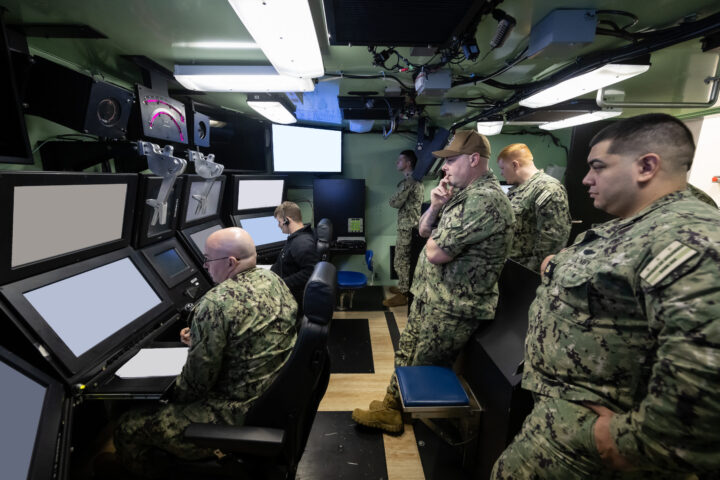
State-of-the-Art Simulator Prepares District of Columbia Crew for its Mission
As construction of the District of Columbia (SSBN 826) continues apace in EB’s South Yard Assembly Building, the sailors who will soon be at the controls are spending hours in a dynamic, high-tech simulator learning the intricacies of operating the 21,000-ton, first-in-class boomer. The Columbia Ship Control Operator Trainer (CSCOT) is a replica of the...Continue reading→
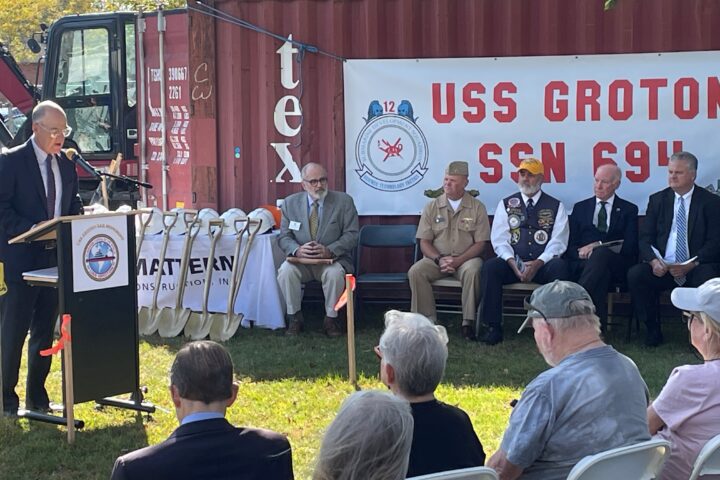
Groundbreaking Ceremony Marks Start of USS Groton Sail Monument
Fifty years after the USS Groton (SSN‑694) first launched, dozens gathered outside the Groton Public Library Oct. 9 to celebrate the groundbreaking of the USS Groton Sail Monument. The $6.6 million project—three decades in the making—will honor the men and women who design, build, operate and maintain the Navy’s submarines, as well as the families...Continue reading→

A Celebration of Heart, Community and Victory
2026 American Heart Association Eastern Connecticut Heart Walk Recap Saturday, October 3, 2026 | UConn Avery Point The 2026 American Heart Association Eastern Connecticut Heart Walk at UConn Avery Point was nothing short of extraordinary. Under bright autumn skies, 26 incredible Electric Boat teams and 151 walkers came together with passion, purpose, and unstoppable energy...Continue reading→
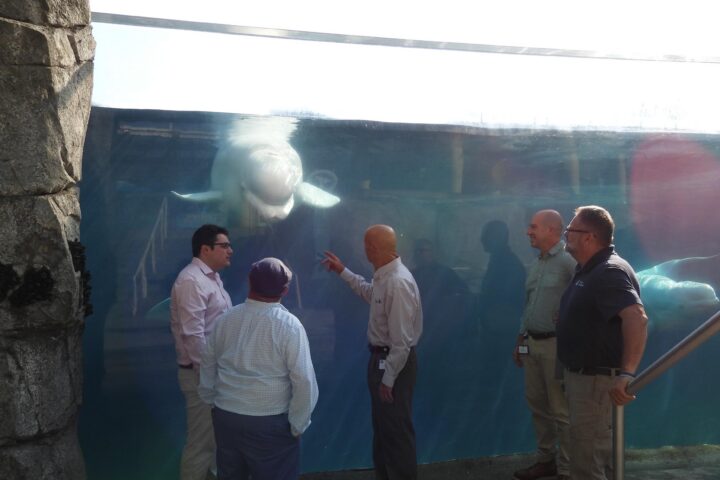
Quonset Point Donation Will Help Keep Mystic Aquarium’s Belugas Cool
Juno, the Mystic Aquarium’s convivial, photo-bombing Beluga whale, will continue swimming in cool comfort thanks to an unlikely chain of events that began 40 miles east in an Electric Boat industrial building at Quonset Point. That’s where EB’s Russ Tatro and Chris Logan were going over plans with a vendor, Carrier Corp., to replace Building...Continue reading→
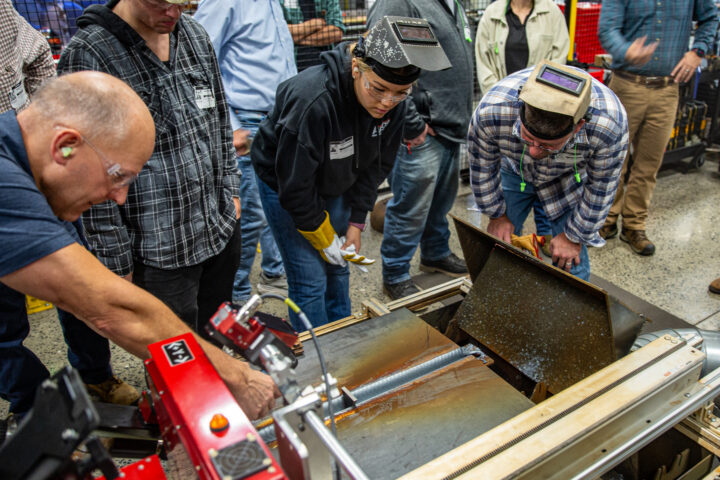
EB Team Visits Hypertherm as Part of Drive Toward Modern, Efficient Shipbuilding
A team from Groton and Quonset Point headed to New Hampshire-based Hypertherm Associates this week to get a closer look at a modern automated plasma gouging process designed to streamline hull fabrication. The visit was part of a broader effort across Electric Boat to bring more advanced, state‑of‑the‑art manufacturing tools into the shipyard. EB plans...Continue reading→
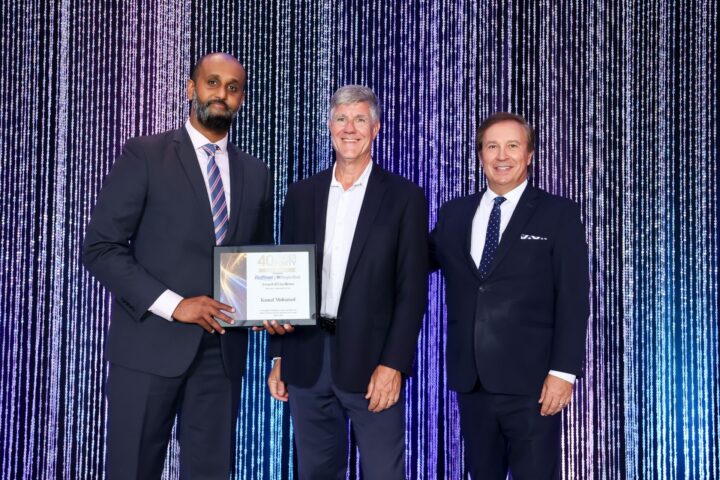
Kamal Mohamed Recognized as 2026 Hartford Business Journal 40 Under Forty Award Recipient
The Hartford Business Journal (HBJ) 40 Under Forty Awards recognize outstanding young professionals in the Greater Hartford area who are excelling in their industries through their leadership roles. They are driven by success, motivated by challenges and are role models for their peers. These individuals are part of an outstanding class of upcoming business leaders...Continue reading→
Electric Boat Joins Regional Leaders for Military Appreciation Breakfast
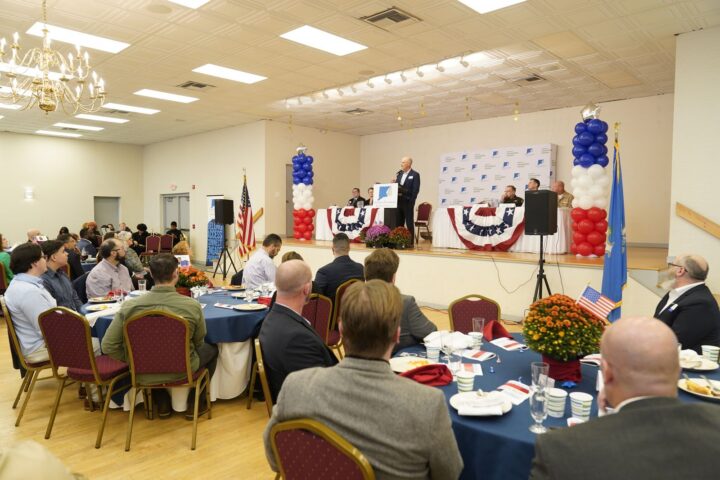
Electric Boat employees joined military and community leaders for the Chamber of Commerce of Eastern Connecticut’s annual Military Appreciation Breakfast on Sept. 30 at Ocean Beach Park’s Port ‘N’ Starboard. The event provided more than 120 complimentary seats to active-duty service members from the Navy, Coast Guard and Connecticut National Guard. General Dynamics Electric Boat...Continue reading→

One Week Left—Let’s Claim the Torch! AHA Eastern Connecticut Heart Walk: Final Countdown
We are just one week away from the 2026 AHA Eastern Connecticut Heart Walk on October 3, 2026, at UConn Avery Point and this is our moment to finish strong. We’ve built incredible momentum, and now we’re within striking distance of something big. Right now, Electric Boat is holding second place, behind Mohegan Sun by...Continue reading→
803 Section 2B/5 Transported from Quonset Point to Groton
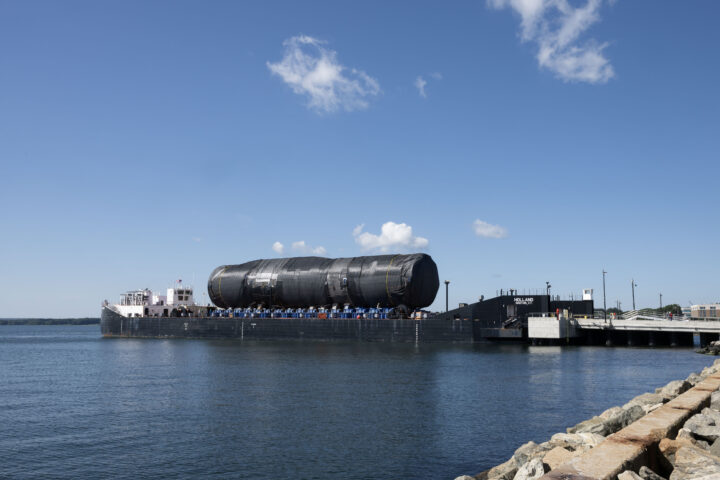
PCU Arizona’s (SSGN 803) Section 2B/5 was successfully delivered to Groton from Quonset Point. At 184 feet in length, this section – which includes the Virginia Payload Module (VPM) – is the largest Virginia-class shipment ever transported. Arizona, the first submarine to incorporate VPM, will be about 460 feet long upon final construction. Section 2B/5...Continue reading→