
Hi everyone, it’s Kevin. Today is Wednesday, January 19th (date recorded).
It’s a critical time in our business and we are executing against an ambitious plan to deliver one Columbia and two Virginia-class submarines a year to our Navy. With the dramatic growth that our business is undergoing and the change that we are experiencing with our workforce, facilities, and our products, we can’t forget what hasn’t changed, and that’s our priorities. You’ve heard me say it before; those priorities are Safety, Quality, Schedule, and Cost, in that order.
Today I’m joined by Megan Roberts, who is now Electric Boat’s Vice President of Quality. So Megan, welcome to the podcast and welcome to the leadership team. Let’s start out by having you share a little bit about yourself.
Thank you, Kevin. Appreciate you having me on today to talk about the Quality organization and certainly the importance of quality in everything we do, especially in January as we kick off 2022 which will surely be another exciting year in shipbuilding here at EB! For a little background on myself, I was hired in the summer of 2003 as a Test Engineer in the Nuclear Test Department. There I was qualified as a Shift Test Engineer on the Virginia propulsion plant, so the 9G plant where I had the opportunity to not only learn in detail how the propulsion plant worked, but I also got to spend a significant portion of my days on the deckplate with either our NTO technicians or ships force and really got a chance to learn about how the boat was laid out and how everything operates as I got to direct testing.
I probably didn’t realize it at the time, but this also officially began my training as a ‘Nuc,’ as we like to call ourselves in the nuclear community sometimes here at EB, and it was really the Nuclear Test leadership team that first introduced me to the Naval Nuclear Propulsion Program principles including things like ownership, responsibility, attention to detail, having a questioning attitude and maintaining integrity, even in the face of challenging situations. All of those lessons have been re-emphasized throughout my career, and are certainly still as relevant today as when I learned them back then.
Following my time in Nuclear Test, I moved into the Engineering and Design organization, first in the Radiation Analysis and Shielding group, and then as the supervisor of the Reactor Plant Structures and Arrangements group for what would then become known as the Columbia-class program. After supervising the group for about seven years, I moved into Radiological Controls as the Manager of Radiological Engineering where I got to spend time focusing on oversight of nuclear work here at the shipyard and at the Subase, as well as ramping up for the Montpelier IDD which was the big maintenance and modernization job that we had in the shipyard at the time.
I then moved back into Engineering as the Director of Structural Design and Engineering where my team was really focused on the design programs, so Columbia design, VPM, and the Virginia Block Five and Six technology insertions, which was also really rewarding. Finally, I spent the last six months as the Director of Supplier Quality where really for the first time in my career I focused more of my energy and effort outside of our gates on our supply base, providing the oversight and supplier management that’s required to make sure that we get quality material to support our construction needs out of our supply base. So that is the two-minute synopsis of my 19 years or so here at EB.
Yes, about 20 years in two minutes. What’s key for me is you’ve got a great wealth of experience, you’re an asset to Electric Boat and I know you’re going to be an asset to the senior leadership team. So let’s talk about the new job. First-time quality is critical in our business, and this is something that is absolutely near and dear to my heart. If we have a lapse in quality at any point in our process, that has a compounding effect that will overall negatively impact our build quality, our schedule, our cost and ultimately the submarine’s performance out in the fleet. We’ve had three incidents that should be important for everybody to understand why quality is so important. Not too long ago, back in the 2005 timeframe, the USS San Francisco was severely damaged while on patrol, more recently USS Hartford collided with another Navy warship, and very recently, USS Connecticut was damaged while on patrol. Every one of those ships made it back because of how they are built. This is something we as shipbuilders need to take personally. Let’s talk about how each member of the EB team contributes to first-time quality.
Absolutely. You said it—every person at Electric Boat certainly has a role to play when it comes to ensuring that our products, one, meet or exceed all requirements but also that we’re delivering a quality and highly capable product to our customers. And quality is built into our products in small steps, day over day, by our entire workforce. We spent a lot of time over the last couple of years focusing on the importance of ship certification, which is great, but that is really the last step just before we’re sending a boat to sea or before delivery. In reality, we achieve quality through good work practices by all of our workforce every day. It includes things like following procedures, documenting our work, and signing for the correct completion of steps over time and over what ends up being a five-year build cycle. It really is this culmination of effort from our entire workforce that provides confidence that when we do send a boat to sea, it’s going to operate properly and that the crew aboard that ship is going to be safe and have the capabilities they need to carry out their mission. It really is a team sport.
Well said. So let’s talk a little bit more about the new gig—you’ve been here for almost 20 years and have seen a lot of the business, and now you’ve been the VP of Quality for all of two weeks, so tell me a little bit about some of your initial impressions and the assessments you’ve had in that time. What are we getting right and what are our challenges? Let’s talk about your priorities.
I’d be happy to. In terms of things that I think we are getting right, I am encouraged with the focus I’ve seen on first-time quality across the enterprise over the last couple of years. I think that several of the goals we’ve taken on and the efforts associated with really looking at our key processes and products across all areas of the business and finding opportunities for improvement is really going to be key to the foundation of moving forward and continuing to improve. There’s also been a focus, as you know, on making sure that we have good metrics and good leading indicators to ensure that we have first-time quality, which is also a key element.
I also think that the efforts and the goals we’ve had surrounding the Continuous Improvement Action Database has played a really positive role in making sure that we are engaging our entire workforce to go think about what they’re doing every day, how we can make things easier for people, and how we can do things more efficiently. I think with all of those things, we have a great start, and I want to continue to build on that so we can make sure we see a positive impact.
That said, I recognize that we have some significant challenges ahead of us, really across all of our programs, that are going to require a lot of effort and energy from the leadership team to focus on things like ramping up on hiring, training and onboarding new people and increasing production, and it will be critical that we do all of these things with a renewed focus and continued focus on safety and quality, as those are enablers to be successful. That’s what’s going to be driving a lot of the priorities for the quality team this year. We really want to be a strong teammate to the organization and be sometimes a conscience when we have to be to make sure that we keep that continuous drumbeat of a focus on quality and keep quality in our day-to-day conversations.
And finally, one last thing I’ll say that I’ve noticed is we have more self-identified level-one problems and relatively significant open top-ten items than I can remember in the recent past. I think that’s a positive thing because it shows that we’re being self-critical, and we’re working to identify and solve our own problems, but I also think that there’s probably some work to do to understand some of the commonalities between those issues and some of the underlying root causes and identify opportunities where we can tie some of those things together and focus on tackling our toughest problems collaboratively as a team. That will be another focus for the Quality team in 2022.
I agree with you that while we’ve got more self-identified problems, some people would say “It’s an imperfect organization, that’s why you have all those problems.” Let’s face it, there is nothing perfect about shipbuilding. There are always problems to solve, that’s why it takes a concerted effort by all of us to help manage them. So the fact that we’re getting better at identifying our own issues and making sure we’re taking action to correct them is an indication of a much stronger organization than perhaps we’ve seen in the past. I think that’s great, and we need to continue down that path. So let’s talk a little bit about that path we’re on, and that is really trying to set that quality-first mindset and getting it embedded in the culture. What do you think it means to have a culture of quality here at Electric Boat and what does it look like when we get there?
To me a culture of quality means that we really foster an environment where quality is inherent in everything we do, and we’re focused on getting things right the first time and not through re-work. It means we have a knowledgeable workforce that proactively ensures they are doing their job correctly, and they are willing to raise their voice and raise their hand when they have a question or recognize a problem. It also means that when things go wrong, that we are committed and willing to stop and fully understand what happened, what the root cause was, and what we can do to prevent recurrence of the problem. Success in this area really does require input from our entire workforce.
And finally, a quality culture to me means that each one of us approaches our work with a continued focus on process improvement, especially in the processes that we work every day. It is important to remember that it’s people who get things done. It’s our workforce who is best poised to identify areas of improvement for their own work, and it’s incumbent upon us as the leadership team, frankly, to take those ideas for improvement, run with them and best support our workforce to keep moving the enterprise forward.
I couldn’t agree more. Look, I’m not an expert in welding, you’re not an expert in welding, but we’ve got a bunch of people who do that every single day, so getting those folks engaged in what they do and then asking them the questions about what it means to make their job a little bit easier and what we can do to help facilitate better quality is absolutely key. I’m seeing a lot more employee engagement especially with regard to safety, and I think increasingly with quality. We need to really continue that. So whether you are a new employee or someone who has worked here 15 or maybe 40 years, it is inspiring to be a part of an organization that takes quality as seriously as we do and keeps it a priority. Towards this goal, let’s talk about the Quality Roadmap and what your team is working on.
The Total Quality Culture Roadmap Team is working to provide tools to the organization to help to facilitate improving our ability to meet our first-time quality goals. The roadmap is really just a construct that is a tool for organizations to use to assess their processes and products, identify opportunities for improvement and take action on those opportunities in a consistent manner. The roadmap has five levels, but in 2022 we’re really focused on the first two levels.
This year each director is going to have a goal to implement Levels I and II of the roadmap, which means taking the time to assess their organization’s performance, specifically related to quality and identify and take action on opportunities for improvement. We’re going to use Quality Improvement Groups (QIGs) which is an idea that we piloted this year in a couple of areas of our business to facilitate our journey through the roadmap process, and obviously the roadmap team is going to be there to help as well. This is going to be a multi-year effort; changing culture takes time. It’s a marathon not a sprint, but I do believe that with the workforce behind us that it’s achievable, and I’m confident that we’re going to get there and be better for it.
The total quality culture and quality improvement groups are something I’m very familiar with from my journey at NASSCO. It did take a couple of years to start to get that gelled and get people really focused on it. So it will take some time, but we’re not going to quit. Our product is too important and our mission is too important. Because it’s going to take time, it’s also going to take patience and continual effort. I know I am committed to it as the rest of the senior leadership team is, and I know you are as well. Great to have you on board in the quality role, Megan, and I look forward to continuing to work with you.
As I said at the start of the podcast, our priorities are, and remain Safety, Quality, Schedule, and Cost. We’re going to continue to focus on that and ultimately together we’re going to end up being able to fulfill our mission to the Navy and to our country.
Thanks everyone; we’ll talk again soon.
Kevin
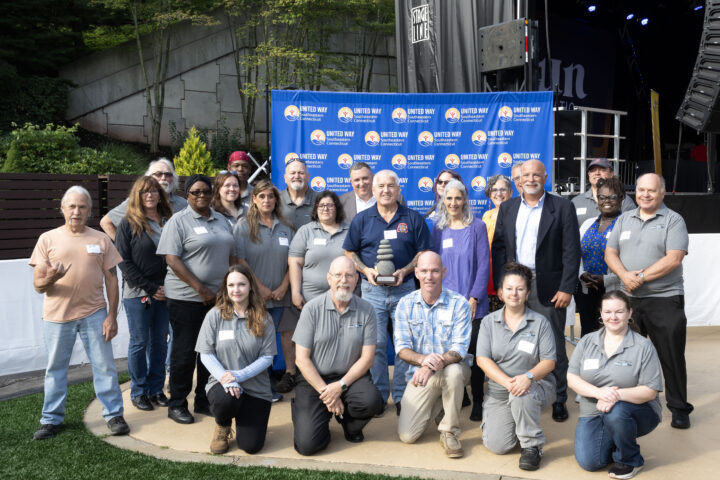
EBECSA Celebrates 75 Years — Nominate EB Employees Past and Present for Recognition
This year, the Electric Boat Employees’ Community Services Association (EBECSA) proudly celebrates its 75th anniversary. EBECSA was founded in 1951 by EB employees who wanted to create a dedicated, organized way to support nonprofit health and human service agencies in the communities where we live and work. What began as a small employee‑driven effort has...Continue reading→
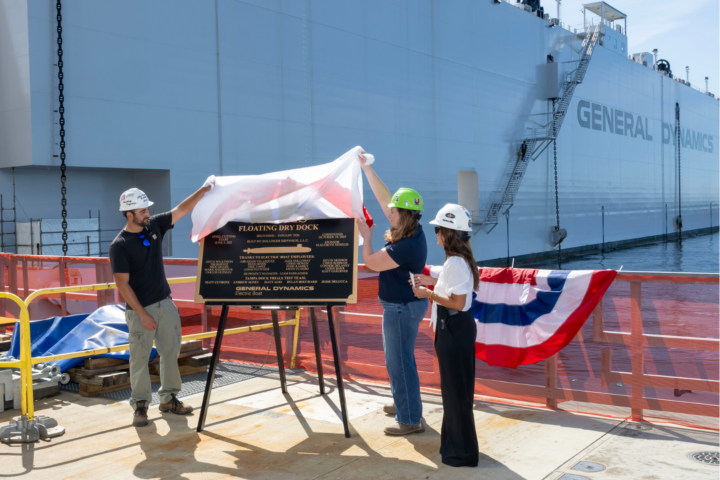
Atlas Plaque Unveiled, Honoring Plank Owners at South Yard Ceremony
Employees who have worked on Atlas, EB’s new state-of-the-art floating dry dock, gathered in the South Yard on Wednesday, Aug. 26, to unveil a new bronze plaque recognizing the contributions of its plank owners. The event celebrated the teams who helped bring Atlas from Bollinger Shipyards in Louisiana to its arrival in Groton earlier this year. Atlas will play...Continue reading→
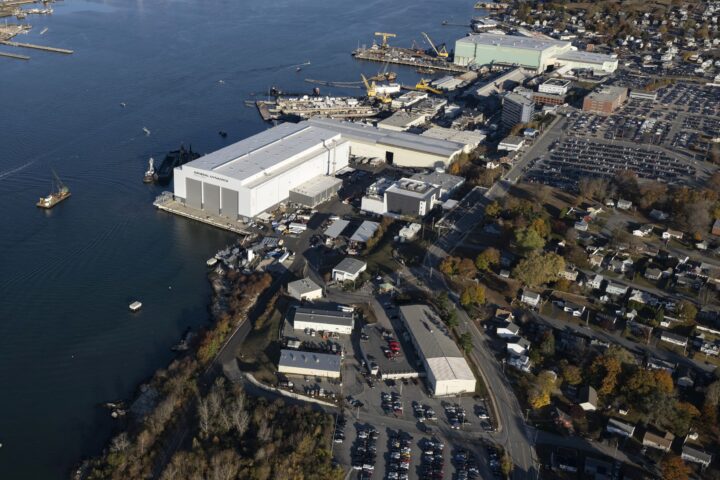
Neighbors Meet with EB to Discuss Noise, Lighting and Other Quality of Life Topics
Nearly twenty neighbors of Electric Boat’s Groton shipyard joined company leaders Aug. 25 for a community conversation focused on their quality‑of‑life concerns related to the South Yard Assembly Building (SYAB) and Atlas, the new floating dry dock. The Mayor of the City of Groton, Jill Rusk, also attended. Residents said they appreciated the chance to talk...Continue reading→
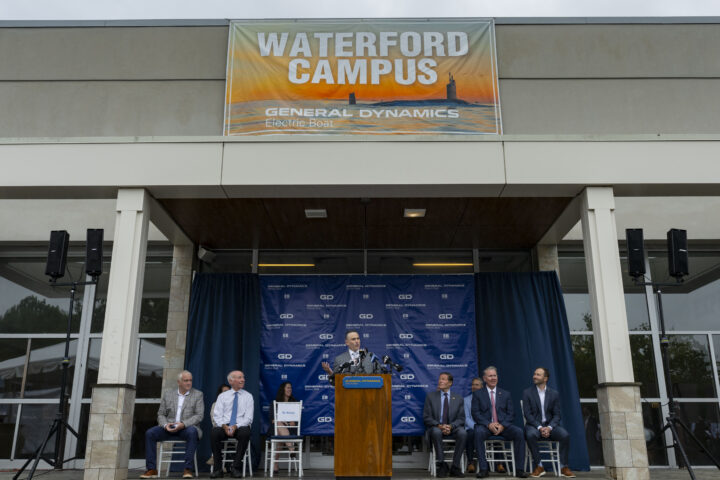
Rayha Report Ep. 26: Waterford Campus Groundbreaking
EB President Mark Rayha reports from the groundbreaking of the new Waterford Campus, where innovation, engineering and workforce development will come together to support our mission. The new facility will help train hundreds of shipbuilders daily as EB continues to grow for future production demands.
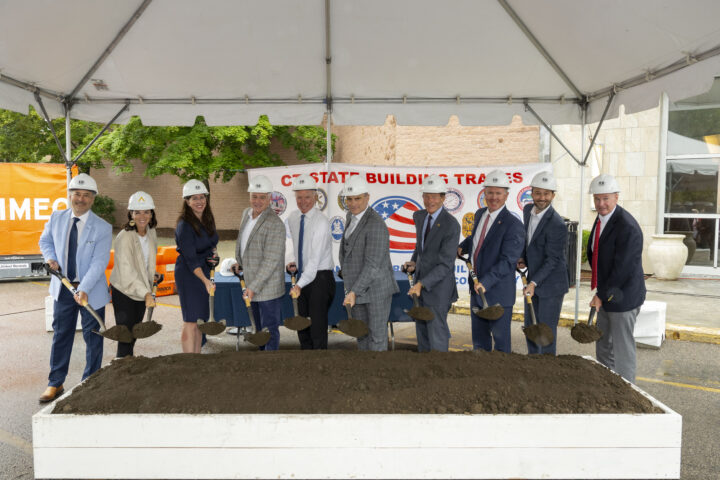
Waterford Campus Groundbreaking Marks EB’s Next Step in Innovation and Workforce Growth
Electric Boat officially broke ground Friday on the Waterford Campus, launching the transformation of the former Crystal Mall into a center for innovation, engineering and high‑tech workforce development. EB President Mark Rayha underscored how the project will reshape the way the company designs, tests and builds submarines. Innovation is the key, he said. “There’s an opportunity to...Continue reading→
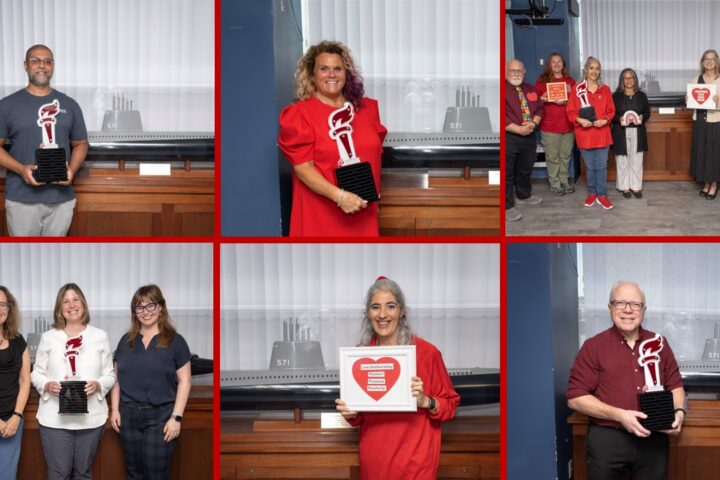
Powering HeartStrong 50: Thank You, EB Teams—Let’s Keep the Momentum Going!
Thank you to our incredible EB Heart Walk teams, our community partners, and everyone who joined the American Heart Association (AHA) Torch Journey photoshoot. Your enthusiasm and dedication made this milestone truly special. Now let’s keep our HeartStrong 50 energy going—our goal is 50 teams and $50,000 raised for the 2026 AHA Eastern Connecticut Heart Walk on October 3 at UConn Avery...Continue reading→
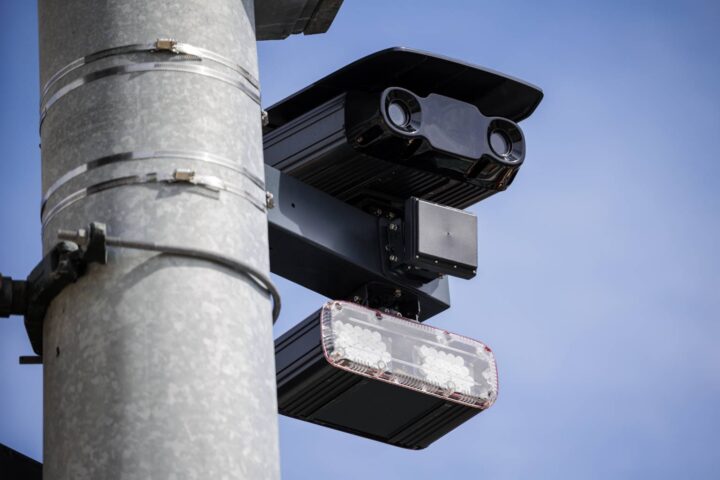
Speed Cameras to be Installed in the City of Groton
The City of Groton Police Department announced that automated speed enforcement cameras will be installed at several locations throughout the city. The cameras will be installed after the required 30-day public notification period, which began on Aug. 7, 2026. Camera locations: Mitchell Street Thames Street Clarence B. Sharp Highway (Route 349) Police said the purpose...Continue reading→
MDA Apprenticeship Application Now Open
Application Window: August 1, 2026 – August 31, 2026 The MDA Apprenticeship Program is a four-year initiative designed to develop a highly skilled workforce for Electric Boat. This program provides three years of on‑the‑job training alongside qualified subject matter experts, combined with classroom instruction across various technical disciplines. Participants gain advanced skills, broaden their expertise, and...Continue reading→
Building 600 Tech Stop Relocation
On Monday, August 3, 2026, Facilities will be relocating the Tech Stop currently located in Building 600 4th Floor East to its new location in Building 130-01 Classroom 7. During this time, please utilize the alternate Tech Stop location: B708 (625 Long Hill Road) Hours: Monday – Friday: 7:00 am – 3:00 pm The tech stop will resume...Continue reading→

A Message From Mark Rayha: Historic Contracts/Rayha Report
Today marks one of the most significant moments in Electric Boat’s history. As part of its $76.6 billion submarine contract announcement, the U.S. Navy has awarded Electric Boat ship construction contracts valued at $29.5 billion for five Columbia-class submarines and $42.1 billion for nine Virginia-class submarines, along with incentives for shipyard infrastructure. Click here to read the...Continue reading→