
Hi everyone; it’s Kevin. Today is Wednesday, October 13th (date recorded). Over the weekend, the news broke that a Navy nuclear engineer, someone employed by Naval Reactors in Washington, and his wife are facing espionage charges for selling military secrets to people who they thought were representatives of a foreign country.
This hits pretty close to home and serves as a stark reminder on how important it is that we do everything we can to ensure EB technology remains U.S. technology. We want to continue to have an unfair overmatch against those who would do us harm, and it’s critical that we minimize any potential of insider threats here at EB.
Joining me on the podcast today are Mark Rayha, our Chief Financial Officer, and Matt Luxton, our General Counsel. Our IT organization, which provides the infrastructure behind our cybersecurity program, reports up though Mark. Our Security team, who actively monitors all potential threats, reports up through Matt.
Thank you both for joining me today to remind our listeners about the proactive measures we take to prevent insider threats here at Electric Boat. Matt, let’s talk about the general incidence of insider threats and what motivates people to commit these kinds of acts.
ML: Thanks Kevin. As this most recent case illustrates, rogue employees are a very real threat, and one that’s been increasing of late. In the last two years, we’ve seen a 50% rise in cases globally. Earlier this year, Eric Rommal, our Director of Security, was on the podcast with you, and he talked about how COVID has added additional stress, financial concerns and a political element to our lives that has driven people to behave very differently than they used to. And while the early reports of this most recent case mention money, I wouldn’t be surprised to find out these people felt like victims or held some sort of belief about our country that, in their minds, justified what they allegedly did.
I’m sure we’ll learn a lot more as this case unfolds, but personally, I can’t imagine how anyone could justify being a traitor to our country. Let’s talk about the behaviors that may indicate an employee or contractor could be an insider threat.
ML: Our team looks for odd behavior or changes in behavior. For example, is someone suddenly working odd or unsupervised work hours? Are they expressing anti-government and/or extreme political views? Do they express hostile behavior toward our company or our country? Are they spending a lot of time at the printer? Do they ask questions outside of their “need to know” topics? Do they seem to be living beyond their means? Are they having performance issues or expressing anger often?
There are, of course, life situations that can drive people to engage in these behaviors. Perhaps someone has a substance abuse or gambling problem, or maybe they have financial difficulties. Clearly, not all people suffering with these issues will turn to selling secrets, but these are the red flags that warrant further investigation. Once we’re made aware, we proactively intervene to help employees who may be going through a rough period in their lives. It’s a multi-disciplinary effort led by Security and supported by HR, Medical, Legal and IT; we use all of these resources to help employees who may be struggling with their emotional or financial health. Once we are made aware, we find that the vast majority of these cases are indeed employees dealing with personal issues, but with the remaining cases, where behaviors are more suspicious, we work with law enforcement, including the FBI and NCIS (Naval Criminal Investigative Service), to further investigate. The bottom line is we take the steps that are necessary to protect our employees, our company and our assets.
We’ve done a lot of work recently to cultivate a better working relationship with the FBI, NCIS and other investigative agencies to make sure that we understand the threats that are out there and are doing everything we can to protect ourselves. Mark, let’s talk about how our IT infrastructure is designed to protect us from these insider threats.
MR: In IT, we operate in conjunction with Security’s cyber team to formulate and enforce a set of guiding principles which ensures the security of our information. First and foremost, together we take a layered approach and duplicate protection in each one of those layers to the greatest extent possible. We want to be sure that we’re striking the right balance between protecting our information while minimizing the impact to our business. That’s what drives the principle behind giving employees the least amount of access necessary to perform their business function.
When it comes to storage devices and media, we are extremely careful and make it clear to employees about what they can and cannot do from day one of their EB careers. For example, all storage media, including USBs, external hard drives and CD ROMs and DVDs must be procured through the EBIT Service Portal; departments cannot use devices such as these that are procured through department office supplies. Storage medium must be encrypted before first use by our Information Technology Services team. Users who require these types of storage devices must be vetted by IT and approved by Security. The media cannot be connected to any unauthorized computers, it must be accounted for at all times, and it cannot be taken outside of the U.S. without the written approval of both the Legal and Security departments.
Thanks Mark. I know that for some of our folks who are new to working in a classified environment, the IT safeguards we put in place can seem like a heck of a burden, but we have to keep the big picture in mind. As this case demonstrates, our adversaries–in this case people who actually worked for Naval Reactors–work diligently and play the long game to gather our technology and intellectual assets in any way they can, including recruiting company insiders. We need to do whatever we can to prevent these threats—so what can employees do to help, Matt?
ML: Simply put, employees should be aware, not paranoid. Be aware of behavioral changes in a colleague, or someone acting hostile towards the company—you can report it through the Security team’s Insider Threat webpage. If it is someone struggling with personal issues, we can get them the help they need. But if it’s someone looking to do the U.S. harm, we can take appropriate steps to hopefully prevent it.
I agree; look, we don’t want people to be paranoid, but we do need people to be aware that threats to our national security are real and they are pervasive as we’ve learned from our relationships with NCIS and the FBI. When it comes to insider threats, we all share responsibility for being observant. The weapons systems that we build, submarines in particular, are in high demand and they are the unfair advantage that our enemies can’t replicate. So you can bet they covet the information that puts one of these together. So if you see changes in a colleague’s behavior, let Security know. As we’ve learned today, in most cases that just means someone may need some help in getting through a rough patch in their lives.
Thanks everyone, for all you do and for contributing to the security of our nation, in the submarines you design, build and maintain, and for keeping our technology American technology.
We’ll talk again soon; thanks for listening.
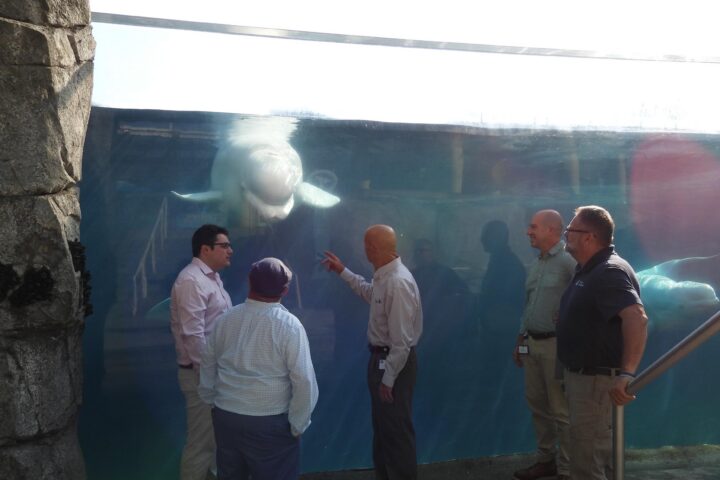
Quonset Point Donation Will Help Keep Mystic Aquarium’s Belugas Cool
Juno, the Mystic Aquarium’s convivial, photo-bombing Beluga whale, will continue swimming in cool comfort thanks to an unlikely chain of events that began 40 miles east in an Electric Boat industrial building at Quonset Point. That’s where EB’s Russ Tatro and Chris Logan were going over plans with a vendor, Carrier Corp., to replace Building...Continue reading→

EB Team Visits Hypertherm as Part of Drive Toward Modern, Efficient Shipbuilding
A team from Groton and Quonset Point headed to New Hampshire-based Hypertherm Associates this week to get a closer look at a modern automated plasma gouging process designed to streamline hull fabrication. The visit was part of a broader effort across Electric Boat to bring more advanced, state‑of‑the‑art manufacturing tools into the shipyard. EB plans...Continue reading→

Kamal Mohamed Recognized as 2026 Hartford Business Journal 40 Under Forty Award Recipient
The Hartford Business Journal (HBJ) 40 Under Forty Awards recognize outstanding young professionals in the Greater Hartford area who are excelling in their industries through their leadership roles. They are driven by success, motivated by challenges and are role models for their peers. These individuals are part of an outstanding class of upcoming business leaders...Continue reading→
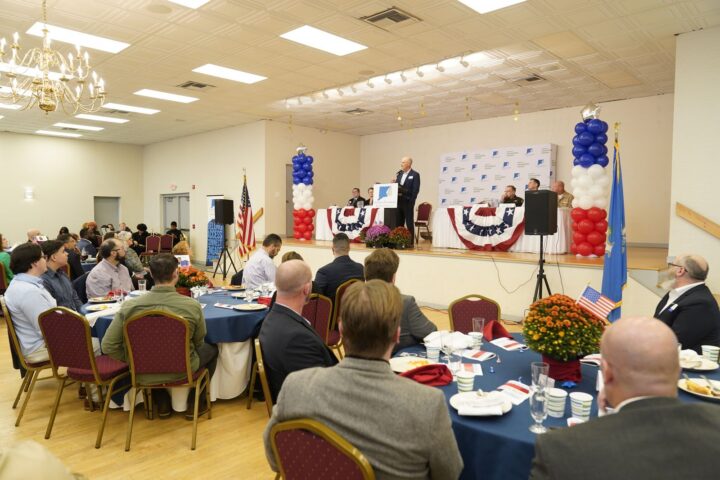
Electric Boat Joins Regional Leaders for Military Appreciation Breakfast
Electric Boat employees joined military and community leaders for the Chamber of Commerce of Eastern Connecticut’s annual Military Appreciation Breakfast on Sept. 30 at Ocean Beach Park’s Port ‘N’ Starboard. The event provided more than 120 complimentary seats to active-duty service members from the Navy, Coast Guard and Connecticut National Guard. General Dynamics Electric Boat...Continue reading→

One Week Left—Let’s Claim the Torch! AHA Eastern Connecticut Heart Walk: Final Countdown
We are just one week away from the 2026 AHA Eastern Connecticut Heart Walk on October 3, 2026, at UConn Avery Point and this is our moment to finish strong. We’ve built incredible momentum, and now we’re within striking distance of something big. Right now, Electric Boat is holding second place, behind Mohegan Sun by...Continue reading→
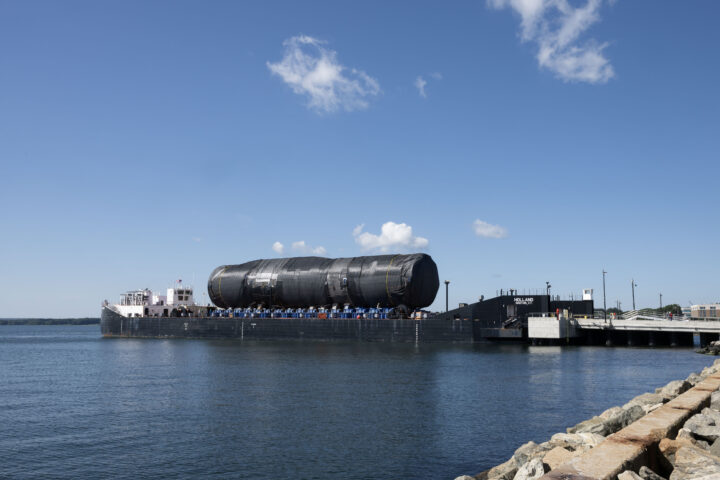
803 Section 2B/5 Transported from Quonset Point to Groton
PCU Arizona’s (SSGN 803) Section 2B/5 was successfully delivered to Groton from Quonset Point. At 184 feet in length, this section – which includes the Virginia Payload Module (VPM) – is the largest Virginia-class shipment ever transported. Arizona, the first submarine to incorporate VPM, will be about 460 feet long upon final construction. Section 2B/5...Continue reading→

Remembering September 11
On September 11, 2001, the Twin Towers of downtown Manhattan’s World Trade Center and the Pentagon in Washington, D.C., were targeted in a series of coordinated attacks that would leave an everlasting imprint on our country’s psyche. As the events unfolded on that Tuesday morning, nearly 3,000 people lost their lives, over 600 were injured...Continue reading→
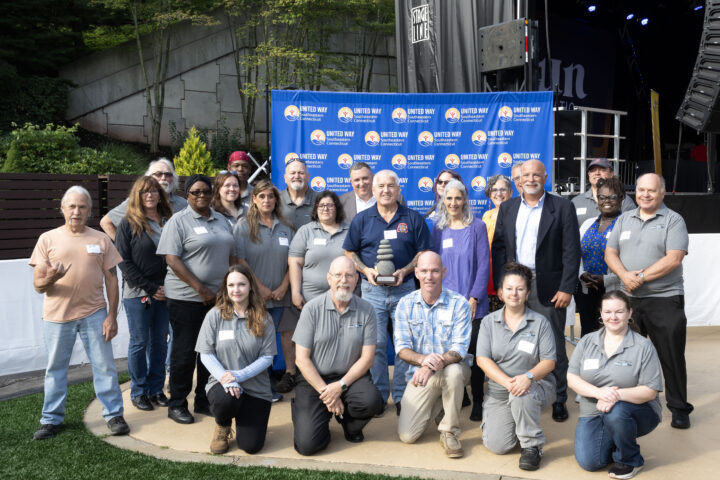
EBECSA Celebrates 75 Years — Nominate EB Employees Past and Present for Recognition
This year, the Electric Boat Employees’ Community Services Association (EBECSA) proudly celebrates its 75th anniversary. EBECSA was founded in 1951 by EB employees who wanted to create a dedicated, organized way to support nonprofit health and human service agencies in the communities where we live and work. What began as a small employee‑driven effort has...Continue reading→
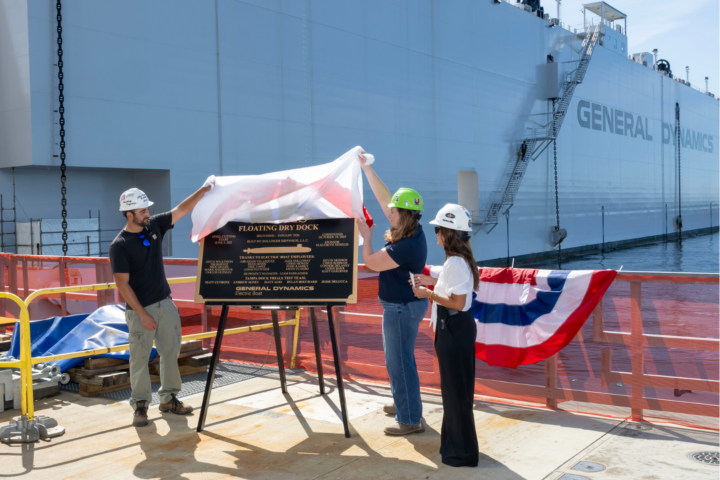
Atlas Plaque Unveiled, Honoring Plank Owners at South Yard Ceremony
Employees who have worked on Atlas, EB’s new state-of-the-art floating dry dock, gathered in the South Yard on Wednesday, Aug. 26, to unveil a new bronze plaque recognizing the contributions of its plank owners. The event celebrated the teams who helped bring Atlas from Bollinger Shipyards in Louisiana to its arrival in Groton earlier this year. Atlas will play...Continue reading→
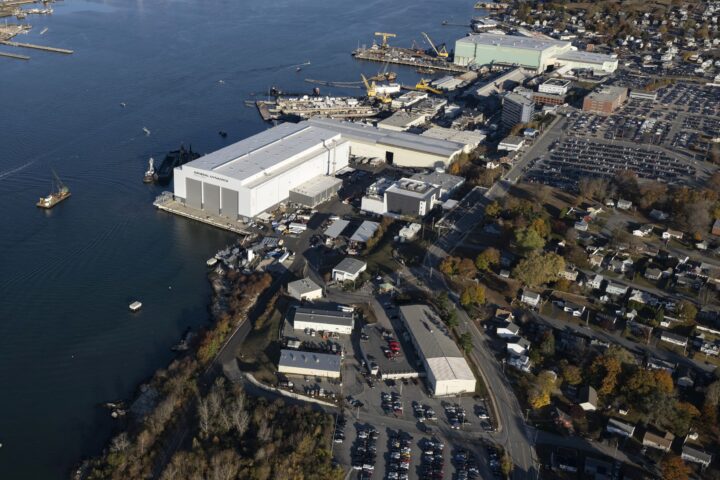
Neighbors Meet with EB to Discuss Noise, Lighting and Other Quality of Life Topics
Nearly twenty neighbors of Electric Boat’s Groton shipyard joined company leaders Aug. 25 for a community conversation focused on their quality‑of‑life concerns related to the South Yard Assembly Building (SYAB) and Atlas, the new floating dry dock. The Mayor of the City of Groton, Jill Rusk, also attended. Residents said they appreciated the chance to talk...Continue reading→