
Hi everyone; it’s Kevin. It’s Thursday, November 19th. Today on the podcast I have the great pleasure of speaking with Electric Boat’s Senior Vice President of Programs and Planning, Kurt Hesch, who has been a great source of knowledge and a great help to me in my every-day work. Two weeks ago, the Navy announced that they exercised previously established options that award EB $9.5 billion worth of contracts for the construction of the first two ships of the Columbia class. Today Kurt is going to provide his perspective on where we stand across all of our programs, along with his insights about our customer’s needs.
Kurt, before we begin, congratulations on your 40-year tenure at EB and your new status as a member of the 2020 class of Distinguished Shipbuilders. That is quite an accomplishment in our business. For the benefit of some of our newer employees, let’s hear a little bit about your background here at EB.
Thank you, Kevin. I have seen quite a bit here; I’ve seen the pendulum swing from seven ships delivered in 1981, including the first Ohio-class that Columbia will replace. We also went six years without a delivery before we were able to get the lead ship Virginia done. But now we’re back to a growing business, and it’s great to see. But I will say this 40th year has been the strangest year yet.
You can say that again, wow. It goes in the record books. Kurt, you have a unique perspective, and I rely on that on a daily basis. Your knowledge of our programs is deep and wide, and you understand our customer very well. You also understand one heck of a lot of our processes across the shipyard just based on your tenure. Let’s start there—let’s talk a little bit about the customer. What is top of mind for the Navy, and how can we better support the fleet?
There’s been a lot of submarine news lately for many reasons. Obviously the Columbia award–the number-one program, more than a decade in the making, is the biggest one. The senior leadership of the Pentagon and Navy is also aligning on the need for more attack submarines, which bodes well for our future demand signal. The talk is now 70-80 subs which would require three per year. On the flip side, the customer is concerned that EB’s plate’s pretty full already, it’s only getting fuller. Their biggest measure is getting VCS (Virginia-class) ships to the fleet.
This is a good opportunity to think about and make sure people understand what’s actually happening in the Groton shipyard today. When you think about the waterfront, you can think of quite a few hulls that are stretching from the north end of the yard down to the south end of the yard. This is the most work we’ve had in about 30 years, wouldn’t you agree?
It definitely is, and frankly getting these ships to the fleet all comes through here in Groton Operations. Right now we have in:
- Graving Dock #1 and Graving Dock #2 two PSAs both doing VCS first-time work for Acoustic Superiority and a bow dome replacement. Those both deliver in the second quarter of next year. Both have high attention from the Navy admirals and the fleet.
- We also have on the North Wing Wall, Oregon, SSN 793, ready to get into her critical test and sea trials early next year.
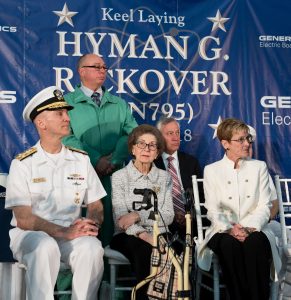
- In Bay 5 of the 260 building we have the Rickover (SSN 795) driving to roll-out and launch in the second quarter of next year. That whole ship went pressure hull complete in September.
- Bay 3 has SSN 797; it has the reactor plant through the stern all together there. We’re pushing towards our reactor plant path which would allow 2B-5 to then end load. At that point, we’ll be waiting for a bow from Newport News that comes in mid-year next year. That is a very important ship for us.
- Bay 2 was made available earlier this year by relocating the tool crib, allowing great progress on SSN 799 RPM and 6/7 MIDS, which is the module that goes right with that. That set up our best nuclear path schedule performance in seven years. Our teamwork and preparedness, including use of the ALC’s (Active Learning Centers), have led to high first-time quality in the piping and structural welding paths.
- We are waiting for some other modules to arrive on that boat. We recently sent one of our hull butt teams to Newport News to join Section 8 to Section 9, that’s the back-end of the ship. We build Section 8 at Quonset; Newport News builds Section 9 down there. Due to some delays in Section 9, we actually sent Section 8 down there and a team to do that hull butt. They did a great job with great work and great quality demonstrated by that EB’s team performance.
We are spread out here in the yard and also spread out across our partner Newport News and within the vendor base. Let’s talk a little bit more about that. We’ve had a few examples this year where we’ve sent some of our experts to work with our suppliers and partners to help them overcome challenges. We had an opportunity to go to BAE in Louisville earlier this year to see what our team was doing on missile tubes to share their welding experience. That was one of the more rewarding trips I’ve been on in my career, to watch our young people and some of our more senior people work together to not only get the work done but also train the people from the business that they were in to help them get better. I think we’ve seen some great improvement there and it becomes a model for us going well into the future. Let’s talk a little bit more about that. What else are we doing and what is your perspective on that?
That’s a great explanation, Kevin. That’s very important to us. As we grow the submarine business, we need more suppliers as well as ourselves—that’s very important. This example at BAE was critical to getting VPM tubes out. We have an example that we just sent some people over to Babcock Marine in the UK to work on tubes for Columbia where we sent a team to help build a team. That’s going to be critical for us going forward to achieve the volume of work we need to. We also are now starting that up at W International, which is a startup firm that’s working steel work for us. So that’s all very important.
That W International is down in South Carolina, isn’t it?
Yes, it’s actually where EB had some facilities in the heyday of the 80’s and early 90’s.
I don’t want to forget that SSN 801 on the waterfront, also in Bay 2, is a key nuclear structure and major piping progressing well. Again, it demonstrates our objective of working every nuclear path job every day.
When you sum that all up, that is two PSAs and our remaining five Block IV deliveries all very active in Groton. It is the most reactor plant work on our waterfront in about 25 years. We will have challenges with the cadence of module arrivals, but that can’t distract from performing to our standards on safety, quality and frankly, the team sport of delivering nuclear submarines alongside our Navy crews.
Really well put. I had the opportunity to be at Corporate this week talking about our Operating Plan for the coming four years. One of the things I noted was that next year the Virginia program will deliver or re-deliver six submarines. Five of those submarines are planned on being here in Groton. We’ve got our work cut out for us.
While that gives us a good rundown on what’s happening today, let’s talk a little bit about the future. What might the Navy be planning on beyond Columbia and Virginia? I think that’s particularly important to our Engineering team. Based on what we know, there are a few more blocks of Virginia submarines coming to us, we think. Then, what are we doing in terms of the next generation attack submarine, SSN(X)?
We still believe there’s going to be two more blocks of Virginia beyond the Block V we have now. How much they change compared to what we’re building today with VPM is uncertain, but my expectation is quite a bit of change for some other missions and also to learn for the next SSN platform, kind of like the back end of the 688-class. We did some changes to that that were to help inform what turned out to be the Seawolf class.
The SSN(X) platform is really still a clean sheet of paper. There have been different reviews and studies of it, and our Conform group is doing work on it. My hope is that it lets a generation of EB employees really generate platforms that surpass our adversary’s aspirations to meet the national security needs. We’ve been doing a lot of affordability versions of submarines—we need to go push the capability further.
When I talk to our young people, I often ask them where else would you rather be than right here right now? We’ve got a great product that’s in high demand for both Virginia and Columbia and it’s a highly adaptable platform. We’re doing some things with that even today in the shipyard on the 790 boat, for example, and what we’ll be doing with seabed warfare on the Virginia platform going forward. It is a tremendous time to be a submarine shipbuilder.
Thanks Kurt, I think a great opportunity for us to tie up and convey to folks just what it is we’ve got going on across all of our programs and how that cadence is only going to be stronger as we continue to move forward with full construction on Columbia and two Virginias per year, potentially three Virginias per year. Also, for continued insights from Kurt, I encourage you to check out his periodic blog posts on Homeport. It’s always an upbeat and informative window into both EB’s business and family life. Kurt; thanks for sharing that with us.
So, thanks, Kurt, for being here today with me, and thanks to all of you for listening. We’ll talk again soon.
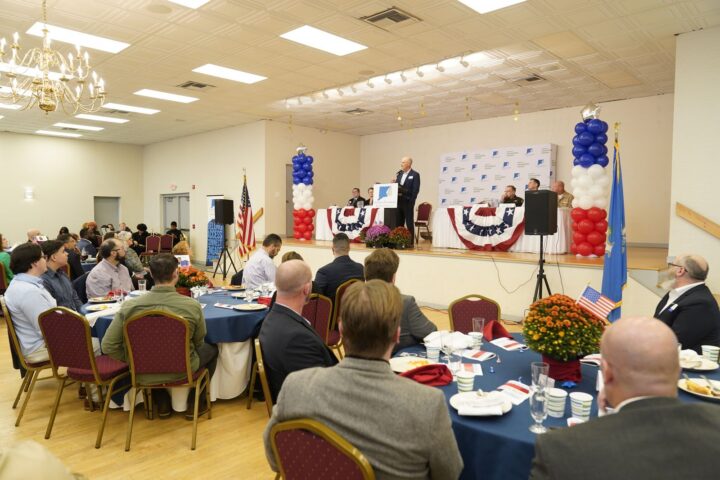
Electric Boat Joins Regional Leaders for Military Appreciation Breakfast
Electric Boat employees joined military and community leaders for the Chamber of Commerce of Eastern Connecticut’s annual Military Appreciation Breakfast on Sept. 30 at Ocean Beach Park’s Port ‘N’ Starboard. The event provided more than 120 complimentary seats to active-duty service members from the Navy, Coast Guard and Connecticut National Guard. General Dynamics Electric Boat...Continue reading→
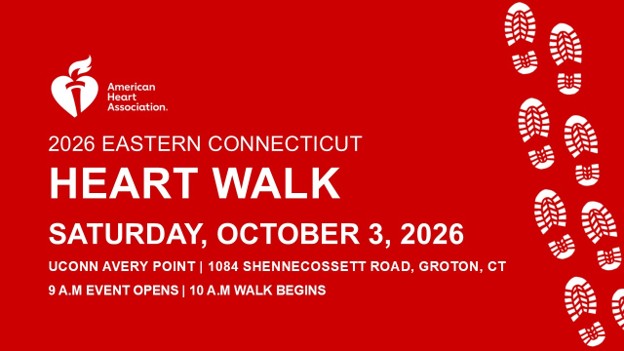
One Week Left—Let’s Claim the Torch! AHA Eastern Connecticut Heart Walk: Final Countdown
We are just one week away from the 2026 AHA Eastern Connecticut Heart Walk on October 3, 2026, at UConn Avery Point and this is our moment to finish strong. We’ve built incredible momentum, and now we’re within striking distance of something big. Right now, Electric Boat is holding second place, behind Mohegan Sun by...Continue reading→
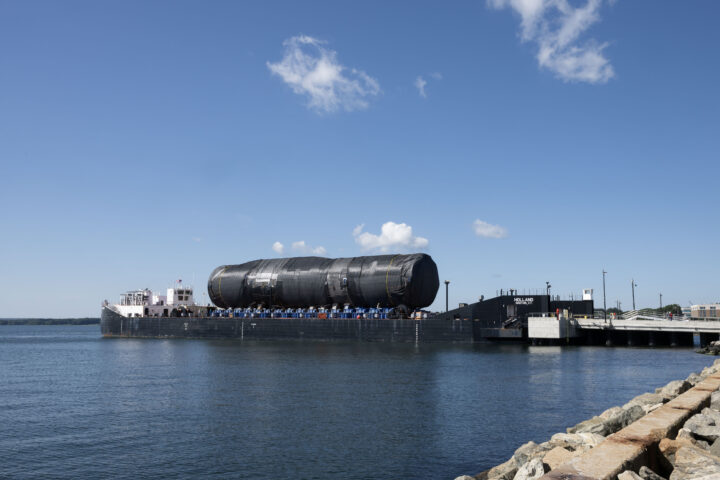
803 Section 2B/5 Transported from Quonset Point to Groton
PCU Arizona’s (SSGN 803) Section 2B/5 was successfully delivered to Groton from Quonset Point. At 184 feet in length, this section – which includes the Virginia Payload Module (VPM) – is the largest Virginia-class shipment ever transported. Arizona, the first submarine to incorporate VPM, will be about 460 feet long upon final construction. Section 2B/5...Continue reading→
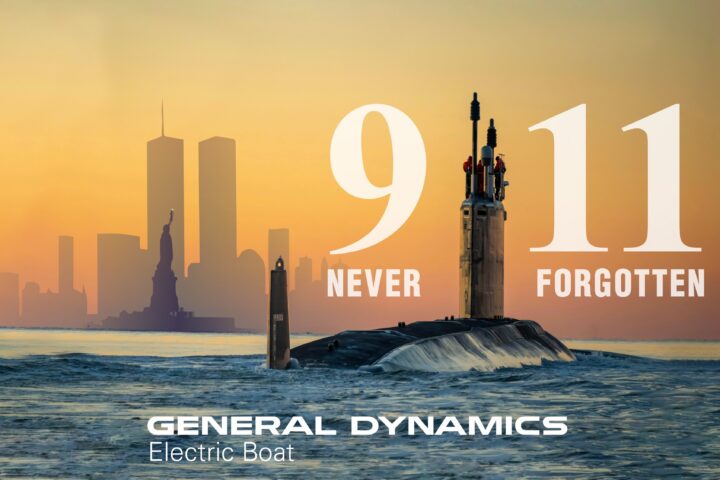
Remembering September 11
On September 11, 2001, the Twin Towers of downtown Manhattan’s World Trade Center and the Pentagon in Washington, D.C., were targeted in a series of coordinated attacks that would leave an everlasting imprint on our country’s psyche. As the events unfolded on that Tuesday morning, nearly 3,000 people lost their lives, over 600 were injured...Continue reading→
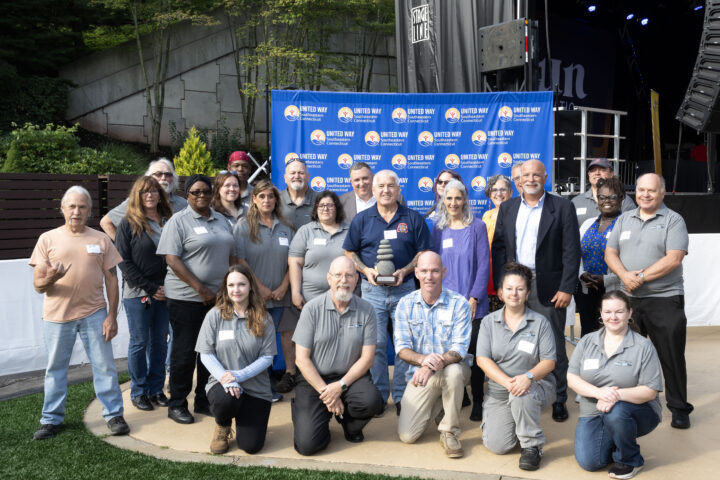
EBECSA Celebrates 75 Years — Nominate EB Employees Past and Present for Recognition
This year, the Electric Boat Employees’ Community Services Association (EBECSA) proudly celebrates its 75th anniversary. EBECSA was founded in 1951 by EB employees who wanted to create a dedicated, organized way to support nonprofit health and human service agencies in the communities where we live and work. What began as a small employee‑driven effort has...Continue reading→
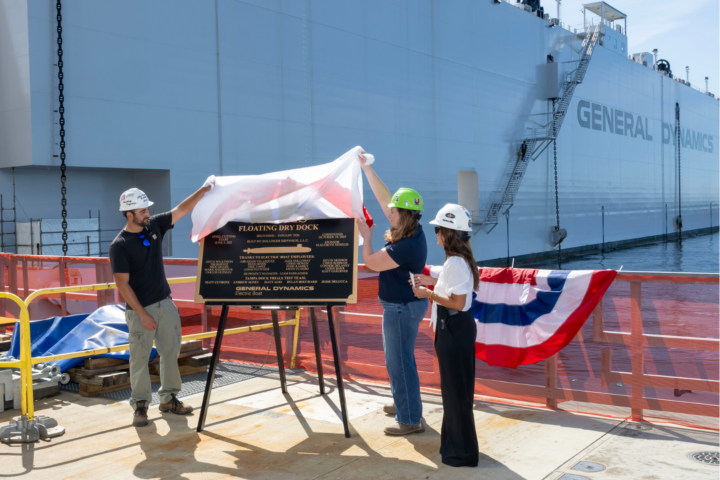
Atlas Plaque Unveiled, Honoring Plank Owners at South Yard Ceremony
Employees who have worked on Atlas, EB’s new state-of-the-art floating dry dock, gathered in the South Yard on Wednesday, Aug. 26, to unveil a new bronze plaque recognizing the contributions of its plank owners. The event celebrated the teams who helped bring Atlas from Bollinger Shipyards in Louisiana to its arrival in Groton earlier this year. Atlas will play...Continue reading→
Neighbors Meet with EB to Discuss Noise, Lighting and Other Quality of Life Topics
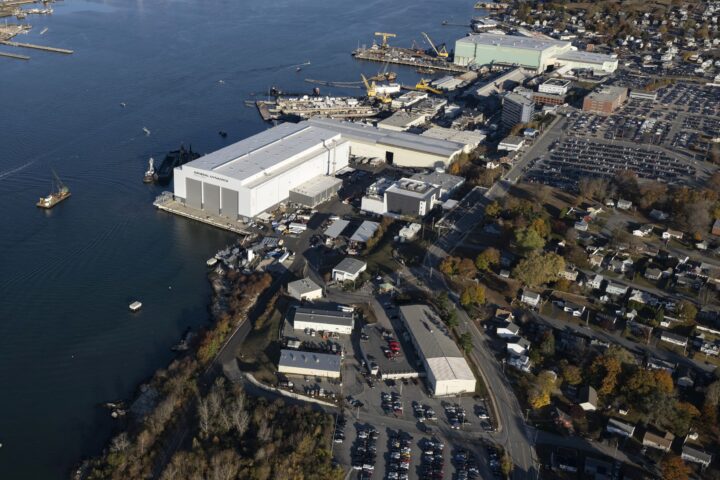
Nearly twenty neighbors of Electric Boat’s Groton shipyard joined company leaders Aug. 25 for a community conversation focused on their quality‑of‑life concerns related to the South Yard Assembly Building (SYAB) and Atlas, the new floating dry dock. The Mayor of the City of Groton, Jill Rusk, also attended. Residents said they appreciated the chance to talk...Continue reading→
Rayha Report Ep. 26: Waterford Campus Groundbreaking
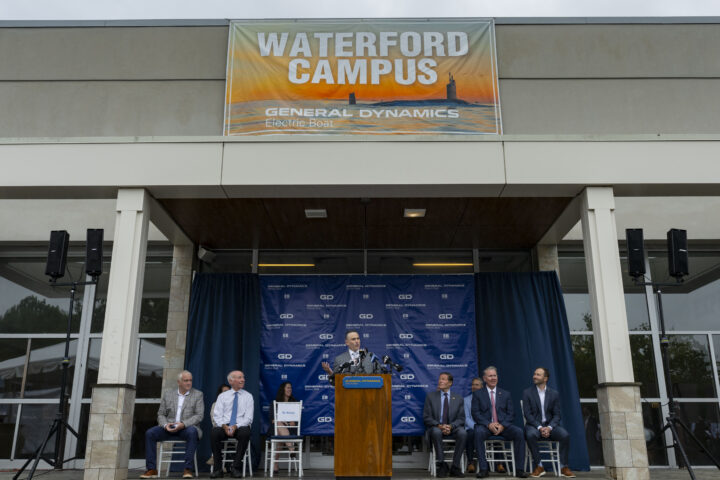
EB President Mark Rayha reports from the groundbreaking of the new Waterford Campus, where innovation, engineering and workforce development will come together to support our mission. The new facility will help train hundreds of shipbuilders daily as EB continues to grow for future production demands.
Waterford Campus Groundbreaking Marks EB’s Next Step in Innovation and Workforce Growth
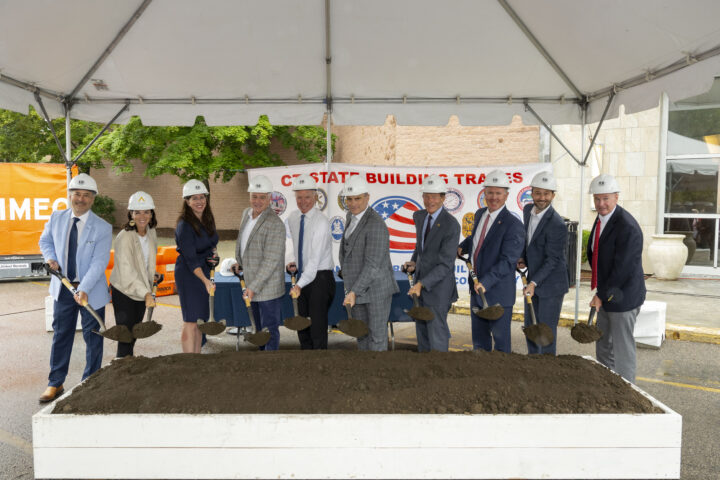
Electric Boat officially broke ground Friday on the Waterford Campus, launching the transformation of the former Crystal Mall into a center for innovation, engineering and high‑tech workforce development. EB President Mark Rayha underscored how the project will reshape the way the company designs, tests and builds submarines. Innovation is the key, he said. “There’s an opportunity to...Continue reading→
Powering HeartStrong 50: Thank You, EB Teams—Let’s Keep the Momentum Going!
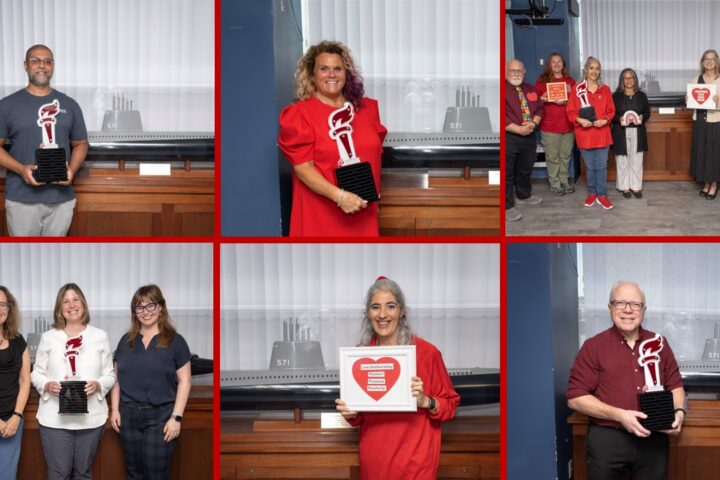
Thank you to our incredible EB Heart Walk teams, our community partners, and everyone who joined the American Heart Association (AHA) Torch Journey photoshoot. Your enthusiasm and dedication made this milestone truly special. Now let’s keep our HeartStrong 50 energy going—our goal is 50 teams and $50,000 raised for the 2026 AHA Eastern Connecticut Heart Walk on October 3 at UConn Avery...Continue reading→