
(Click here for podcast.)
**Note: After this podcast was recorded, EB leadership learned of the 47th positive COVID test for an employee. The employee works at the Newport News Shipyard in EB Department 330, located in Building 903. The employee’s last day of work was May 13, 2020. The employee was tested on May 25, 2020.**
Hi everyone, it’s Kevin. It’s been about a month since my last podcast with our Medical Directors, Dr. Andrews and Dr. Hurley, who’ve been on the front lines managing our efforts to help control the spread of COVID-19 at EB. They’ve put in many long hours over the last few weeks, along with their staff and volunteers, testing our employees in Groton. I think it’s fair to say the two of you have conducted many hundreds of tests here in Groton, and we’ve got more testing going on in Quonset Point starting this morning, which will go through about the middle of next week. On behalf of all the folks here at EB, thanks for your personal commitment to getting this testing done. I’ve talked about testing in my podcasts, but I’m no expert, and I think everyone will appreciate the perspective of our in-house medical experts. So, Dr. Andrews, Dr. Hurley, welcome back to the podcast.
KG: To start, Dr. Andrews, can you summarize our testing program so far?
Sure, thanks Kevin. To summarize, for those employees who are not at the Groton location, EB offered antigen and antibody testing to everyone within the gates at the Groton location. We’ve also done the Subase, and we encouraged employees who were working from home to come in for testing. This way the Groton facility really was able to get a good sampling of its population. The testing took place over about a week at two sites, one in Bldg. 88 and the other under a tent on the Wet Dock. Detailed schedules went out to the supervisors to facilitate the process. Each employee had their badge swiped, registered, and could elect to have the antigen nasal swab, the antibody finger prick, or both tests. Almost everyone opted to have both tests completed. The antigen nasal swab was sent to the lab and the antibody finger prick test was completed while the employees waited. Some employees were then directed to get a confirmatory blood test either in Bldg. 88 or the yard hospital. The testing went really smoothly in both locations. There were maybe one or two times that a backup occurred, but by in large the system worked effectively and efficiently. This week and next week the testing will be completed at Quonset Point. From there the testing will keep moving from location to location.
KG: Dr. Hurley, we’ve talked a lot about these tests and I’ve learned an awful lot about the science behind them. Can you talk a little bit about the science in the various tests we’ve conducted?
There are three basic types of tests. The first is the antigen test. It looks to characterize viral material from the sample. The sample or specimen is typically taken from the anterior nose or deep nasal pharyngeal area. If you are truly infected with the COVID-19 virus we know that the infected person secretes a lot of viral particles. In these cases the anterior nasal swab is sufficient. If you are early in the infection or have no symptoms, the deep nasal pharyngeal test is slightly more accurate.
Both tests are known as PCR tests, or polymerase chain reaction tests. The nasal sample is sent to a reference laboratory where they amplify and detect the genetic material (RNA) of the COVID virus found on the test swab. This test determines if you have active infection. It is very accurate. The chance that MERS, SARS-1 or other corona viruses would confound the test is very slight. Thus, it is very specific for COVID-19 when it is positive. It does have some weaknesses. Most people don’t like a swab stuck up their nose, thus the name, “Brain swab” and it needs to be sent to a reference laboratory for processing which can take 2-5 days to get the results back. Its strengths are that it can catch asymptomatic people and get them in to quarantine before they propagate the infection to others.
The second test is the “Serologic” test. It is a finger prick “screening test” which checks to see whether you might have had the disease and have developed antibodies to fight COVID-19. The antibody test looks for either IgM or IgG antibody in your blood. IgM occurs early in the disease. IgG presents later, often at the end. The test itself is what they call a lateral flow kit. A drop of blood is placed in the well and then covered with a buffering solution. It passes through a membrane and runs laterally along the cassette until it hits a control line and potentially two lines representing antibodies. This is the same technology as a pregnancy test or a strep test. Screening tests by definition usually are easy and fairly painless, but not as accurate as a blood test. Unfortunately, this is old technology but new to COVID, so the tests are only good for screening and still need to be confirmed if there is a positive result.
The last test is the confirmatory antibody test done with a blood draw. This is considered the gold standard of confirming the presence of antibodies. It is not a good screening test as it requires a blood draw and then a reference laboratory to analyze it. So we offer it to employees who have a positive screening antibody test on the finger prick in order to confirm the presence of the antibodies. Some of the confirmation tests will show that a person has the antibodies; while some will not show the antibodies, thus meaning the finger prick test was a false positive.
KG: It’s interesting to hear about the various technologies so we understand what people are experiencing when they get tested. Dr. Andrews, what were the results of the testing performed at Electric Boat so far?
It is really important to remember that the results do change daily, particularly as EB does more testing. So far medical has completed just over 5,000 tests. Most people had both tests completed, but some people did choose one or the other test. Of the 5,000 tested we found only two individuals positive for the antigens. They did not know they had the virus, which means they were asymptomatic carriers. Both were quarantined and have done well. This helped to stop the spread of the virus at its earliest stage. Less than 100 employees were found to have antibodies present. Most of the employees with positive antibodies were known to have had active disease.
KG: Dr. Hurley, so 5,000 tests, a handful of positive cases of either type. What do the results tell us about the EB population?
Statistically, the population we sampled was large and the results were adequate to guide the company as it moves forward in the pandemic. There are several take-home messages from the data so far. As Susan alluded to, we have a susceptible population. Greater than ninety-nine percent of the tests were negative for COVID-19. So we need to plan and anticipate for additional cases as the states re-open economies. Secondly, we found only two individuals that would be classified as asymptomatic carriers.
This means people acted appropriately by following CDC and state guidelines during this pandemic. They stayed home, socially distanced and washed their hands.
KG: I couldn’t be happier that people paid attention and followed the rules. Dr. Andrews, let’s talk a little bit more about that. We’ve gotten more than a few things right; what do these results tell you that we’ve done well?
It’s going to sound a little bit like I’m repeating Dr. Hurley, but what it does mean is that the number of infected employees is low, so two things: One, there is a low prevalence in this part of CT and two; the safety measures that EB has taken are working.
EB continues to have a team doing investigations and contact tracing to help control any outbreaks at the facility. Plus EB followed all the public health guidelines of social distancing, washing hands, and wearing masks, which appear to have been effective. The increased cleaning may also be contributing to the success. It is impossible to say what single thing may be making the big difference. It would be nice if we could pick one thing, but we can’t. In fact, it is all the small changes that both EB as a company has made and each individual person has made that seem to be helping. So far, EB has successfully been able to mitigate the spread of the virus while continuing to safely protect the employees and safely continue on with our mission to protect the country which is super.
KG: Dr. Hurley, a lot of people are thinking about the future and what lies ahead with regard to the disease as we start to see some relaxation in the lockdown we’ve been through. What do the results tell us about going forward?
As the states relax some of the rules and as we begin to transition back to a more normal schedule, EB workers needs to double-down on personal safety measures. This is the time when employees may begin to get lax, but this is the most important time to stay vigilant. As we all become more active, we in essence are increasing our interactions with others and multiplying our chances of contracting COVID-19.
We as a community need to continue to model the behaviors that protected us for the past three months by being vigilant, wearing masks, social distancing, and hand washing. We need to remember the basics of staying healthy – especially as our risks increase.
With summer just around the corner we can all anticipate how uncomfortable wearing a mask might become. We know it might seem hotter or harder to breathe in the masks, but there really is no easy solution. The virus will not take a break, there is little evidence that summer in and of itself will hinder the spread of the virus. So, all employees working in the heat will need to take breaks and definitely increase their hydration.
Now more than ever we have to maintain our new healthy behaviors – and if we see an increase in cases in the next few weeks, we’ll be back to performing investigations followed by contact tracing and even potential quarantines. COVID is not going away any time soon so we as a company and as individuals need to keep up all the good work that has made us successful to date.
KG: Let me ask you both, as medical professionals, what are your hopes and concerns about where society is moving with regard to COVID-19? What do we need to stay focused on? Dr. Andrews?
My hope is that we can control the spread of COVID. As the science catches up with the disease, we as the medical community will be able to educate society to limit the transmission. The world may be changed, but if we understand how the disease spreads and what we can do to limit this spread then we can alter our behaviors but still live the life we want to live. Once we have enough testing and controls in place, then we can begin to move around without fear. I will be able to visit my parents, go out to eat and travel, even if this means doing a little extra work or doing things a little differently. As long as everyone does their part as we begin to understand more, then all of us should be able to get back what we enjoy. I assume there will be a second spike of disease. But this time we know how to quickly control the spread and ideally, if we all incorporate our new normal into our day to day life, then just maybe I will be wrong, and we can avoid the second spike all together. We all need to continue to be vigilant with social distancing, hand hygiene and masking so that we can enjoy life again. I know that I am ok, personally, with the new normal that protects the greater good including the people that are most vulnerable.
KG: Dr. Hurley, what do you think?
My hope is that we as a community will continue the behaviors that were successful in slowing the spread of COVID-19 until such time that there is a vaccine sufficient to create “herd immunity.”
I hope this pandemic has taught us to appreciate Public Health and how events such as these tie us all together. We’ll need to remember these lessons. Public health experts have predicted a pandemic for over two decades. We were overdue. We lucked out in the sense that the death rate in developed countries is probably going to be under 2 percent when all is said and done. But what if the next pandemic has a death rate like Ebola? The average was 50% with a range of 25-90%. Further, it is thought that COVID-19 will probably be around for a while—years. So we’ll have to get used to, and adhere to, this new normal.
That having been said, the pandemic has been a tremendous disrupter of the status quo. I believe we as a people will benefit in the long term from many of the innovations that were borne out of necessity created by this pandemic.
KG: Thank you both for taking the time, in the midst of testing, to share your thoughts on the current COVID situation with our listeners. And thank you to those listening for taking to heart the wise words of Dr. Andrews and Dr. Hurley, so we can continue to recover life as we know it, as safely as possible. Please stay tuned, we’ll continue to keep you updated as we fight through this disease together. Thanks again Docs.
Delivering the Future
Some imagine the future. We deliver it now.
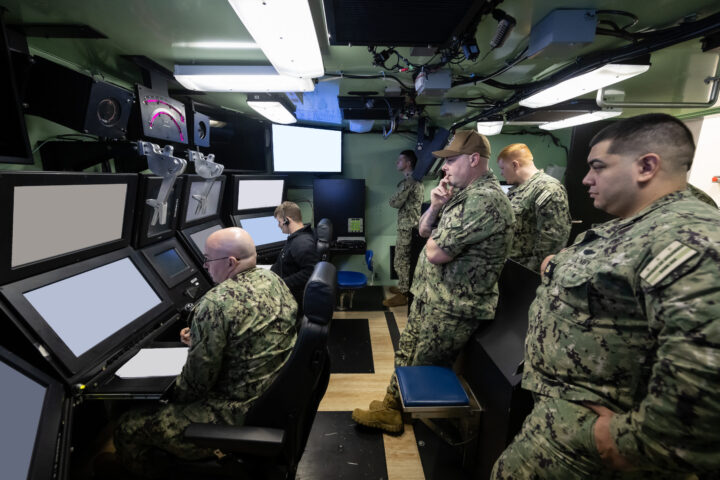
State-of-the-Art Simulator Prepares District of Columbia Crew for its Mission
As construction of the District of Columbia (SSBN 826) continues apace in EB’s South Yard Assembly Building, the sailors who will soon be at the controls are spending hours in a dynamic, high-tech simulator learning the intricacies of operating the 21,000-ton, first-in-class boomer. The Columbia Ship Control Operator Trainer (CSCOT) is a replica of the...Continue reading→
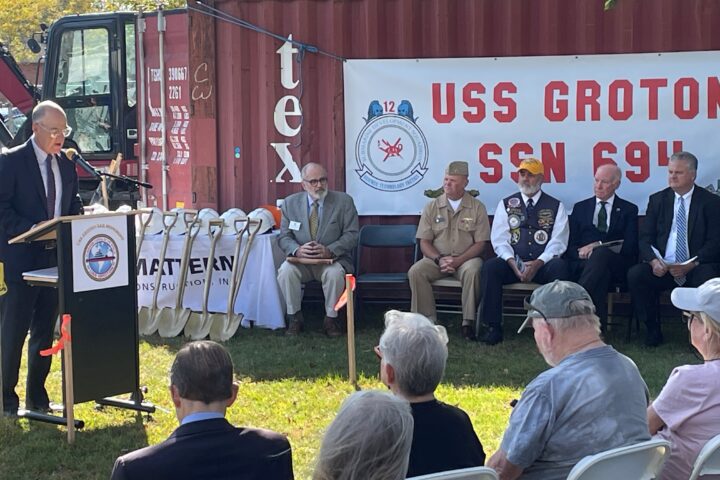
Groundbreaking Ceremony Marks Start of USS Groton Sail Monument
Fifty years after the USS Groton (SSN‑694) first launched, dozens gathered outside the Groton Public Library Oct. 9 to celebrate the groundbreaking of the USS Groton Sail Monument. The $6.6 million project—three decades in the making—will honor the men and women who design, build, operate and maintain the Navy’s submarines, as well as the families...Continue reading→

A Celebration of Heart, Community and Victory
2026 American Heart Association Eastern Connecticut Heart Walk Recap Saturday, October 3, 2026 | UConn Avery Point The 2026 American Heart Association Eastern Connecticut Heart Walk at UConn Avery Point was nothing short of extraordinary. Under bright autumn skies, 26 incredible Electric Boat teams and 151 walkers came together with passion, purpose, and unstoppable energy...Continue reading→
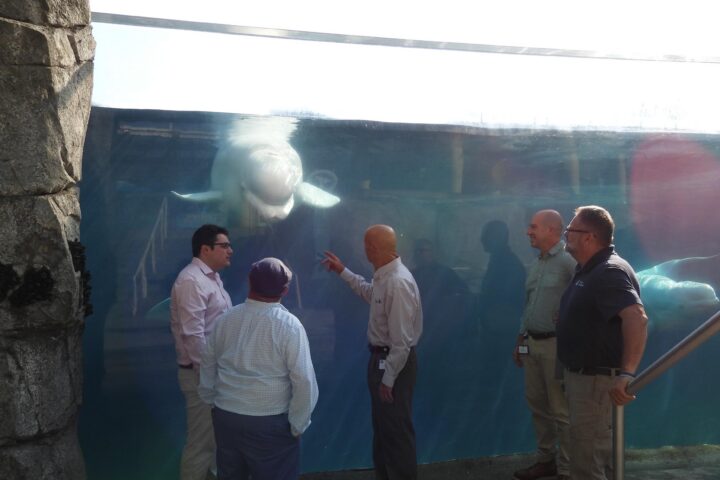
Quonset Point Donation Will Help Keep Mystic Aquarium’s Belugas Cool
Juno, the Mystic Aquarium’s convivial, photo-bombing Beluga whale, will continue swimming in cool comfort thanks to an unlikely chain of events that began 40 miles east in an Electric Boat industrial building at Quonset Point. That’s where EB’s Russ Tatro and Chris Logan were going over plans with a vendor, Carrier Corp., to replace Building...Continue reading→
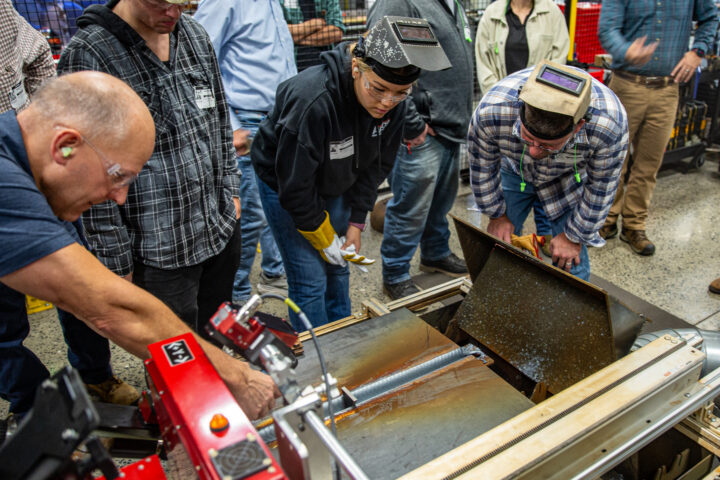
EB Team Visits Hypertherm as Part of Drive Toward Modern, Efficient Shipbuilding
A team from Groton and Quonset Point headed to New Hampshire-based Hypertherm Associates this week to get a closer look at a modern automated plasma gouging process designed to streamline hull fabrication. The visit was part of a broader effort across Electric Boat to bring more advanced, state‑of‑the‑art manufacturing tools into the shipyard. EB plans...Continue reading→
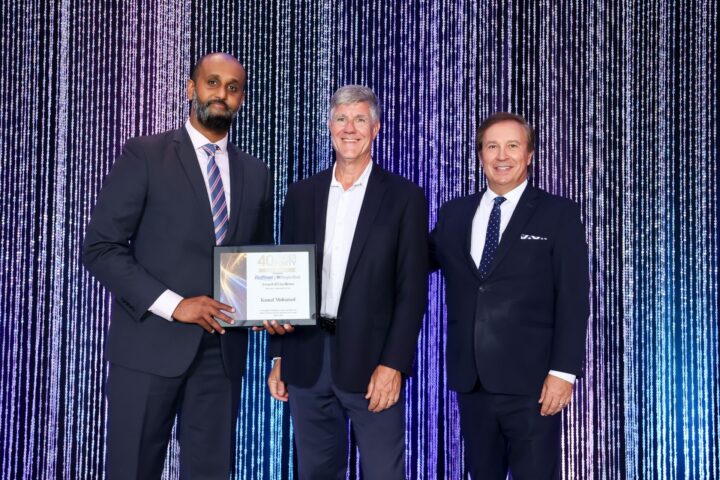
Kamal Mohamed Recognized as 2026 Hartford Business Journal 40 Under Forty Award Recipient
The Hartford Business Journal (HBJ) 40 Under Forty Awards recognize outstanding young professionals in the Greater Hartford area who are excelling in their industries through their leadership roles. They are driven by success, motivated by challenges and are role models for their peers. These individuals are part of an outstanding class of upcoming business leaders...Continue reading→
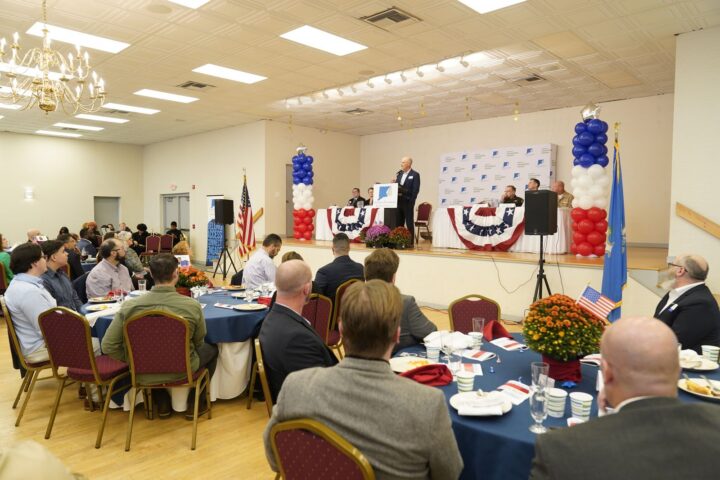
Electric Boat Joins Regional Leaders for Military Appreciation Breakfast
Electric Boat employees joined military and community leaders for the Chamber of Commerce of Eastern Connecticut’s annual Military Appreciation Breakfast on Sept. 30 at Ocean Beach Park’s Port ‘N’ Starboard. The event provided more than 120 complimentary seats to active-duty service members from the Navy, Coast Guard and Connecticut National Guard. General Dynamics Electric Boat...Continue reading→
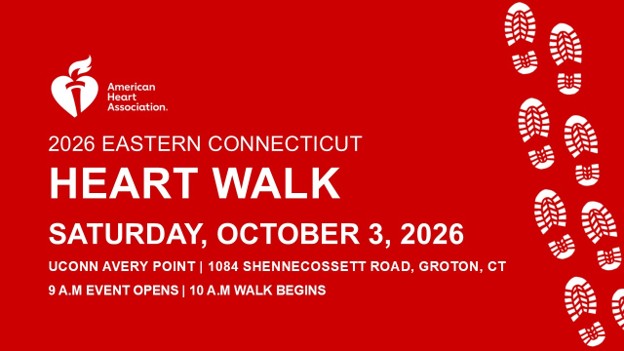
One Week Left—Let’s Claim the Torch! AHA Eastern Connecticut Heart Walk: Final Countdown
We are just one week away from the 2026 AHA Eastern Connecticut Heart Walk on October 3, 2026, at UConn Avery Point and this is our moment to finish strong. We’ve built incredible momentum, and now we’re within striking distance of something big. Right now, Electric Boat is holding second place, behind Mohegan Sun by...Continue reading→
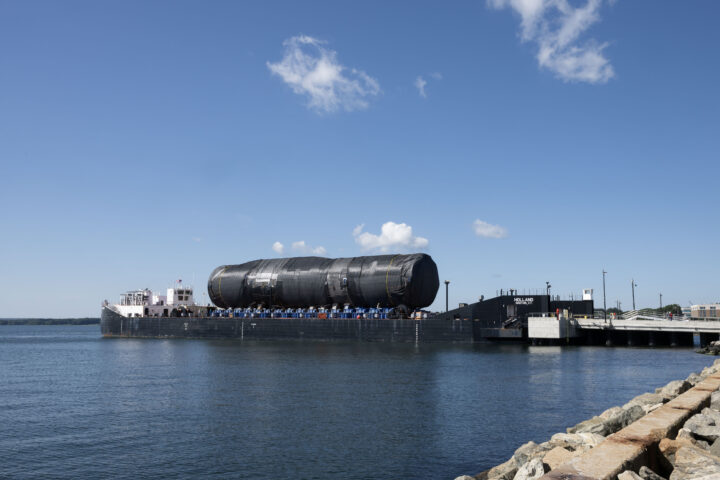
803 Section 2B/5 Transported from Quonset Point to Groton
PCU Arizona’s (SSGN 803) Section 2B/5 was successfully delivered to Groton from Quonset Point. At 184 feet in length, this section – which includes the Virginia Payload Module (VPM) – is the largest Virginia-class shipment ever transported. Arizona, the first submarine to incorporate VPM, will be about 460 feet long upon final construction. Section 2B/5...Continue reading→