
By Emil Casciano, Chief Nuclear Officer
August 16, 2018
Recently, there have been repeated instances where temporary systems and components have been disturbed, resulting in a loss of cleanliness, damage to equipment and potentially serious injury.
The most recent occurrence was when persons unknown disconnected a 440v power cable without the knowledge of whether or not the system was de-energized. Had the unknown person disconnected the cable while it was energized, the person could have been seriously injured. Since the owner of the system was not involved and unknowing of the disconnection, the system was subsequently turned on for routine operations, causing the exposed connector to be energized, which posed a serious risk to personnel and equipment.
Handling, operation, installation or removal of temporary systems and components must be performed by the organization that installed the system, and they must be contacted if the system must be removed or rerouted. There have been instances where removal of temporary systems or components without the knowledge of the owning trade has caused damage to finished work, and in the most recent case, risked serious personal injury. In those instances, the individual disconnecting the system did not ask the following three questions before proceeding:
- Do I understand why this component or system is installed?
- Does the owning trade know that I am disturbing this component/system?
- Is this system de-energized, depressurized and drained?
Typically, temporary systems and components are tagged for identification, but some may not be tagged at all depending on the nature of the temporary system. Whether the temporary system has a tag or not, unless you can answer the three questions above, you should not operate, modify or remove the component. Some examples of these types of tags include STO Temporary System Tag (Orange), STO Test Control Tag (Yellow) and NTO Nuclear Support Identity Tag (Blue). Each tag provides a point of contact for the owner of the service. If a tag is not present, contact the cognizant area supervisor for assistance.
We build the most complex machines the world has ever seen. We must respect our temporary systems as much as our ships’ permanently installed systems. When we are operating or handling systems or components, we need to be vigilant, perform our JHA, and ask ourselves the ‘Three Questions.’
Delivering the Future
Some imagine the future. We deliver it now.
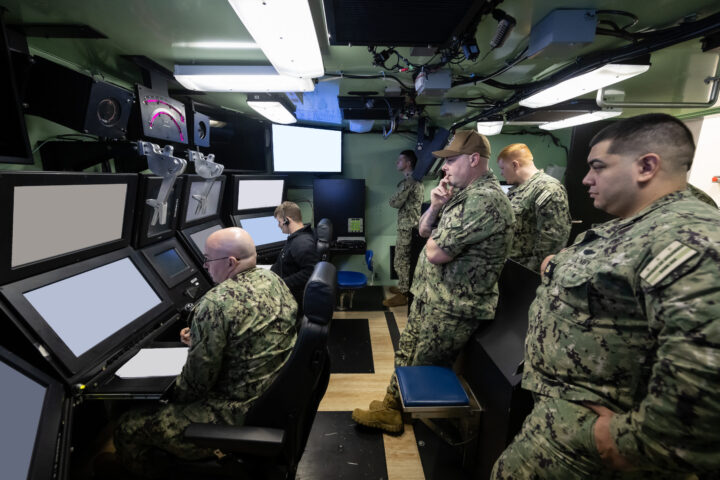
State-of-the-Art Simulator Prepares District of Columbia Crew for its Mission
As construction of the District of Columbia (SSBN 826) continues apace in EB’s South Yard Assembly Building, the sailors who will soon be at the controls are spending hours in a dynamic, high-tech simulator learning the intricacies of operating the 21,000-ton, first-in-class boomer. The Columbia Ship Control Operator Trainer (CSCOT) is a replica of the...Continue reading→
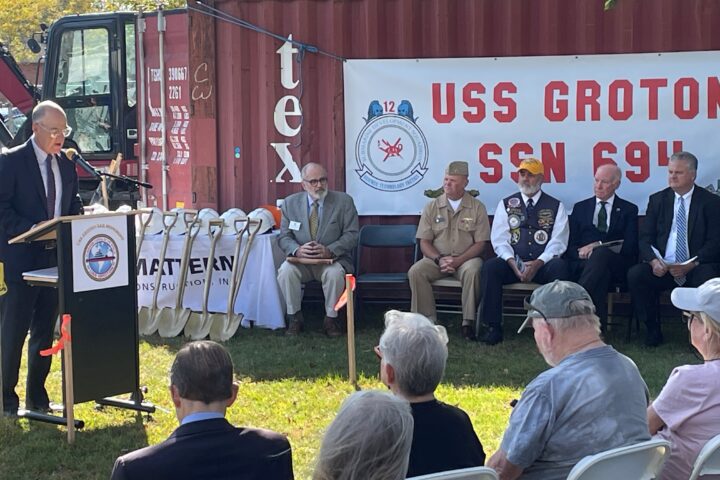
Groundbreaking Ceremony Marks Start of USS Groton Sail Monument
Fifty years after the USS Groton (SSN‑694) first launched, dozens gathered outside the Groton Public Library Oct. 9 to celebrate the groundbreaking of the USS Groton Sail Monument. The $6.6 million project—three decades in the making—will honor the men and women who design, build, operate and maintain the Navy’s submarines, as well as the families...Continue reading→

A Celebration of Heart, Community and Victory
2026 American Heart Association Eastern Connecticut Heart Walk Recap Saturday, October 3, 2026 | UConn Avery Point The 2026 American Heart Association Eastern Connecticut Heart Walk at UConn Avery Point was nothing short of extraordinary. Under bright autumn skies, 26 incredible Electric Boat teams and 151 walkers came together with passion, purpose, and unstoppable energy...Continue reading→
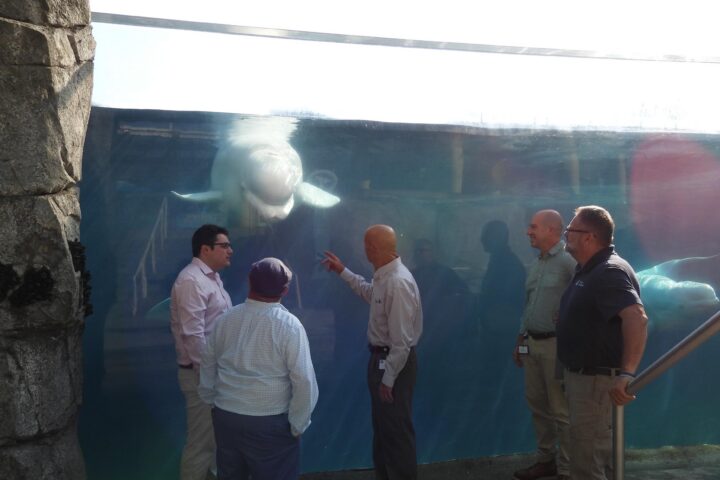
Quonset Point Donation Will Help Keep Mystic Aquarium’s Belugas Cool
Juno, the Mystic Aquarium’s convivial, photo-bombing Beluga whale, will continue swimming in cool comfort thanks to an unlikely chain of events that began 40 miles east in an Electric Boat industrial building at Quonset Point. That’s where EB’s Russ Tatro and Chris Logan were going over plans with a vendor, Carrier Corp., to replace Building...Continue reading→
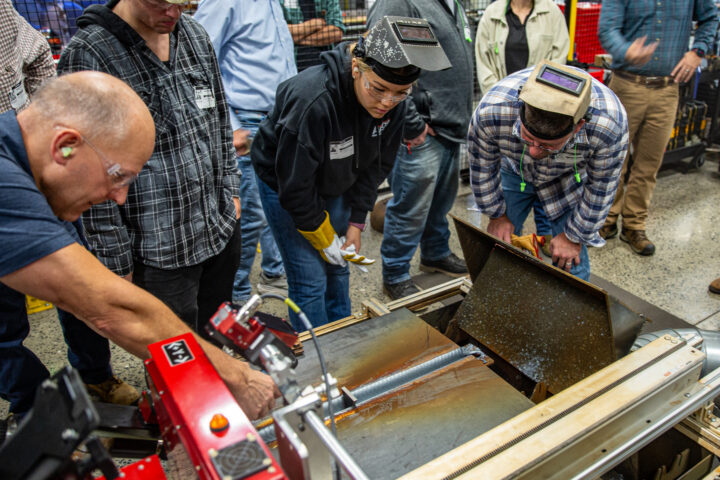
EB Team Visits Hypertherm as Part of Drive Toward Modern, Efficient Shipbuilding
A team from Groton and Quonset Point headed to New Hampshire-based Hypertherm Associates this week to get a closer look at a modern automated plasma gouging process designed to streamline hull fabrication. The visit was part of a broader effort across Electric Boat to bring more advanced, state‑of‑the‑art manufacturing tools into the shipyard. EB plans...Continue reading→

Kamal Mohamed Recognized as 2026 Hartford Business Journal 40 Under Forty Award Recipient
The Hartford Business Journal (HBJ) 40 Under Forty Awards recognize outstanding young professionals in the Greater Hartford area who are excelling in their industries through their leadership roles. They are driven by success, motivated by challenges and are role models for their peers. These individuals are part of an outstanding class of upcoming business leaders...Continue reading→
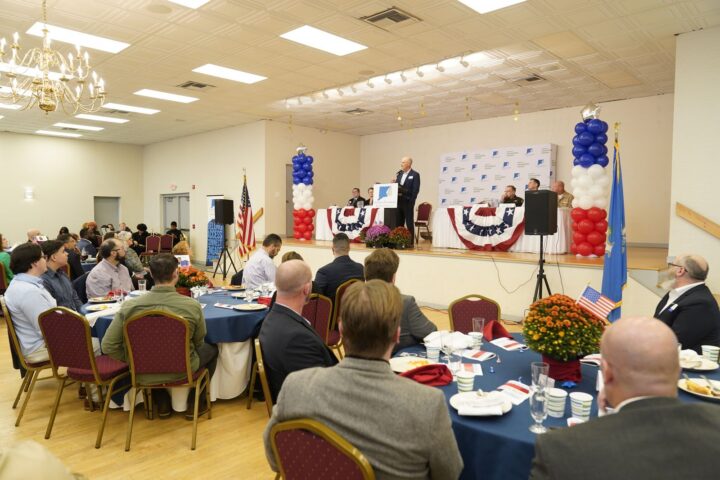
Electric Boat Joins Regional Leaders for Military Appreciation Breakfast
Electric Boat employees joined military and community leaders for the Chamber of Commerce of Eastern Connecticut’s annual Military Appreciation Breakfast on Sept. 30 at Ocean Beach Park’s Port ‘N’ Starboard. The event provided more than 120 complimentary seats to active-duty service members from the Navy, Coast Guard and Connecticut National Guard. General Dynamics Electric Boat...Continue reading→

One Week Left—Let’s Claim the Torch! AHA Eastern Connecticut Heart Walk: Final Countdown
We are just one week away from the 2026 AHA Eastern Connecticut Heart Walk on October 3, 2026, at UConn Avery Point and this is our moment to finish strong. We’ve built incredible momentum, and now we’re within striking distance of something big. Right now, Electric Boat is holding second place, behind Mohegan Sun by...Continue reading→
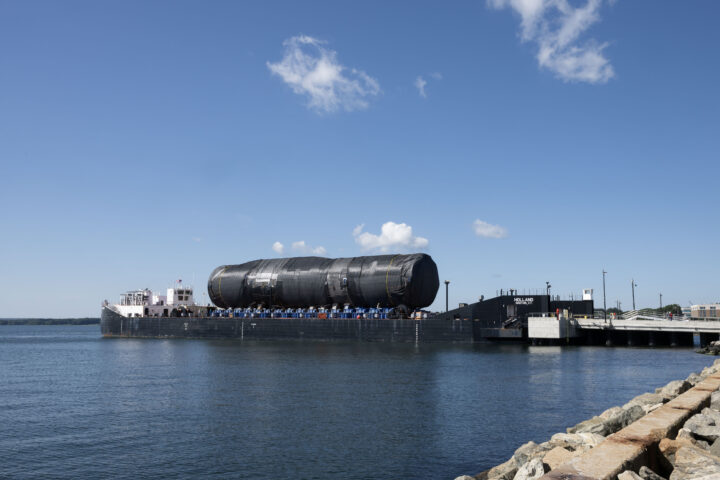
803 Section 2B/5 Transported from Quonset Point to Groton
PCU Arizona’s (SSGN 803) Section 2B/5 was successfully delivered to Groton from Quonset Point. At 184 feet in length, this section – which includes the Virginia Payload Module (VPM) – is the largest Virginia-class shipment ever transported. Arizona, the first submarine to incorporate VPM, will be about 460 feet long upon final construction. Section 2B/5...Continue reading→