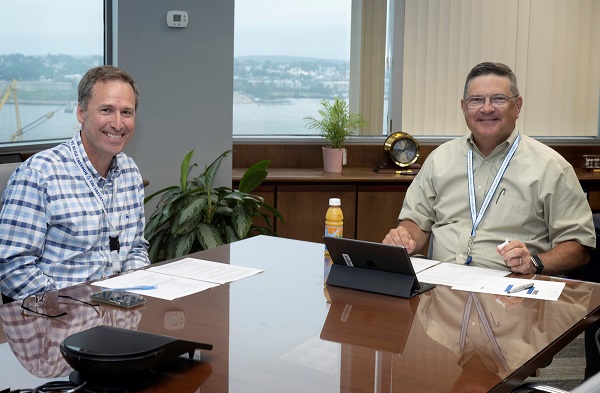
Hi everyone; it’s Kevin. Today is Wednesday, July 10 (date recorded). Joining me today on the podcast for the first time is Dave Roberts, Electric Boat’s Vice President of Real Estate and Facilities. Dave joined Electric Boat at the end of last year, succeeding Joe Drake, who retired. So Dave, welcome to the podcast. Let’s start with you telling us a little bit about your background.
Thanks Kevin. It’s great being back in Groton! I spent a little over 30 years in the Navy and more than half of that time was here in the New London area up at the submarine base. So joining the Electric Boat team is a little like coming back home for my family and I. We have a lot of friends who work here, and it’s great getting reacquainted with them while I’m out walking the yard.
In the Navy, I served on four submarines: the USS New York City, the Miami, the Nebraska and the Dallas. All four of those submarines were built here at Electric Boat, so I have an affinity for Electric Boat. My most enjoyable tour was on Dallas. Dallas was commissioned in 1981, run for 37 years and decommissioned in 2018. When I commanded her she was later in her life. We went on mission and the ship performed fantastic, met all the mission requirements, certainly comparable to all those newer ships on the waterfront including the Virginia and Los Angeles classes. Everybody came home safely. Dallas’ life was extended, which was an interesting situation for us. It was great, and it was really a testament to the quality of EB’s shipbuilding, to extend the submarine life to 37 years. In fact, USS Norfolk, which is a newer boat, was decommissioned before Dallas; she was only a 31-year-old boat and happened to be built at Newport News. I just have a lot of fond memories of Electric Boat; I’ve been at sea on Electric Boat ships and it’s just been a fantastic Navy career.
I had a few tours after command here in Groton. I was the commanding officer of the Naval Submarine School, the commanding officer of the Submarine Learning Center and the chief of staff at the Undersea Warfighting Development Center, all in Groton. I finished my career as the Dean of Math and Science at the U.S. Naval Academy. After retirement, I spent two years at a small software company up in Boston and then another two years as the assembly and test director at Northrup Grumman at their Sunnyvale site, where they build the submarine turbine generators and main propulsion units for Virginia and the turbine generators for the Columbia class. I had a great career, and it’s great being here at EB.
I agree with your assessment—coming back to what I believe is the center of submarine excellence all across the world right here in Groton and southeastern New England, it feels like home. You’ve been on the job now for about seven months. Let’s talk about your impressions so far—what we’re getting right and what you see as the challenges.
The getting right part is crystal clear to me. First is the quality of our workforce. As I walk around and talk with people in the shipyard and at Quonset Point, they’re talented and smart. They’re dedicated to a mission that’s greater than themselves.
I agree with that—it’s something that you feel every day.
Yes, and they’re focused on the right things thanks to good leadership. These are challenging problems we’re trying to solve which requires a team. I think Admiral Houston had it right when he said that it’s hard to operate a submarine at sea, but it’s harder to build one. I’m seeing that firsthand here in a very short period of time. So the quality of our workforce is a real game-changer for us.
The other thing we’re getting right is the safety culture. From the minute I walked in the gate, you can see it. You see the signs, the road markings, people wearing their protective equipment, people correcting themselves. That is a culture and that does not come without a lot of work: senior leader engagement, personally dealing with safety issues is also something that I’ve noticed. We know it’s important, and we’re not just talking about it—we’re acting and communicating about the importance of safety across all levels at our facilities.
Those are areas where we are really getting it right here. As far as challenges, it appears to me that the biggest challenge we have is the ramp up to build one Columbia and two Virginia-class submarines a year. I am new to the shipbuilding business, but it appears to be a very difficult task that requires a strong team. And to do it with the day in and day out blocking and tackling of safety on the deckplate so that we do this in a way that is at the pace we need to meet, but also do it safely with first-time quality so we’re not doing a bunch of re-work, while we meet our business objectives, is a big challenge for us.
EB is the worldwide leader in submarine design and construction. Another challenge is that comes with an enormous responsibility to hold a standard. We are not only challenged internally to maintain our own standards—we do a great job with that with audits and surveillances—but the challenge comes from the hundreds of suppliers, focus factories, these external organizations that are all trying to meet our standard to build submarines the right way. This is very difficult work to maintain that standard, but I’m certainly confident based on the quality of our workforce that we can do it.
Really well said, and I agree 100%. I think we have the best shipbuilders in the world at Electric Boat, and we owe it to ourselves and to each other to operate in a mindset that we are 200 percent accountable every day so that we’re coming home to our families in the same shape we left for work that morning. You talked a little bit about the mission focus. From my perspective, that’s giving our nation’s submariners the assurance that they can conduct their missions and return home to their families as well. You talked about your experience doing that very thing. Given our opportunities and challenges, and the fact that our workforce is going to continue to grow for as far as we can forecast right now, let’s talk about your priorities in your new role.
The priorities all start with President’s Intent. It really resonates with me coming from the Navy, there’s a Commander’s Intent idea. President’s Intent makes a lot of sense to me—in there, one of the desired end states is “Our facilities and equipment are materially ready.” That’s our requirement; that’s on me. We’ve defined that a little bit further to mean that no facility or piece of equipment is in the critical path to production work. And if it is, we swarm to that problem to minimize the downtime so that we maximize production rate.
Another way to look at this is, our job is to be in the background as a supporting organization. If no one sees us, if no one knows who we are, if the roofs don’t leak, the equipment is running per design, we’re doing our job. That’s how we’ve interpreted that. Our priority is operationalizing President’s Intent. How are we doing that? It continues to come back to maintaining our safety culture and record, and improving on it. For example, at Quonset Point, we’ve had one recordable injury in the Real Estate and Facilities organization in the last 11 months, and that’s something to celebrate, but it requires work every day on the deckplate with that basic blocking and tackling, being out there and watching what we’re doing and keeping our people safe because we care about them. That’s something to celebrate, but we also know we’re only as good as our last injury, meaning we have to stay on it every day.
The second part is first-time quality. The way we look at that in the maintenance of our buildings and systems is one, to prevent problems. Going back to roofs leaking and equipment not working per design, we’re having some of those problems. We want to get ahead of that, i.e., less fixing and more preventing. We’ve spent a lot of time on our preventive maintenance program over the last six months to really, at my level, understand in detail what we’re looking at and how we’re working to prevent problems through a robust maintenance program. While we’re doing that, we need to watch what we’re doing. Surveillance is key to improving our business. Audits are good and important from a paperwork perspective, but we want to watch how we’re doing our business, and so the surveillance is something that I’m very focused on, picking up not only the number of surveillances we’re doing but the quality of them. What we’re driving to in the prevention of problems is operating systems technically right, meaning when we have a problem, when we’re looking at systems, whether we’re preventing a problem or one fails, we always want to come back to what the technical requirement is. It’s an area we need to work on; it’s not just about banding and systems and problems, but are we digging at the root cause and fixing it technically correct.
Since we have some leaking roofs, and we have some equipment failures along the way, we are obviously having to swarm to fix problems, and we want to fix those problems the right way, the first time. The reasons are, first, safety. If we have a piece of equipment, say an electrical cord is shorted out and we only work that cord as a temporary repair, it could cause a shock in the future. That’s a simple example of why we need to fix that cord the right way the first time. Another reason is because we are a group of professionals, people who have joined our team to be professional facilities and real estate experts. We owe them the right tools and materials to fix things the right way the first time; it’s what they’ve joined our organization to do, professionally. And lastly, to be honest, we just don’t have the luxury of unending resources to do rework. We have to do things the right way the first time because rework is expensive; we just can’t afford it. Those are some reasons why we’re really focused on first-time quality.
Last things we’re doing is we’re working to make learning the fabric of our organization. We’ve improved on the number of deckplate team learning sessions that we’re doing across the board, which is good. I’d like to see the quality of those sessions improve, so we’re working on that. Lastly, we just need to be little more aggressive, a little more assertive, to play more offense.
If you look at our facilities and our equipment and our buildings, they are really no different when it comes to maintenance than the submarines that we build and send to sea. The submarine force does an excellent job of sending ships to sea to do missions, but they always bring them back to get the maintenance done—it’s part of the lifespan of submarines. Dallas was extended by four years because they kept up with the maintenance. It’s the same thing here. We need to get the maintenance done on our buildings, our equipment and our facilities, which means we need to edge our way into production work, find the time where we can to get that maintenance done and not delay it. As we delay it, there’s costs involved and problems down the road. So we’re working on being a little more assertive and aggressive, being at the table to make sure that the equipment is ready for Operations’ use.
Great synopsis. I always think about something we can all relate to—we all have a car, and it gets us to and from work. Would you rather do the preventive maintenance to keep it running, or not, and let it break down to the point where you’ve got some really expensive repairs ahead of you. Obviously, the right way to do things is that preventive maintenance. Since you’ve been here, I’ve seen great improvement in how the Facilities and Real Estate team interacts with the rest of the organization. I think there’s a lot of great learning going on. You’ve got a lot of great talent on your team, and getting them to be more part of the mainstream in operations here in Groton and Quonset Point is really a game changer for us and the way we think about our facilities. So I appreciate the great work. I agree with the priorities you’ve got, and if we’re going to deliver one Columbia and two Virginia-class submarines, it’s absolutely critical that the buildings, systems and equipment are all of the same quality, and we think about how to maintain them, just as we do the submarines we deliver. We also need to provide our growing workforce with some more resources and that includes their working environment. Let’s talk about that.
We have challenges with space and parking at all of our major locations in Groton, New London and Quonset Point. We know we have to work on these. The needs are office space, particularly over in New London, the lab space for engineers. We have workforce development areas as we grow the team and we’re training them, in particular welders, but other groups as well, we need space for them. And of course, warehousing, because the pace we’re building submarines requires more warehousing.
We have a lot of irons in the fire right now working on our space issues. We also have irons in the fire and have been working hard on parking. We have a cross-functional team from Policy, to Security, to the Facilities group and Safety, working on parking. This is an important topic for all of us. Just as a quick summary, in Groton we’ve added over 600 spots over the past year and a half. It might not seem like it because I know that some of these spots are further away from the shipyard, requiring maybe a ten-minute walk, but we are adding spots here in Groton. In New London, the parking garage work is going to be done by the end of the year—that will put 250 spots back there. At Quonset point, we’re expanding the Orange lot.
I recognize that it’s still insufficient as we continue to build our teams, but as I said, we have a lot of irons in the fire. As we solve the space problem, whether it’s offices or labs, that will also solve the parking issues as well. We’ve got a lot of work in front of us here. I want to make sure that you know it’s on my radar, and we’re working hard to alleviate some of those. We will continue to communicate with you and the rest of the company often to make sure that you know how we’re proceeding.
Appreciate that update Dave. You’ve got a tough job; not only do we have a legacy of real estate and facilities that we’re dealing with, but we’re adding onto that every single day and that’s something that you’re also keeping your eye on. I appreciate you taking the time to introduce yourself to the broader EB team here on the podcast, and we’ll continue to keep people apprised of your priorities and the progress of you and your team.
Thanks everyone; we’ll talk again soon.
Delivering the Future
Some imagine the future. We deliver it now.
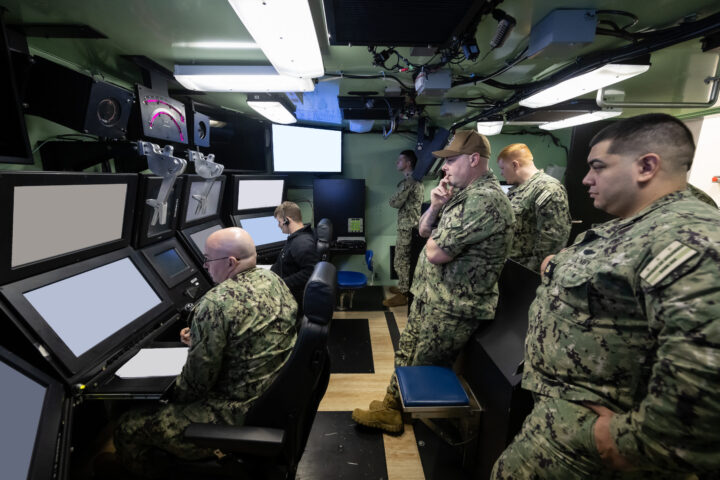
State-of-the-Art Simulator Prepares District of Columbia Crew for its Mission
As construction of the District of Columbia (SSBN 826) continues apace in EB’s South Yard Assembly Building, the sailors who will soon be at the controls are spending hours in a dynamic, high-tech simulator learning the intricacies of operating the 21,000-ton, first-in-class boomer. The Columbia Ship Control Operator Trainer (CSCOT) is a replica of the...Continue reading→
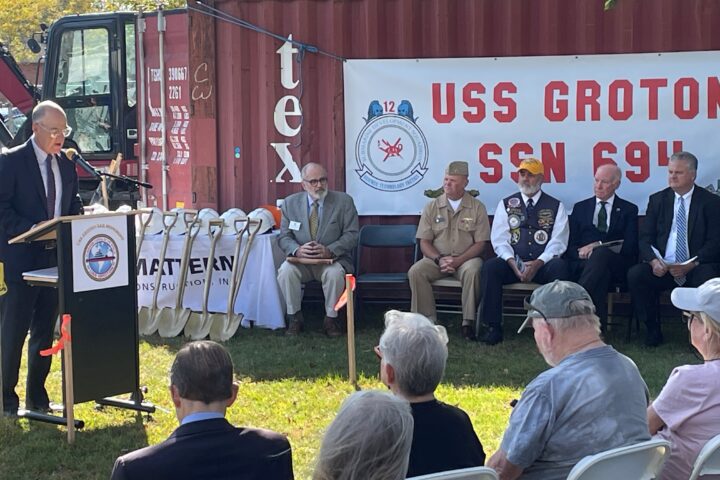
Groundbreaking Ceremony Marks Start of USS Groton Sail Monument
Fifty years after the USS Groton (SSN‑694) first launched, dozens gathered outside the Groton Public Library Oct. 9 to celebrate the groundbreaking of the USS Groton Sail Monument. The $6.6 million project—three decades in the making—will honor the men and women who design, build, operate and maintain the Navy’s submarines, as well as the families...Continue reading→

A Celebration of Heart, Community and Victory
2026 American Heart Association Eastern Connecticut Heart Walk Recap Saturday, October 3, 2026 | UConn Avery Point The 2026 American Heart Association Eastern Connecticut Heart Walk at UConn Avery Point was nothing short of extraordinary. Under bright autumn skies, 26 incredible Electric Boat teams and 151 walkers came together with passion, purpose, and unstoppable energy...Continue reading→
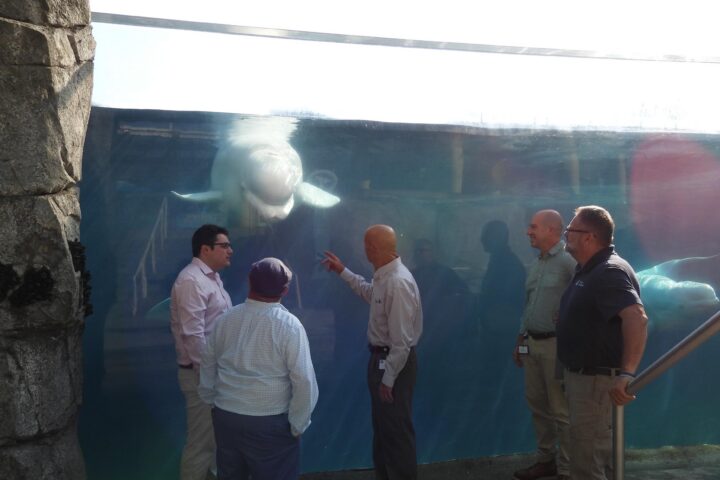
Quonset Point Donation Will Help Keep Mystic Aquarium’s Belugas Cool
Juno, the Mystic Aquarium’s convivial, photo-bombing Beluga whale, will continue swimming in cool comfort thanks to an unlikely chain of events that began 40 miles east in an Electric Boat industrial building at Quonset Point. That’s where EB’s Russ Tatro and Chris Logan were going over plans with a vendor, Carrier Corp., to replace Building...Continue reading→
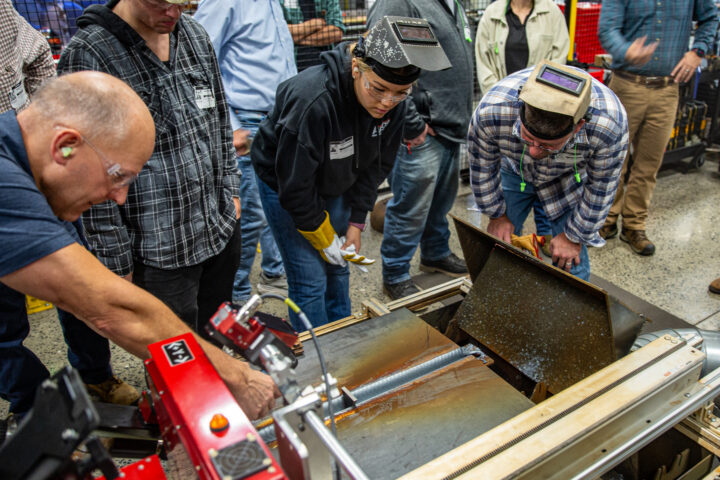
EB Team Visits Hypertherm as Part of Drive Toward Modern, Efficient Shipbuilding
A team from Groton and Quonset Point headed to New Hampshire-based Hypertherm Associates this week to get a closer look at a modern automated plasma gouging process designed to streamline hull fabrication. The visit was part of a broader effort across Electric Boat to bring more advanced, state‑of‑the‑art manufacturing tools into the shipyard. EB plans...Continue reading→
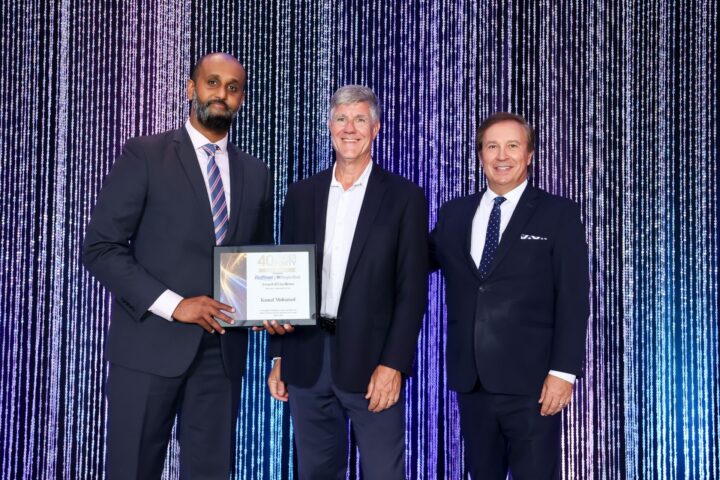
Kamal Mohamed Recognized as 2026 Hartford Business Journal 40 Under Forty Award Recipient
The Hartford Business Journal (HBJ) 40 Under Forty Awards recognize outstanding young professionals in the Greater Hartford area who are excelling in their industries through their leadership roles. They are driven by success, motivated by challenges and are role models for their peers. These individuals are part of an outstanding class of upcoming business leaders...Continue reading→
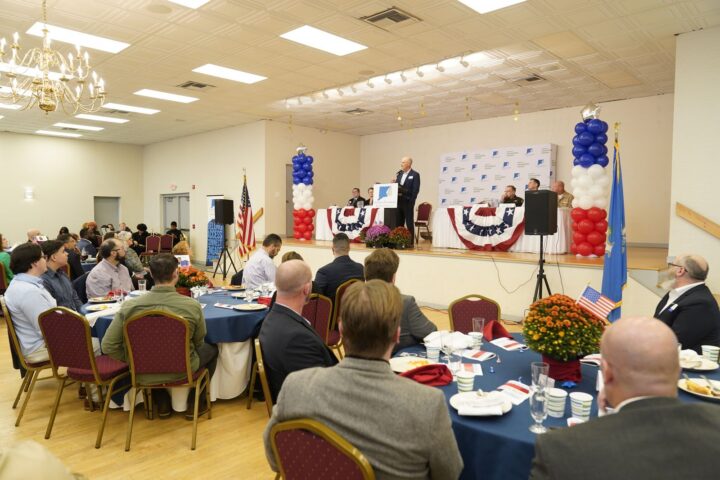
Electric Boat Joins Regional Leaders for Military Appreciation Breakfast
Electric Boat employees joined military and community leaders for the Chamber of Commerce of Eastern Connecticut’s annual Military Appreciation Breakfast on Sept. 30 at Ocean Beach Park’s Port ‘N’ Starboard. The event provided more than 120 complimentary seats to active-duty service members from the Navy, Coast Guard and Connecticut National Guard. General Dynamics Electric Boat...Continue reading→

One Week Left—Let’s Claim the Torch! AHA Eastern Connecticut Heart Walk: Final Countdown
We are just one week away from the 2026 AHA Eastern Connecticut Heart Walk on October 3, 2026, at UConn Avery Point and this is our moment to finish strong. We’ve built incredible momentum, and now we’re within striking distance of something big. Right now, Electric Boat is holding second place, behind Mohegan Sun by...Continue reading→
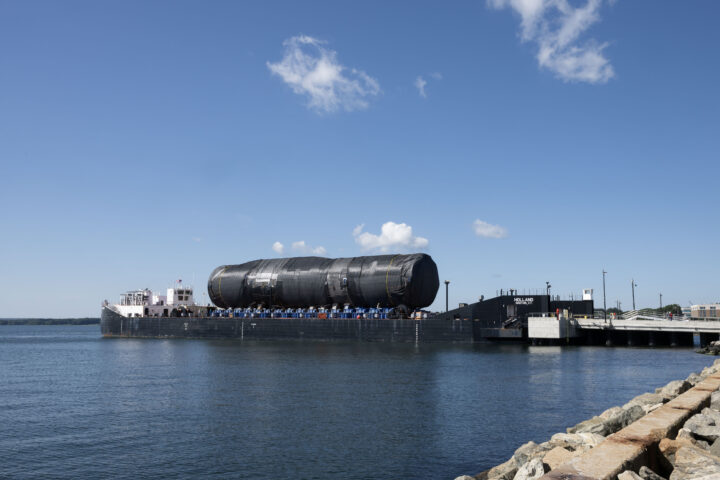
803 Section 2B/5 Transported from Quonset Point to Groton
PCU Arizona’s (SSGN 803) Section 2B/5 was successfully delivered to Groton from Quonset Point. At 184 feet in length, this section – which includes the Virginia Payload Module (VPM) – is the largest Virginia-class shipment ever transported. Arizona, the first submarine to incorporate VPM, will be about 460 feet long upon final construction. Section 2B/5...Continue reading→