
Hi everyone; it’s Kevin. Today is Wednesday, August 2. We recently closed the financial books for the second quarter of 2023, and General Dynamics, our CEO Phebe Novakovic, reported our overall financial results to the Street just this past week. Mark Rayha, our VP and Chief Financial Officer, and newly announced Chief of Operations, is with me today, so welcome back Mark and congratulations on the promotion.
Thank you.
It’s well deserved, and I look forward to continuing to work with you in your new role.
In the past Mark and I have done a podcast on Finance 101. This is part of our intentional steps to improve, overall, Electric Boat’s employees’ understanding of what we call financial acumen—how does the business of shipbuilding ultimately make money and continue to grow to provide the Navy with the submarines it needs.
Let’s talk about some of the messages that came out of this most recent earnings report. To start, our revenue volume is ahead of our operating plan, and Phebe commented that our volume growth really is a precursor to margin growth. Let’s talk about what that means from a shipbuilding standpoint.
As you stated in your President’s Intent, and as we’ve maintained as our business focus throughout the year, our drive for volume and velocity has led to growth in revenue during the first half of the year. The growth has come from both EB labor and from increased throughput by our supply chain. As a refresher, the revenue we book is based on the cost; we’re on a percentage-of-completion accounting method, so the cost is the proxy for percent complete, so our revenue is based on the cost we incur building our product.
Although we’re not where we want to be or need to be from a schedule cadence or efficiency standpoint, the increased capacity is essential to our ability to achieve the delivery rates the Navy needs. As we go down that path, and the expanded workforce gains experience, this learning enables efficiency which drives operating leverage and leads to the increased margin as Phebe stated.
I think in shorter terms, the more we get done, the more dilution we see in rates and the better off we are in terms of overall margin.
That’s the rationale behind volume and velocity that we’ve talked about before and as we articulated in my President’s Intent. Volume and velocity really will help us drive improved schedule performance and also our financial outcome. Let’s talk a little bit about how that works.
Submarine construction is extraordinarily labor and capital intense. It takes a lot of skilled laborers and a lot of equipment and machinery to do that work. The level of support labor and fixed equipment and fixture costs are high because of the complexity of our product. To put it in context, it’s roughly one support person supporting each tradesperson that’s doing the work, through Supply Chain, Riggers and all the important elements of the business that support the tradesperson doing the job on the deckplate.
So, the more construction hours we perform and can earn, the lower the fixed support cost per construction hour. That’s all good from the standpoint of our financial results and our efficiencies. We invested in our buildings, equipment and fixtures with the expectation that there would be an equivalent of one Columbia class and two Virginia class delivered per year. Until we reach that rate, the cost per construction hour is going to be higher than it should be. As a result, as that rate continues to be higher than it should be, it negatively impacts the return on investment and, in turn, will limit our ability to continue to invest in the business.
Right, so perform better to realize what we’ve already invested in and getting that return on investment is really what’s that’s all about. Let’s talk a little bit more about that from a capital perspective. We had a pontoon failure earlier this year, and we’ve spent a lot of time thinking about what our posture was with regard to maintenance of our shipbuilding infrastructure. We’re taking some significant turns; I’m proud in the way the team has reacted to that. I think we’re in a much better position today than we were back in February. We need to continue to ensure that we’ve got safe and reliable construction capacity including all of the facilities at Quonset and here in Groton as well. As you noted earlier, submarine construction is pretty capital intensive.
Let’s talk about how we manage the cost of keeping all of our infrastructure in proper working order.
The key is disciplined planning. We’ve all received the response “we can’t afford that right now” when we’ve been asking for either new equipment or for money for a major repair to an existing asset. Planning shipyard infrastructure maintenance is no different than what you’d do at home. We’ll always be under affordability pressure; you can’t fix everything at once. The size of this business and the amount of infrastructure we have to maintain is something that’s extraordinary, as we talked about earlier. The key to leveraging our available funds is by doing the best we can to consistently execute a disciplined plan for the maintenance and then the eventual replacement of the equipment.
The pontoon’s a great example of that—a long-lived asset with a very detailed maintenance plan until we get to the point, which will be coming up soon, that we can fully replace that asset. In a business this large, spreading out the expenditures over time is key to financial management success. We’ll spend hundreds of millions this year on capital equipment, a lot of which is getting spent to increase capacity for one Columbia and two Virginia, but it’s also maintaining the existing infrastructure that we have. No business can afford to fix everything at once. Active participation in the financial budgeting process is essential by everybody. When you’re involved in that planning process, it’s good for everybody if we’re disciplined to that process and provide the best inputs we can at the time. It gets into the rates, which gets into our contracts, and it allows us to create the affordability we need to be able to do this and do a good job maintaining it over time.
That planning piece is critical to us as we go forward; getting that right is the key to being able to do all that affordably. Mark, thanks again, appreciate you taking the time to help us all better understand the financial acumen aspects of the business, how volume and velocity have an impact on our ability to deliver on our mission, now, and really ensure the future continued success of Electric Boat.
Congratulations once again on the COO billet. Really appreciate being able to work with you. Thanks for listening everyone. We’ll talk again soon.
Delivering the Future
Some imagine the future. We deliver it now.
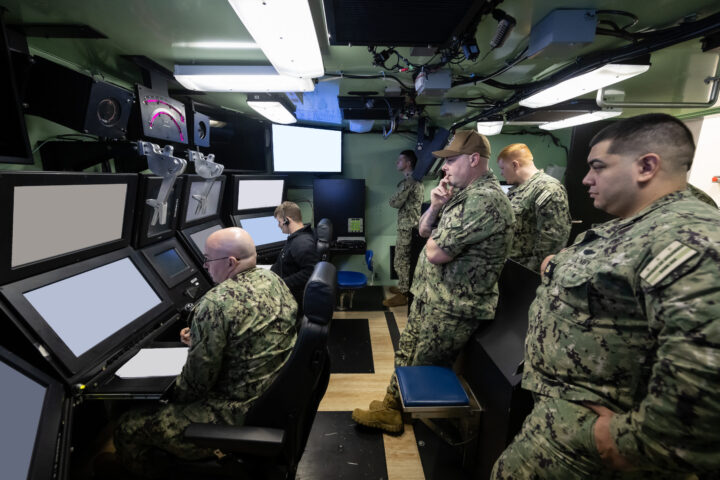
State-of-the-Art Simulator Prepares District of Columbia Crew for its Mission
As construction of the District of Columbia (SSBN 826) continues apace in EB’s South Yard Assembly Building, the sailors who will soon be at the controls are spending hours in a dynamic, high-tech simulator learning the intricacies of operating the 21,000-ton, first-in-class boomer. The Columbia Ship Control Operator Trainer (CSCOT) is a replica of the...Continue reading→
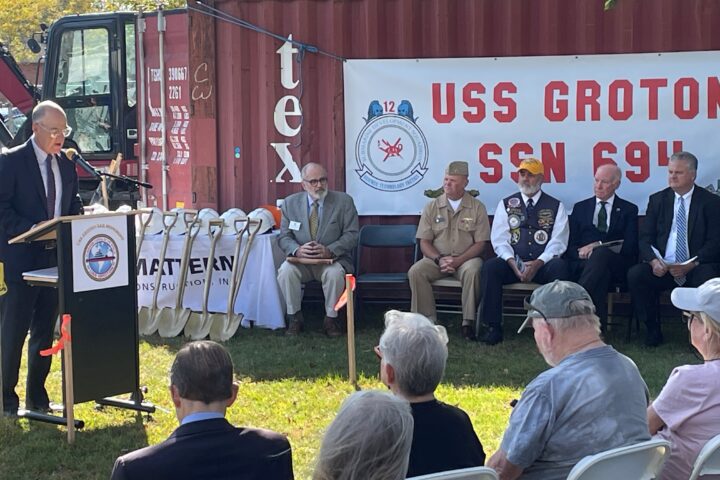
Groundbreaking Ceremony Marks Start of USS Groton Sail Monument
Fifty years after the USS Groton (SSN‑694) first launched, dozens gathered outside the Groton Public Library Oct. 9 to celebrate the groundbreaking of the USS Groton Sail Monument. The $6.6 million project—three decades in the making—will honor the men and women who design, build, operate and maintain the Navy’s submarines, as well as the families...Continue reading→

A Celebration of Heart, Community and Victory
2026 American Heart Association Eastern Connecticut Heart Walk Recap Saturday, October 3, 2026 | UConn Avery Point The 2026 American Heart Association Eastern Connecticut Heart Walk at UConn Avery Point was nothing short of extraordinary. Under bright autumn skies, 26 incredible Electric Boat teams and 151 walkers came together with passion, purpose, and unstoppable energy...Continue reading→
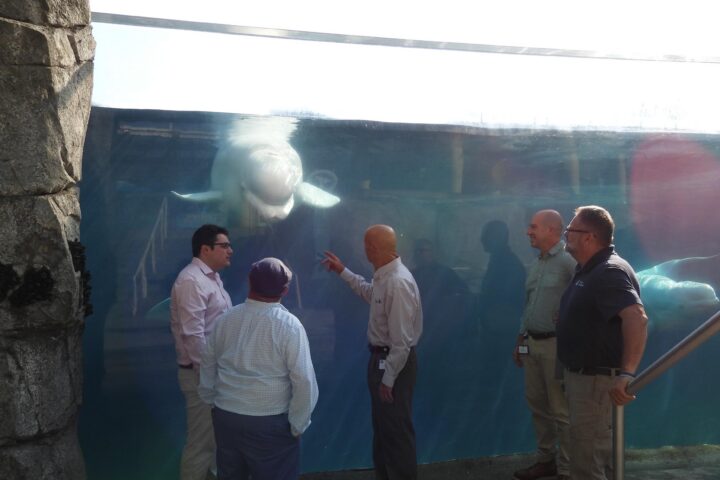
Quonset Point Donation Will Help Keep Mystic Aquarium’s Belugas Cool
Juno, the Mystic Aquarium’s convivial, photo-bombing Beluga whale, will continue swimming in cool comfort thanks to an unlikely chain of events that began 40 miles east in an Electric Boat industrial building at Quonset Point. That’s where EB’s Russ Tatro and Chris Logan were going over plans with a vendor, Carrier Corp., to replace Building...Continue reading→
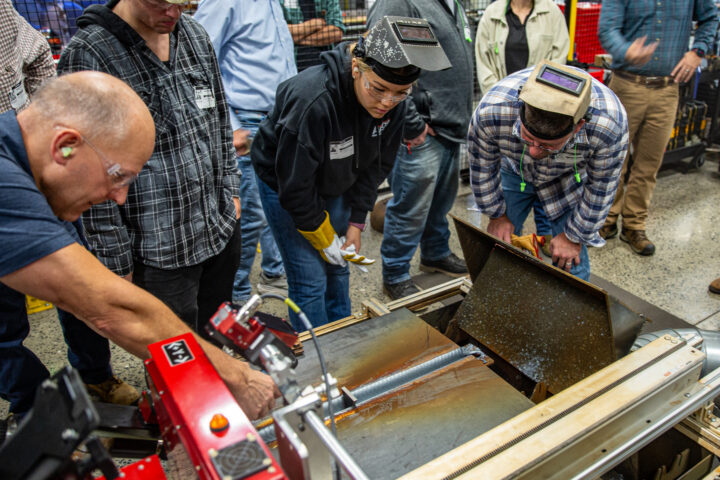
EB Team Visits Hypertherm as Part of Drive Toward Modern, Efficient Shipbuilding
A team from Groton and Quonset Point headed to New Hampshire-based Hypertherm Associates this week to get a closer look at a modern automated plasma gouging process designed to streamline hull fabrication. The visit was part of a broader effort across Electric Boat to bring more advanced, state‑of‑the‑art manufacturing tools into the shipyard. EB plans...Continue reading→
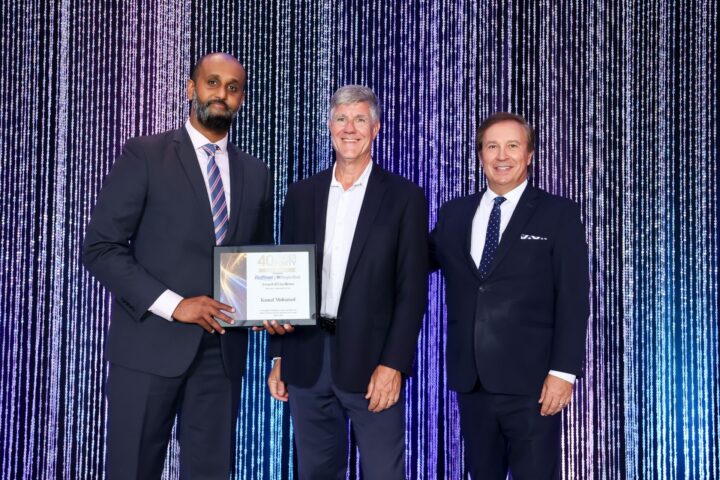
Kamal Mohamed Recognized as 2026 Hartford Business Journal 40 Under Forty Award Recipient
The Hartford Business Journal (HBJ) 40 Under Forty Awards recognize outstanding young professionals in the Greater Hartford area who are excelling in their industries through their leadership roles. They are driven by success, motivated by challenges and are role models for their peers. These individuals are part of an outstanding class of upcoming business leaders...Continue reading→
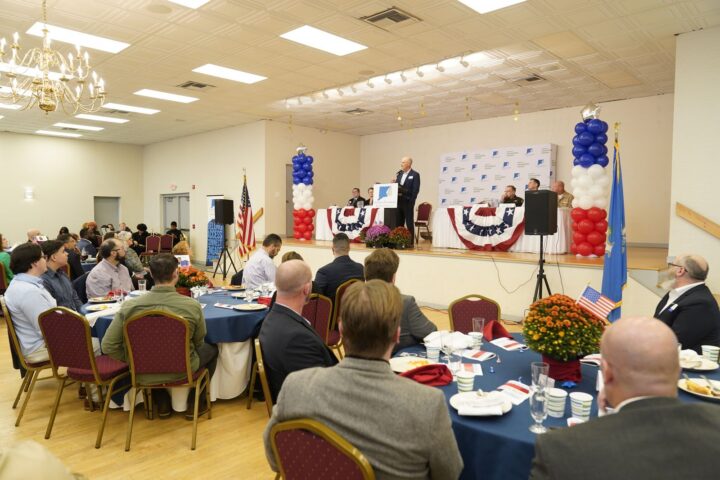
Electric Boat Joins Regional Leaders for Military Appreciation Breakfast
Electric Boat employees joined military and community leaders for the Chamber of Commerce of Eastern Connecticut’s annual Military Appreciation Breakfast on Sept. 30 at Ocean Beach Park’s Port ‘N’ Starboard. The event provided more than 120 complimentary seats to active-duty service members from the Navy, Coast Guard and Connecticut National Guard. General Dynamics Electric Boat...Continue reading→

One Week Left—Let’s Claim the Torch! AHA Eastern Connecticut Heart Walk: Final Countdown
We are just one week away from the 2026 AHA Eastern Connecticut Heart Walk on October 3, 2026, at UConn Avery Point and this is our moment to finish strong. We’ve built incredible momentum, and now we’re within striking distance of something big. Right now, Electric Boat is holding second place, behind Mohegan Sun by...Continue reading→
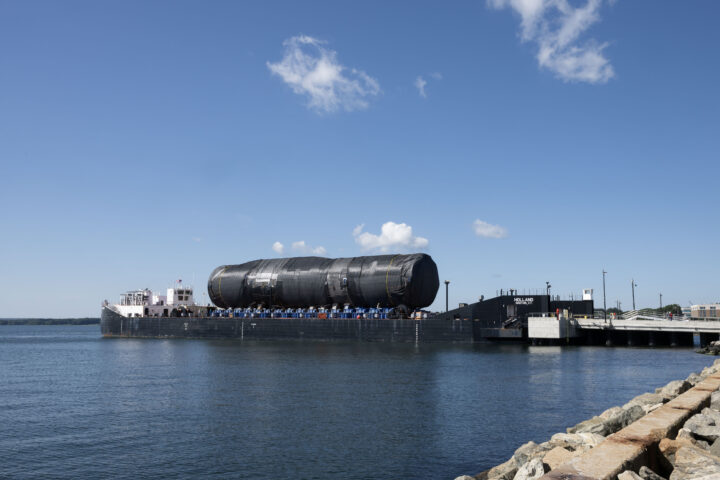
803 Section 2B/5 Transported from Quonset Point to Groton
PCU Arizona’s (SSGN 803) Section 2B/5 was successfully delivered to Groton from Quonset Point. At 184 feet in length, this section – which includes the Virginia Payload Module (VPM) – is the largest Virginia-class shipment ever transported. Arizona, the first submarine to incorporate VPM, will be about 460 feet long upon final construction. Section 2B/5...Continue reading→