Fellow Shipbuilders,
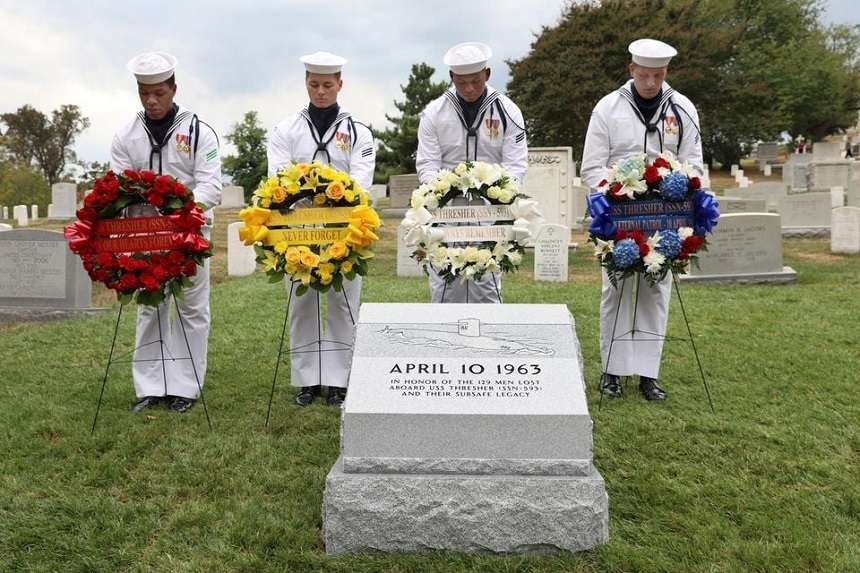
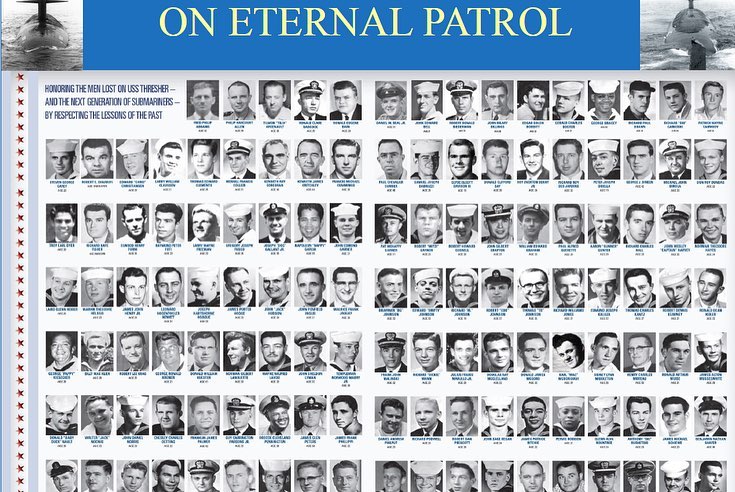
Today we commemorate the 60th anniversary of the loss of the USS Thresher after an extended post shakedown availability at Portsmouth Naval Shipyard. On this day in 1963, 129 men lost their lives; 129 families lost a son, a father, a brother. As a result of that tragedy, three generations of descendants wonder what could have been, and how many siblings, children and grandchildren never were. We also wonder what those men would have continued to contribute to this nation, if they had the chance.
On Tuesday, April 9, 1963, USS Thresher was gently pushed her from her berth at Portsmouth Naval Shipyard. On shore, children of the crew sitting on their mom’s laps honked and waved from parked cars as they watched her departure, having just said their goodbyes and looking forward to seeing their dads in two days, just in time for Easter egg hunts and a family feast.
On board Thresher, as she progressed to the dive point overnight and into the next morning, a series of shallow dives were conducted to ready the crew for the dive to test depth. 220 miles off shore on the morning of the 10th, Thresher had reached the continental shelf and was ready to dive in 8,400 feet of ocean. As her escort ship USS Skylark stood by, LT CDR John Wesley Harvey ordered the ship to submerge and the bow slipped beneath the surface of the ocean. All was well as Thresher gradually dove in 100-foot increments. Routine messages were relayed between Skylark and Thresher as she proceeded to the depths. Then, unexpectedly, a message from Thresher—“Experiencing minor difficulties, have positive up angle, am attempting to blow”—was received, followed by additional garbled transmissions. At approximately 9:18 a.m., Thresher was lost.
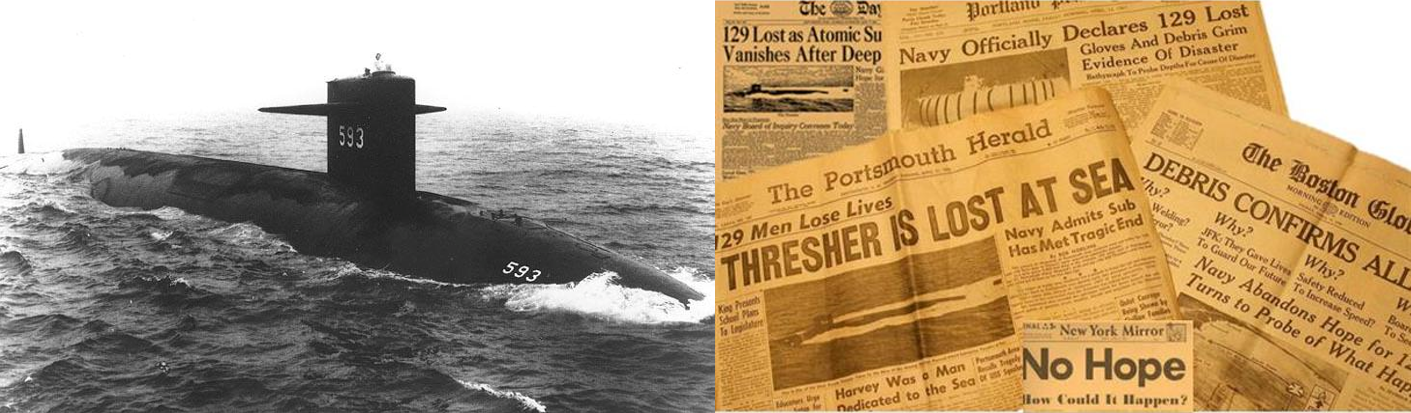
We will never know for sure what occurred that day, but it is suspected that one or more brazed seawater pipe joints failed; access to vital equipment was blocked hindering ability to isolate the flooding; salt spray on electric panels caused them to short out; loss of those electrical panels caused the plant to shut down, and without the plant, loss of propulsion; emergency measures were taken, but moisture in the emergency main ballast tank blow system likely caused airways to restrict and freeze over and become blocked, hence preventing lifesaving air to fill the ballast tanks and the ship from returning to the surface with its only remaining recovery system.
Out of this tragedy came volumes of lessons learned, changes in perspective, new design and operating requirements and a culture of excellence that still exists today. Out of this tragedy, the SUBSAFE program was born—the first of three Special Emphasis Programs (SEPs) whose sole purpose is to protect the platform and its crews from avoidable risks on an already dangerous mission. As a result, no SUBSAFE-certified submarine has ever been lost. As our previous Electric Boat president, John Casey, many times said, “We send our one and only product, a U.S. Navy nuclear submarine, “into an environment that otherwise would not sustain human life and expect it to return every time.” The Special Emphasis Programs (SUBSAFE, DSS-SOC and Fly-by-Wire) have assured just that.
One of our EB-built boats, the USS Hartford in our yard right now, is an example of that success. As many of you know, Hartford survived a terrible collision in the Straits of Hormuz in 2009, and brought each of her sailors home to their families—and it’s because of our adherence to design requirements, rigorous engineering standards, proper training, mentoring and supervision, the drive for first-time quality, detailed inspections, testing and certification documentation—that we can continue to ensure the excellent performance of our products. Each time Electric Boat sends a ship to sea, whether it be a newly constructed ship or a ship we have in for maintenance, I proudly provide the Electric Boat SEP certification, with extreme confidence that the ship is safe to go to sea “into an environment that otherwise would not sustain human life,” and I do that on behalf of the work accomplished by the men and women of Electric Boat. That extreme confidence cannot, can never, be allowed to evolve into a culture of arrogance based on previous success. Our duty and responsibility to those 129 lost souls on USS Thresher is to never allow that to happen again.
The SUBSAFE culture of excellence cannot be allowed to become fragile. We live in a day-to-day world where facts are ignored or revised, consequences aren’t clear, threats aren’t recognized, reality is corrupted by social media, and if it’s not streaming on your phone, it’s not important. I’ll tell you this—that cannot be the culture inside our gates. The fact is, there are existential threats out there, and consequences to our nation if we can’t deliver our ships so that they can perform their mission to protect us. We owe it to our sailors to build our ships, with velocity (that’s speed with solid foundational direction) to rigorous standards with first-time quality, so they remain safe and can continue to trust their ship will perform as designed, allowing them to focus on their mission.
Commemoration of this event is a remembrance of who those 129 souls were—a remembrance of the impact that day had on their families and the U.S. Navy—and a remembrance of the first nuclear submarine lost. Sixty years ago is beyond the memories of most Americans, in fact, those that actually remember that day are very rare. Many of us have seen tragedy and know how tragedy impacts us personally and directly, but time takes its toll. Some remember the loss of the Space Shuttle Challenger and the horror on the faces of the families and students there to celebrate the milestone launch of the first teacher into space; more remember the loss of Space Shuttle Columbia and the streaking of debris across the sky; and even more so 9/11, 22 years ago already. Many of the folks coming in our gates today were not yet born when that happened. As the years progress on, the pain becomes distant, the memories fade, the first-hand witnesses are gone, new generations mature, and we become vulnerable to tragedy again, maybe because of ignorance, maybe its arrogance or maybe its complacency.
Our challenge here is to turn up the gain on the consequences of not getting it right, because there are consequences if we don’t maintain our diligence. We must fight the three enemies of our Special Emphasis Programs—ignorance, arrogance and complacency—so that they find no path into our submarines. These enemies are always poised to attack and are always looking to find a way in, just like the pressure of the sea is always trying to find a way in. I ask you all to join me in this fight, to maintain our rigorous standards, to teach those that need to learn and to never assume that it doesn’t matter if a step was missed or that a requirement was not met. Don’t let the enemies in our gates. We owe it to those 129 men that we’ll maintain the watch on ship safety and first-time quality and will keep today’s sailors safe so that they can in turn protect us and our great nation.
I’ll close with words from Vice Admiral Grenfell, then Commander Submarine Force, United States Atlantic Fleet. “They are remembered not as men who were, but as men who are; who because of their profession of the undersea, have given us greater knowledge of its mysteries and opened broader paths for its exploration and use.”
Please go forth and achieve excellence in the work you do today and every day.
Thank you.
Stephen C. Kirkup
Director, Quality Assurance and Special Emphasis Programs
Delivering the Future
Some imagine the future. We deliver it now.
State-of-the-Art Simulator Prepares District of Columbia Crew for its Mission
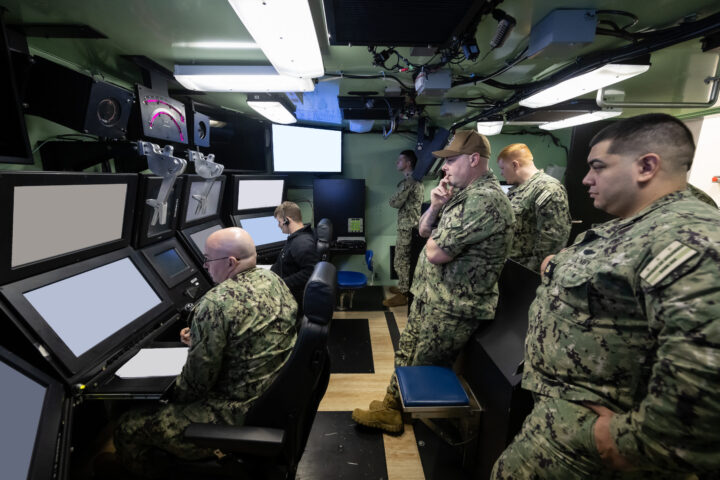
As construction of the District of Columbia (SSBN 826) continues apace in EB’s South Yard Assembly Building, the sailors who will soon be at the controls are spending hours in a dynamic, high-tech simulator learning the intricacies of operating the 21,000-ton, first-in-class boomer. The Columbia Ship Control Operator Trainer (CSCOT) is a replica of the...Continue reading→
Groundbreaking Ceremony Marks Start of USS Groton Sail Monument
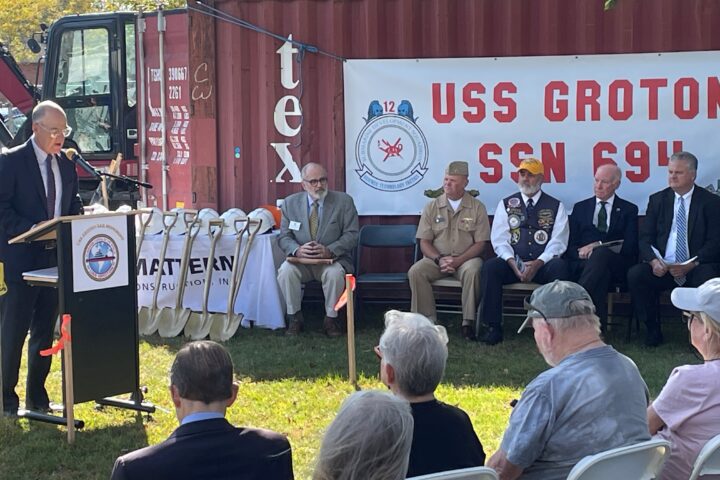
Fifty years after the USS Groton (SSN‑694) first launched, dozens gathered outside the Groton Public Library Oct. 9 to celebrate the groundbreaking of the USS Groton Sail Monument. The $6.6 million project—three decades in the making—will honor the men and women who design, build, operate and maintain the Navy’s submarines, as well as the families...Continue reading→

A Celebration of Heart, Community and Victory
2026 American Heart Association Eastern Connecticut Heart Walk Recap Saturday, October 3, 2026 | UConn Avery Point The 2026 American Heart Association Eastern Connecticut Heart Walk at UConn Avery Point was nothing short of extraordinary. Under bright autumn skies, 26 incredible Electric Boat teams and 151 walkers came together with passion, purpose, and unstoppable energy...Continue reading→
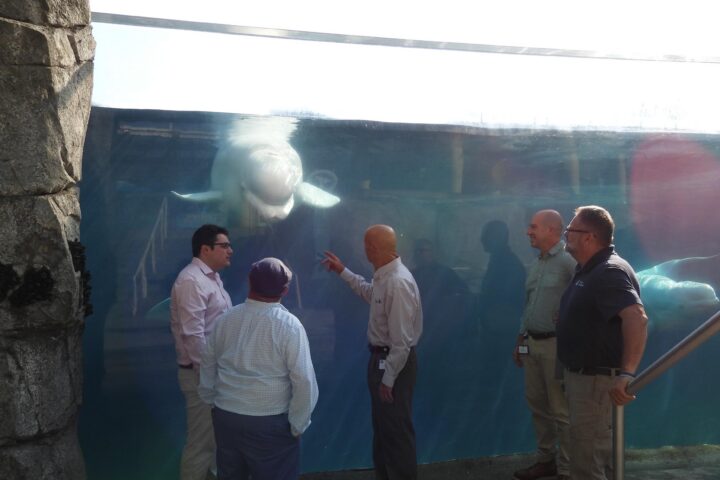
Quonset Point Donation Will Help Keep Mystic Aquarium’s Belugas Cool
Juno, the Mystic Aquarium’s convivial, photo-bombing Beluga whale, will continue swimming in cool comfort thanks to an unlikely chain of events that began 40 miles east in an Electric Boat industrial building at Quonset Point. That’s where EB’s Russ Tatro and Chris Logan were going over plans with a vendor, Carrier Corp., to replace Building...Continue reading→

EB Team Visits Hypertherm as Part of Drive Toward Modern, Efficient Shipbuilding
A team from Groton and Quonset Point headed to New Hampshire-based Hypertherm Associates this week to get a closer look at a modern automated plasma gouging process designed to streamline hull fabrication. The visit was part of a broader effort across Electric Boat to bring more advanced, state‑of‑the‑art manufacturing tools into the shipyard. EB plans...Continue reading→
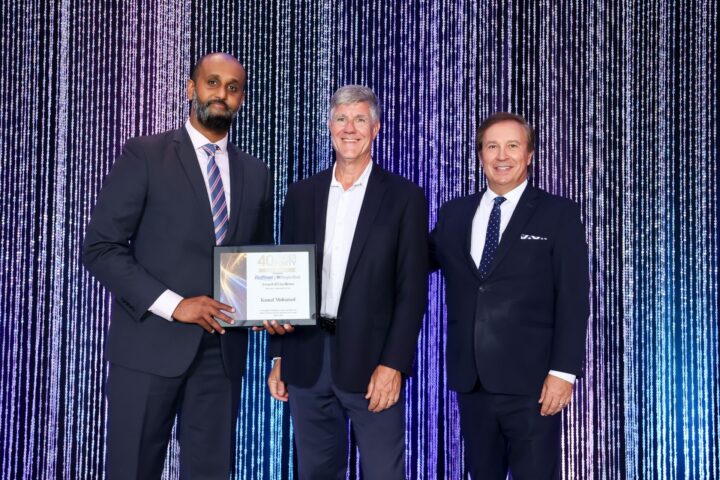
Kamal Mohamed Recognized as 2026 Hartford Business Journal 40 Under Forty Award Recipient
The Hartford Business Journal (HBJ) 40 Under Forty Awards recognize outstanding young professionals in the Greater Hartford area who are excelling in their industries through their leadership roles. They are driven by success, motivated by challenges and are role models for their peers. These individuals are part of an outstanding class of upcoming business leaders...Continue reading→
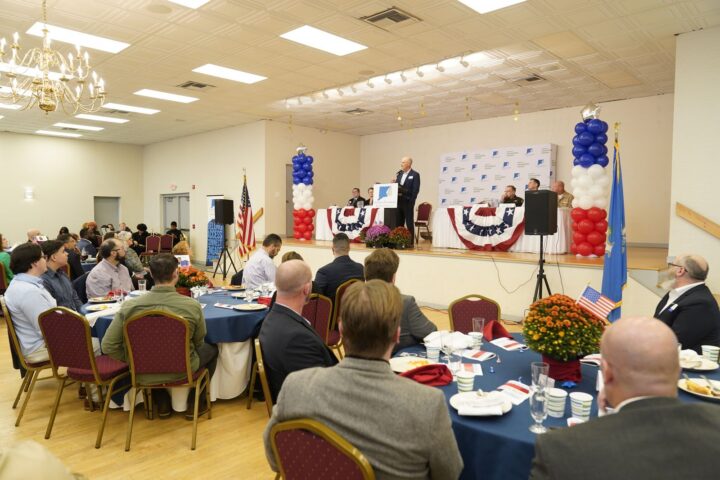
Electric Boat Joins Regional Leaders for Military Appreciation Breakfast
Electric Boat employees joined military and community leaders for the Chamber of Commerce of Eastern Connecticut’s annual Military Appreciation Breakfast on Sept. 30 at Ocean Beach Park’s Port ‘N’ Starboard. The event provided more than 120 complimentary seats to active-duty service members from the Navy, Coast Guard and Connecticut National Guard. General Dynamics Electric Boat...Continue reading→

One Week Left—Let’s Claim the Torch! AHA Eastern Connecticut Heart Walk: Final Countdown
We are just one week away from the 2026 AHA Eastern Connecticut Heart Walk on October 3, 2026, at UConn Avery Point and this is our moment to finish strong. We’ve built incredible momentum, and now we’re within striking distance of something big. Right now, Electric Boat is holding second place, behind Mohegan Sun by...Continue reading→
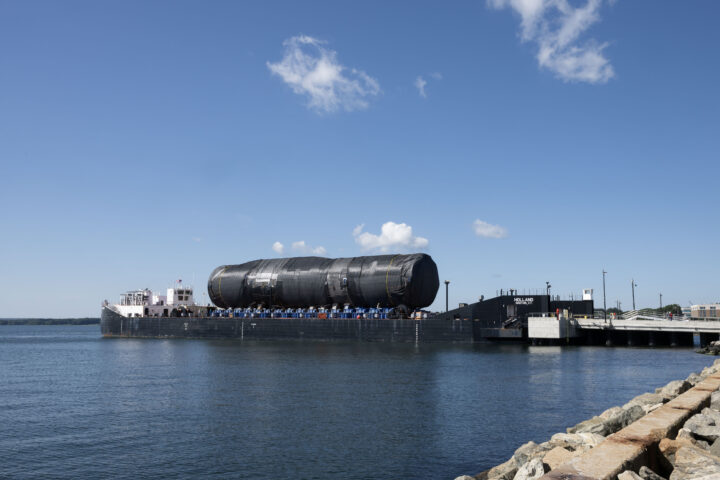
803 Section 2B/5 Transported from Quonset Point to Groton
PCU Arizona’s (SSGN 803) Section 2B/5 was successfully delivered to Groton from Quonset Point. At 184 feet in length, this section – which includes the Virginia Payload Module (VPM) – is the largest Virginia-class shipment ever transported. Arizona, the first submarine to incorporate VPM, will be about 460 feet long upon final construction. Section 2B/5...Continue reading→