Hi everyone; it’s Kevin. It’s Monday, August 15. Today on the podcast, I want to talk about a topic that I believe is critical to our success, and our ability to achieve our mission. Teamwork is such a big part of shipbuilding and being able to understand the value that everyone on the EB team contributes is really something that’s important to me. It’s stated as our first Core Value, about valuing each other and the work we all do to further the mission of Electric Boat. The challenge we face, though, is translating that into behaviors, and the ways we treat each other.
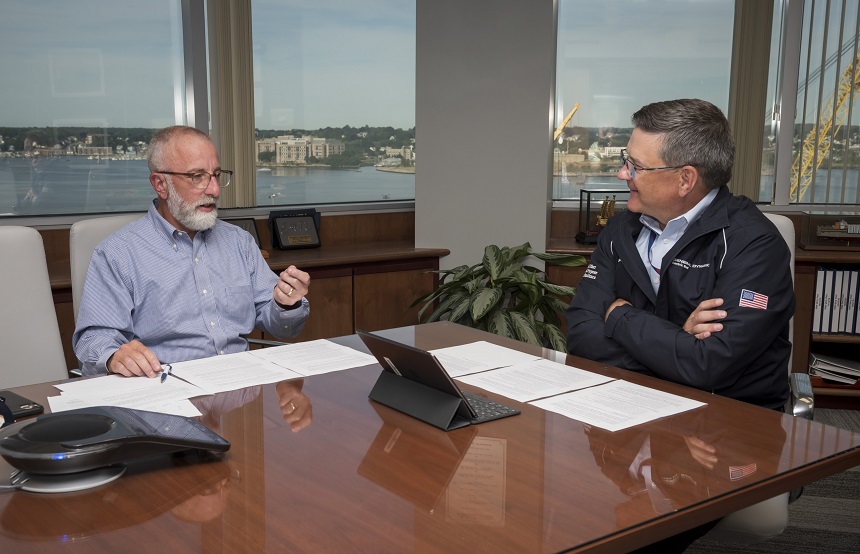
With me today is Norm St. Cyr., who is the Director of our Nuclear Regional Maintenance Department up at the Sub Base (NRMD) and he manages the nuclear operations. Last fall, Norm became a facilitator in Outward Mindset training, and he’s begun a grassroots effort to share these concepts to help our company be more successful.
So Norm, welcome to the podcast. Let’s start with a little bit of your background and how you became familiar with Outward Mindset.
Thanks Kevin.
I came to EB in 2018 after 33 years of service in the Navy. At the end of my career I was at the Naval Reactors field office right here in the shipyard. It allowed me to basically watch and learn from how Electric Boat responds to problems and how they attempt to solve them.
I learned about the Outward Mindset training when I was hired to be the NRMD Director, and I visited with the Squadron 12 commodore, Capt. Boland. He told me about the Outward Mindset and that he is actually a facilitator in it. In response, I bought the books, read about it and really connected with it.
Over my 33 years, it was interesting how the military responds to changes and is always out in front of society when it comes to big changes like hazing or gays in the military. One thing I learned from the Navy is that it’s the leaders who set the standards. The Outward Mindset can allow us to achieve what we need to do here at Electric Boat.
Thanks for your service, Norm, it’s been a great pleasure getting to know you over the last couple of years. And now you’re taking on the challenge of bringing these concepts of the Outward Mindset to Electric Boat. Let’s start with a basic definition of what it means to have an Outward Mindset.
Simply put, an Outward Mindset means that you view other people as people, not as objects or obstacles that get in your way. We can use this both at work and at home. The Outward Mindset helps us to have healthy relationships, especially in the face of problems. Someone with an Outward Mindset makes the choice to recognize that other people’s jobs and objectives are just as important as ours. Another way to think about this is to ask the question: Do I spend more time helping things go right or am I part of the problem?
That does tie back to something that I’m fond of and that is the “Ten Commandments of Shipbuilding” that I’ve inherited over my time in this business. One of those is always assuming you’re 51% of the problem. Sometimes that’s hard to do, to actually admit that. We all contribute as a team to our collective success, or our failure, and in turn, we all need to look in the mirror when there’s conflict or an issue to be resolved because we all have a role to play. Let’s talk about what gets in the way and why being a good teammate is such a challenge.
That’s a great question. We’re always told to be a good teammate, partner, a parent, but the problem is that we get very little training in these skills. It’s difficult to be a good teammate. And one thing that we’re not really taught how to do is to be good listeners. No one is perfect. We have to recognize whether we mean it or not, we make other people’s jobs harder. And we need to see how we do that. Sometimes we get in trouble when things go wrong. This is where the dysfunction comes; we tend to make it about ourselves instead of really focusing on the mission.
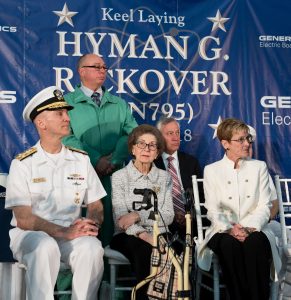
I think that’s absolutely key. I’m pleased to see a lot more mission orientation across the organization, a lot more planners on the deck plate for example, at Quonset. Engineers helping out as well trying to solve some difficult problems. People really rolling up their sleeves. I think as an organization that’s something that we need more of. People willing to go the extra mile to help each other out. We’ve had some good experience so far, and you’ve shared these concepts of Outward Mindset with a group of leaders in the Quality and Operations teams at Quonset Point and Groton, as well as the QP leadership team. You’ve also shared it with some other teams including the PCU Rickover/795 Project Team. Let’s talk about examples where adopting an Outward Mindset has really helped us solve a problem.
In March, I shared these principles with Steve Kirkup, Kirk Scheel and Harry Haugeto, applying it to a specific challenge. Basically, asking the question: when we have an unsatisfactory weld, what are our behaviors in response to this problem? So those directors brought together the NDT team, NDT Engineering, Operations and Weld Engineering.
During that two-day workshop, I spent time with those directors and key members of the team, and we talked about how we make other people’s jobs harder. We had really no idea how much the other team cared, how hard they worked and what really what we did, and we highlighted was, although we’re told that 51% is about us—the shipbuilding rule—we tend to solely focus on the other person’s 49%, not seeking to understand our own destructive behaviors.
Another example of success was up at NRMD, my team worked with the Portsmouth Naval Shipyard doing a media discharge. The Outward Mindset helped me to help my team focus on what the mission is, and what’s important to the fleet, and not focus on past behaviors that they may have experienced from the Portsmouth Team.
Those are great examples, and I know specifically the quality example, what we saw was not just a difference in people’s attitudes but an actual difference in performance, in the way that we had better success getting first-time quality on some of the most difficult welds we do, which are RT or radiographic joints that we analyze here particularly in Groton, but so too in Quonset Point.
I think it’s important as we turn our mindset towards other people’s challenges, and think about what’s on their plate, we move away from our separate corners and really start to build trust, which is so important in establishing a relationship. When things go wrong, it’s easy to get defensive. But if you can remember that the other person is worthy and equally as important as you, it’s easier to air that disagreement.
Exactly—it sets up the dynamic where you’re seeing the problem as a problem, not as the other team making it a problem. One thing about the Outward Mindset—it’s not easy; what we do here is very difficult and there’s always problems. Learning the skill, developing the skill takes practice. For me conducting the workshops and really trying to develop the skill has transformed how I interact with people.
For example, a member of my team interrupted me during a staff meeting in a way that some might say was kind of rude. Instead of getting angry and responding in the moment, I was able to not. I was able to look at that person as a person and imagine what if this person is having the worst day of their life? As a result, about an hour later he came up to me and apologized. Now, in retrospect, if I would have yelled at him, I never would have received that apology. And our relationship would not be what it is today.
One thing the Outward Mindset teaches you is that if you provide humanity for someone, in a moment in which some might think they least deserve it, you build trust and you build a relationship. It’s important that leaders have this mindset.
If a leader treats their department or peers as objects, it sets the tone for the entire department. The leader’s behavior gives permission for their people to emulate that destructive behavior, bogging down EB’s ability to really deliver submarines on time. I like to say the leader can undo the most good.
In that way Kevin, as President of Electric Boat, you can actually undo the most good.
I understand that and, of course, I own that responsibility. That’s why I’m interested in Outward Mindset, and I’ve been learning about it and talking about it with you, practicing the concepts. In about a month’s time, you’re going to be facilitating the training with my senior leadership team in September so we can take what we’ve learned and use that to help us make EB even better and ensure we achieve the culture change that we need. We’re going to expand who’s facilitating this and employ it throughout the directorships. I expect there will be a lot more learning going on about the Outward Mindset. I think we’re already on that journey, but there’s a lot more that I think we can do as a team to our overall benefit. So Norm, I want to thank you again for bringing the concepts of the Outward Mindset to EB.
I really believe adopting an Outward Mindset will help to instill the culture change we desire. Building the skills to have an Outward Mindset during all interactions, with your boss, peers, your work team, will allow us to focus on our 51%, behave as a true teammate, and really make the problems we face as a company eminently solvable.
If someone is interested in learning about the Outward Mindset, they can check out the books: Leadership and Self-Deception, the Outward Mindset and The Anatomy of Peace.
Thanks Norm, and thanks everyone; we’ll talk again soon.
Quonset Point Donation Will Help Keep Mystic Aquarium’s Belugas Cool
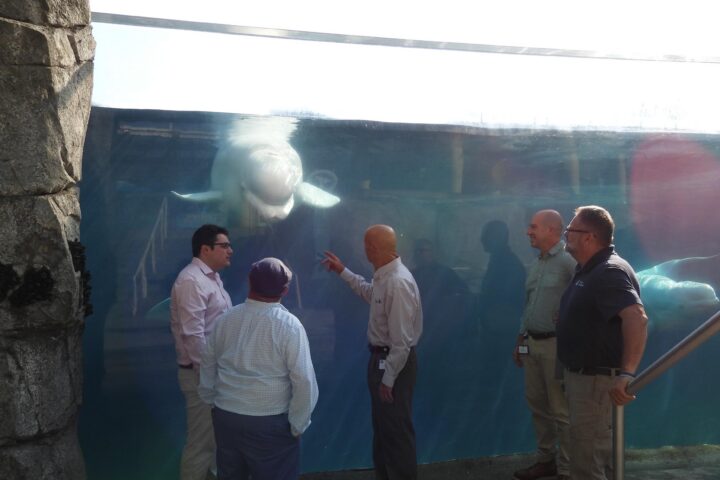
Juno, the Mystic Aquarium’s convivial, photo-bombing Beluga whale, will continue swimming in cool comfort thanks to an unlikely chain of events that began 40 miles east in an Electric Boat industrial building at Quonset Point. That’s where EB’s Russ Tatro and Chris Logan were going over plans with a vendor, Carrier Corp., to replace Building...Continue reading→
EB Team Visits Hypertherm as Part of Drive Toward Modern, Efficient Shipbuilding
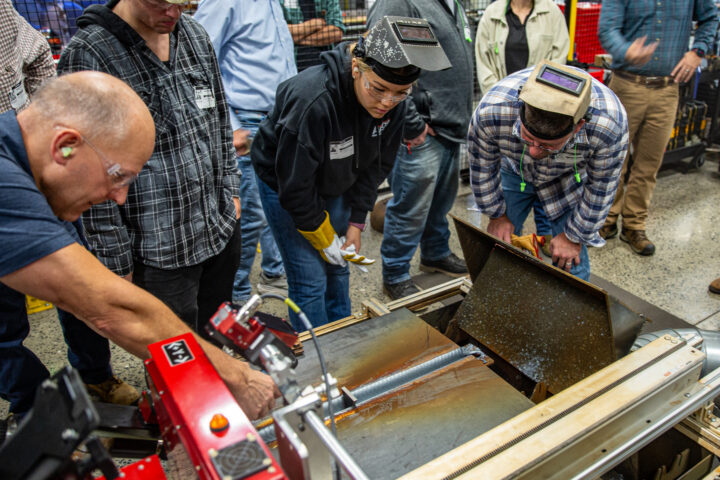
A team from Groton and Quonset Point headed to New Hampshire-based Hypertherm Associates this week to get a closer look at a modern automated plasma gouging process designed to streamline hull fabrication. The visit was part of a broader effort across Electric Boat to bring more advanced, state‑of‑the‑art manufacturing tools into the shipyard. EB plans...Continue reading→
Kamal Mohamed Recognized as 2026 Hartford Business Journal 40 Under Forty Award Recipient
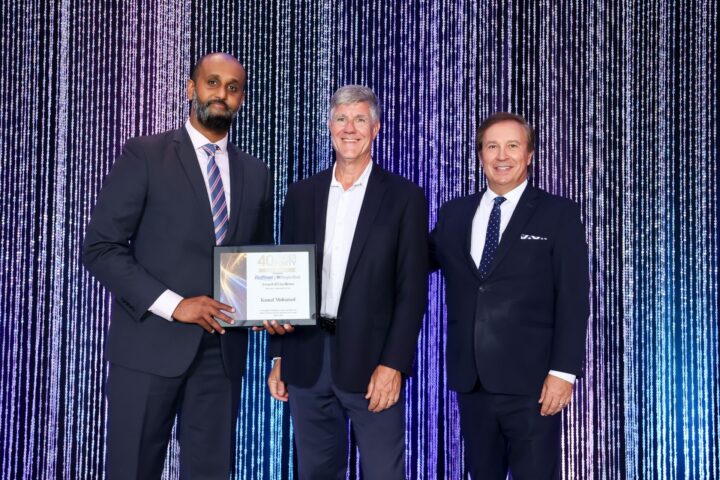
The Hartford Business Journal (HBJ) 40 Under Forty Awards recognize outstanding young professionals in the Greater Hartford area who are excelling in their industries through their leadership roles. They are driven by success, motivated by challenges and are role models for their peers. These individuals are part of an outstanding class of upcoming business leaders...Continue reading→
Electric Boat Joins Regional Leaders for Military Appreciation Breakfast
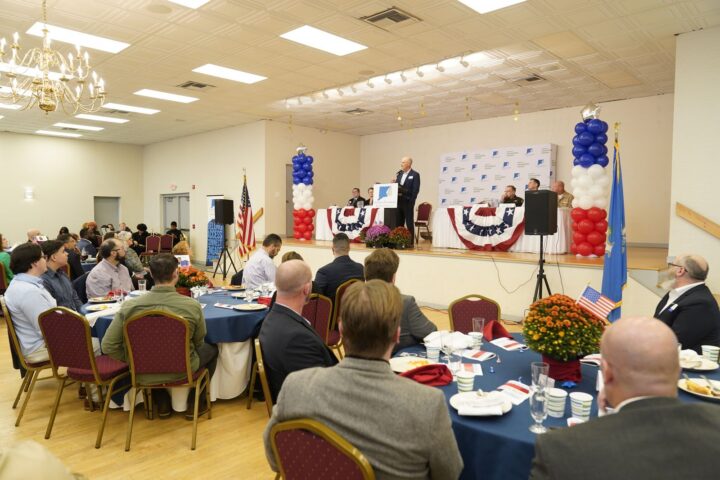
Electric Boat employees joined military and community leaders for the Chamber of Commerce of Eastern Connecticut’s annual Military Appreciation Breakfast on Sept. 30 at Ocean Beach Park’s Port ‘N’ Starboard. The event provided more than 120 complimentary seats to active-duty service members from the Navy, Coast Guard and Connecticut National Guard. General Dynamics Electric Boat...Continue reading→

One Week Left—Let’s Claim the Torch! AHA Eastern Connecticut Heart Walk: Final Countdown
We are just one week away from the 2026 AHA Eastern Connecticut Heart Walk on October 3, 2026, at UConn Avery Point and this is our moment to finish strong. We’ve built incredible momentum, and now we’re within striking distance of something big. Right now, Electric Boat is holding second place, behind Mohegan Sun by...Continue reading→
803 Section 2B/5 Transported from Quonset Point to Groton
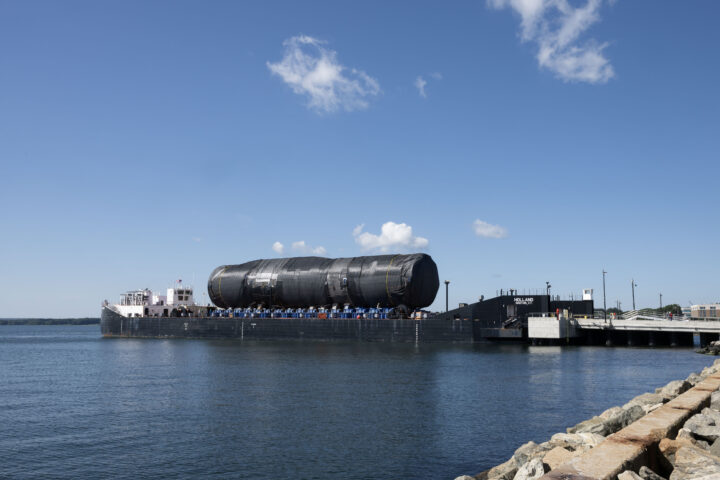
PCU Arizona’s (SSGN 803) Section 2B/5 was successfully delivered to Groton from Quonset Point. At 184 feet in length, this section – which includes the Virginia Payload Module (VPM) – is the largest Virginia-class shipment ever transported. Arizona, the first submarine to incorporate VPM, will be about 460 feet long upon final construction. Section 2B/5...Continue reading→
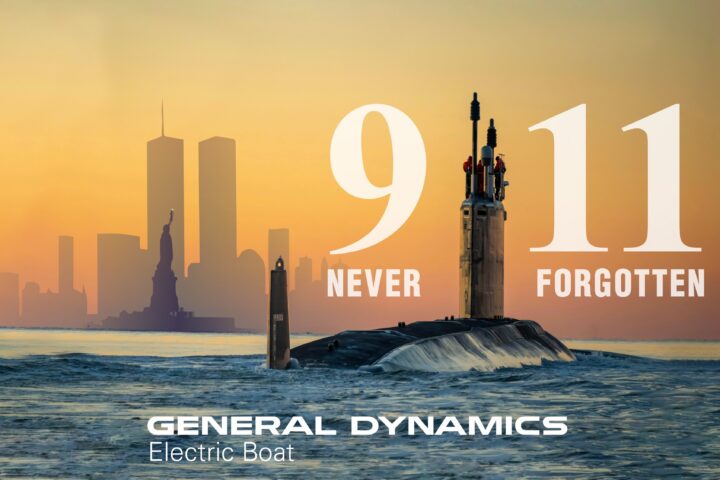
Remembering September 11
On September 11, 2001, the Twin Towers of downtown Manhattan’s World Trade Center and the Pentagon in Washington, D.C., were targeted in a series of coordinated attacks that would leave an everlasting imprint on our country’s psyche. As the events unfolded on that Tuesday morning, nearly 3,000 people lost their lives, over 600 were injured...Continue reading→
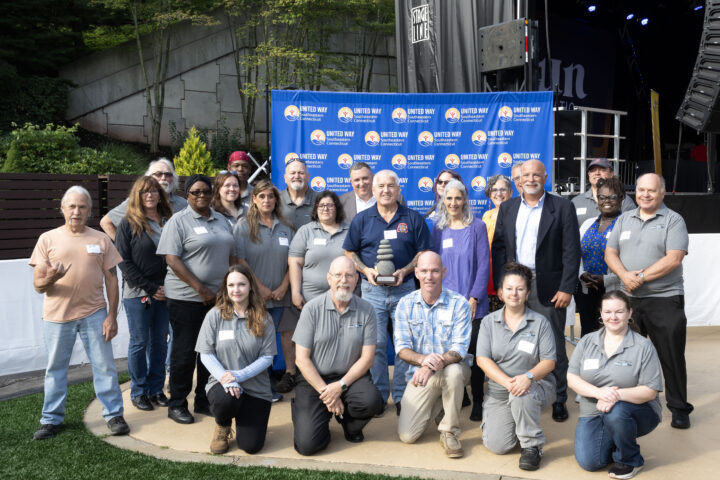
EBECSA Celebrates 75 Years — Nominate EB Employees Past and Present for Recognition
This year, the Electric Boat Employees’ Community Services Association (EBECSA) proudly celebrates its 75th anniversary. EBECSA was founded in 1951 by EB employees who wanted to create a dedicated, organized way to support nonprofit health and human service agencies in the communities where we live and work. What began as a small employee‑driven effort has...Continue reading→
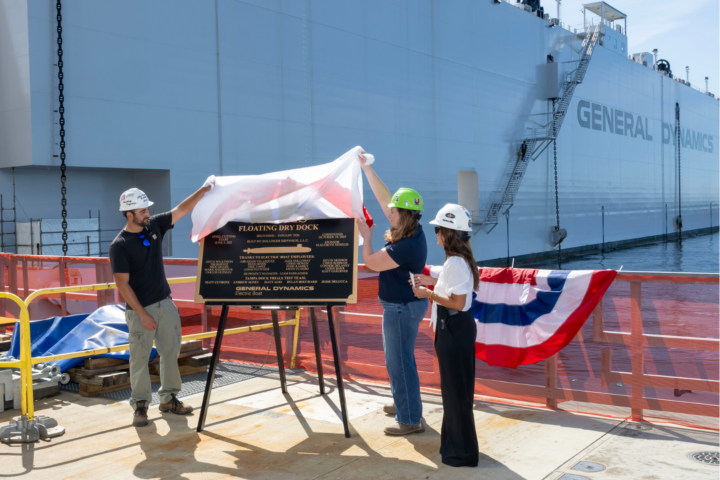
Atlas Plaque Unveiled, Honoring Plank Owners at South Yard Ceremony
Employees who have worked on Atlas, EB’s new state-of-the-art floating dry dock, gathered in the South Yard on Wednesday, Aug. 26, to unveil a new bronze plaque recognizing the contributions of its plank owners. The event celebrated the teams who helped bring Atlas from Bollinger Shipyards in Louisiana to its arrival in Groton earlier this year. Atlas will play...Continue reading→
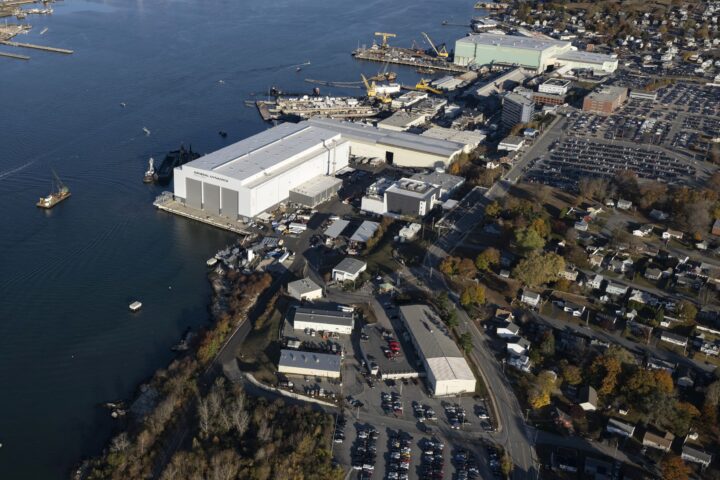
Neighbors Meet with EB to Discuss Noise, Lighting and Other Quality of Life Topics
Nearly twenty neighbors of Electric Boat’s Groton shipyard joined company leaders Aug. 25 for a community conversation focused on their quality‑of‑life concerns related to the South Yard Assembly Building (SYAB) and Atlas, the new floating dry dock. The Mayor of the City of Groton, Jill Rusk, also attended. Residents said they appreciated the chance to talk...Continue reading→