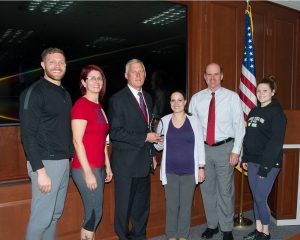

Hi everyone; it’s Kevin. Today is Wednesday, August 11th. On June 1st of this year, Eric Snider joined Electric Boat as Vice President of the Columbia Program. Eric came to us from General Dynamics Applied Physical Sciences, which he joined in September of last year. Before joining APS, Eric served for 34 years in Naval Reactors. In his last position in NR, he reported directly to Admiral Caldwell as Program Manager for the Virginia Program. So Eric, welcome to the podcast. Let’s share with our listeners a bit more about your background.
Thanks Kevin, I appreciate the opportunity to introduce myself to the EB Community. I feel like I’ve grown up here a bit over my 34 years. It’s great to be here.
I grew up in a small town in North Carolina near Greensboro. I went to college in Raleigh at NC State— go Wolf Pack. My first year was 1982 and that was the year that the “Cardiac Pack” made the run all the way through to the championship in men’s college basketball. I even got to meet and sort of know Jimmy Valvano there too, so that was an interesting artifact of being there at that time.
And a legend of the men’s game for sure…
Absolutely! After graduating and going to work in D.C. for Naval Reactors, I met and married my wife Theresa. She’s from Chicopee, Mass., so we managed to put together the South and the North there. We later had two daughters who are both in college now. I did spend 34 years at Naval Reactors living in the D.C. area in northern Virginia. We moved to Gales Ferry last August and we love, absolutely love, being in southeastern CT.
Well we love having you here. You’ve got a unique background and a detailed understanding of submarine construction and maintenance and project management that I think is already accelerating EB’s performance. Let’s talk about your priorities—you’ve had what, two whole months now to soak on all EB has to offer, so let’s talk about those priorities.
My first priority is people. I think the shipyard and what we do here is a national treasure and a linchpin in our national defense. My number-one priority is to help steward and take care of the people that make that happen. Critical to that people priority is safety—I know that’s your priority as well—and I am evermore committed to trying to make sure that we hold each other accountable and that we are generating the safest workplace we can for everyone.
Finally, I’ll say as the vice president of the Columbia program, priority is to deliver USS Columbia 826 in April of 2027. I want to lead the program office to be the bridge where necessary to get the whole shipyard team to make that goal, and we have to do that together. We don’t win individually as the program office or as the engineering department or even as the waterfront, we get there together. So I want to help lead the whole team to achieve that goal.
I couldn’t agree more; you’re absolutely right. Shipbuilding is a full-contact team sport; there is no question about it. It takes all 17,000, almost 18,000 of us now working together from the earliest days in design right through material procurement, planning and then of course the execution on the deck plate. There isn’t any job insignificant here in a shipyard. It’s going to take all of us working together.
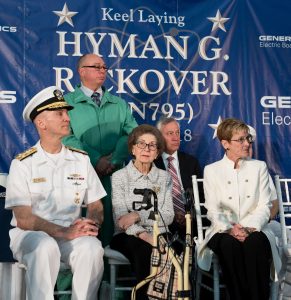
I want to talk a little bit about something that just happened here on July 31st when we christened PCU 795, the Hyman G. Rickover. We were fortunate to have the Admiral’s widow, Mrs. Rickover, take part in our keel-laying ceremony for the boat back in 2018, but sadly Mrs. Rickover passed away just a few weeks before the christening on July 5th. She served as the ship sponsor for the first Rickover, the 709 boat. You have a unique perspective given your time in Naval Reactors because you knew Mrs. Rickover. Tell us a little bit more about her.
I met Mrs. Rickover several years before but interacted with her most in the preparations actually leading up to that keel laying for 795. I got to spend quite a bit of time talking with her. In describing her, I’d say most importantly in her own right, she was an accomplished professional before meeting and marrying Admiral Rickover. She was a Navy nurse and she was his second wife; his first wife had passed away before they got married. She was absolutely devoted to the admiral, and not in the wait-on-him kind of way. She was certainly no shrinking violet. I think they shared values that led her to believe in him and his pursuits and him in hers as well. Especially education; I got to travel with her once to the magnet school in Chicago named for Admiral Rickover. To see her there interacting with the children, and her interest in making sure that all was being done for the betterment of their education, was inspiring in its own right.
She always wanted to talk about what I’ll call the more humanitarian or coach/mentor side of the admiral. Though I never met the admiral, and didn’t know him, from folks I worked with at Naval Reactors, who did work directly for him, it was clear that on days such as you and your wife had a baby, or if people got married, or even on your birthday, you might find a personal note from the admiral sitting on your desk letting you know he recognized significant life events. That’s not a side of him that you hear much about. He was certainly dedicated to the hard work that we have to do to deliver nuclear powered submarines as we do. That’s difficult and requires demanding standards. He did have a little bit softer side, and she talked about that as often as she could.
Thanks for sharing that Eric; it’s not something that we often get to hear much about. Since the christening, we’re making great progress on Rickover down on the pontoon in Graving Dock 3, so we’re hoping to get float-off here in the next couple of days.
I didn’t have the opportunity to meet Mrs. Rickover, but from your own account it’s clear that she was a very special woman. We learned at the sponsor’s dinner and at the ceremony itself, she was a dedicated sponsor to the sailors who served on the 709 boat and a tireless preserver of her husband’s legacy, as you indicated. Thank you for sharing that and for taking the time to introduce yourself to the EB team today and talk about your priorities for Columbia.
Thanks everyone; we’ll talk soon.
Delivering the Future
Some imagine the future. We deliver it now.
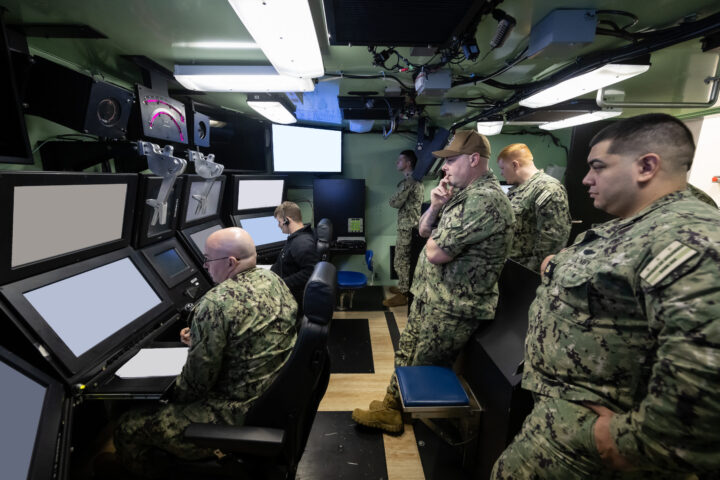
State-of-the-Art Simulator Prepares District of Columbia Crew for its Mission
As construction of the District of Columbia (SSBN 826) continues apace in EB’s South Yard Assembly Building, the sailors who will soon be at the controls are spending hours in a dynamic, high-tech simulator learning the intricacies of operating the 21,000-ton, first-in-class boomer. The Columbia Ship Control Operator Trainer (CSCOT) is a replica of the...Continue reading→
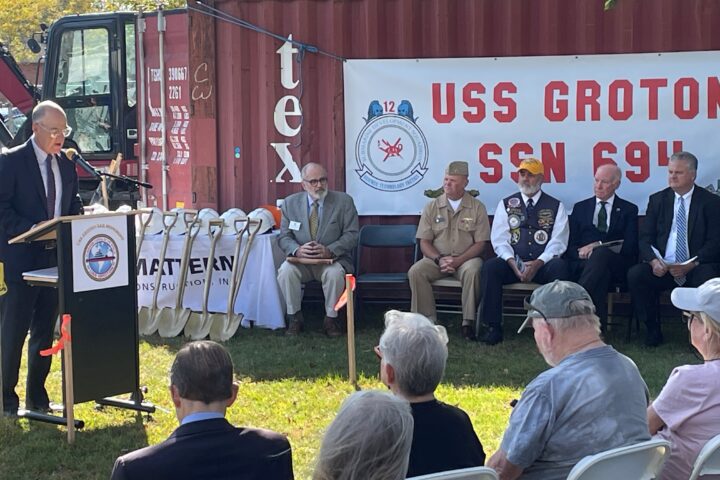
Groundbreaking Ceremony Marks Start of USS Groton Sail Monument
Fifty years after the USS Groton (SSN‑694) first launched, dozens gathered outside the Groton Public Library Oct. 9 to celebrate the groundbreaking of the USS Groton Sail Monument. The $6.6 million project—three decades in the making—will honor the men and women who design, build, operate and maintain the Navy’s submarines, as well as the families...Continue reading→

A Celebration of Heart, Community and Victory
2026 American Heart Association Eastern Connecticut Heart Walk Recap Saturday, October 3, 2026 | UConn Avery Point The 2026 American Heart Association Eastern Connecticut Heart Walk at UConn Avery Point was nothing short of extraordinary. Under bright autumn skies, 26 incredible Electric Boat teams and 151 walkers came together with passion, purpose, and unstoppable energy...Continue reading→
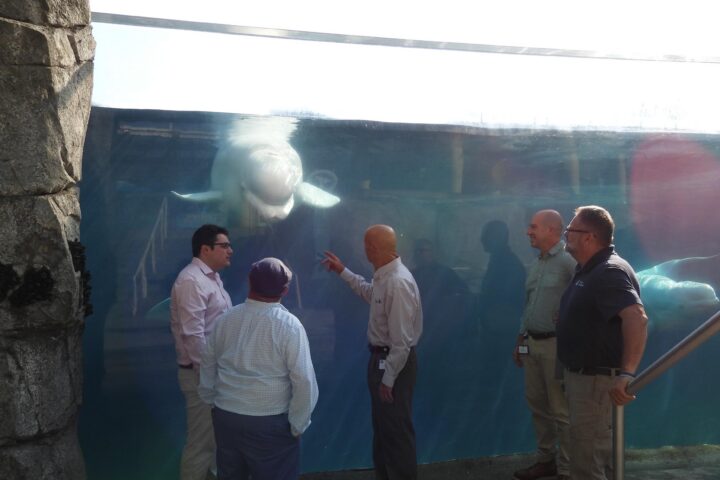
Quonset Point Donation Will Help Keep Mystic Aquarium’s Belugas Cool
Juno, the Mystic Aquarium’s convivial, photo-bombing Beluga whale, will continue swimming in cool comfort thanks to an unlikely chain of events that began 40 miles east in an Electric Boat industrial building at Quonset Point. That’s where EB’s Russ Tatro and Chris Logan were going over plans with a vendor, Carrier Corp., to replace Building...Continue reading→
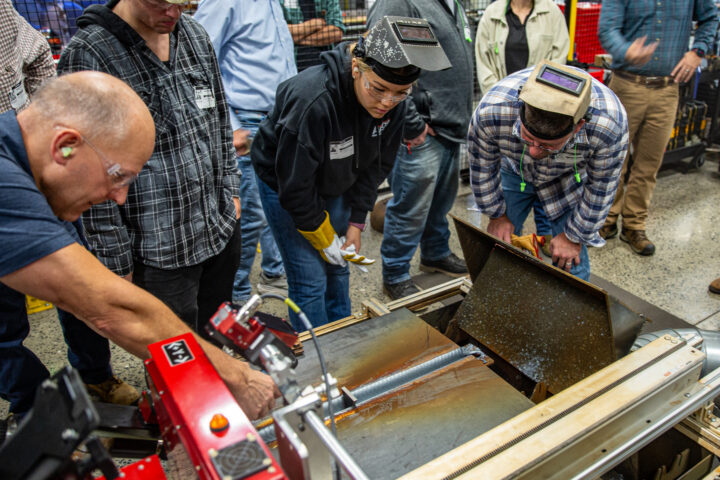
EB Team Visits Hypertherm as Part of Drive Toward Modern, Efficient Shipbuilding
A team from Groton and Quonset Point headed to New Hampshire-based Hypertherm Associates this week to get a closer look at a modern automated plasma gouging process designed to streamline hull fabrication. The visit was part of a broader effort across Electric Boat to bring more advanced, state‑of‑the‑art manufacturing tools into the shipyard. EB plans...Continue reading→
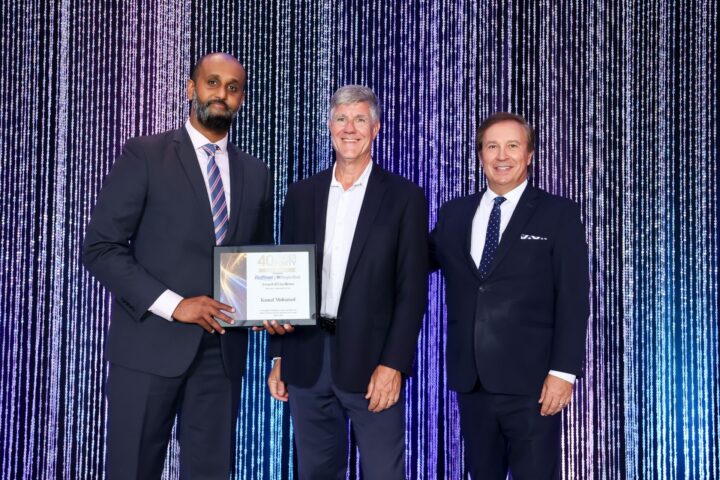
Kamal Mohamed Recognized as 2026 Hartford Business Journal 40 Under Forty Award Recipient
The Hartford Business Journal (HBJ) 40 Under Forty Awards recognize outstanding young professionals in the Greater Hartford area who are excelling in their industries through their leadership roles. They are driven by success, motivated by challenges and are role models for their peers. These individuals are part of an outstanding class of upcoming business leaders...Continue reading→
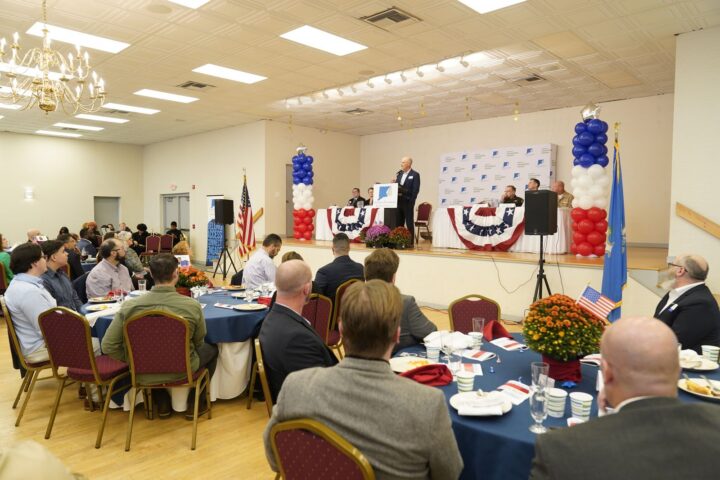
Electric Boat Joins Regional Leaders for Military Appreciation Breakfast
Electric Boat employees joined military and community leaders for the Chamber of Commerce of Eastern Connecticut’s annual Military Appreciation Breakfast on Sept. 30 at Ocean Beach Park’s Port ‘N’ Starboard. The event provided more than 120 complimentary seats to active-duty service members from the Navy, Coast Guard and Connecticut National Guard. General Dynamics Electric Boat...Continue reading→

One Week Left—Let’s Claim the Torch! AHA Eastern Connecticut Heart Walk: Final Countdown
We are just one week away from the 2026 AHA Eastern Connecticut Heart Walk on October 3, 2026, at UConn Avery Point and this is our moment to finish strong. We’ve built incredible momentum, and now we’re within striking distance of something big. Right now, Electric Boat is holding second place, behind Mohegan Sun by...Continue reading→
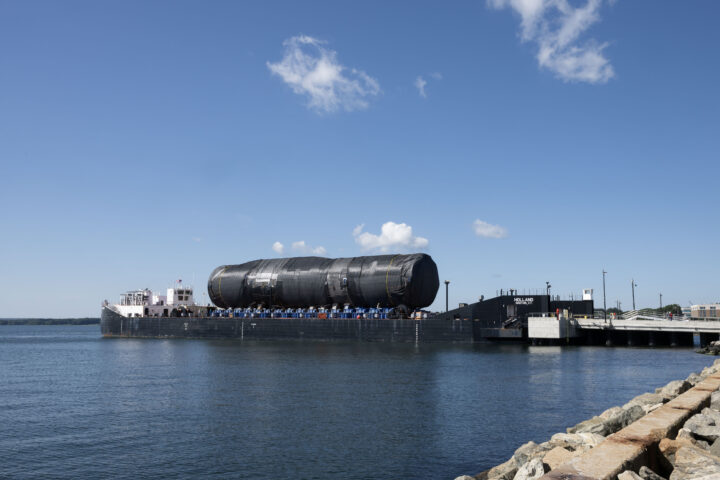
803 Section 2B/5 Transported from Quonset Point to Groton
PCU Arizona’s (SSGN 803) Section 2B/5 was successfully delivered to Groton from Quonset Point. At 184 feet in length, this section – which includes the Virginia Payload Module (VPM) – is the largest Virginia-class shipment ever transported. Arizona, the first submarine to incorporate VPM, will be about 460 feet long upon final construction. Section 2B/5...Continue reading→