
Hi everyone, it’s Kevin. Today is March 5th. With the once-in-a generation growth we’re experiencing now, someone who is joining Electric Boat today is not just taking a job, but launching a career. With me on today’s podcast is Kurt Hesch, our Senior VP of Programs. Kurt has been with Electric Boat for more than 40 years. He’s somebody whose leadership I rely on every single day, and he brings some really unique perspective to our business. So I thought it would be insightful to have a conversation with Kurt about how he has navigated his career, and what he looks back on as the formative transition points along the way. Maybe some of you listening might find that helpful as you begin or perhaps are at the midpoint of your career.
So Kurt, you joined EB back in 1980 fresh out of school?
KH: Yes, I was an Engineering grad out of UMass. I joined the defense business at a time everybody knew we had an adversary in Russia. EB was booming with people and ships everywhere on the waterfront. My job was evaluating structural designs, a lot of repair work and some changes to 688CL or Ohio Class for cost reduction. What got me out of building 221, where my desk was, was to go down onto the boats down in the shipyard and on shipchecks. One I remember was an employee suggestion on making OHIO more modular—that got me to talk to a number of people outside my swim-lane of the engineering community.
As an employee, how you prepare for success and conduct yourself evolves as you progress through your career. Looking back, what served you well when you were starting out as an entry-level engineer?
KH: One was a belief to get good at the job you’re in every day. And be inquisitive. I mentioned asking questions about that modular task—that forced me to ask a lot of questions. Being able to move around to learn and be known around the organization is important. And be ready—at some point you will be tasked to take on something you might not think you’re prepared for. That first shipcheck I did, I thought “why would you send brand-new, green me on a shipcheck.” It was really good for me; I got to learn a lot—how to deal with a crew and what changes they wanted on their boat and that frankly led to me being able to do more shipchecks.
I agree with that—in my own experience, understanding this business really requires you to move around. We’ve got a great opportunity here in a lot of different departments. Moving around the organization sure taught me a lot about how this business operates. Looking back at this first phase of your career, was there a particular project that you remember for its impact on you and the business?
The one that changed the trajectory for me at EB first was the competition on the forward end of Seawolf. Seawolf was to be the best submarine we could design because of the threat from the Russians, but it was also a competition with Newport News. That unique opportunity was where work became exciting and fun. In the end, EB won the aft-end design; but Newport News was awarded the forward end. Frankly, that dovetails with the worst day of my career because we were told at a pretty abrupt termination of that competition just before halftime, right before we were all getting prepared for our first major design review of that competition. That was not a good day for me—I remember it many years later.
KG: Let’s talk about some other roles you’ve had during your career. You’ve become senior vice president now, but there were some steps along the way.
I actually turned down my first supervisory job offer because I thought that job was a little more of an evaluation job than a create job, and I was somewhat spoiled by that Seawolf forward-end experience of creating things. I did become a supervisor shortly thereafter in the 90’-91’ timeline and shifted to run the structural group whose sole focus was to create new attack submarine design to replace the cancelled Seawolf program. It gave me the chance to win again as it was also a competition with Newport News.
That was at the time after the Berlin Wall came down and the Cold War was over. With reduced need for submarines, we weathered a ton of layoffs, including a welder of 15 years who coached Little League with me. That hit home in a personal way how important doing our work right and urgently was to the lives of our friends and families in the Connecticut and Rhode Island communities.
That was in some ways similar to the Columbia program in that we needed to prepare with a new computer system, the first one we did on computers at all. We had new designers but they weren’t new employees—most of them transitioned from the shipyard trades. We were all in it together doing new things including this new earned value management system, which was tracking our cost and schedule to support that new build. Frankly, we knew if we cost too much or took too long, the cancellation of the Seawolf could be the cancellation of the new attack submarine.
As it turned out, it was good. We created some really good things—we expanded the use of modules, even though our group was 90% new hires out of college. We won—and I’ll always believe we won decisively—but at the end of the day we won. That eventually led to the next major transition point for me, which was Business Leader Group 1 (BLG1) that was a new thing at Electric Boat at the time, to bring a group of people from all areas of the business together. That was in March of 2003, and during that time frame I was assigned to work in the Virginia program on a rotation where I eventually stayed for pretty much a decade. I met great people across that and made a lot of relationships that mattered for me in that new job.
KG: That’s a great story from a transition perspective, and what it takes. You and I have talked about this offline on many occasions. As we move on in our careers, you need to differentiate the way you think. What may work for you as an engineer doesn’t necessarily work the same way in the program office. I’ve been asked by young people before for advice for someone starting out in their career. I often tell them, move around. Look for those opportunities. Do your job well, as you said earlier, and then also understand the environment your company operates in. In our case at EB, you really need to understand how we succeed from a financial perspective and what your customer needs are—not necessarily our Navy customer—while that’s equally important—but who is your internal customer and how do you serve them? You’ve certainly had to develop those skill sets over time. Let’s talk about other ways people can move forward in their career.
KH: Absolutely; when I moved out of the “straight” engineering to program roles—to tell you the truth, I never thought I would do that; I was very happy in those engineering roles—I had to go learn what it takes to get funding and align on contracts to build boats. That’s what we needed to do in the Virginia program. Today we use “Many Voices, One Message” as a key element of getting Congress to fund ships. We go in fits and starts with how successful we are with the customer, the Navy, on that and Newport News on that, but that’s a key role. We brief Congress and the Navy quite a bit on our programs. Frankly, none of that I learned in engineering school.
You talked about the excitement you felt as a new engineer working on Seawolf. Here you are after 40 years at Electric Boat. What excites you about where the business is today?
KH: I think you’ve heard me say the opportunity to create is a great challenge and a great thing to do. Frankly our adversary has put us in positions where we need more and better submarines. Russia keeps developing better and better capabilities in their submarines and their missile launches and some asymmetric threats that they’ve been working on. China has made no secret of their island chain strategy trying to further their ability to threaten any carrier strike groups out in the pacific and any other surface ships for that matter. Combined, these threats are driving a demand signal for more and more capable submarines with advanced sensors and increased payloads. So we have a lot of opportunity to go create things. At the same time that’s true, we get to build a lot of ships. We were doing a lot when I first got here. We delivered seven in 1981. To put it in today’s perspective, we delivered seven new construction submarines in about the last decade. So that opportunity to build many more is on us, the Navy needs it, whether it’s the new Columbia class, the Virginia variants we’re developing, or the SSN(X) that is the future. Yes, that’s exciting and that’s opportunity for just about everybody in the business to find their niche and grow and move around.
I couldn’t agree more with that. I often quote one of my favorites from Theodore Roosevelt, who often said that one of life’s great prizes is to work hard at work worth doing. We’ve covered some of that today—our work is worth doing because it has a great impact personally on our lives and is rewarding on a personal and professional level. But then you expand that—you think about our families, you think about the region here in southern New England and how important it is to our region, and ultimately, how important it is to the cause of freedom. When I get a chance to talk to young people, like you often I think about how lucky they are to be in a situation where they have an opportunity not just for a job but a career in shipbuilding and how meaningful that work is to all of us and will be for generations to come.
So Kurt, thank you for joining us on the podcast today. Hopefully, our listeners can take something away that will help them in their career.
Talk soon, thanks everyone.
Delivering the Future
Some imagine the future. We deliver it now.
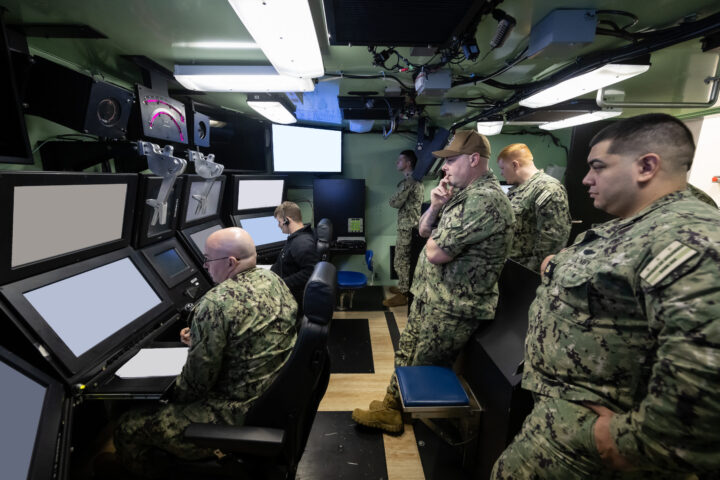
State-of-the-Art Simulator Prepares District of Columbia Crew for its Mission
As construction of the District of Columbia (SSBN 826) continues apace in EB’s South Yard Assembly Building, the sailors who will soon be at the controls are spending hours in a dynamic, high-tech simulator learning the intricacies of operating the 21,000-ton, first-in-class boomer. The Columbia Ship Control Operator Trainer (CSCOT) is a replica of the...Continue reading→
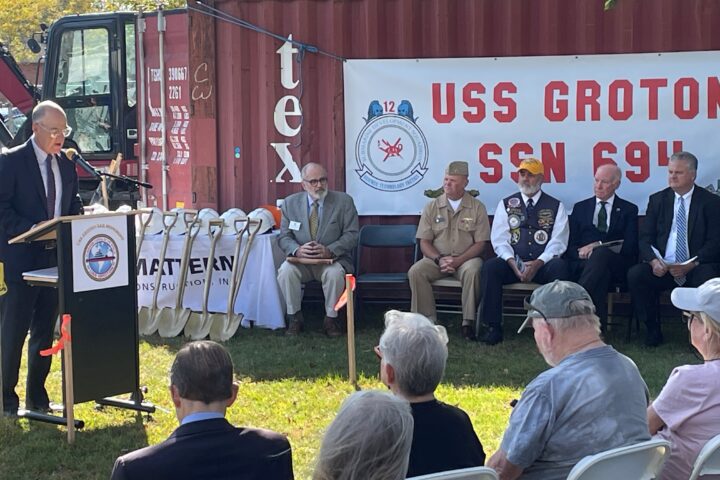
Groundbreaking Ceremony Marks Start of USS Groton Sail Monument
Fifty years after the USS Groton (SSN‑694) first launched, dozens gathered outside the Groton Public Library Oct. 9 to celebrate the groundbreaking of the USS Groton Sail Monument. The $6.6 million project—three decades in the making—will honor the men and women who design, build, operate and maintain the Navy’s submarines, as well as the families...Continue reading→

A Celebration of Heart, Community and Victory
2026 American Heart Association Eastern Connecticut Heart Walk Recap Saturday, October 3, 2026 | UConn Avery Point The 2026 American Heart Association Eastern Connecticut Heart Walk at UConn Avery Point was nothing short of extraordinary. Under bright autumn skies, 26 incredible Electric Boat teams and 151 walkers came together with passion, purpose, and unstoppable energy...Continue reading→
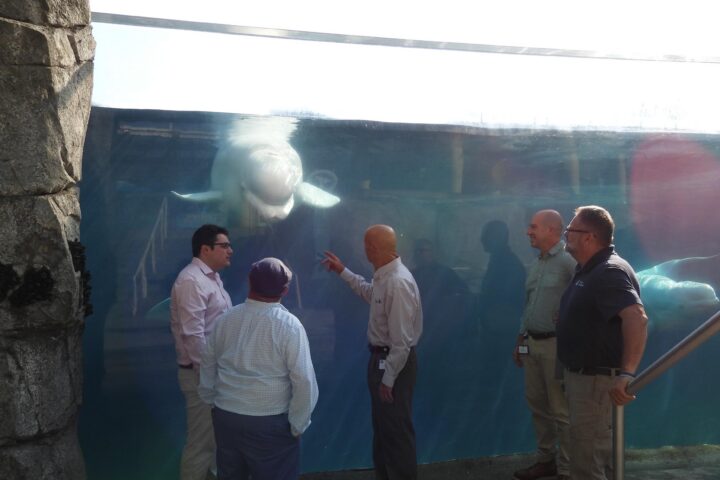
Quonset Point Donation Will Help Keep Mystic Aquarium’s Belugas Cool
Juno, the Mystic Aquarium’s convivial, photo-bombing Beluga whale, will continue swimming in cool comfort thanks to an unlikely chain of events that began 40 miles east in an Electric Boat industrial building at Quonset Point. That’s where EB’s Russ Tatro and Chris Logan were going over plans with a vendor, Carrier Corp., to replace Building...Continue reading→
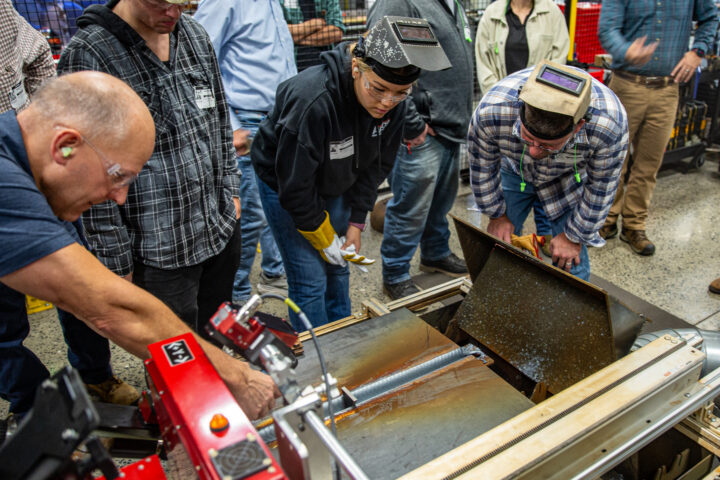
EB Team Visits Hypertherm as Part of Drive Toward Modern, Efficient Shipbuilding
A team from Groton and Quonset Point headed to New Hampshire-based Hypertherm Associates this week to get a closer look at a modern automated plasma gouging process designed to streamline hull fabrication. The visit was part of a broader effort across Electric Boat to bring more advanced, state‑of‑the‑art manufacturing tools into the shipyard. EB plans...Continue reading→
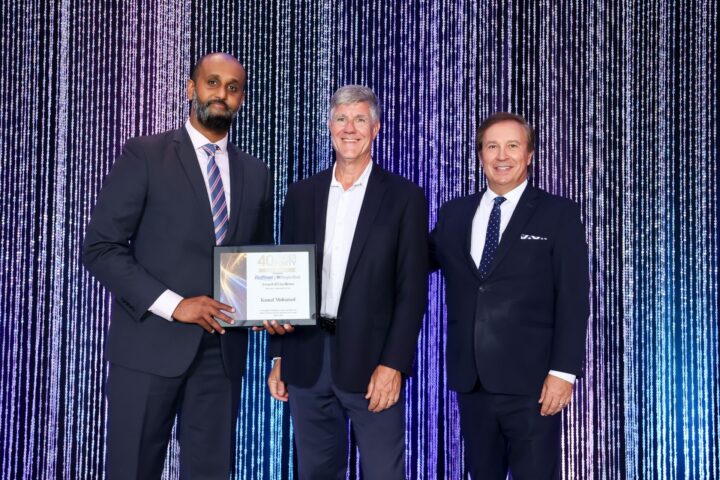
Kamal Mohamed Recognized as 2026 Hartford Business Journal 40 Under Forty Award Recipient
The Hartford Business Journal (HBJ) 40 Under Forty Awards recognize outstanding young professionals in the Greater Hartford area who are excelling in their industries through their leadership roles. They are driven by success, motivated by challenges and are role models for their peers. These individuals are part of an outstanding class of upcoming business leaders...Continue reading→
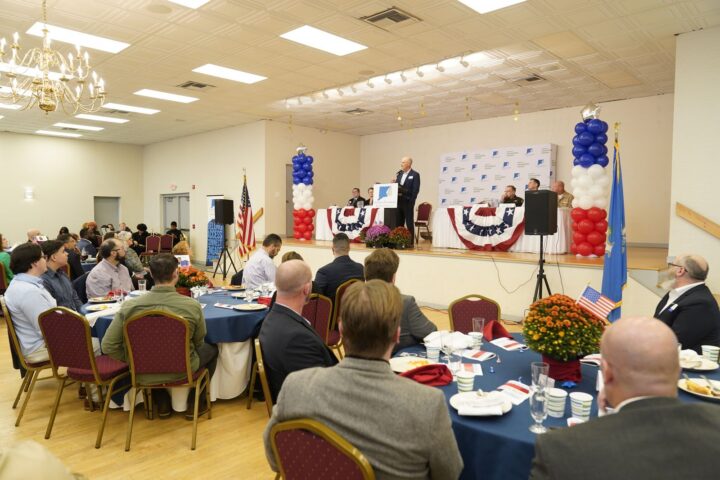
Electric Boat Joins Regional Leaders for Military Appreciation Breakfast
Electric Boat employees joined military and community leaders for the Chamber of Commerce of Eastern Connecticut’s annual Military Appreciation Breakfast on Sept. 30 at Ocean Beach Park’s Port ‘N’ Starboard. The event provided more than 120 complimentary seats to active-duty service members from the Navy, Coast Guard and Connecticut National Guard. General Dynamics Electric Boat...Continue reading→
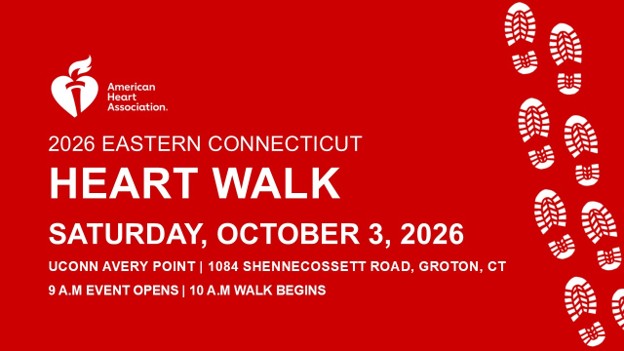
One Week Left—Let’s Claim the Torch! AHA Eastern Connecticut Heart Walk: Final Countdown
We are just one week away from the 2026 AHA Eastern Connecticut Heart Walk on October 3, 2026, at UConn Avery Point and this is our moment to finish strong. We’ve built incredible momentum, and now we’re within striking distance of something big. Right now, Electric Boat is holding second place, behind Mohegan Sun by...Continue reading→
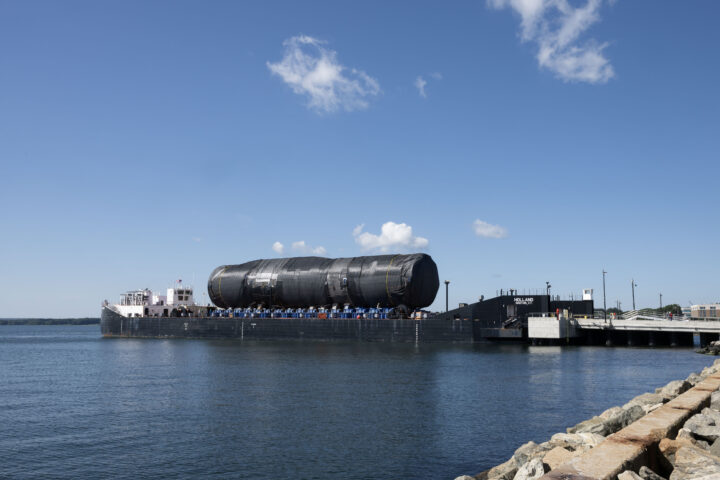
803 Section 2B/5 Transported from Quonset Point to Groton
PCU Arizona’s (SSGN 803) Section 2B/5 was successfully delivered to Groton from Quonset Point. At 184 feet in length, this section – which includes the Virginia Payload Module (VPM) – is the largest Virginia-class shipment ever transported. Arizona, the first submarine to incorporate VPM, will be about 460 feet long upon final construction. Section 2B/5...Continue reading→