
Hi everyone, this is Kevin. It’s Friday, February 26. As February draws to a close, I’d like give you an update on the progress we’ve made so far in the first two months of this year.
On the facility construction front, we celebrated the topping-off of Quonset Point’s new Automated Frame and Cylinder (AFC) 2 Building. This building is critical to Columbia’s pressure hull construction and our ability to deliver the Columbia Class on a one-per-year cadence. Currently we have 4 Columbia fixtures; when AFC 2 is complete we will add another 7 fixtures to support construction.
EB’s construction team also recently wrapped up dredging operations for the new channel in Narragansett Bay required for the Ocean Transport Barge “Holland” to tie up and load Columbia modules for final assembly in Groton . Because Columbia modules are the largest we have ever built, and the barge that transports them draws more water, the channel had to be widened and deepened.
In Groton, we’ve achieved a major milestone with the completion of drilling all of 505 casings and rock sockets supporting the structural deck for the South Yard Assembly Building project. The structural deck is nearly 90% complete. We have completed fabrication of the precast concrete sections that make up the decks support structure and have set over 1,200 of the 1,624 beams and flat deck pieces. We have poured nearly 50% of the structural slab. Completion of the deck is anticipated in the April timeframe and vertical construction is anticipated to commence soon thereafter.
At Quonset Point, welding in the tube pairing fixture for the first 2 missile tubes for the SSN803 Virginia Payload Module (VPM) is 80% complete, and is expected to be 100% complete by the end of this week, followed by x-ray testing of the welds this weekend. We expect what we call a 2-pack to be installed into the 803’s pressure hull in early March. I’ve had the opportunity to meet the welders involved in this first of its kind milestone. Collin Tavares joined EB in April of 2020 and came to us with some welding experience from a few different industries. In less than a year, with training and the mentorship of experienced welder Andy Fiore, Collin can take pride in his work on the crown section, which required complex, mechanized welding. I’d also like to recognize veteran welder Nick Dias for completing the keel section welding of the 2-pack.
Also at Quonset Point, as a first-time evolution, flask bottles were loaded into the Columbia missile-compartment hull cylinder. The installed flask bottles are a combination of nitrogen and air flasks; these flasks are used for strategic weapons support (SWS), ensuring the missiles remain safe and dry, which is vital to maintaining the weapon systems. This contributes to the confidence we have in our ballistic-missile submarine fleet and its strategic importance as the most survivable-leg of our nation’s nuclear deterrence capability. The last time we built these systems was in support of Ohio-class construction, more than 25 years ago.
Quonset Point has received the first Columbia missile tube in two years from one of our suppliers BWXT. We’ve had challenges with quality and schedule performance from our missile tube suppliers that has taken time to work through. We now expect that by mid-year, we will have resolved those challenges for both the VPM and Columbia, fixing a critical supply chain challenge. Quonset Point also recently shipped out Missile Tube 11 to England for the UK’s Dreadnought submarine program. This missile tube outfitting was performed at a program best of just 59 days.
The first two Columbia stern spherical air flasks arrived at Newport News from QP—back in the 688 days, vendors built these for us. After the Cold War ended, and submarine construction was reduced, there were no vendors in business who made them. We started making them for the Seawolf and have continued for Virginia and Columbia.
Also on Columbia, we’ve achieved the highest throughput to date in steel parts cut and ready for use in deck fabrication.
Finally, on Columbia, we’ve transferred about 40,000 hours of work from Quonset Point to the Groton steel trades who will support advanced construction of several large tanks, foundations, deck assemblies and fixtures. This shift of work helps to de-risk the program by providing Groton Operations with the ability to accelerate learning, build team proficiency, and get used to the new design tools, systems and technologies associated with Columbia before the first major modules of SSBN 826 arrive in Groton in 2024. It also contributes to smoothing the peaks and valleys in our workforce.
In the next few days, SSN 793 (Oregon) will reach the important milestone of achieving criticality, meaning its nuclear reactor will go into operation. To enable the team to safely prepare for critical operations, we conducted COVID testing twice per week for EB and ship personnel. This was enabled by the diligence of our medical staff and the ability to run and get results quickly using our own Sophia testing machines. The 793 has also reached its habitability milestone, which means the process begins for the crew to live and work on the ship.
We’re making progress on the USS Hartford (SSN 768) Engineered Overhaul. Repair work is important to our business for three reasons: first, the Navy is placing more tasking on our submarines which is resulting in decisions to re-fuel, rather than decommission, submarines. Submarine re-fueling is performed at public naval shipyards, and as that work increases, it makes the shift of non-refueling overhaul to private shipyards like Electric Boat necessary. Second, radiological controls associated with reactor plant systems are much more challenging on operating submarines than on new construction submarines. The ability to conduct maintenance in radiologically controlled environments is a core capability that cannot be easily re-created once lost. A steady stream of M&M work keeps those muscles exercised. And finally, M&M work traditionally has provided us an opportunity to shift resources to smooth any peaks and valleys in our workforce, especially in Groton. Going forward, steady M&M work will allow us to more gradually ramp up our Groton workforce as we enter into full rate production on Columbia. The planning contract for this overhaul was awarded last August. We are off to a good start on planning and material procurement, and we received the RFP from the Navy for the actual production work. The next step is for us to prepare the proposal/contract. We will begin limited work starting in June.
Thank you all for your contributions that are enabling us to deliver on our mission.
With regard to COVID, we seem to be turning a corner into a more hopeful place as rates of infection have declined and the vaccine rollout continues with more folks soon becoming eligible. As a resident of Connecticut, anyone now over the age of 55 will be eligible for vaccination beginning on March 1. It does not look like we will be dispensing vaccines here at EB, at least not yet. That means those eligible need to register with the state and get their vaccine. Yesterday, you should have received an email with information on how to make your appointment. I plan on getting the vaccine, as does my wife, and with it we look forward to the promise of life starting to feel more like normal.
Thank you for listening; we’ll talk soon.
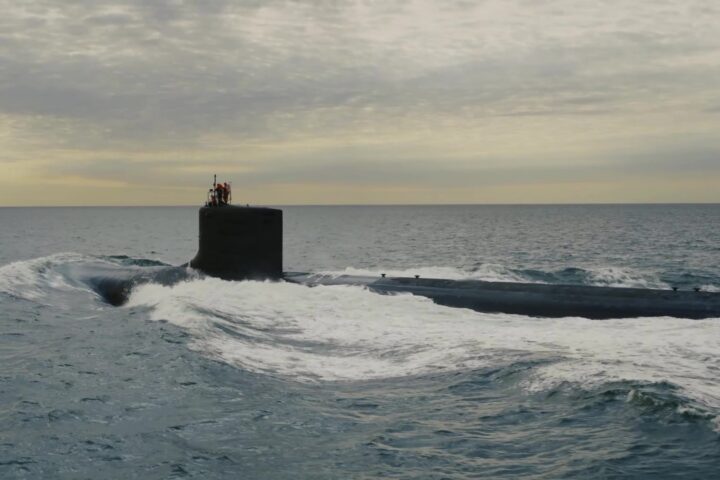
Delivering the Future
Some imagine the future. We deliver it now.
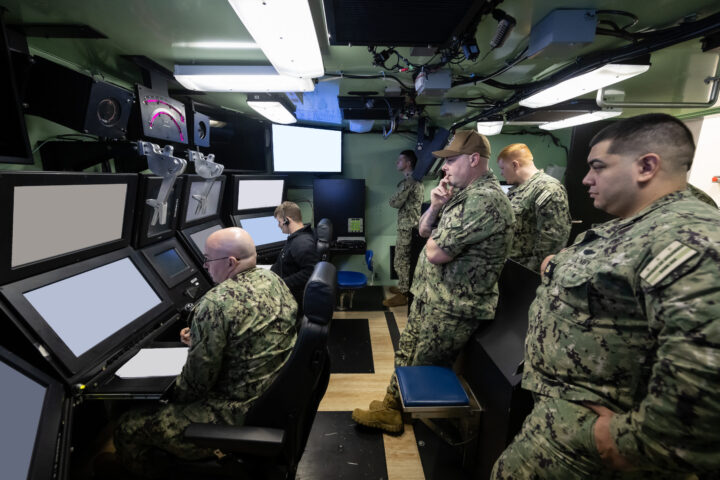
State-of-the-Art Simulator Prepares District of Columbia Crew for its Mission
As construction of the District of Columbia (SSBN 826) continues apace in EB’s South Yard Assembly Building, the sailors who will soon be at the controls are spending hours in a dynamic, high-tech simulator learning the intricacies of operating the 21,000-ton, first-in-class boomer. The Columbia Ship Control Operator Trainer (CSCOT) is a replica of the...Continue reading→
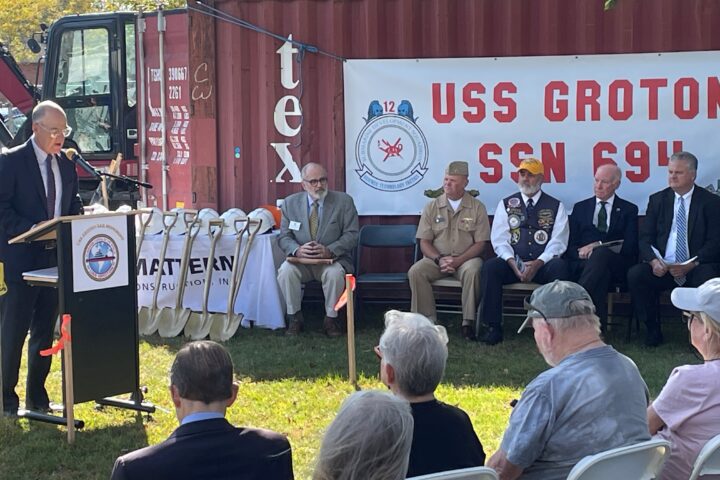
Groundbreaking Ceremony Marks Start of USS Groton Sail Monument
Fifty years after the USS Groton (SSN‑694) first launched, dozens gathered outside the Groton Public Library Oct. 9 to celebrate the groundbreaking of the USS Groton Sail Monument. The $6.6 million project—three decades in the making—will honor the men and women who design, build, operate and maintain the Navy’s submarines, as well as the families...Continue reading→

A Celebration of Heart, Community and Victory
2026 American Heart Association Eastern Connecticut Heart Walk Recap Saturday, October 3, 2026 | UConn Avery Point The 2026 American Heart Association Eastern Connecticut Heart Walk at UConn Avery Point was nothing short of extraordinary. Under bright autumn skies, 26 incredible Electric Boat teams and 151 walkers came together with passion, purpose, and unstoppable energy...Continue reading→
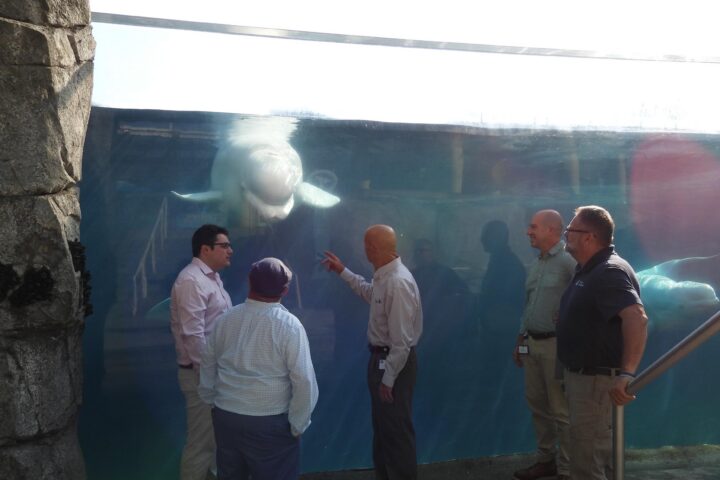
Quonset Point Donation Will Help Keep Mystic Aquarium’s Belugas Cool
Juno, the Mystic Aquarium’s convivial, photo-bombing Beluga whale, will continue swimming in cool comfort thanks to an unlikely chain of events that began 40 miles east in an Electric Boat industrial building at Quonset Point. That’s where EB’s Russ Tatro and Chris Logan were going over plans with a vendor, Carrier Corp., to replace Building...Continue reading→
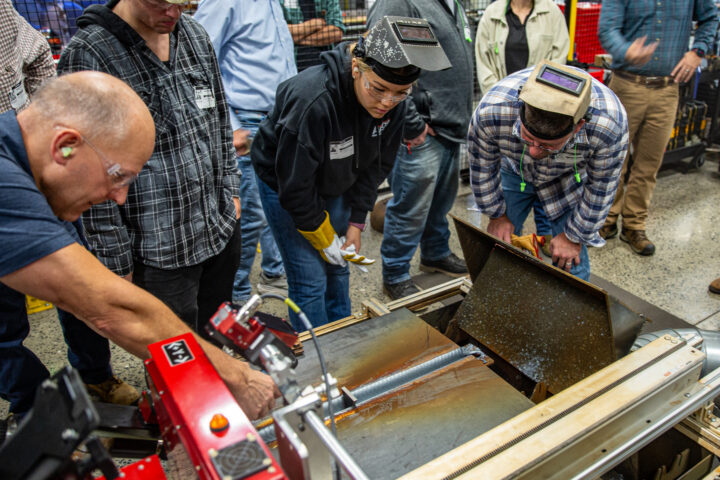
EB Team Visits Hypertherm as Part of Drive Toward Modern, Efficient Shipbuilding
A team from Groton and Quonset Point headed to New Hampshire-based Hypertherm Associates this week to get a closer look at a modern automated plasma gouging process designed to streamline hull fabrication. The visit was part of a broader effort across Electric Boat to bring more advanced, state‑of‑the‑art manufacturing tools into the shipyard. EB plans...Continue reading→
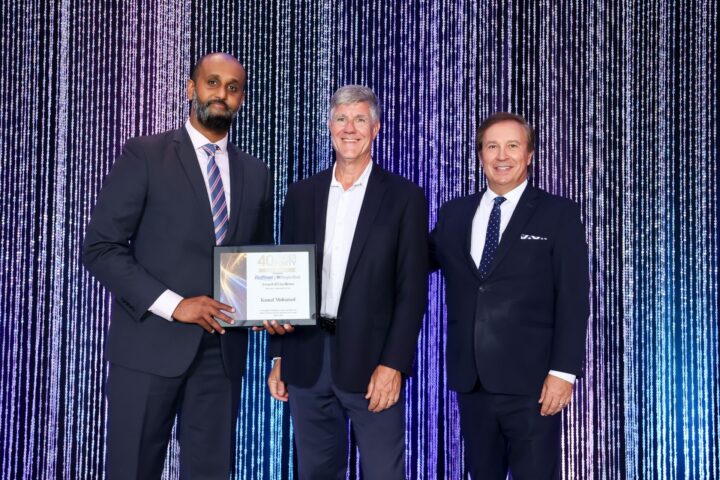
Kamal Mohamed Recognized as 2026 Hartford Business Journal 40 Under Forty Award Recipient
The Hartford Business Journal (HBJ) 40 Under Forty Awards recognize outstanding young professionals in the Greater Hartford area who are excelling in their industries through their leadership roles. They are driven by success, motivated by challenges and are role models for their peers. These individuals are part of an outstanding class of upcoming business leaders...Continue reading→
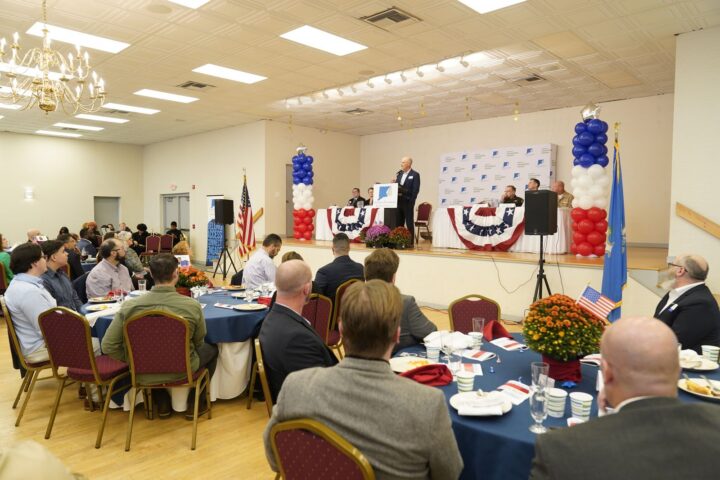
Electric Boat Joins Regional Leaders for Military Appreciation Breakfast
Electric Boat employees joined military and community leaders for the Chamber of Commerce of Eastern Connecticut’s annual Military Appreciation Breakfast on Sept. 30 at Ocean Beach Park’s Port ‘N’ Starboard. The event provided more than 120 complimentary seats to active-duty service members from the Navy, Coast Guard and Connecticut National Guard. General Dynamics Electric Boat...Continue reading→
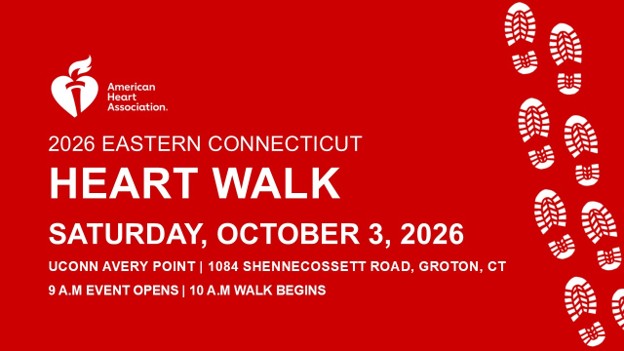
One Week Left—Let’s Claim the Torch! AHA Eastern Connecticut Heart Walk: Final Countdown
We are just one week away from the 2026 AHA Eastern Connecticut Heart Walk on October 3, 2026, at UConn Avery Point and this is our moment to finish strong. We’ve built incredible momentum, and now we’re within striking distance of something big. Right now, Electric Boat is holding second place, behind Mohegan Sun by...Continue reading→
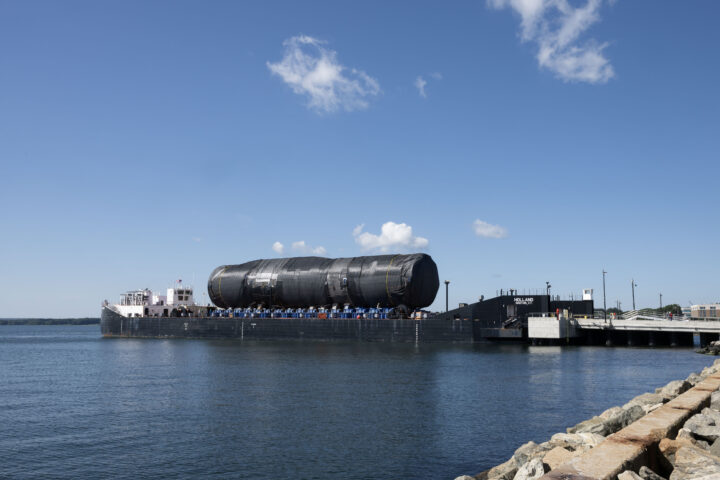
803 Section 2B/5 Transported from Quonset Point to Groton
PCU Arizona’s (SSGN 803) Section 2B/5 was successfully delivered to Groton from Quonset Point. At 184 feet in length, this section – which includes the Virginia Payload Module (VPM) – is the largest Virginia-class shipment ever transported. Arizona, the first submarine to incorporate VPM, will be about 460 feet long upon final construction. Section 2B/5...Continue reading→