
KG – Hi everyone, it’s Monday, February 8th. Joining me on the podcast today is Matt Olander. You’ll recall just before the holiday break we announced Matt’s new role as VP of Design and Engineering (D&E). Today’s podcast is an opportunity to meet Matt and hear about his vision for leading the D&E organization. So Matt, welcome to the podcast. Let’s start with your background—you came to EB straight from college.
Matt Olander (MO):
Thanks for the opportunity to be on the podcast today. Yes, I came to EB straight from UConn as a mechanical engineer. Back in the mid 90’s, the economy wasn’t so great, and this was one of the few places that was hiring. I wasn’t alone; there were quite a few folks coming to EB as the Virginia design was ramping up. But if I’m honest, I wasn’t planning on staying very long. I was engaged to my wife and looking for a real job, and this was a place I could land.
It’s funny—over the years I’ve heard so many people talk about shipbuilding in that regard, “Hey, I was just looking for a way to pay some bills.” Here we are 25, 30 years later and it turned into a career. You’ve been in your new role just a few weeks—let’s talk a little bit about your priorities.
MO:
First, it’s absolutely fantastic to be back in engineering after about 15 years of running programs. I really am an engineer at heart. Right now I’m meeting a lot of the folks that I knew in engineering, and I’m asking lots of questions, but I do come in with some perspectives. There’s no doubt that the Columbia is the DOD’s (Dept. of Defense’s) top priority, and Electric Boat’s top priority, and mine as well. We really need to complete this design and do so efficiently with a renewed focus on quality. In fact, when I think about 2021, this is going to be a pivotal year for this organization. As we finish the Columbia design, we are also ramping up on some very unusual and interesting work on the Virginia program. These are really big moves that don’t happen that often. We’re lucky that this work, frankly, is as well aligned as it is; it gives us an opportunity to have an orderly transition between programs. But this is also a significant risk for us—this whole year is really going to be defined by how well we finish the Columbia design. If we blow our budgets and we’re late coming off that program, we put more stress on both the Columbia program but also the Virginia work may be put at risk as well. So I am very focused on our execution of Columbia and the transition to the Virginia work emerging.
You and I have talked a lot about what’s happening with the evolution of the Virginia class, and we’re seeing some really exciting new missions for that platform and just how adaptable that platform is as it continues to evolve—things like seabed warfare and so on. We’ve also talked about the Jimmy Carter, SSN-23, which is really a case study of efficiency at EB and how we adapted that class to support that particular mission for Jimmy Carter. Let’s talk about the lessons you learned from your experience on that team. What has stuck with you and how is it shaping how you’ll lead D&E?
MO:
The Jimmy Carter is one of three Seawolf-class submarines. It was probably one of the most complex engineering challenges we’ve tackled in decades. It was also one of the fastest programs we executed. We had a blank sheet of paper and within 5.5 years we were on sea trials. As hard as that program was, and as many challenges as there were, the morale across the entire team was extremely high. I haven’t met anybody who doesn’t consider that program one of the highlights of their career. I think a real key to the program was a very strong engineering leadership role within that program. Within engineering, we challenged ourselves to work outside of our traditional silos. Outside of engineering, we had a very strong partnership with the program office, materials and purchasing, planning and even the shipyard. We had to make sure that we’d have all the work paper and material our shipbuilders needed when they needed it. We were at their side through the entire build and all the first-time evolutions. We didn’t get everything right…far from it. But we were all in it together—sort of one team, one fight. I am excited to say, echoing your point, that there is some work like this in our near-term horizon. Some of the Virginia evolution work will challenge us in the same ways that we were on the Jimmy Carter.
KG: I think you said it well—one team, one fight. If there’s something that I’ve developed over my career, it’s the understanding of how mutually supportive we’ve got to be for this business to be successful. In a lot of ways, culture drives behavior—so stepping back, can you define the culture that drove the team’s success on the Jimmy Carter?
MO:
My team probably hears me say this a lot. As a leadership of a large organization, we have to inspire, equip and empower our people. Let them do the design and engineering, and we’ll manage the business and clear a path for them. From an inspiration perspective, I think everybody at EB should be inspired by what we do and how important submarines are in the world today. During the execution of the Jimmy Carter design, September 11th happened fairly early on in that program; it was a watershed moment for us. It was very clear the nation needed this capability. That was pretty powerful inspiration, and we were determined not to fail. We had just come off the Virginia design, so we were trained on how to use CATIA, and to do that design process. So we had a mature tool and a ready workforce—we were equipped for the task. Lastly, we were very well empowered. On the Jimmy Carter, the challenge was so extreme both in technical complexity and schedule, we had to think differently. We were empowered to do so. This all came together in the sense of strong ownership—we all owned the program, we all bought in and we all worked together. We knew the mission, we had the tools and we thought differently. And we did lots of things both within engineering, and how we integrated these complex systems and thought about how we would challenge each other to do designs in parallel versus waiting for each other to be done. But even so far as to think about, how are we going to test all this stuff in a very compressed construction schedule—things like how we tested the tether-management system in the 260 building. Some of us, frankly, were even blessed to be on sea trials as these systems came to life for the first time and able to train the crew. So it’s that total ownership of knowing what we had to deliver to the fleet that fueled us to take on that challenge.
KG: Culture change is something that is critically important to the way ahead for us, particularly given the evolution of Virginia, where we’re at with Columbia and the opportunity to be doing some really exciting and very interesting work—more work than in our history. So that culture is going to be a key for us as we take on the next generation of boats including SSNX and future Virginias. Culture change can be hard, though. As a leader of D&E, how are you approaching the challenge?
MO:
Culture change is hard. I think there are a couple of parts to it. The first is a common understanding that we need to assess our culture. Do we have the right culture for the challenges we face? I think there is some strong motivation to allow us to reflect on where we are. The great power competition with Russia and China is a real existential threat to the United States. These nations are very different and approaching us with very different strategic plans. They are moving very fast, and they think differently than we do. We know for certain our submarines will play a very significant role in this competition. So we have to reflect a bit. We will need to go faster with technical rigor and bring on new missions, like seabed warfare, or new capabilities and new technologies to the fleet and have to do so in an affordable way. A key to culture change is to find examples of the good and spread them around. I think there’s a few we can draw on. The first I’d say is seabed warfare. It is a very innovative team. They’re bringing a new mission to the submarine fleet. They are going quickly with significant technical rigor too.
I am intimately familiar with that example, but others listening may not be. I think there is one more broadly that we can talk about, which is how we responded to COVID and how dramatically we changed how we work as an organization. When COVID hit, we really didn’t understand how this would unfold. We didn’t really have a playbook on how we would execute through a global pandemic. And yet not only did we persevere and execute the challenges that we had set out for that year, we did it with a completely different posture at the end of the year than when we had started. We pivoted from a culture that wouldn’t ever consider working from home to one that has nearly half of its people in the D&E organization working at home. I think that’s a pretty profound pivot, to do that on the fly. I don’t think any of us should take that lightly. We can accomplish anything we set our minds to. We have a history of rising to those types of challenges.
And we certainly have our share of challenges ahead of us in the coming years. We’ve got a younger workforce than we’ve had over our history. That means our young people are going to have to learn faster. I’m optimistic because that provides tremendous opportunity for anybody who is just starting out with EB today. Given the things that we’re going to be doing, and how we’re creating jobs for people, but more importantly, not just job, but long-term careers. Last week I had an opportunity to talk at the legislative brief that we do on an annual basis. My whole view on that is we’re talking about careers here at EB, not jobs, and in particular careers that have a lot of meaning and impact to the security of our nation.
Matt, I couldn’t be happier with you in the D&E role. You have my every confidence, and I want to thank you for giving our listeners the opportunity to learn more about you and how you will lead the D&E organization.
Thanks everyone; we’ll talk again soon.
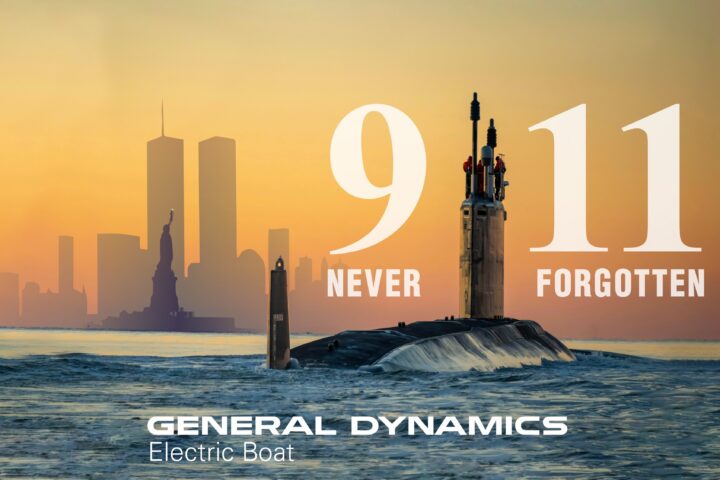
Remembering September 11
On September 11, 2001, the Twin Towers of downtown Manhattan’s World Trade Center and the Pentagon in Washington, D.C., were targeted in a series of coordinated attacks that would leave an everlasting imprint on our country’s psyche. As the events unfolded on that Tuesday morning, nearly 3,000 people lost their lives, over 600 were injured...Continue reading→
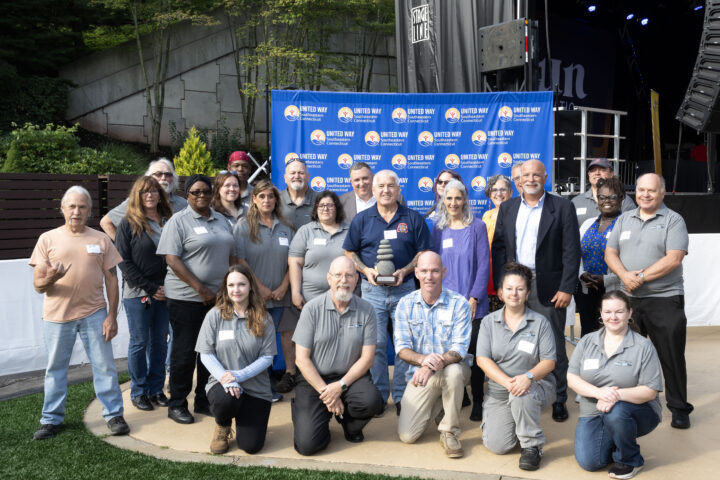
EBECSA Celebrates 75 Years — Nominate EB Employees Past and Present for Recognition
This year, the Electric Boat Employees’ Community Services Association (EBECSA) proudly celebrates its 75th anniversary. EBECSA was founded in 1951 by EB employees who wanted to create a dedicated, organized way to support nonprofit health and human service agencies in the communities where we live and work. What began as a small employee‑driven effort has...Continue reading→
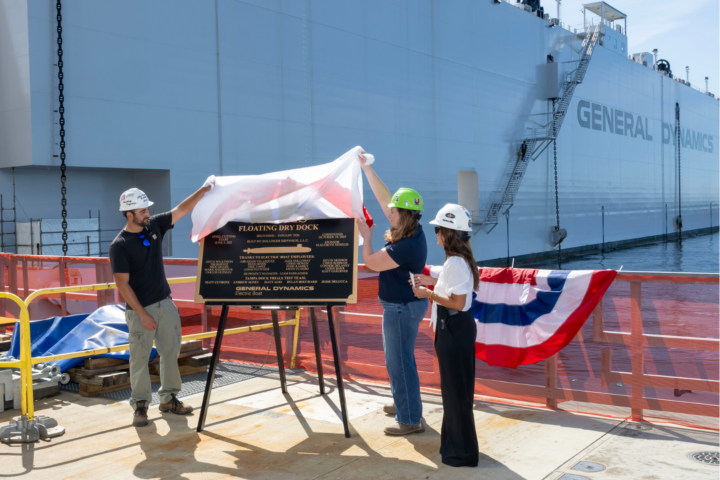
Atlas Plaque Unveiled, Honoring Plank Owners at South Yard Ceremony
Employees who have worked on Atlas, EB’s new state-of-the-art floating dry dock, gathered in the South Yard on Wednesday, Aug. 26, to unveil a new bronze plaque recognizing the contributions of its plank owners. The event celebrated the teams who helped bring Atlas from Bollinger Shipyards in Louisiana to its arrival in Groton earlier this year. Atlas will play...Continue reading→
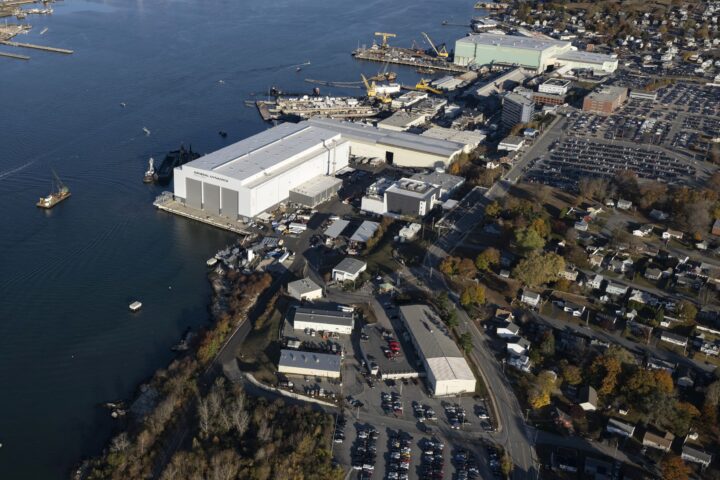
Neighbors Meet with EB to Discuss Noise, Lighting and Other Quality of Life Topics
Nearly twenty neighbors of Electric Boat’s Groton shipyard joined company leaders Aug. 25 for a community conversation focused on their quality‑of‑life concerns related to the South Yard Assembly Building (SYAB) and Atlas, the new floating dry dock. The Mayor of the City of Groton, Jill Rusk, also attended. Residents said they appreciated the chance to talk...Continue reading→
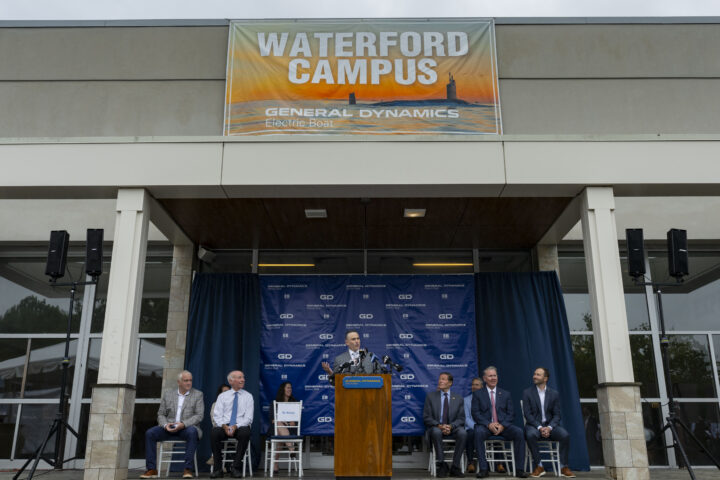
Rayha Report Ep. 26: Waterford Campus Groundbreaking
EB President Mark Rayha reports from the groundbreaking of the new Waterford Campus, where innovation, engineering and workforce development will come together to support our mission. The new facility will help train hundreds of shipbuilders daily as EB continues to grow for future production demands.
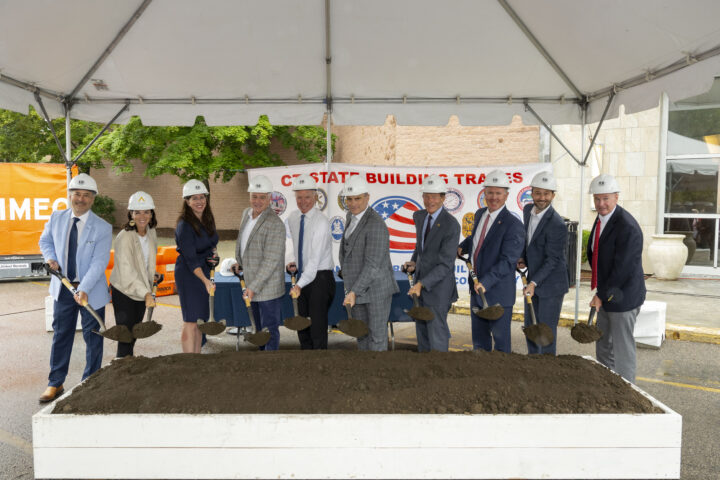
Waterford Campus Groundbreaking Marks EB’s Next Step in Innovation and Workforce Growth
Electric Boat officially broke ground Friday on the Waterford Campus, launching the transformation of the former Crystal Mall into a center for innovation, engineering and high‑tech workforce development. EB President Mark Rayha underscored how the project will reshape the way the company designs, tests and builds submarines. Innovation is the key, he said. “There’s an opportunity to...Continue reading→
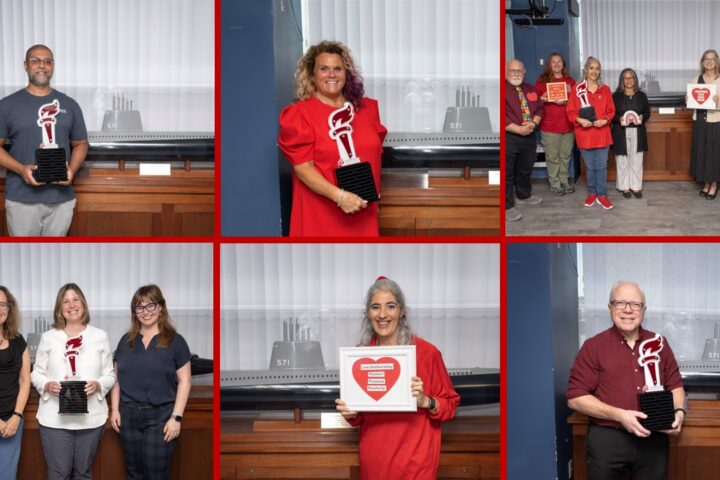
Powering HeartStrong 50: Thank You, EB Teams—Let’s Keep the Momentum Going!
Thank you to our incredible EB Heart Walk teams, our community partners, and everyone who joined the American Heart Association (AHA) Torch Journey photoshoot. Your enthusiasm and dedication made this milestone truly special. Now let’s keep our HeartStrong 50 energy going—our goal is 50 teams and $50,000 raised for the 2026 AHA Eastern Connecticut Heart Walk on October 3 at UConn Avery...Continue reading→
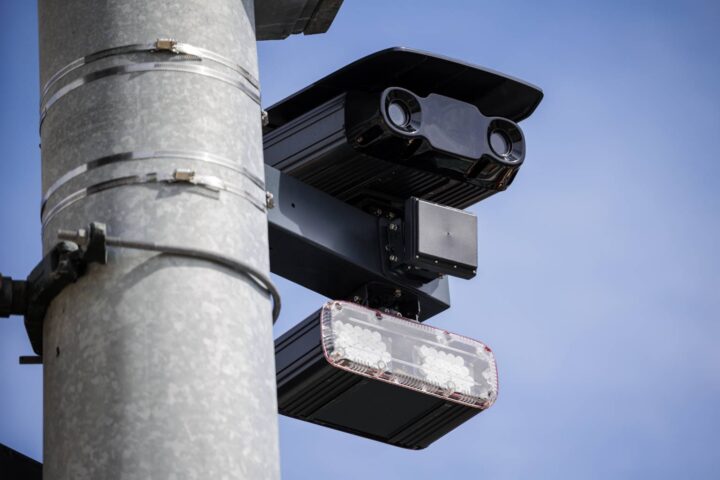
Speed Cameras to be Installed in the City of Groton
The City of Groton Police Department announced that automated speed enforcement cameras will be installed at several locations throughout the city. The cameras will be installed after the required 30-day public notification period, which began on Aug. 7, 2026. Camera locations: Mitchell Street Thames Street Clarence B. Sharp Highway (Route 349) Police said the purpose...Continue reading→
MDA Apprenticeship Application Now Open
Application Window: August 1, 2026 – August 31, 2026 The MDA Apprenticeship Program is a four-year initiative designed to develop a highly skilled workforce for Electric Boat. This program provides three years of on‑the‑job training alongside qualified subject matter experts, combined with classroom instruction across various technical disciplines. Participants gain advanced skills, broaden their expertise, and...Continue reading→

Building 600 Tech Stop Relocation
On Monday, August 3, 2026, Facilities will be relocating the Tech Stop currently located in Building 600 4th Floor East to its new location in Building 130-01 Classroom 7. During this time, please utilize the alternate Tech Stop location: B708 (625 Long Hill Road) Hours: Monday – Friday: 7:00 am – 3:00 pm The tech stop will resume...Continue reading→