
(podcast)
Hi everyone, today is Wednesday, October 7, and this is NOT Kevin Graney. My name is Wilmer Lambert; I’m an Engineering Specialist in Dept. 432, President of the Black Engineering Council, active member in Hispanic Shipbuilders Association, a Core Values team contributor and a Combat and Weapons System Core Team member and oh, it’s my Birthday so Kevin, “Look at me…I’m ‘the Captain now.’”
For today’s podcast, we’re turning the tables on Kevin. So he’s been here about a year now at Electric Boat. In the course of our conversation, I’ll ask him to reflect on the past 12 months–how the EB team is progressing and what it’s been like to lead during this very eventful year.
So Kevin, welcome to your podcast. From listening to your conversations over these last months, I know you do your best to help your guests feel comfortable, so I’ll try to do the same. Let’s get started.
All right Wilmer, thanks a lot. Fire away!
What a year it’s been! What’s your first thought when you reflect back on what you were doing this time last year?
I came in on Monday and recognized it was October 5th and thought that was the day we christened Oregon, just a year ago. It really felt like coming back home. In 2006, I left EB Groton for NASSCO in San Diego. It was a great opportunity for me and my family. Coming back was a great opportunity too—I’m proud to be back with the EB team.
I lived in San Diego for 14 years, and even though I was born and raised in Buffalo, NY, my blood thinned out living in Southern California. We did a Veterans Day event shortly after I got here. I remember going out, it was Nov. 11, standing out at 6:00 a.m. doing the morning colors and it was cold! I hadn’t been that cold in a while. By lunchtime we did another one, and I was a little warmer, but I was still cold. By the time we did the afternoon session for the second shift, I looked like the kid in “A Christmas Story” wrapped up in a big red snowsuit. I forgot how cold it can be in an early cold snap. That was a crisp reminder of New England weather.
Personally for me coming back, the challenge that we did not expect for me and Cheryl was just what was going to happen with COVID. We were supposed to be apart for about six months, she in San Diego, and I was here. It turned out it was more like 9 months before we could pack up the house and get her out here. It’s not good being a geographic bachelor, so I was very happy to have her back. I’m glad for it.
The world certainly changed for all of us with COVID; I know a lot of us have had some time to adjust.
Word started to spread fairly soon that you were conducting these “undercover boss” walks through the shipyard in a hoodie and a hard hat; different colored hard hats for different groups. Let’s talk about that.
There really was no undercover boss thing going on. I learn a lot about how we perform our functions out in the shipyard by walking around. I really enjoy seeing how ships come together. No matter how long I’ve been in this business, I always learn a lot. It was interesting to meet people, see what they were doing, and talk with them. My hardhat and my jacket had my name on it; there wasn’t anything undercover about it. I was genuinely interested to see what people were up to.
Before your cover was blown, what did you learn and how did that inform your priorities?
I think the key for me was recognizing that a lot of the reason I’m here is to try and help the organization in how we’re performing as a team in getting submarines built. One of the first things I looked at was our safety performance. I came from a shipyard that had a better safety performance than what we had last year here at EB so I really focused hard on safety early on. While we can always get better, and we need to get better, I’m glad to see we have dramatically improved. Last year at this time our Lost Work Injury Rate across the enterprise was 1.71; our rate now is 1.22. That’s about a 25-30% reduction; that’s a huge improvement. While we had some issues with COVID in conducting safety training and following through on some of the initiatives we’ve started, we’ve really stepped up our safety training and I’ve been talking with our supervisors about how important it is we educate them with regard to what a safe work environment means. If we do that successfully, that means they’re going to replicate that environment for their people and overall we become safer as a result.
What are your thoughts on how we can become as efficient as possible in delivering submarines to the Navy?
I will tell you that over the last couple months, I’ve been doing some town-hall type meetings with our Operations Supervisors. I tell them how important their job is to our business and how I think they have a really difficult job. What we’ve been working on for the organization is really trying to put the Operations folks on a pedestal by getting the obstacles out of their way: getting the design done, getting the material to them on time and getting a good plan in front of them so they can go execute the work that is out in front of them. They are my customer, and I tell them that in these sessions.
So you mentioned Design, Material, and Planning; how are we doing in those three key areas?
I think we’re improving every day, and this has been a team effort. I’m really proud of the way the team is rallying around that. If you think about design, not long after I started, we had a big celebration in New London marking the official completion of Columbia arrangements. Now we’re done; we had a couple of stragglers but we’re now 100%. What’s even better is we’ve gotten the drawings associated with all those arrangements—we call them disclosures—we’re about 83% complete on that as we speak. That is twice as complete as any other submarine class we’ve ever designed in our history. That sets up our Operations Supervisor for a more complete design; he or she will have fewer questions as we begin building the Columbia classes of submarines.
Last October, we were completing about 105 disclosures per month; our average rate now is about 113 per month. We’re having many fewer problems with the design tools; I think we’re really starting to hit our stride. That’s for Virginia and Columbia combined. We did some design work on the Virginia Payload Module as well as Columbia. Back in October 2019, our design completion percentage was about 52%; now it is 80%. So congratulations to the great effort by the Design and Engineering folks. It’s been a heck of a year of improvement and progress.
What about material availability and vendor preparedness?
I’ve ridden the Materials Team pretty hard—Blair Decker and his team have really answered the bell. It’s been phenomenal to watch how that team has really rallied to help the rest of the yard. Last year at this time we were experiencing material shortages 3.3% of the time in the Virginia program and about 11% in Columbia. This year the Virginia rate has been reduced to an overall shortage rate of 2.6%–a 21% reduction. For Columbia we’ve actually cut that delinquency by about half; the shortage rate is now about 6.0%. While any piece of material can really be a problem for us, the fact that there is so much less has really started the production team in a better place with the work packages having the material available when they begin. The other area they’re focused on is where we’re at with vendor preparedness. Remember, our supply base is critical to our success. Blair and his team have moved about 22 critical suppliers from a state of “not ready” to “now ready for future work.” Overall, over 90% of our suppliers are “ready for future demand today.” That means we’re going to see more and more improvement in our material availability with time.
That’s big, having that many suppliers already prepared for future demand. How about planning–I know you’ve spoken at length about the importance of it to EB’s success. Are we seeing positive momentum in this area?
This is the one area that impacts the operations supervisors the most, and we’re seeing some improvements. One of the things we’ve done is stood up a group of Production Control Planners that are helping with our operations supervisors. We have 41 Production Control Planners at QP and 35 in Groton. They’re doing more and more work with Operations—their job is to give our supervisors more bandwidth, so our supervisors aren’t out chasing material or paperwork, or anything else that’s getting in the way. That gives our supervisors the opportunity to spend more time on the deckplate teaching and coaching their people so we’re more proficient and better skilled with time.
When I had Ray Gabriel on the podcast a few weeks ago we talked about how we need to have standardized plans for our submarines. While the process of managing these network plans is continuous, our Advance Planners are improving and implementing a more standardized workflow for Virginia here in Groton. We’re also focused on making the Quonset Point networks accurate; I just had a conversation with Ray on this this afternoon. That’s going to enable us to have a more standardized approach, improve manning forecasts and the work release process for both Columbia and Virginia will be more streamlined.
One more measure that we’re moving the needle with regard to planning is that we’ve had a 65% increase in average work instruction output. So the planners are working hard to get work instructions out. While they’re doing that, they’re achieving a 46% average reduction in cost, so they’re getting faster and the products are getting cheaper since about October 2019. That’s a great improvement.
That’s good news, and I think it’s very helpful that you’re emphasizing the fundamentals of our business. Many of us work in very specialized areas of the business and it can be challenging to lift up our heads and think about how we’re moving forward as Team EB.
Let’s switch gears and talk about how we’ve had to keep our business moving through COVID. We’re unfortunately seeing an uptick in COVID rates in our region right now, and that’s been reflected in case rates going up slightly among EB employees, so managing through COVID is what we have to do for the foreseeable future.
I think COVID has been terrible for our country and for a lot of people. What it’s done has helped draw us together as a team to confront this thing. It’s had some goodness in that the rest of the organization is really rallying around each other to try and help. I think we’ve done a good job from a teamwork perspective, recognizing that a lot of this stuff we’re making it up as we go. Part of that is the great relationship we’ve established with our union leadership and how they’ve really helped. Our MTC, MDA and our Carpenter’s union, the leaders and the senior folks from the unions, have done a great job with things like shift work over on the New London side. We’ve done some things with blue/gold shifts in Operations here in Groton. And we’ve done quite a bit with working from home and using your own device from home to try and continue with getting the work done. We’ve proven to ourselves that the posture we’ve taken and the way we’ve tried to protect our employees has been beneficial.
That’s been a huge change in our culture and approach to the way we work every day. The HR folks have been absolute stalwarts in helping find new ways to provide some benefits. We introduced a new reduced work-week option for folks dealing with fluctuating school schedules. I’m really proud of the way our medical team has answered the bell both at Quonset Point and Groton. They’ve been flat out doing whatever they can. They’ve been the subject of several podcasts as well to try and keep people informed. We’ve done testing for about 10,000 of us here over the course of the last six months or so, and we’re continuing to do some contact tracing as employees test positive. All of that is putting us in a better posture as unfortunately the positive rates for COVID increase here in New London and Rhode Island.
The Facilities folks deserve a shout out—they’ve been terrific in keeping things clean and getting us the supplies we need to stay sanitized and meet the protocols that have proven successful. There’s a lot of effort that’s gone into this, but I want to point out too that individuals also have a role to play. We’ve done a lot with masks, some mask blitzes recently. I want everybody to stay disciplined. We need to continue to meet the protocols—washing our hands, wearing our face masks, getting our flu shots to minimize the virus spread in the organization, whether it’s COVID or the flu. Everyone needs to continue to do your part, and we’re going to stay safe as a result of that.
I must say the facilities team has been one of the many heroes during this COVID battle to go along with EB Medical. I thank them every time they come to the lab to sanitize the area. I have been on two sea-trials over the past 30 days, and EB medical has gone above and beyond to support, they have been able to accommodate me on a Saturday before the holiday and last week just before midnight on my return day. So together they have really been the driving force in allowing me and the greater EB community to continue supporting the fleet.
As we move into the end of the year, it seems like we have accomplished a lot, even with COVID. Are there some highlights you’d like to share?
There’s quite a few. We’ve talked about a couple of them already. We just completed a NR evaluation in August. We were very well prepared and the team was energized for that evaluation. We got some feedback from our customer that demonstrates our efforts to improve our teamwork and communication are starting to make a real difference here. While we’ve got a lot of work ahead of us, it’s nice to know from our customer’s perspective that we’re headed in the right direction.
I’m proud of the work we’re doing in our pipe shops in Groton and Quonset. We’re seeing some world-class performance particularly with regard to first-time quality in the last 12-13 weeks in Groton and probably 20-25 weeks in Quonset. We need to continue that great work; first-time quality is creating opportunity for us.
Our Nuclear Regional Maintenance Department folks had done a great job on USS Hartford recently. We did a very complex radiological maintenance evolution. It doesn’t happen very often, and we were under a lot of scrutiny for that. It went exceedingly well. When I toured the facility, the thing I saw was great morale, I saw great teamwork and I saw just a can-do spirit from our folks over at the NMRD. That was great to watch. We also completed the full-power heat run on Columbia’s Main Propulsion Motor at our test facility in the Philadelphia Navy Yard. That’s a huge risk reduction for the Columbia program; really important. Again, I saw a great team really poised and really focused on formal watch standing and just a real can-do attitude.
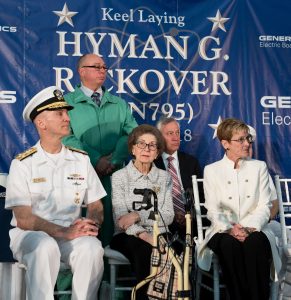
We did something we haven’t done in a long time in Groton last month on Rickover—two simultaneous hull butts on that ship. The last time we did this was about ten years ago; the ship achieved pressure hull complete on September 8th because of that great effort.
The first VPM tube finally arrived from BAE in Louisville, Kentucky. I’ll tell you a story on that briefly. I was in Louisville watching about 20 of our welders teaching the guys at BAE how to weld, how to do training and fixing a lot of the problems with some of the early work they had done. Great attitude—I saw young people, I saw older people training our younger people, great attitude and those guys really drove it to the point where we got our first VPM tube up at Quonset in late August. The second tube has just recently arrived. We’re off and running because of the great work we’re doing helping our vendor base.
On the Columbia program, we’ve got two fully outfitted tubes now in the E-fixture on its way to become the first quad pack for the Columbia lead ship. If you think about our progress on Columbia, we’ve got about 40% of the pressure hull now complete and about 70% of the ship’s major decks are already under construction. Looking at the big picture on Columbia, we’re roughly 5% complete as we move into the official construction start in the coming weeks. For perspective, that’s more than 20 times the amount of work, in labor hours, than what we did with the lead ship Virginia prior to construction start.
This morning I had the opportunity to tour out Groton’s South Yard Assembly Building, which is the centerpiece of the investment here in Groton for Columbia, about $850 million going into that project. It is on track and on schedule and will support the program.
I think as you look around at all the different aspects of the yard, there is so much going on. Nick Chabraja, our former CEO, was here back in August. He said, “Hey, it looks like you guys are on the turn.” I agree with that, we’re starting to build momentum, we’re getting confidence in ourselves, and we’re winning the confidence of our customer. And we’re staying true to our core values: valuing each other, acting with integrity and purpose and committing to excellence as we do all that.
I used to sail on submarines, and I can think of no greater purpose than bringing our sailors the ships they need to keep this country safe. I’m incredibly proud of the work we’re doing and incredibly proud of the people I get to come to work with every day. I’m going to continue to do my job, which is to treat everybody who is an employee here as my customer. I’m going to remove those obstacles to make you guys as successful as I can.
Well Kevin, I really enjoyed hosting your podcast today. I appreciate you taking the time to answer my questions and concerns. Thank you for showing that you care and are committed to the employees’ safety and improving the overall culture here at EB.
I appreciate your communication with the podcast but also the time you have taken to listen to employees. The fact that you have different guests on shows that you really want the communication to go both ways and it carries OFF the podcast as well.
With everything happening right now with COVID and the social unrest, many of us are talking about and thinking about the future – of this country, of this company and our families – and what the next generation will inherit. I believe that although there is still lots of work to be done, we as a company are heading in the right direction thanks to everyone under your leadership being committed to the values and vision of EB.
To our faithful listeners; thanks for joining me today. Signing off, I’m Wilmer Lambert with Special Guest EB President Kevin Graney. Stay warm, stay safe and if you are stopping by the 4th annual HSA Luncheon to cap off Hispanic Heritage month, I’ll see you there. Have a great day!
Delivering the Future
Some imagine the future. We deliver it now.
State-of-the-Art Simulator Prepares District of Columbia Crew for its Mission
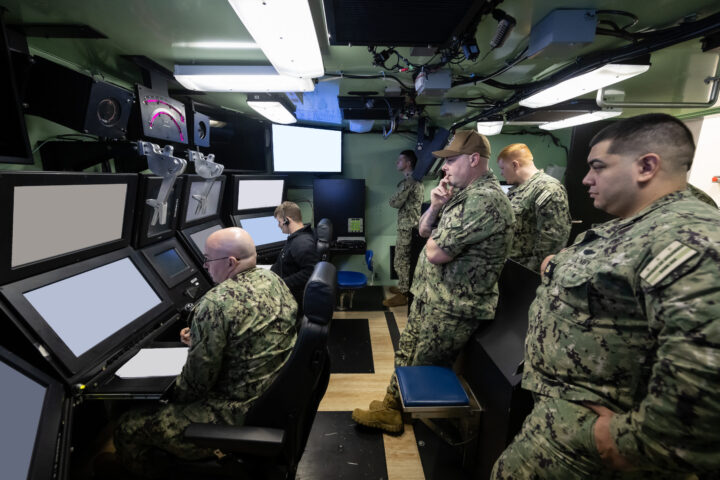
As construction of the District of Columbia (SSBN 826) continues apace in EB’s South Yard Assembly Building, the sailors who will soon be at the controls are spending hours in a dynamic, high-tech simulator learning the intricacies of operating the 21,000-ton, first-in-class boomer. The Columbia Ship Control Operator Trainer (CSCOT) is a replica of the...Continue reading→
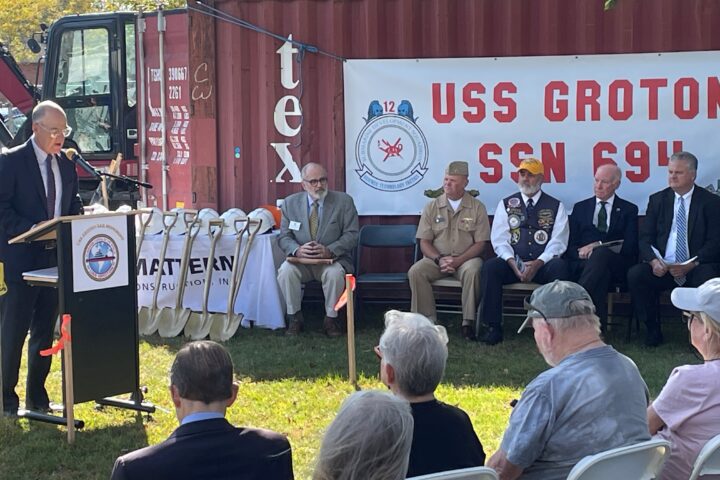
Groundbreaking Ceremony Marks Start of USS Groton Sail Monument
Fifty years after the USS Groton (SSN‑694) first launched, dozens gathered outside the Groton Public Library Oct. 9 to celebrate the groundbreaking of the USS Groton Sail Monument. The $6.6 million project—three decades in the making—will honor the men and women who design, build, operate and maintain the Navy’s submarines, as well as the families...Continue reading→

A Celebration of Heart, Community and Victory
2026 American Heart Association Eastern Connecticut Heart Walk Recap Saturday, October 3, 2026 | UConn Avery Point The 2026 American Heart Association Eastern Connecticut Heart Walk at UConn Avery Point was nothing short of extraordinary. Under bright autumn skies, 26 incredible Electric Boat teams and 151 walkers came together with passion, purpose, and unstoppable energy...Continue reading→
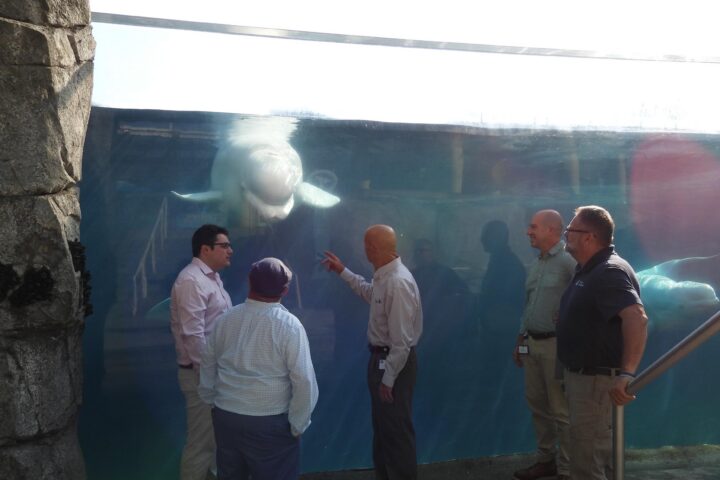
Quonset Point Donation Will Help Keep Mystic Aquarium’s Belugas Cool
Juno, the Mystic Aquarium’s convivial, photo-bombing Beluga whale, will continue swimming in cool comfort thanks to an unlikely chain of events that began 40 miles east in an Electric Boat industrial building at Quonset Point. That’s where EB’s Russ Tatro and Chris Logan were going over plans with a vendor, Carrier Corp., to replace Building...Continue reading→
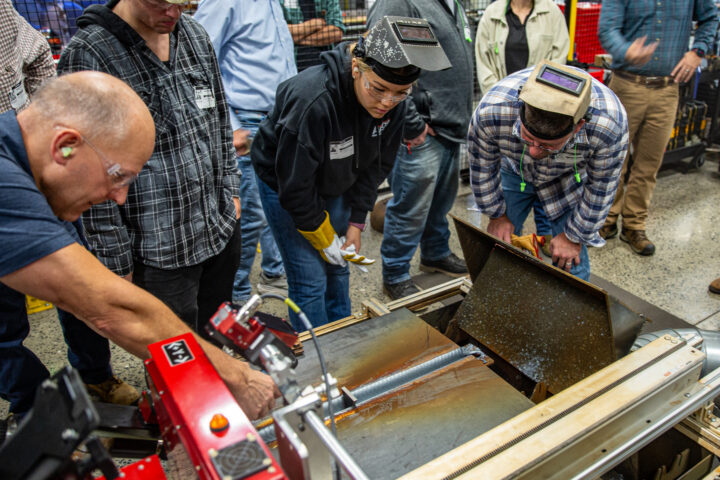
EB Team Visits Hypertherm as Part of Drive Toward Modern, Efficient Shipbuilding
A team from Groton and Quonset Point headed to New Hampshire-based Hypertherm Associates this week to get a closer look at a modern automated plasma gouging process designed to streamline hull fabrication. The visit was part of a broader effort across Electric Boat to bring more advanced, state‑of‑the‑art manufacturing tools into the shipyard. EB plans...Continue reading→
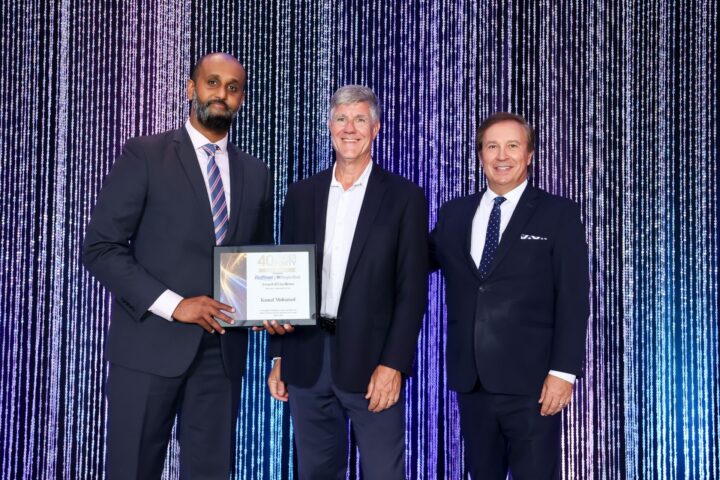
Kamal Mohamed Recognized as 2026 Hartford Business Journal 40 Under Forty Award Recipient
The Hartford Business Journal (HBJ) 40 Under Forty Awards recognize outstanding young professionals in the Greater Hartford area who are excelling in their industries through their leadership roles. They are driven by success, motivated by challenges and are role models for their peers. These individuals are part of an outstanding class of upcoming business leaders...Continue reading→
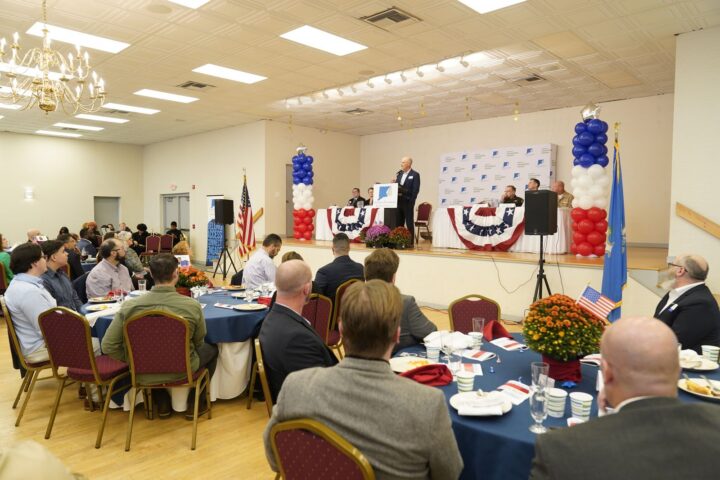
Electric Boat Joins Regional Leaders for Military Appreciation Breakfast
Electric Boat employees joined military and community leaders for the Chamber of Commerce of Eastern Connecticut’s annual Military Appreciation Breakfast on Sept. 30 at Ocean Beach Park’s Port ‘N’ Starboard. The event provided more than 120 complimentary seats to active-duty service members from the Navy, Coast Guard and Connecticut National Guard. General Dynamics Electric Boat...Continue reading→
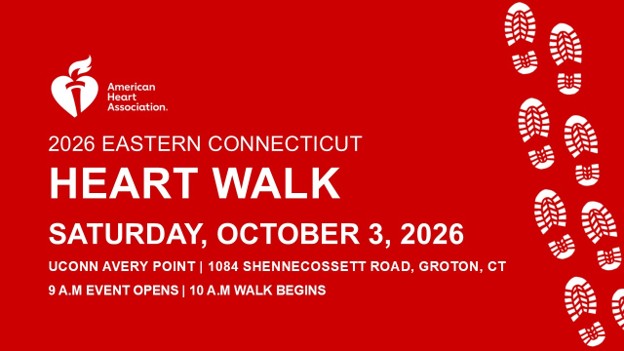
One Week Left—Let’s Claim the Torch! AHA Eastern Connecticut Heart Walk: Final Countdown
We are just one week away from the 2026 AHA Eastern Connecticut Heart Walk on October 3, 2026, at UConn Avery Point and this is our moment to finish strong. We’ve built incredible momentum, and now we’re within striking distance of something big. Right now, Electric Boat is holding second place, behind Mohegan Sun by...Continue reading→
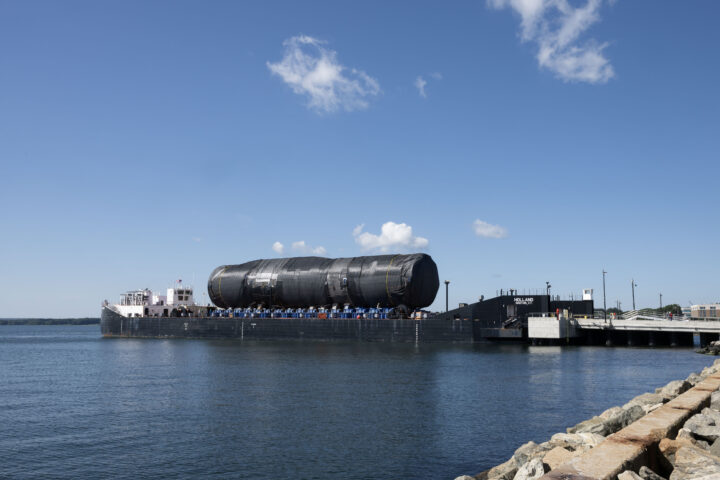
803 Section 2B/5 Transported from Quonset Point to Groton
PCU Arizona’s (SSGN 803) Section 2B/5 was successfully delivered to Groton from Quonset Point. At 184 feet in length, this section – which includes the Virginia Payload Module (VPM) – is the largest Virginia-class shipment ever transported. Arizona, the first submarine to incorporate VPM, will be about 460 feet long upon final construction. Section 2B/5...Continue reading→