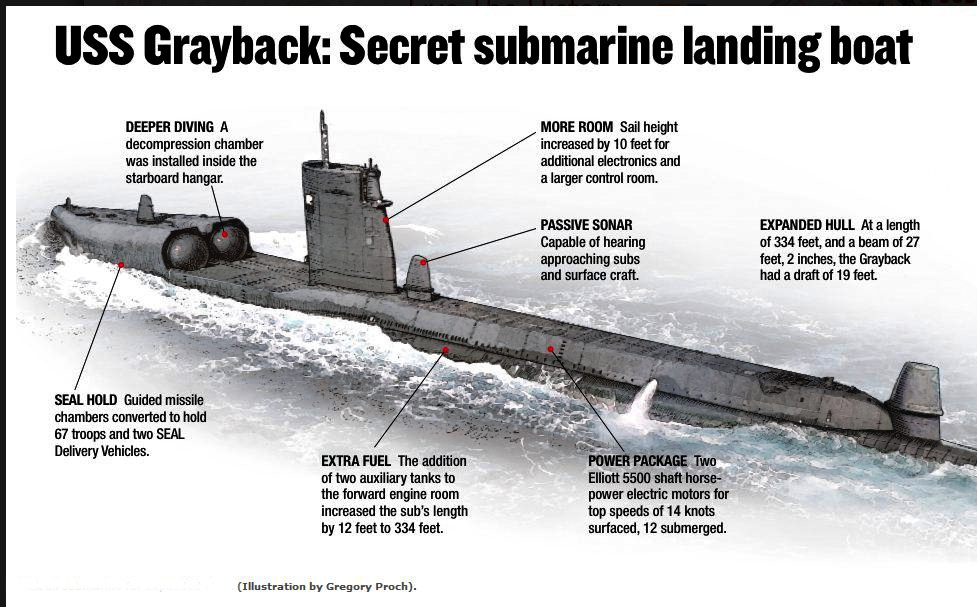
On January 16, 1982, near midnight, the “mini-sub,” a Navy Seal delivery vehicle (SDV), returned to its host submarine USS Grayback (LPSS-574). Though unheard of elsewhere in the Navy at the time, such operations had been routine aboard for more than a decade. USS Grayback was off the coast of the Philippines involved in a classified mission.
No one knew that serious tragedy lay just ahead.
Before this phase of service, the diesel-electric USS Grayback (named after the herring, a small fish of great commercial importance to the Great Lakes region) had served as a launching platform for Regulus missiles. These missiles led to revolutionary advances in how our Navy could be capable of deterrence and power with the ability to destroy land targets while being undetected from sea.
For its current role, the USS Grayback had its cavernous twin missile bays converted into diving hangars and a decompression chamber for special-forces operations.
After stowing the SDV, USS Grayback’s support divers and the SDV crew (six team members total) remained within the flooded (“wet side”) starboard hangar, making preparations for re-entering the submarine. They received permission to shut the outer hangar door, the step just before draining and venting the hangar.
By this time, the vent-and-drain operation had become so routine that diver-qualified personnel on the dry side of the hangar directed the procedure in a largely informal manner. While draining water from any manned space, it is critical that breathable fresh air flows in through a vent pipe to replace the volume of the draining water. Aboard USS Grayback, this air flow was controlled by a vent valve operable from the wet or dry side through a linkage. The dry-side supervisor ordered the vent valve to be opened; the wet side divers acknowledged and complied. The expected venting alarm didn’t sound as normal, but no one questioned this problem nor did anything about it. Draining commended.
Soon the wet-side divers felt dizzy and short of breath. One operator checked valve positions but couldn’t open the vent any farther. Later, someone keyed the wet-side communication microphone but didn’t speak. Five of the six divers passed out and fell into the water, some possibly losing their scuba regulator mouth pieces. One diver managed to hook his arm over a pipe to avoid falling before he too passed out.
The dry-side operators heard the keying of the wet-side microphone but dismissed it as a joke or inadvertent action. Not hearing the expected reports of water level and noting the usual draining noise had stopped, the dry-side operators attempted microphone communication. When this failed to get a response, they tried standard tap signals, repeating each one several times. Using their dry-side operating linkage, they checked the vent valve but found it difficult to operate. One dry-side operator entered the transfer lock that separated the dry from the wet-side and peered through what was referred to as the “dead light” window; he saw only material from a wet suit within. After several more minutes of communications attempts, the diver whom had hooked his arm on a pipe began to revive and reported that he needed help. Dry-side operators then entered the hangar and found that five of the six wet-side divers had died.
A formal investigation revealed several design flaws as well as personnel training, maintenance and operation issues in the USS Grayback diver transfer system. Often design weaknesses can be mitigated by proper training, maintenance and disciplined operation, but on January 16, 1982 this was not the case. It was concluded that a wet-side operator had opened the vent valve only partway, thereby causing a vacuum to form.
Contributing factors included:
•Neither the vent valve, nor its operating linkage, had been lubricated properly
•Those who claimed to have done greasing maintenance didn’t know a fitting existed for greasing the vent valve
•Other grease fittings in the hangar were painted over or rusted shut
•17 gauges were overdue for calibration and another one was missing
•Hangar drain procedures had not been submitted to NAVSEA for approval; mandated changes to other procedures had not been made.
•Two senior watches were often combined, in violation of procedures
•Diver personnel had received less than 1-1/2 hours of diving training in the previous six months
•Not all participating divers had attended the pre-dive brief
Each one of these factors wasn’t catastrophic by itself, but when combined in the right order it led to a tragedy.
From this tragic event came improvements in the Deep Submergence Systems (DSS) Certification Program (commonly referred to as DSS-SOC). The Navy now requires that all diving systems be designed to prevent or minimize the possibility of unintentionally causing a vacuum, and hazard and safety analyses are required during design.
Additionally, Navy diving and salvage personnel are involved in the certification of submarine-oriented diving systems. Today, the material and procedural requirements of the DSS program continue to evolve, and the most current requirements are contained in the System Certification Procedures and Criteria Manual for Deep Submergence Systems, NAVSEA SS800-AG-MAN-010/P-9290. The intent of the DSS certification process is to provide maximum reasonable assurance that a material or procedural failure that imperils the operators or occupants will not occur, and the DSS personnel may be recovered without injury if there is an accident.
As members of the EB Team, our challenge and responsibility today, 37 years after the accident aboard USS Grayback, is to maintain the high level of the standards established by the DSS Certification Program.
Compliance with our procedures is critical. Attention to detail, regardless of the task, should be the mindset we have with anything we do associated with diver safety. A questioning attitude is critical—am I using the correct lubricant? Do I have the proper OQE for implodable or explodable volumes? Is my work task in the DSS-SOC boundary?
We cannot undo the tragedies of the past but we can learn from them and ensure that we always adhere to all diver safety requirements. We, as members of the submarine team, owe those who died aboard USS Grayback nothing less.
The men lost on January 16, 1982:
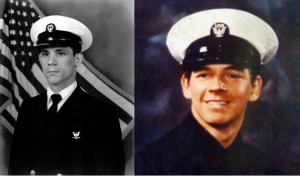
Charles Wayne Bloomer and Rodney Lee Fitz (right).
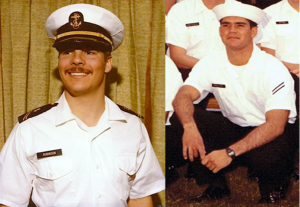
William C. Robinson and Leslie C. Shelton (right).
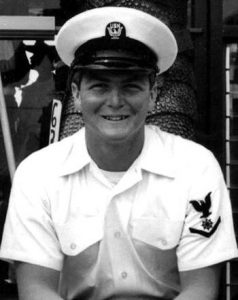
Richard D. Bond
Rest in peace shipmates. The EB Team is committed to your legacy each and every day we work on submarines.
Delivering the Future
Some imagine the future. We deliver it now.
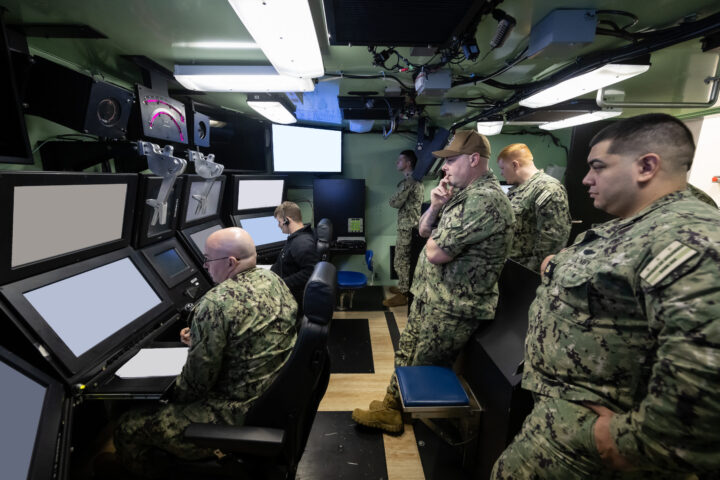
State-of-the-Art Simulator Prepares District of Columbia Crew for its Mission
As construction of the District of Columbia (SSBN 826) continues apace in EB’s South Yard Assembly Building, the sailors who will soon be at the controls are spending hours in a dynamic, high-tech simulator learning the intricacies of operating the 21,000-ton, first-in-class boomer. The Columbia Ship Control Operator Trainer (CSCOT) is a replica of the...Continue reading→
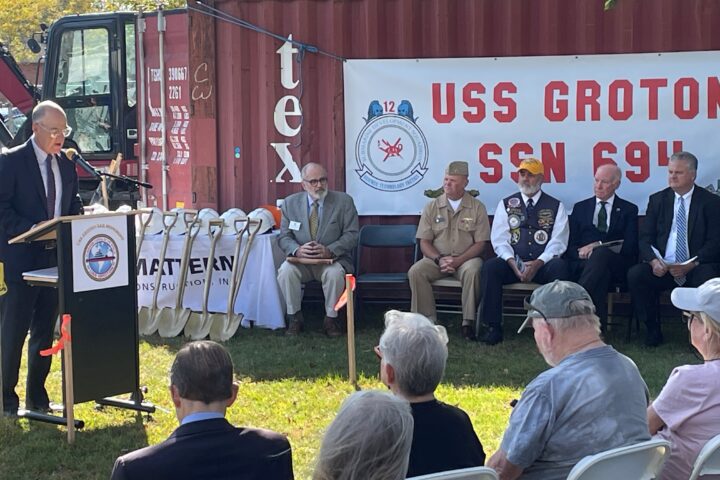
Groundbreaking Ceremony Marks Start of USS Groton Sail Monument
Fifty years after the USS Groton (SSN‑694) first launched, dozens gathered outside the Groton Public Library Oct. 9 to celebrate the groundbreaking of the USS Groton Sail Monument. The $6.6 million project—three decades in the making—will honor the men and women who design, build, operate and maintain the Navy’s submarines, as well as the families...Continue reading→

A Celebration of Heart, Community and Victory
2026 American Heart Association Eastern Connecticut Heart Walk Recap Saturday, October 3, 2026 | UConn Avery Point The 2026 American Heart Association Eastern Connecticut Heart Walk at UConn Avery Point was nothing short of extraordinary. Under bright autumn skies, 26 incredible Electric Boat teams and 151 walkers came together with passion, purpose, and unstoppable energy...Continue reading→
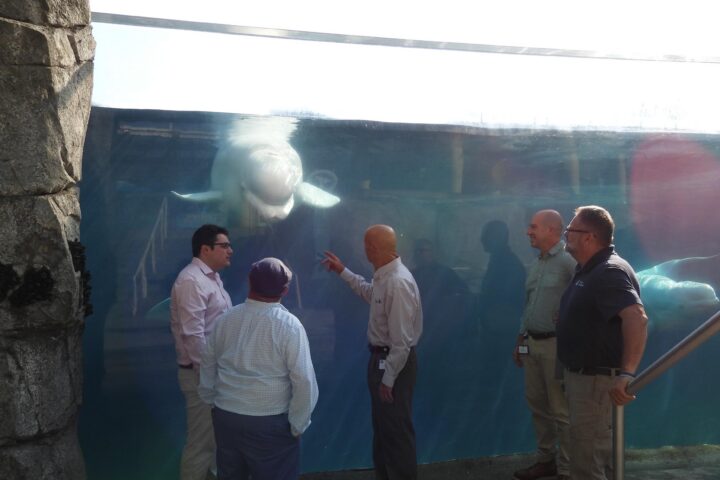
Quonset Point Donation Will Help Keep Mystic Aquarium’s Belugas Cool
Juno, the Mystic Aquarium’s convivial, photo-bombing Beluga whale, will continue swimming in cool comfort thanks to an unlikely chain of events that began 40 miles east in an Electric Boat industrial building at Quonset Point. That’s where EB’s Russ Tatro and Chris Logan were going over plans with a vendor, Carrier Corp., to replace Building...Continue reading→
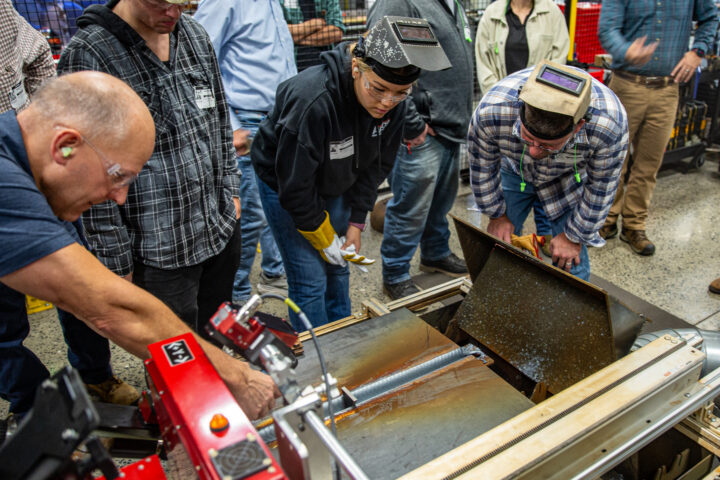
EB Team Visits Hypertherm as Part of Drive Toward Modern, Efficient Shipbuilding
A team from Groton and Quonset Point headed to New Hampshire-based Hypertherm Associates this week to get a closer look at a modern automated plasma gouging process designed to streamline hull fabrication. The visit was part of a broader effort across Electric Boat to bring more advanced, state‑of‑the‑art manufacturing tools into the shipyard. EB plans...Continue reading→
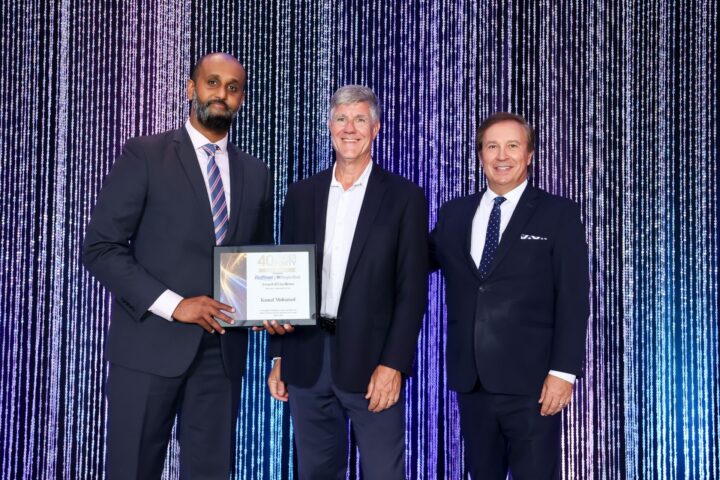
Kamal Mohamed Recognized as 2026 Hartford Business Journal 40 Under Forty Award Recipient
The Hartford Business Journal (HBJ) 40 Under Forty Awards recognize outstanding young professionals in the Greater Hartford area who are excelling in their industries through their leadership roles. They are driven by success, motivated by challenges and are role models for their peers. These individuals are part of an outstanding class of upcoming business leaders...Continue reading→
Electric Boat Joins Regional Leaders for Military Appreciation Breakfast
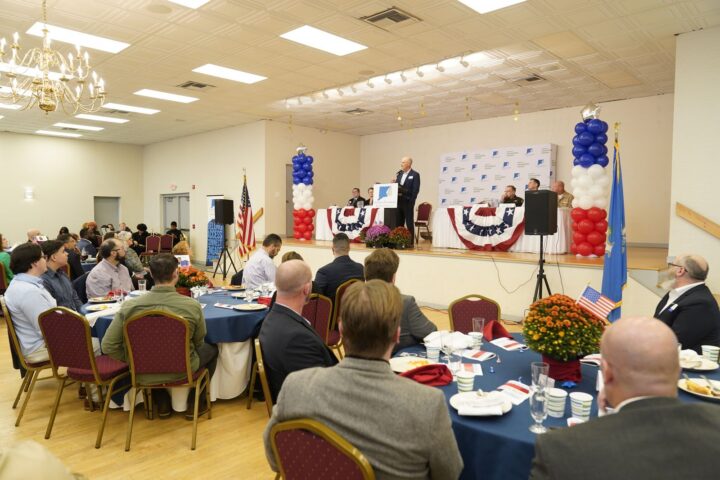
Electric Boat employees joined military and community leaders for the Chamber of Commerce of Eastern Connecticut’s annual Military Appreciation Breakfast on Sept. 30 at Ocean Beach Park’s Port ‘N’ Starboard. The event provided more than 120 complimentary seats to active-duty service members from the Navy, Coast Guard and Connecticut National Guard. General Dynamics Electric Boat...Continue reading→

One Week Left—Let’s Claim the Torch! AHA Eastern Connecticut Heart Walk: Final Countdown
We are just one week away from the 2026 AHA Eastern Connecticut Heart Walk on October 3, 2026, at UConn Avery Point and this is our moment to finish strong. We’ve built incredible momentum, and now we’re within striking distance of something big. Right now, Electric Boat is holding second place, behind Mohegan Sun by...Continue reading→
803 Section 2B/5 Transported from Quonset Point to Groton
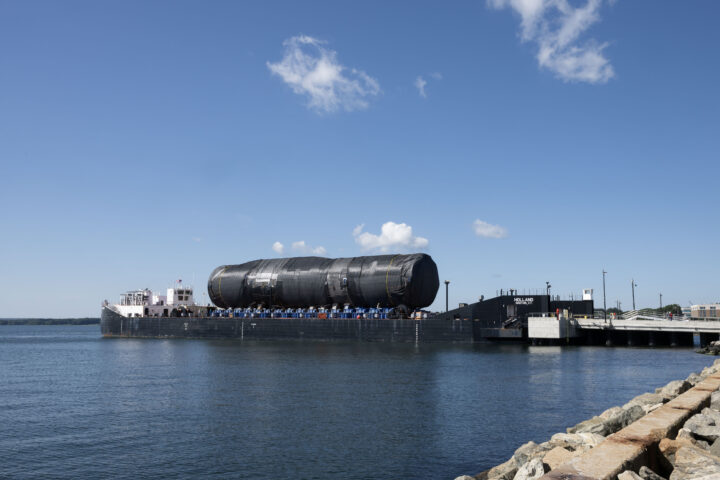
PCU Arizona’s (SSGN 803) Section 2B/5 was successfully delivered to Groton from Quonset Point. At 184 feet in length, this section – which includes the Virginia Payload Module (VPM) – is the largest Virginia-class shipment ever transported. Arizona, the first submarine to incorporate VPM, will be about 460 feet long upon final construction. Section 2B/5...Continue reading→