By Erik Walsh, NTO Electrical Production Radiological Controls Operations Supervisor
August 7, 2018
If you ever feel you haven’t been given the chance to come to the table with a better way of doing something, I ask you to look to your drawings, references, and procedures. These represent the recorded voices of your teammates, who are responsible for the construction, operation, and maintenance of our nuclear submarines. These documents are the output of many challenges encountered — they are the combined answers to the “how to” questions. Trust the hard work that has gone into making these processes, and procedures; it will keep you safe and ensure that what you are trying to do is appropriate.
Each time a document revision is put into use, it signals that an individual has come to the table with a new way of doing something. It is our responsibility to those that have come before and certainly to those that will come after us, to develop safer, more-efficient solutions. Come to the table, provide your input, and improve our team.
Installing and protecting nuclear instruments is significantly important to EB, specifically to the nuclear trades and test groups. History has shown that the detectors have the possibility of being damaged at every phase from construction through install and need significant protection until delivery of the reactor compartment (RC). Many proposals have been implemented to improve our methods of protecting the detectors.
Staging in the RC has been reconfigured by Manufacturing Engineering (D467) to support detector installation earlier in the construction process. Previously, temporary staging was welded to the deck, delaying installation of some detectors until a month after others. This deferred NTO analysis of the detector integrity, which further delayed identifying problems. Communication of the difficulties associated with the install was critical to starting the discussion and revisiting how and when we build and install components in the RC.
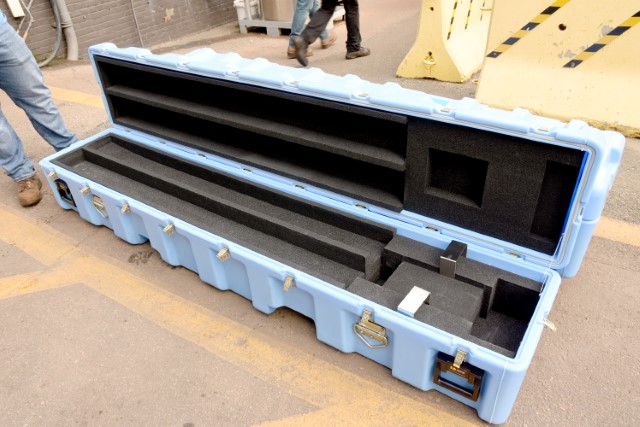
NTO recently implemented the use of custom cases to safeguard the detectors and provide detector location assignment information in support of install. In the past, wooden shipping crates housed all components of the detector at receipt. The crates were then reconfigured to house the NTO-built detector for transportation to the RC. The detector and supplemental pieces would travel in different containers to be rigged into the RC at the time of install. Using the new cases and improving handoffs during the procedure, NTO (with assistance from Carpenters D252 and Riggers D230) was able to safely and effectively install these detectors on the 793 boat (Oregon) in four days – that’s 60% fewer days compared to previous typical installations!
Additionally, D274 NTO/NSM has implemented protective covers, Tygon tubing, and markings to further protect the cables until the RC construction is complete. In the past, detector cabling was not sufficiently protected to prevent damage, resulting in costly repairs and rework. These protective covers are of significant importance and must not be removed without proper authorization and coordination with Nuclear Ship’s Management.
Quonset Point Donation Will Help Keep Mystic Aquarium’s Belugas Cool
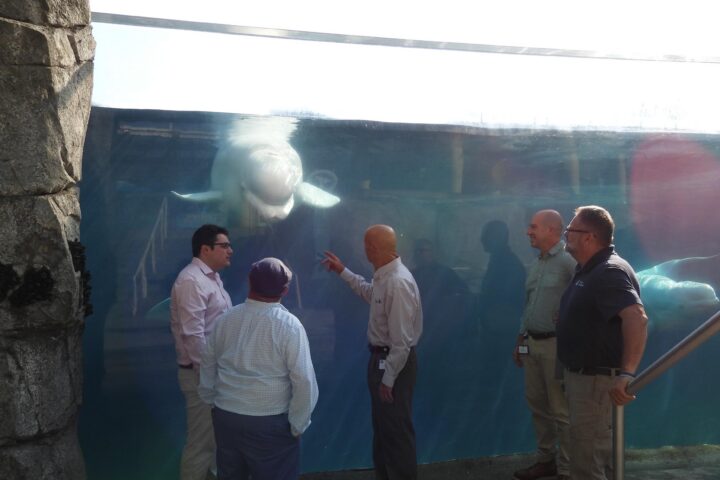
Juno, the Mystic Aquarium’s convivial, photo-bombing Beluga whale, will continue swimming in cool comfort thanks to an unlikely chain of events that began 40 miles east in an Electric Boat industrial building at Quonset Point. That’s where EB’s Russ Tatro and Chris Logan were going over plans with a vendor, Carrier Corp., to replace Building...Continue reading→

EB Team Visits Hypertherm as Part of Drive Toward Modern, Efficient Shipbuilding
A team from Groton and Quonset Point headed to New Hampshire-based Hypertherm Associates this week to get a closer look at a modern automated plasma gouging process designed to streamline hull fabrication. The visit was part of a broader effort across Electric Boat to bring more advanced, state‑of‑the‑art manufacturing tools into the shipyard. EB plans...Continue reading→

Kamal Mohamed Recognized as 2026 Hartford Business Journal 40 Under Forty Award Recipient
The Hartford Business Journal (HBJ) 40 Under Forty Awards recognize outstanding young professionals in the Greater Hartford area who are excelling in their industries through their leadership roles. They are driven by success, motivated by challenges and are role models for their peers. These individuals are part of an outstanding class of upcoming business leaders...Continue reading→
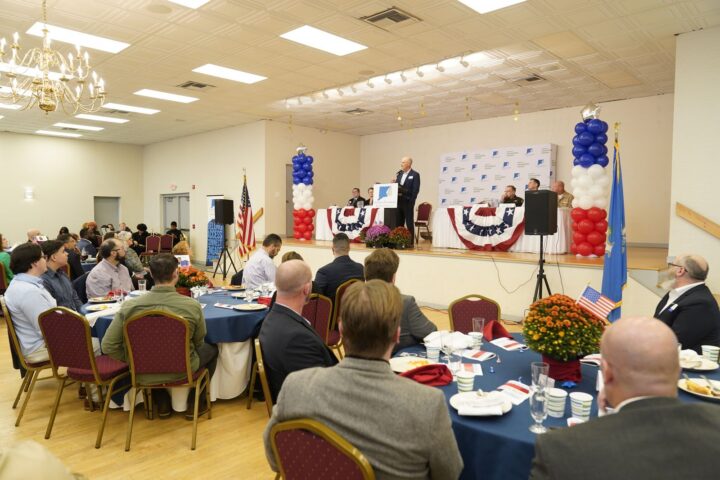
Electric Boat Joins Regional Leaders for Military Appreciation Breakfast
Electric Boat employees joined military and community leaders for the Chamber of Commerce of Eastern Connecticut’s annual Military Appreciation Breakfast on Sept. 30 at Ocean Beach Park’s Port ‘N’ Starboard. The event provided more than 120 complimentary seats to active-duty service members from the Navy, Coast Guard and Connecticut National Guard. General Dynamics Electric Boat...Continue reading→

One Week Left—Let’s Claim the Torch! AHA Eastern Connecticut Heart Walk: Final Countdown
We are just one week away from the 2026 AHA Eastern Connecticut Heart Walk on October 3, 2026, at UConn Avery Point and this is our moment to finish strong. We’ve built incredible momentum, and now we’re within striking distance of something big. Right now, Electric Boat is holding second place, behind Mohegan Sun by...Continue reading→
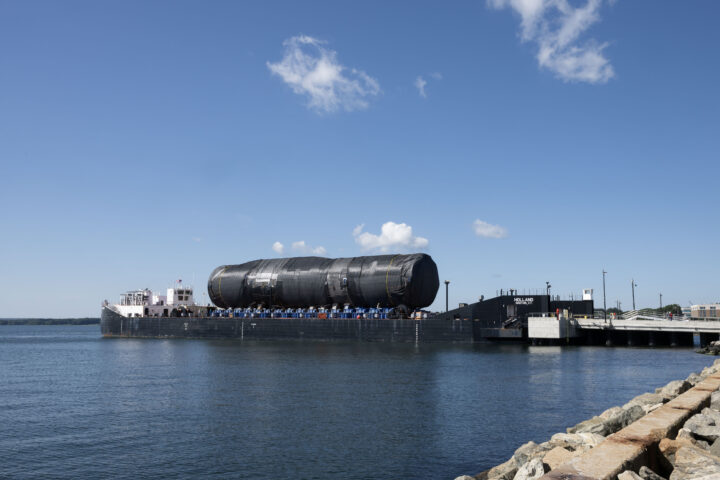
803 Section 2B/5 Transported from Quonset Point to Groton
PCU Arizona’s (SSGN 803) Section 2B/5 was successfully delivered to Groton from Quonset Point. At 184 feet in length, this section – which includes the Virginia Payload Module (VPM) – is the largest Virginia-class shipment ever transported. Arizona, the first submarine to incorporate VPM, will be about 460 feet long upon final construction. Section 2B/5...Continue reading→
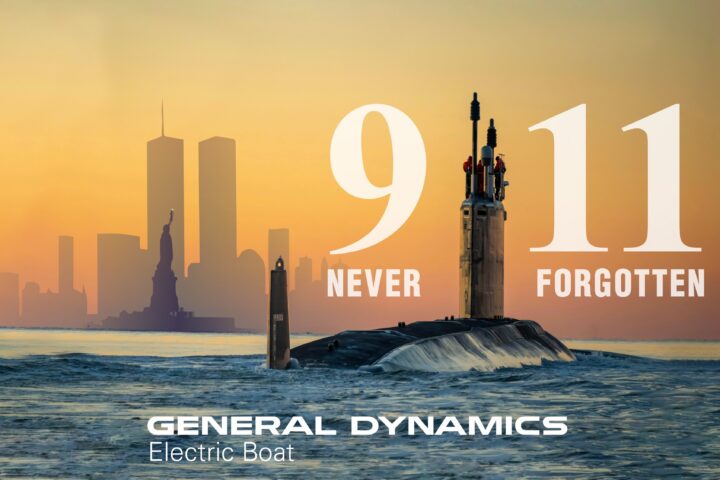
Remembering September 11
On September 11, 2001, the Twin Towers of downtown Manhattan’s World Trade Center and the Pentagon in Washington, D.C., were targeted in a series of coordinated attacks that would leave an everlasting imprint on our country’s psyche. As the events unfolded on that Tuesday morning, nearly 3,000 people lost their lives, over 600 were injured...Continue reading→
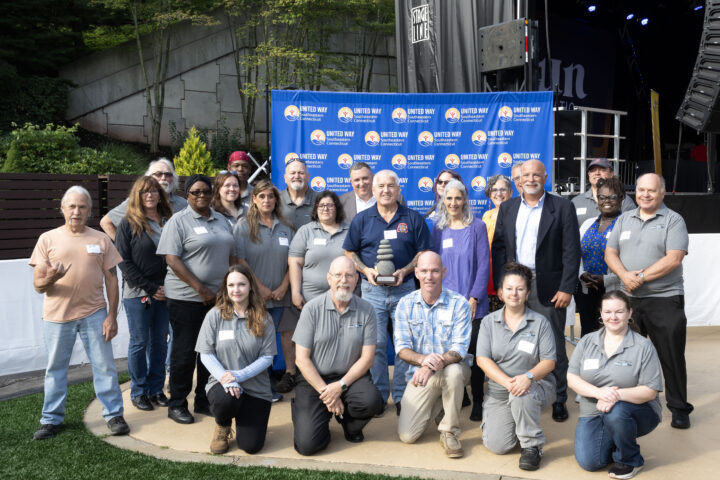
EBECSA Celebrates 75 Years — Nominate EB Employees Past and Present for Recognition
This year, the Electric Boat Employees’ Community Services Association (EBECSA) proudly celebrates its 75th anniversary. EBECSA was founded in 1951 by EB employees who wanted to create a dedicated, organized way to support nonprofit health and human service agencies in the communities where we live and work. What began as a small employee‑driven effort has...Continue reading→
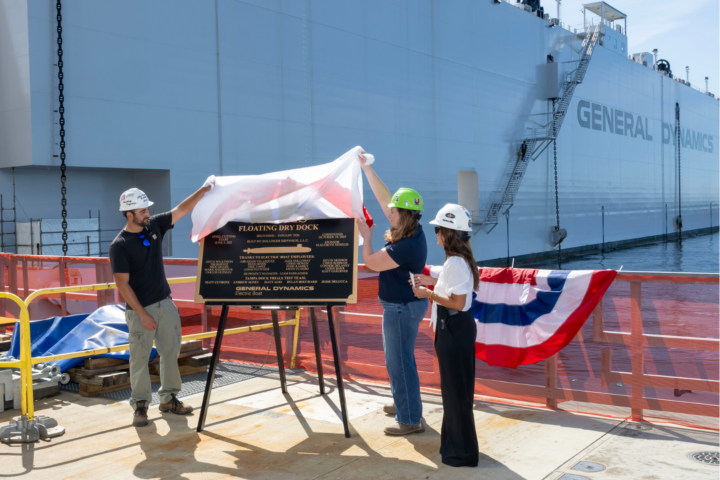
Atlas Plaque Unveiled, Honoring Plank Owners at South Yard Ceremony
Employees who have worked on Atlas, EB’s new state-of-the-art floating dry dock, gathered in the South Yard on Wednesday, Aug. 26, to unveil a new bronze plaque recognizing the contributions of its plank owners. The event celebrated the teams who helped bring Atlas from Bollinger Shipyards in Louisiana to its arrival in Groton earlier this year. Atlas will play...Continue reading→
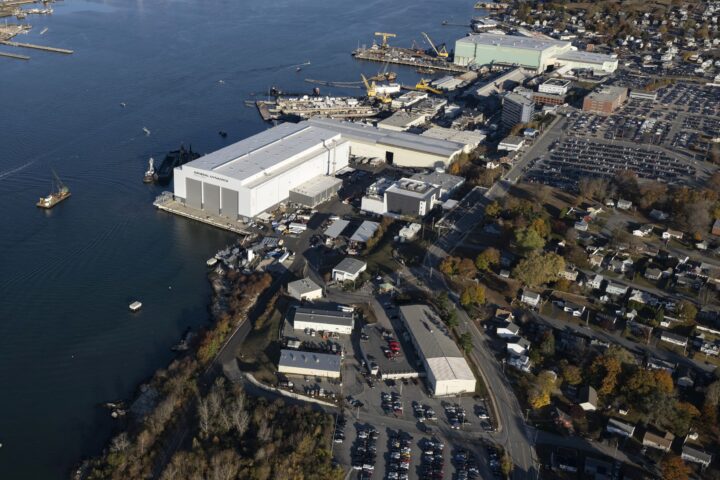
Neighbors Meet with EB to Discuss Noise, Lighting and Other Quality of Life Topics
Nearly twenty neighbors of Electric Boat’s Groton shipyard joined company leaders Aug. 25 for a community conversation focused on their quality‑of‑life concerns related to the South Yard Assembly Building (SYAB) and Atlas, the new floating dry dock. The Mayor of the City of Groton, Jill Rusk, also attended. Residents said they appreciated the chance to talk...Continue reading→