
Hi everyone; it’s Kevin. Today is Friday, August 28th.
It’s been a busy time for us here at Electric Boat. Last Friday, we hosted Secretary of the Navy Kenneth Braithwaite and our congressional delegations from Rhode Island and Connecticut. The Secretary toured the Building 9 complex in Quonset Point, Building 260 in Groton and the South Yard Assembly Building site. He was impressed by the quality of our people and our progress since his last visit just a few short weeks ago. He thanked us for our commitment to our nation’s defense. Thanks also go to our congressional delegation for the work they do to ensure that Congress and our government leaders understand the vital role we play in defense of our nation and that they fund it appropriately. I also want to thank our union partners for their support at the event.
We had good news last week with the announcement that the Southeastern New England Defense Industry Alliance, known as SENEDIA, has been awarded a two-year contract by the Department of Defense Industrial Base Analysis and Sustainment Program for $18.6 million dollars for submarine shipbuilding workforce development. I’d like to again thank our congressional delegation along with SENEDIA and our training partners for success in securing this award. EB continues to collaborate with our regional partners to create training pipelines in support of our vital mission. This award will expand these programs and provide a skilled workforce to meet the need for increased hiring at Electric Boat and at our critical supply chain partners.
On Monday morning the EB team had the honor of welcoming Mrs. Terry Stackley to Quonset Point for the keel-laying ceremony for PCU Idaho, SSN 799. Terry is the sponsor for Idaho, the 26th ship of the Virginia class. Due to the need for physical distance, the group watching Quonset Point’s Tim Cashman weld Terry’s initials onto the keel plate was fairly small. Special guests included Terry’s children and husband Sean, the former Assistant Secretary of the Navy for Research, Development and Acquisition. Quonset Point’s Master Shipbuilders—employees who, this year, celebrate 40 years or more of service to Electric Boat—were at the ceremony and it was an honor for me to thank them for their service. I encourage you to check out the photo story capturing the great event—it’s posted on both Homeport and EB Landing.
Immediately after the keel laying on Monday morning, I returned to Groton where, this week, Naval Reactors has been conducting their yearly audit, which concluded today. We were well prepared and energized, and the feedback we received demonstrates that our efforts to improve teamwork and communication are beginning to make a real difference. We have a lot of work ahead of us as we continue to improve, and I am energized when I see the entire EB team coming together. We are building some momentum that will be critical as we grow the team and the workload. Admiral Caldwell told me our nation and our Navy need us to be successful!
A few weeks ago I highlighted the great strides the Groton Pipe Shop was making in raising their radiographic weld acceptance rates. Over the past seven weeks, from July 11 – August 27, they’ve had an acceptance rate of 99%. In fact, they’ve had only one pipe joint reject out of almost 100 attempts. That is world-class performance achieved with help from across EB including NDT, welding engineering and others. This is what first-time quality means. We are seeing less rework, and we are creating opportunity for even more improvement. Over the last 17 weeks, the Quonset Point pipe team has improved their weld acceptance rate from around 90% in April to 95%. Congratulations to all involved for the teamwork this required and please keep up the great work!
Over the last few months at the Subase, the Nuclear Regional Maintenance Department partnered with the crew of USS Hartford to successfully execute a complex radiological maintenance evolution. This evolution involved multiple EB departments from the shipyard matrixed into the NRMD who engineered, planned, and executed multiple maintenance tasks. Working side-by-side with the USS Hartford crew and Navy personnel, our EB employees demonstrated the collaboration and teamwork with the Navy which will be a key for success during the Engineered Overhaul for the Hartford that our company was recently awarded. That will take place later next year.
In other good news, last week at our test facility in the Philadelphia Navy Yard, where we are testing the full-scale electric drive propulsion system for Columbia, we successfully completed the full-power heat run on the Main Propulsion Motor.
One of the biggest technical risks of power dense electric motors is their thermal performance, where an inadequate design can lead to significant overheating. In the case of the Main Propulsion Motor, an inadequate thermal design can result in the ship not achieving its design speed. The Main Propulsion Motor heat run shows the design is performing as expected, and we have retired a significant technical risk for the Columbia propulsion system. On Tuesday I received a note from Admiral Caldwell congratulating EB and everyone involved—in his words, Bravo Zulu, or well done to everyone who contributed to this important milestone.
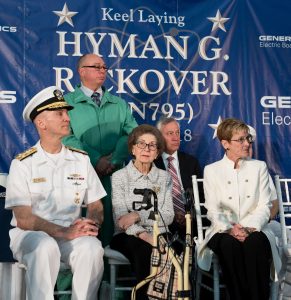
This past week, on SSN 795 PCU Rickover, we performed two hull butts simultaneously—Section 2A to 2B and Section 5 to 6. The last time we did this was almost a decade ago on SSN 782, USS Mississippi. It takes a team of linesmen and transfer car operators, along with Engineering and Accuracy Control folks to align the hull butts to drawing requirements. Once the hull butt is aligned, the Steel Trades, shipfitters, welders and grinders, lock the hull butt in place. Once Quality Assurance accepts the fit-up and fairness of the hull butt, we install strip heaters for welding, and the Equipment Control Center installs the tracks used to run the automated welding machines. The whole process of welding a hull butt takes an average of about 33 days. We’ll be done with both welds next week. Thank you for a great team effort.
It’s a pleasure to have so much good news to share with you. The term “root cause analysis” is most closely associated with stepping back to figure out why something went wrong. But I think it’s even more important to step back and analyze why we’re getting it right. Simply put, it comes back to our core values – valuing each other, behaving with integrity and purpose and committing to excellence. The teamwork and mutual support I’m seeing is something I ask each of you to demonstrate to each other each day. Thank you for your hard work and dedication to our values and our mission.
Have a great weekend. I think I’m going fishing.
Kevin
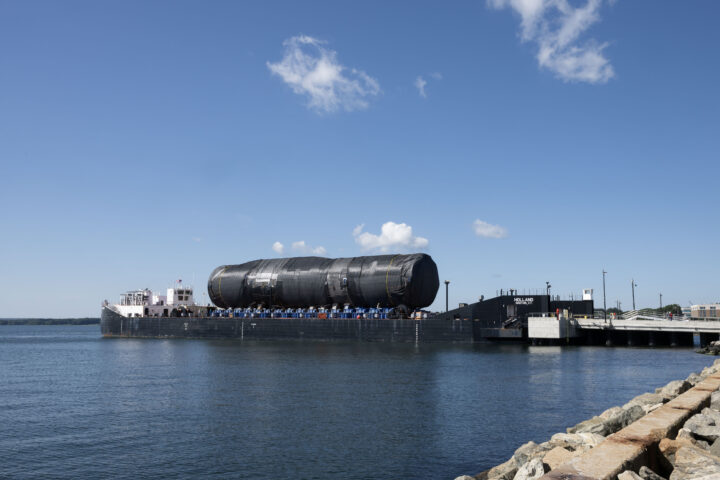
803 Section 2B/5 Transported from Quonset Point to Groton
PCU Arizona’s (SSGN 803) Section 2B/5 was successfully delivered to Groton from Quonset Point. At 184 feet in length, this section – which includes the Virginia Payload Module (VPM) – is the largest Virginia-class shipment ever transported. Arizona, the first submarine to incorporate VPM, will be about 460 feet long upon final construction. Section 2B/5...Continue reading→
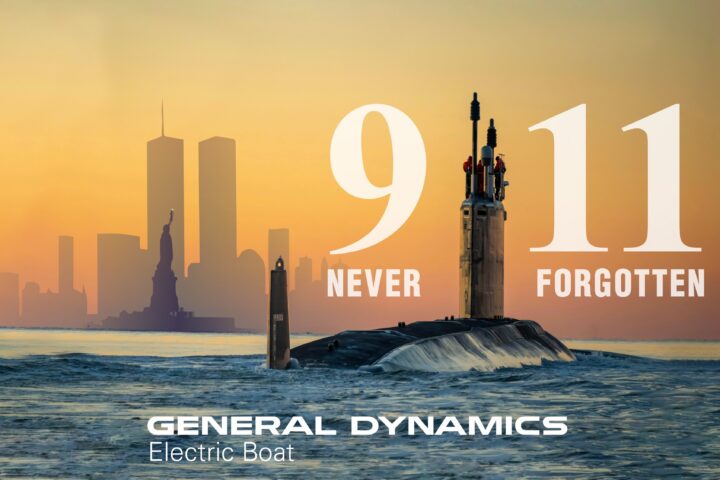
Remembering September 11
On September 11, 2001, the Twin Towers of downtown Manhattan’s World Trade Center and the Pentagon in Washington, D.C., were targeted in a series of coordinated attacks that would leave an everlasting imprint on our country’s psyche. As the events unfolded on that Tuesday morning, nearly 3,000 people lost their lives, over 600 were injured...Continue reading→
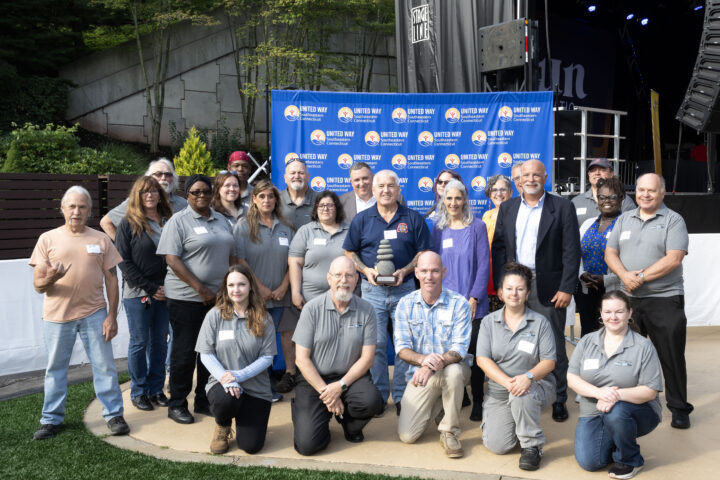
EBECSA Celebrates 75 Years — Nominate EB Employees Past and Present for Recognition
This year, the Electric Boat Employees’ Community Services Association (EBECSA) proudly celebrates its 75th anniversary. EBECSA was founded in 1951 by EB employees who wanted to create a dedicated, organized way to support nonprofit health and human service agencies in the communities where we live and work. What began as a small employee‑driven effort has...Continue reading→
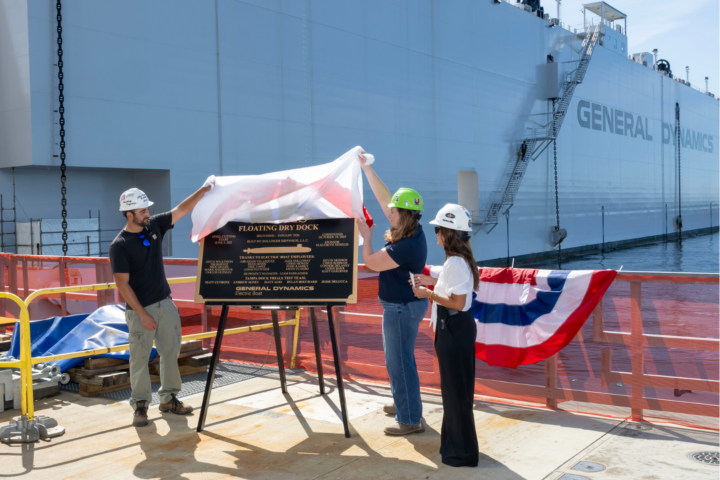
Atlas Plaque Unveiled, Honoring Plank Owners at South Yard Ceremony
Employees who have worked on Atlas, EB’s new state-of-the-art floating dry dock, gathered in the South Yard on Wednesday, Aug. 26, to unveil a new bronze plaque recognizing the contributions of its plank owners. The event celebrated the teams who helped bring Atlas from Bollinger Shipyards in Louisiana to its arrival in Groton earlier this year. Atlas will play...Continue reading→
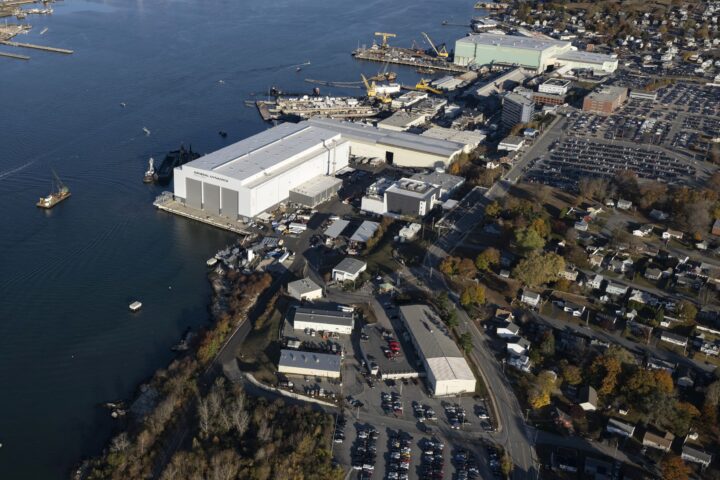
Neighbors Meet with EB to Discuss Noise, Lighting and Other Quality of Life Topics
Nearly twenty neighbors of Electric Boat’s Groton shipyard joined company leaders Aug. 25 for a community conversation focused on their quality‑of‑life concerns related to the South Yard Assembly Building (SYAB) and Atlas, the new floating dry dock. The Mayor of the City of Groton, Jill Rusk, also attended. Residents said they appreciated the chance to talk...Continue reading→
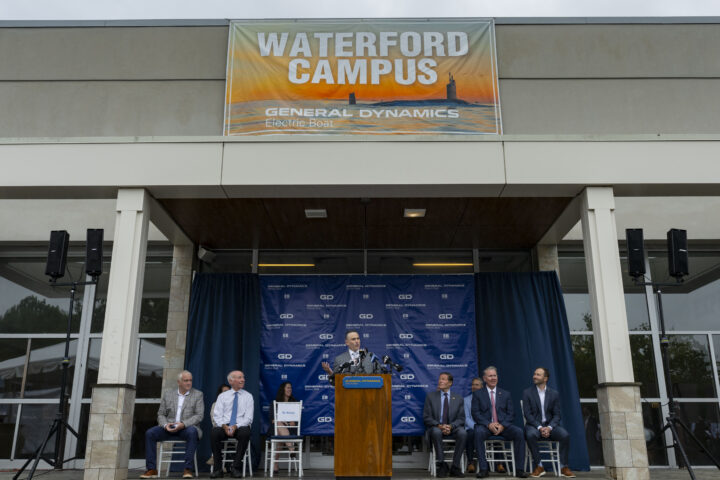
Rayha Report Ep. 26: Waterford Campus Groundbreaking
EB President Mark Rayha reports from the groundbreaking of the new Waterford Campus, where innovation, engineering and workforce development will come together to support our mission. The new facility will help train hundreds of shipbuilders daily as EB continues to grow for future production demands.
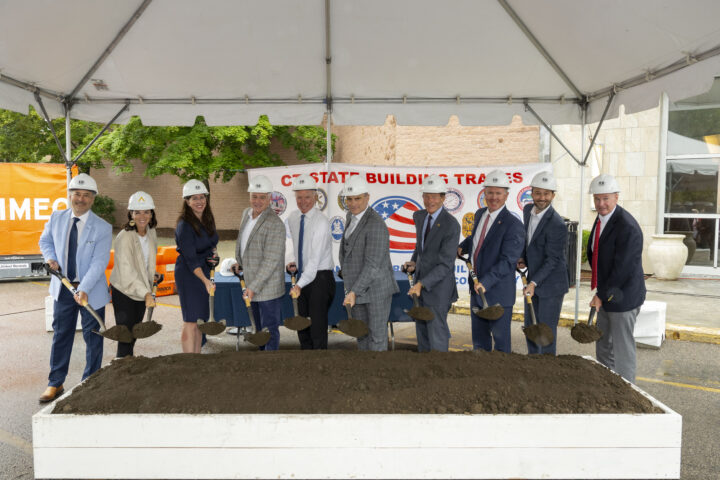
Waterford Campus Groundbreaking Marks EB’s Next Step in Innovation and Workforce Growth
Electric Boat officially broke ground Friday on the Waterford Campus, launching the transformation of the former Crystal Mall into a center for innovation, engineering and high‑tech workforce development. EB President Mark Rayha underscored how the project will reshape the way the company designs, tests and builds submarines. Innovation is the key, he said. “There’s an opportunity to...Continue reading→
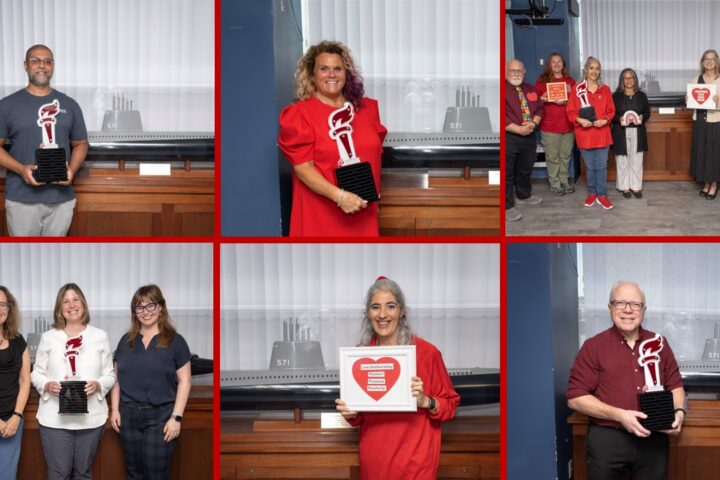
Powering HeartStrong 50: Thank You, EB Teams—Let’s Keep the Momentum Going!
Thank you to our incredible EB Heart Walk teams, our community partners, and everyone who joined the American Heart Association (AHA) Torch Journey photoshoot. Your enthusiasm and dedication made this milestone truly special. Now let’s keep our HeartStrong 50 energy going—our goal is 50 teams and $50,000 raised for the 2026 AHA Eastern Connecticut Heart Walk on October 3 at UConn Avery...Continue reading→
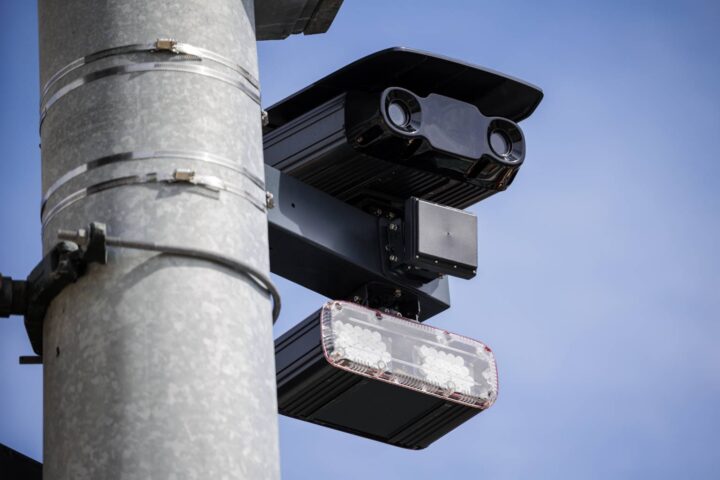
Speed Cameras to be Installed in the City of Groton
The City of Groton Police Department announced that automated speed enforcement cameras will be installed at several locations throughout the city. The cameras will be installed after the required 30-day public notification period, which began on Aug. 7, 2026. Camera locations: Mitchell Street Thames Street Clarence B. Sharp Highway (Route 349) Police said the purpose...Continue reading→
MDA Apprenticeship Application Now Open
Application Window: August 1, 2026 – August 31, 2026 The MDA Apprenticeship Program is a four-year initiative designed to develop a highly skilled workforce for Electric Boat. This program provides three years of on‑the‑job training alongside qualified subject matter experts, combined with classroom instruction across various technical disciplines. Participants gain advanced skills, broaden their expertise, and...Continue reading→