
Hi everyone; today is August 6th. (Podcast)
I want to talk a little bit about fire prevention and safety. On July 12, a catastrophic fire broke out on the amphibious assault ship Bonhomme Richard out in San Diego. It was undergoing maintenance at the time, and this is the worst in-port disaster the Navy has seen since the 2012 fire on board the attack submarine USS Miami. After four days of intense firefighting, the fire on the BHR was extinguished. Sixty-three people were treated for minor injuries, including heat exhaustion and smoke inhalation; thankfully, there were no fatalities. Early reports indicated that flammable materials, such as cardboard boxes and drywall, were being stored in a large cargo bay. This material is believed to have fueled the fire.
I want you to think back to May of 2012 when the USS Miami was undergoing a 20-month engineering overhaul at Portsmouth Naval Shipyard in Maine. A painter employed by the shipyard was working in the Miami’s torpedo room. On May 23rd, he set fire to a bag of rags that he placed on a bunk in a state room. So this was arson. It took a combined force of one hundred personnel twelve hours to extinguish the blaze. Damage was in excess of $400 million dollars with a repair bill of $700 million. That financial impact led the Navy ultimately to decommission the ship in 2014 rather than have it undergo costly repairs. Frankly, that ship probably would never have been the same.
Remember too, we just had a recent event on what will be the future USS Kennedy at Newport News where a tig lead shorted to the deck caused a burn-through of the deck, and the hot molten steel melted down to the deck below where it ignited some insulation. That fire burned for about 15 minutes before it was put out. Again, at NASSCO Norfolk on board USS Kearsarge, we had a fire as a result of some hot work. That one worked the way it was supposed to. The fire watch did the right thing and put the fire out pretty much on the spot. Those are two reminders, on the future Kennedy and on Kearsarge, that it doesn’t take much to cause a fire in a shipyard. The two larger events on board BHR and Miami are sobering reminders about how critically important fire prevention and control is in a shipyard.
Joining me today on the podcast is Matt Luxton, Vice President and General Counsel. Matt and I have been friends for many years. In addition to his legal responsibilities, our Security and Safety teams report up to Matt. Today Matt and I are going to talk about the part we all play in preventing catastrophes like the BHR and the Miami from happening in our shipyard and facilities in the first place.
KG: So Matt, thanks for joining this week’s podcast. To start, let’s talk about the aspects of our work that make us vulnerable to fire.
ML: Thanks Kevin, there are two major areas that represent our greatest risk of fire and opportunities for prevention: hot work and proper housekeeping. Unfortunately most fires, all of which are preventable, stem from either not adhering to the 35-rule requirement for hot work or the aggregation of combustible material.
KG: We’ve been working on this for a few weeks, and this is something that I’m going to be pretty adamant about that we improve our posture. So let’s talk a little bit about that. What are the Safety team and Operations team doing in partnership to strengthen our program around fire prevention? Let’s start with hot work.
ML: Immediately after the BHR, at Quonset Point and Groton we took steps to make sure that we were raising our awareness of the requirements for fire prevention and the actual steps people should take. Up at Quonset, Operations management issued directives to reinforce safety and fire requirements. Our supervisors are continuing to reinforce safety and fire protection at the deck plate briefings and supervisors are conducting follow-up audits to validate and ensure compliance. In addition, hot work protection now requires a peer-to-peer review to make sure we haven’t missed anything, and supervisors and area superintendents are mandated to perform daily shift surveillances focused on combustible material.
In Groton we’ve taken many of the same steps. Supervision and hot workers have reviewed the attributes of our Safety Manual related to hot work and the actions you’re supposed to take prior to starting hot work. All shipboard compartments were reviewed for hot work compliance. We require daily inspection prior to allowing hot work to commence on the SSN 795 and SSN 793 torpedo room bilges. All of our stud welders and their supervisors conducted a hot-work stand down, and ship’s management is conducting hot work observations on all ships. Finally, on the SSN 795 hull butt welding and gouging process, we’ve updated it to include surveillances by the Steel Trade General Foreman, Supervision and Assistant Area Superintendents. Our safety team is also giving “Working Safely When Welding and Gouging” briefings to employees at all sites to reinforce EB’s hot work protection policies.
KG: What’s important to me about all of this is that our folks not just understand what it is they need to do from a fire prevention and safety perspective, but why they have to do it. It all stems from making sure that we’re taking the combustible material out of the space so that when we’re doing hot work we’re staying safe. Let’s talk a little bit about housekeeping. It’s fair to say the fires on USS Miami and Bonhomme Richard would have been a lot less severe if the workspaces had been cleaned and all the clutter removed.
ML: That’s absolutely true, Kevin. In fact, cleaning as you go is the single most important element of fire prevention when working inside a production environment like at EB. A fire can’t start if there is nothing flammable to ignite. These two major events illustrate the importance of being proactive by adopting good safety habits. You’ve got to be aware of the dangers around you, you’ve got to contain materials that can quickly ignite, you’ve got to adhere to the rules that keep us safe and you always have to follow your training when performing hot work.
And, most importantly, we need to remember that complacency is as dangerous as the fire itself. We have to stay ever-vigilant on fire prevention and protection.
KG: Couldn’t agree more and the steps that we’re taking as an organization for fire prevention are critically important to our future. So, what do we expect our employees to do in case they’re in a situation where a fire breaks out?
ML: I think everybody knows here at Groton we have a series of “Cas-Con” boxes located throughout the Groton shipyard. Quonset Point has emergency communication centers located throughout the manufacturing areas. If you come across a fire, your first step is to call and report the fire, or really any other emergency, using one of these two systems. If you’re not near a Cas-Con box, or you’re not near a communication center up at Quonset, call the emergency numbers. In Groton, it’s 3-3333; at QP it is 2-2222. In New London, employees should dial 9-911. As everybody knows, there are fire extinguishers throughout the company’s facilities. And if you feel safe, you can and should try to put out the fire using our “one and done” policy with the fire extinguisher. Basically, practice “PASS”: point, aim, squeeze and sweep. After the initial attempt with one fire extinguisher, do not continue trying. Hopefully by that point, fire response will have shown up.
KG: Thanks Matt, we now know that the fire that occurred at Newport News on board Kennedy, one of the problems that we had was that the individual smelled smoke, and went to investigate, rather than call for help. That delayed the reaction to the fire and caused it to burn a little longer than maybe it would have otherwise.
I think this is helpful information, and it’s important for our folks to know about it. The risk of a fire in the yard or on one of our ships is always present and something that I constantly worry about. A fire in your work area can cause injuries and loss of life to you, your coworkers, and to our emergency responders. It can also damage or destroy our facilities, and we work so hard to put proper facilities in place for our folks to use to be able to build ships. Ultimately, the Navy needs these ships to defend our nation. Thanks to everyone listening for taking this seriously. Be proactive about the safety of you, your co-workers, our facilities and the sailors who will live on our ships to make sure we keep everyone safe.
We’ll talk soon.
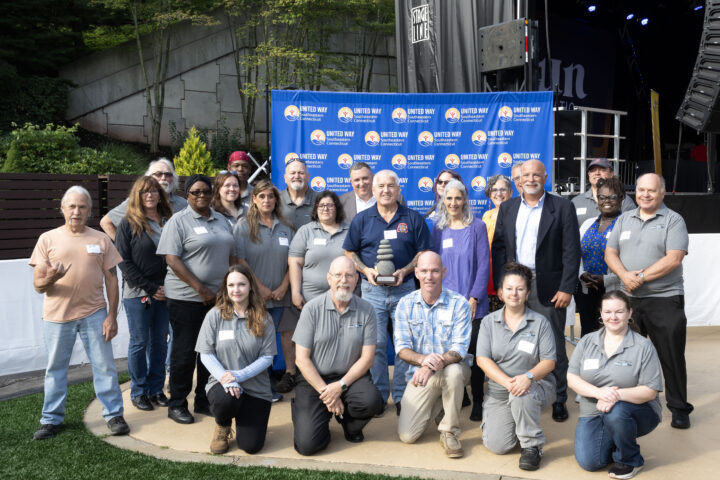
EBECSA Celebrates 75 Years — Nominate EB Employees Past and Present for Recognition
This year, the Electric Boat Employees’ Community Services Association (EBECSA) proudly celebrates its 75th anniversary. EBECSA was founded in 1951 by EB employees who wanted to create a dedicated, organized way to support nonprofit health and human service agencies in the communities where we live and work. What began as a small employee‑driven effort has...Continue reading→
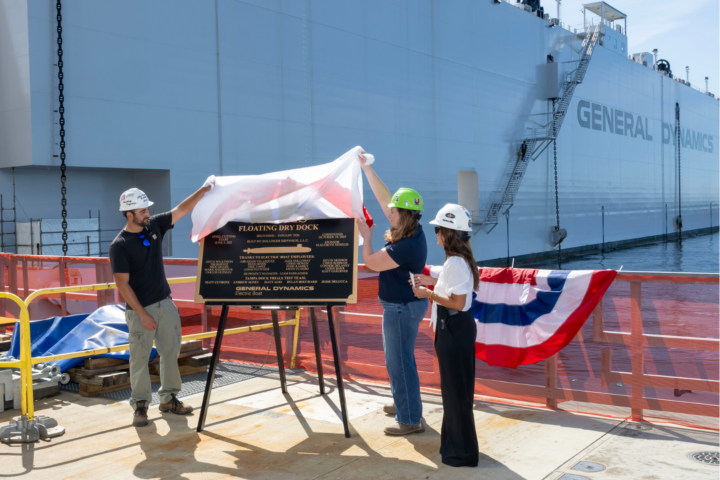
Atlas Plaque Unveiled, Honoring Plank Owners at South Yard Ceremony
Employees who have worked on Atlas, EB’s new state-of-the-art floating dry dock, gathered in the South Yard on Wednesday, Aug. 26, to unveil a new bronze plaque recognizing the contributions of its plank owners. The event celebrated the teams who helped bring Atlas from Bollinger Shipyards in Louisiana to its arrival in Groton earlier this year. Atlas will play...Continue reading→
Neighbors Meet with EB to Discuss Noise, Lighting and Other Quality of Life Topics
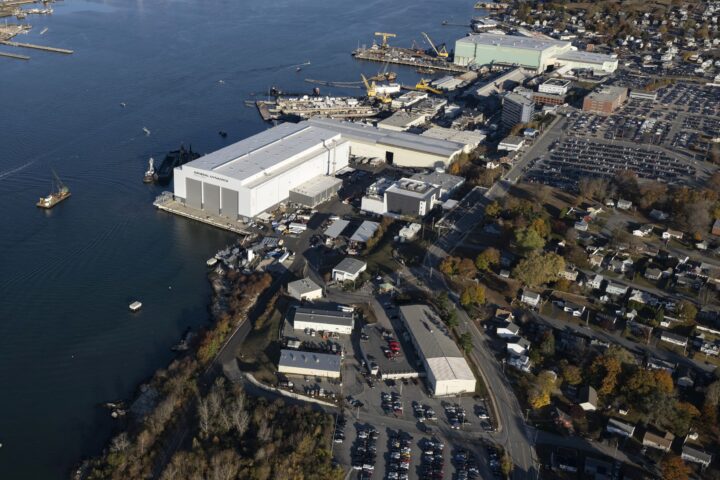
Nearly twenty neighbors of Electric Boat’s Groton shipyard joined company leaders Aug. 25 for a community conversation focused on their quality‑of‑life concerns related to the South Yard Assembly Building (SYAB) and Atlas, the new floating dry dock. The Mayor of the City of Groton, Jill Rusk, also attended. Residents said they appreciated the chance to talk...Continue reading→
Rayha Report Ep. 26: Waterford Campus Groundbreaking
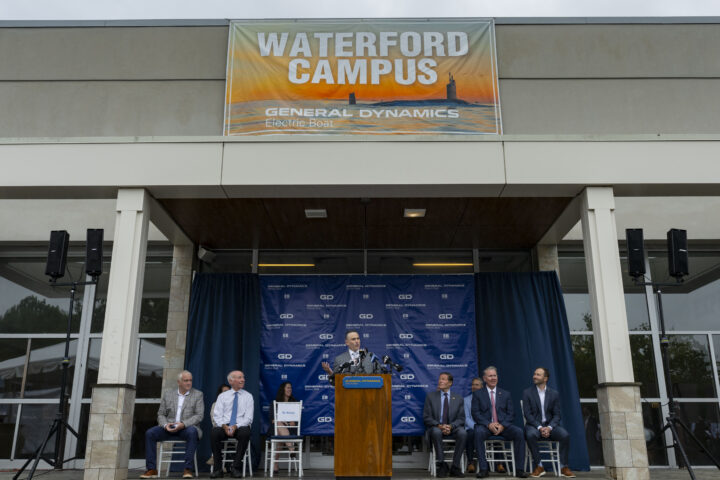
EB President Mark Rayha reports from the groundbreaking of the new Waterford Campus, where innovation, engineering and workforce development will come together to support our mission. The new facility will help train hundreds of shipbuilders daily as EB continues to grow for future production demands.
Waterford Campus Groundbreaking Marks EB’s Next Step in Innovation and Workforce Growth
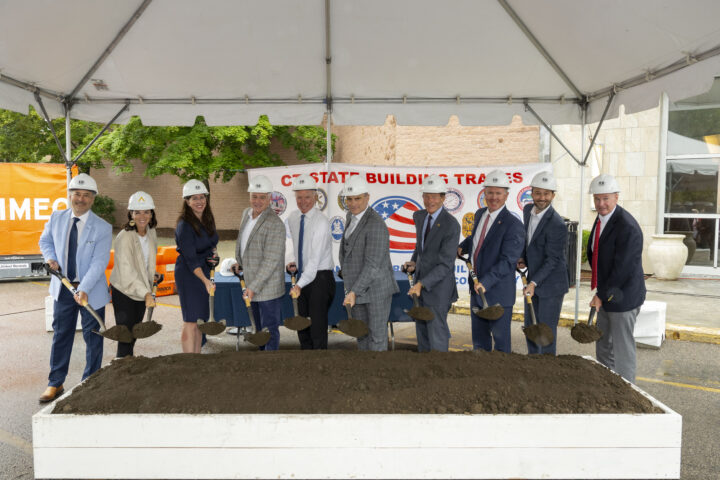
Electric Boat officially broke ground Friday on the Waterford Campus, launching the transformation of the former Crystal Mall into a center for innovation, engineering and high‑tech workforce development. EB President Mark Rayha underscored how the project will reshape the way the company designs, tests and builds submarines. Innovation is the key, he said. “There’s an opportunity to...Continue reading→
Powering HeartStrong 50: Thank You, EB Teams—Let’s Keep the Momentum Going!
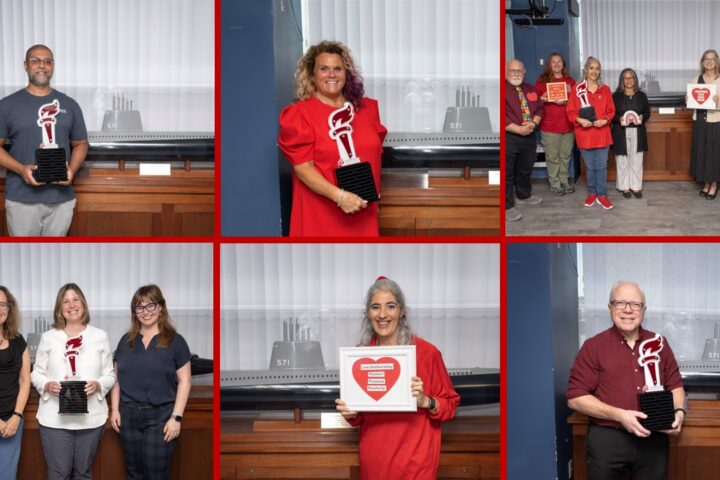
Thank you to our incredible EB Heart Walk teams, our community partners, and everyone who joined the American Heart Association (AHA) Torch Journey photoshoot. Your enthusiasm and dedication made this milestone truly special. Now let’s keep our HeartStrong 50 energy going—our goal is 50 teams and $50,000 raised for the 2026 AHA Eastern Connecticut Heart Walk on October 3 at UConn Avery...Continue reading→
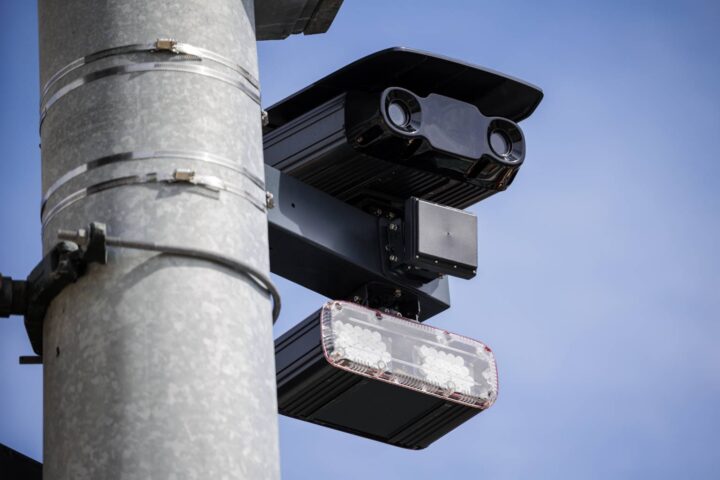
Speed Cameras to be Installed in the City of Groton
The City of Groton Police Department announced that automated speed enforcement cameras will be installed at several locations throughout the city. The cameras will be installed after the required 30-day public notification period, which began on Aug. 7, 2026. Camera locations: Mitchell Street Thames Street Clarence B. Sharp Highway (Route 349) Police said the purpose...Continue reading→
MDA Apprenticeship Application Now Open
Application Window: August 1, 2026 – August 31, 2026 The MDA Apprenticeship Program is a four-year initiative designed to develop a highly skilled workforce for Electric Boat. This program provides three years of on‑the‑job training alongside qualified subject matter experts, combined with classroom instruction across various technical disciplines. Participants gain advanced skills, broaden their expertise, and...Continue reading→

Building 600 Tech Stop Relocation
On Monday, August 3, 2026, Facilities will be relocating the Tech Stop currently located in Building 600 4th Floor East to its new location in Building 130-01 Classroom 7. During this time, please utilize the alternate Tech Stop location: B708 (625 Long Hill Road) Hours: Monday – Friday: 7:00 am – 3:00 pm The tech stop will resume...Continue reading→

A Message From Mark Rayha: Historic Contracts/Rayha Report
Today marks one of the most significant moments in Electric Boat’s history. As part of its $76.6 billion submarine contract announcement, the U.S. Navy has awarded Electric Boat ship construction contracts valued at $29.5 billion for five Columbia-class submarines and $42.1 billion for nine Virginia-class submarines, along with incentives for shipyard infrastructure. Click here to read the...Continue reading→