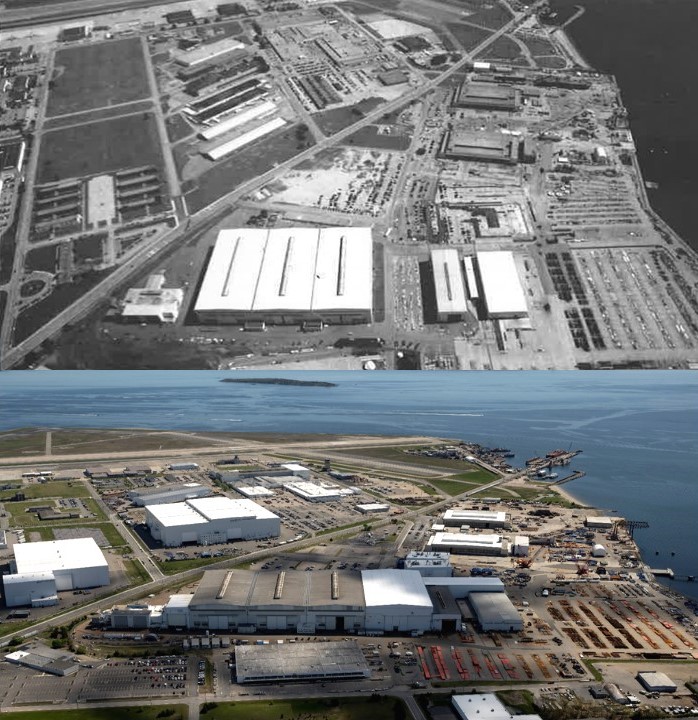
Then vs. now: aerial view of Electric Boat Quonset Point.
Hi everyone; it’s Kevin. Today is Thursday, March 28 (date recorded). This past November 23 marked fifty years since Electric Boat obtained the property formerly known as the Quonset Point Naval Air Station. Today on the podcast I’m joined by Ray Gabriel, VP of Quonset Point Operations, to talk about the history of Quonset Point and how the men and women of Electric Boat have transformed this site into what I think is the model of modular shipbuilding for our nation.
So Ray, welcome to the podcast. Let’s start by talking about how QP came into being.
Thanks Kevin. Back in 1971, EB down in Groton was looking to expand its capabilities and facilities. The Naval Air Station up here in Quonset Point had recently closed and the Rhode Island Governor at the time, Philip Noel, was looking for a new tenant. It just so happened that some EB management, Henry Nardone, and Joe Pierce, the general manager at the time, mentioned that EB was looking to expand to the governor. Low and behold, we struck a deal. It took about two years; so in November of 1973, the facility we now know as Quonset was born.
Yeah, it’s come an enormous long way here. So when we talk to some of the folks who were here at the beginning, it’s always interesting to hear some of those first impressions. The facility started to ramp up in early 1974 building the Ohio class, and it was really a shoestring operation at that time, with only eight employees and a couple of managers—I’m not sure what the supervisor ratio was then; sounds a little low—and also equipment scrounged from all the government and World War II surplus depots we could find, across the world to really start to set Quonset up into a manufacturing hub.
Yeah, historically, there’s a learning curve, from what we’ve been told, it wasn’t until about 1977 that the facility did get some twentieth-century equipment. Couple that with, we took some knowledge, believe it or not, from German submarine-building techniques from WWII to try to get some mass-production philosophy in the facility. Like anything else, there was a challenge in implementing it. Frankly, until that time period, there really wasn’t a submarine program big enough to require mass production techniques to be utilized. Just like today, in the early 1970s with both the Los Angeles-class attack submarine and the Ohio-class ballistic-missile submarine coming together and being built simultaneously, the circumstances were such that mass production techniques could be utilized.
And it’s really changed pretty dramatically from stick building to where we are today. So let’s talk about how that began and what some of those major changes in mass production were.
Fundamentally, we look at two things that we still do today. We have the introduction of work stations and construction or module teams rather than having expensive, skilled labor kind of just muddled around looking around for their tools and collecting the parts needed for the job that might be assigned. And also the concept of materials being brought to the work centers and work stations so the workers stood ready to use them and continue to build.
So some of those parallels exist today in the way we’re configured. Also an interesting parallel from a time in terms of assembling a workforce here at Quonset Point. Back then, because the Naval Air Station had just shut down, there was a pretty educated and available workforce which included some sheet metal workers, machinists and electricians, but those folks needed to be converted from repairing aircraft to building submarines, which we all know is a very different skill set. Let’s talk about how that transformation happened.
To your point on previous podcasts, it starts with the front end. At that time, construction drawings for a submarine, which could literally number in the hundreds or even thousands, were complex and unfamiliar to these type of workers who were operating in an air station or aircraft mechanic type of discipline. So the solution was to create a booklet of drawings for each particular task—flip the pages and build a ship. Really that’s how work packages came into being, which formed the predecessor for today’s computer-aided drawing and work instructions.
So as time goes on the momentum and efficiencies at Quonset Point began to grow and by 1975, Quonset became Electric Boat’s principal center for hull fabrication, sub-assemblies and other large components. The first Ohio module was shipped to Groton that year. It’s always interesting to see some of those early hull cylinders coming, effectively not even outfitted. Let’s talk about how that progressed over time.
If you really look at the inflection point of Quonset, it occurred in November of 1978. This is when Quonset Point began construction on what is now the AFC, automated frame and cylinder manufacturing facility, which was completed in 1979. Some have called this the most significant breakthrough in submarine technology since EB’s development of the welded submarine hull. The automated frame and cylinder building allowed hull sections to be built much more quickly and efficiently, and included the ability to top load components and end load components and fully outfitted decks that are slid into the hull cylinders. Essentially this is where modular construction was born.
The facility continued to expand and technical developments continued through the 1980s and into the 1990s. The site marked the first piece of steel cut for the Seawolf-class Jimmy Carter (SSN 23) in 1995 and just a year later was when we started work on the Virginia class in 1996. Fast forward almost 20 years later and the first steel for District of Columbia was cut at QP in August of 2016.
Here we are today, now building from what was essentially relatively empty hull cylinders to I think the pinnacle of outfitting, where we’re greater than high 90 percents complete coming out of Quonset Point with a lot more manufacturing, a lot more outfitting taking place than ever before and to good effect. When I think of Quonset Point, I think a lot about how this place really set the tone for what modular construction for submarines is around the world. Really a leader from the very beginning in terms of how we fixture, the technology that we bring to bear and adapt to support manufacturing. The men and women here who have supported that over the last fifty years have been a tremendous part of that history. Ray, you’ve been in the job now a couple of years. Let’s talk about what you’ve observed and tell me about your perspective from the long line of distinguished shipbuilders that have come through Quonset Point.
Thanks Kevin, I appreciate that. I think over my two years what we’ve been able to do at Quonset is again restore and cultivate what has made Quonset successful over the last fifty years, and that’s a team centered on the mission, which is simply to fabricate and deliver complete modules to final assembly and test, both in Groton and Newport News. Simply put, I couldn’t be prouder of all levels of management and departments and individual contributors here at Quonset. The director team has really collaborated together to try to drive facility-level improvements and productivity and safety. It’s a credit to them and the manager team who number almost 65 managers on the facility to be able to drive over what is now 7,000 people in the common mission of building modules or supporting those who build the modules.
I think, and I’ll speak for the directors and managers, what we’re most impressed by is those leaders and mechanics that form our most fundamental unit here at Quonset, which is the crew, the operations crew. They have been able to grow to a level that you see in all the metrics, high level and down to the most fundamentals that they use to assess their performance. That has always been the key here, is supporting that crew and making sure that they have what they need to build these modules. And like myself, I’m the facility vice president, I’m the vice president of operations, so I am fundamentally in an operations support role. I would be remiss if I didn’t recognize the over 2,000 folks that are here at Quonset now supporting the operations departments and allowing Quonset Point to accelerate production and achieve some of the performance that we need and will need more of in the coming years.
You know this place is just steeped with a lot of history, a lot of tradition and a lot of greatness— there are a lot of proud shipbuilders that come through Quonset Point every day. I’ve heard some of the mentors that have trained me over time call Quonset Point the crown jewel of General Dynamics. I think about that often when I come here. I agree; what people do here is special and what it takes to develop and deliver modules from this facility, today especially, with some of the youngest workforce that we’ve ever had—both our front-line leaders and our workers—doing it safely and of the requisite quality speaks volumes about the leadership team here and how everybody is committed to the mission.
So Ray, want to say thanks for joining me on the walk down memory lane today. Congratulations to all of our QP shipbuilders on our 50th anniversary and for the pivotal role you play in submarine construction and the security of our nation.
Thanks everyone; we’ll talk again soon.
Delivering the Future
Some imagine the future. We deliver it now.
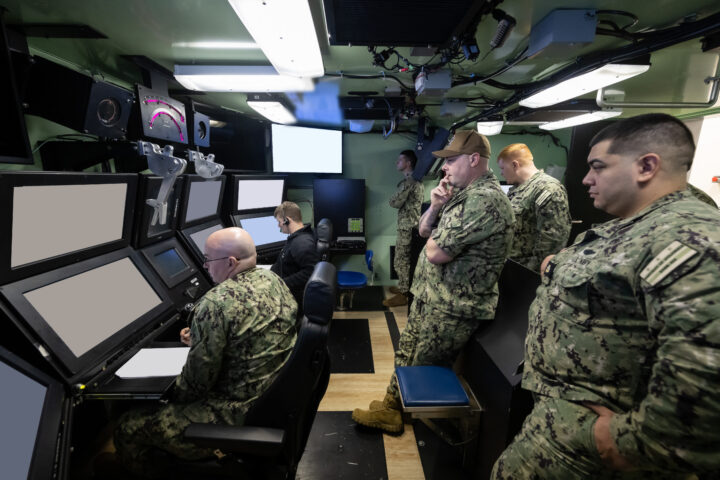
State-of-the-Art Simulator Prepares District of Columbia Crew for its Mission
As construction of the District of Columbia (SSBN 826) continues apace in EB’s South Yard Assembly Building, the sailors who will soon be at the controls are spending hours in a dynamic, high-tech simulator learning the intricacies of operating the 21,000-ton, first-in-class boomer. The Columbia Ship Control Operator Trainer (CSCOT) is a replica of the...Continue reading→
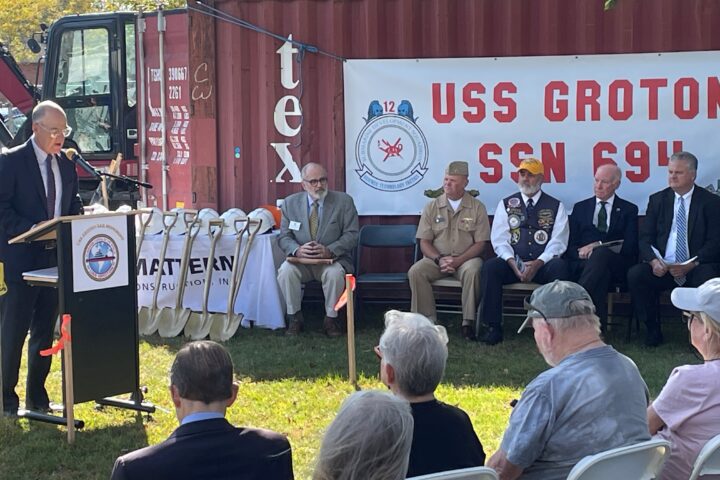
Groundbreaking Ceremony Marks Start of USS Groton Sail Monument
Fifty years after the USS Groton (SSN‑694) first launched, dozens gathered outside the Groton Public Library Oct. 9 to celebrate the groundbreaking of the USS Groton Sail Monument. The $6.6 million project—three decades in the making—will honor the men and women who design, build, operate and maintain the Navy’s submarines, as well as the families...Continue reading→

A Celebration of Heart, Community and Victory
2026 American Heart Association Eastern Connecticut Heart Walk Recap Saturday, October 3, 2026 | UConn Avery Point The 2026 American Heart Association Eastern Connecticut Heart Walk at UConn Avery Point was nothing short of extraordinary. Under bright autumn skies, 26 incredible Electric Boat teams and 151 walkers came together with passion, purpose, and unstoppable energy...Continue reading→
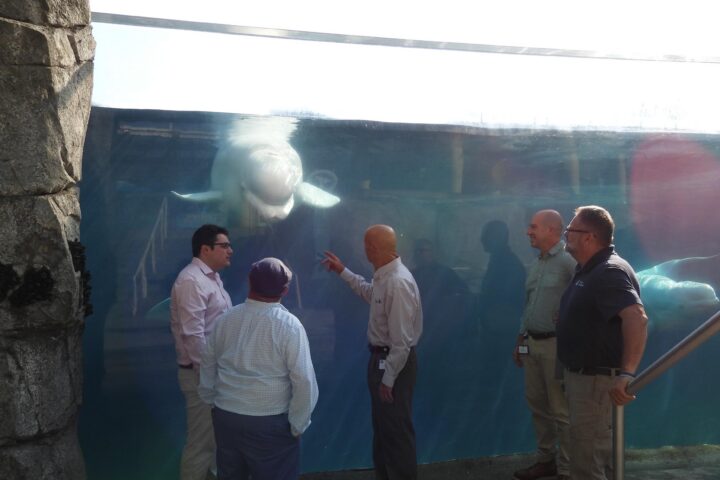
Quonset Point Donation Will Help Keep Mystic Aquarium’s Belugas Cool
Juno, the Mystic Aquarium’s convivial, photo-bombing Beluga whale, will continue swimming in cool comfort thanks to an unlikely chain of events that began 40 miles east in an Electric Boat industrial building at Quonset Point. That’s where EB’s Russ Tatro and Chris Logan were going over plans with a vendor, Carrier Corp., to replace Building...Continue reading→
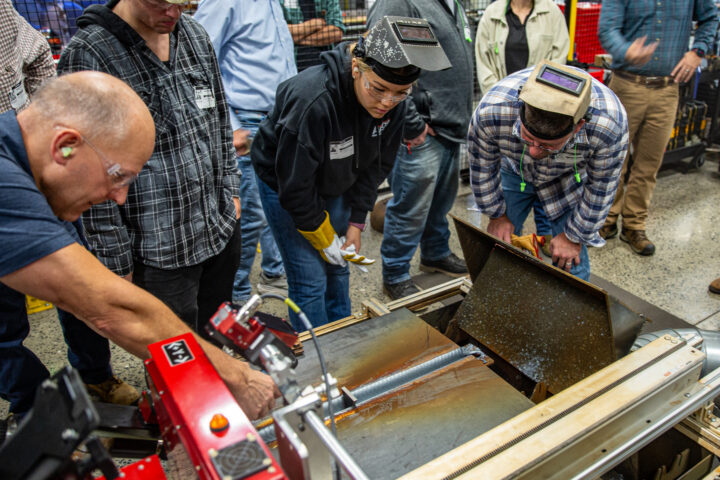
EB Team Visits Hypertherm as Part of Drive Toward Modern, Efficient Shipbuilding
A team from Groton and Quonset Point headed to New Hampshire-based Hypertherm Associates this week to get a closer look at a modern automated plasma gouging process designed to streamline hull fabrication. The visit was part of a broader effort across Electric Boat to bring more advanced, state‑of‑the‑art manufacturing tools into the shipyard. EB plans...Continue reading→
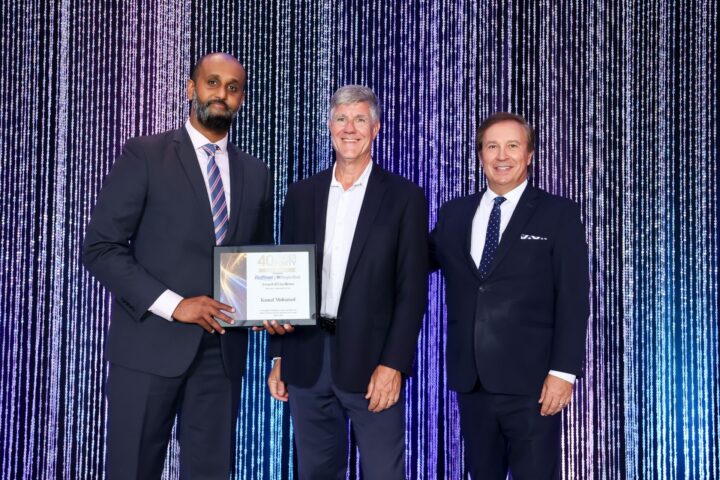
Kamal Mohamed Recognized as 2026 Hartford Business Journal 40 Under Forty Award Recipient
The Hartford Business Journal (HBJ) 40 Under Forty Awards recognize outstanding young professionals in the Greater Hartford area who are excelling in their industries through their leadership roles. They are driven by success, motivated by challenges and are role models for their peers. These individuals are part of an outstanding class of upcoming business leaders...Continue reading→
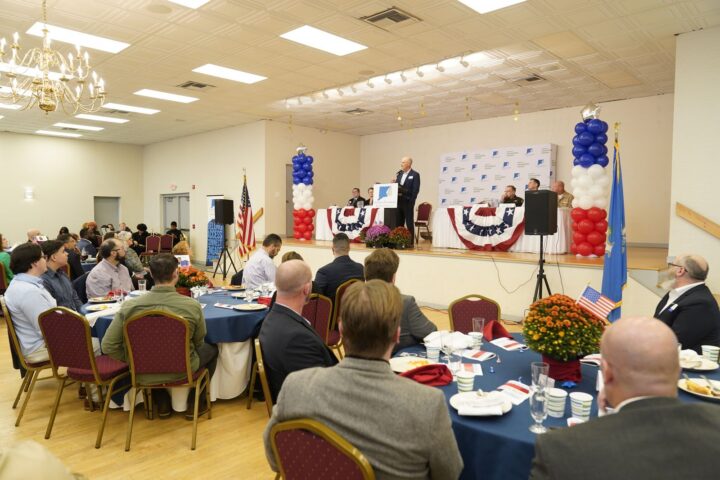
Electric Boat Joins Regional Leaders for Military Appreciation Breakfast
Electric Boat employees joined military and community leaders for the Chamber of Commerce of Eastern Connecticut’s annual Military Appreciation Breakfast on Sept. 30 at Ocean Beach Park’s Port ‘N’ Starboard. The event provided more than 120 complimentary seats to active-duty service members from the Navy, Coast Guard and Connecticut National Guard. General Dynamics Electric Boat...Continue reading→

One Week Left—Let’s Claim the Torch! AHA Eastern Connecticut Heart Walk: Final Countdown
We are just one week away from the 2026 AHA Eastern Connecticut Heart Walk on October 3, 2026, at UConn Avery Point and this is our moment to finish strong. We’ve built incredible momentum, and now we’re within striking distance of something big. Right now, Electric Boat is holding second place, behind Mohegan Sun by...Continue reading→
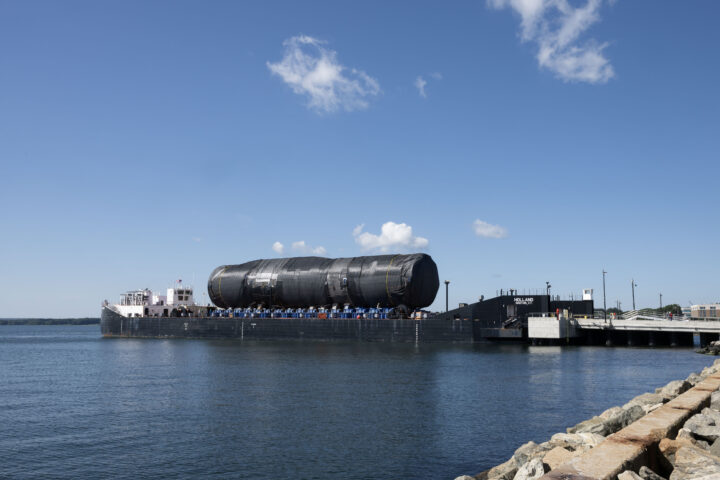
803 Section 2B/5 Transported from Quonset Point to Groton
PCU Arizona’s (SSGN 803) Section 2B/5 was successfully delivered to Groton from Quonset Point. At 184 feet in length, this section – which includes the Virginia Payload Module (VPM) – is the largest Virginia-class shipment ever transported. Arizona, the first submarine to incorporate VPM, will be about 460 feet long upon final construction. Section 2B/5...Continue reading→