
KG: Hi everyone, it’s Kevin. It’s Wednesday, January 20th. Joining me on the podcast today is Emil Casciano. Since July of 2019, Emil has led the Design and Engineering organization. In December, we announced Emil’s new role as Vice President of Nuclear Operations and Fleet Support, reporting to me. This is an exciting opportunity for all of us as we think about why we made this move. Specifically, we did it because of the significant workload we’ve got as we go through two concurrent programs— Virginia and Columbia—going forward. Standing up someone with Emil’s experience and leadership capability on the waterfront to help us as we go forward is critically important to our success. Today Emil and I are going to talk about his position, which is a new role for the company, and the part his team plays in enabling this once-in-a-generation level of delivery we’ve committed to our customer. So welcome, Emil. To start, please share a little bit of your background with our audience.
EC: Thanks Kevin, I appreciate the opportunity to talk about my new role. I came to Electric Boat after 31 years in the Navy, serving in the submarine force. I served on four submarines, all EB-built, commanded USS Philadelphia and was commander of Submarine Squadron Two in Groton. I retired from the Navy one day and started at EB the next day working as a program manager for fleet support and the UK Trident program office. Other roles at EB included Director of Mechanical Engineering and Design, Chief Nuclear Officer and most recently, Vice President of Design and Engineering. I’ve forged a lot of relationships with senior leaders at Naval Reactors and Program Executive Offices for Columbia and Virginia. I plan on leveraging those relationships to deliver our awesome submarines to the fleet.
KG: Thanks Emil. As I mentioned at the onset, your experience and your leadership is going to be key to us going forward. I think you give us a unique perspective; we can now focus on areas that will be critical for our future and ultimately our success. Let’s talk about your priorities for the groups you’re leading, which are: Waterfront Engineering, the Nukes, RadCon, the Compatibility Test Facility down in Philadelphia, and the Planning Yard.
EC: We also picked up the R&D Lab which dovetails nicely with our mission and Waterfront Engineering. The priorities are really to get 793 PCU Oregon delivered to the fleet, that’s a few months away right now. We have a lot of preparations for the USS Hartford overhaul, that’s the biggest overhaul and repair job we’ve ever done, and that will be starting in a few months’ time up at the base. As you all know, we have an annual inspection to renew our license to handle radioactive materials, so we have that this summer to get our license extended. Longer term, we’re working on the training and planning necessary to build the main motor module for Columbia. That first main propulsion motor will arrive at Quonset Point next January. Longer term, we’re also starting to work on what it will take to support the Columbia once we deliver her to the fleet. That’s a little tricky because the refit facilities in Bangor and King’s Bay will have to maintain Columbia while they’re also maintaining the Ohio.
KG: Let’s talk about Columbia. Since that’s a new class of ship, and it’s going to have electric drive as its propulsion system, that’s going to stretch us in some ways. Tell us what you see as the impacts to our company.
EC: That’s a really exciting capability that we will be delivering to the fleet. We’ll have to do some new training and develop new skills for our workforce, our supervisors and inspectors. We’re starting to build that now. Some of this equipment will also be classified, so we’re looking ahead, asking if we need any special security requirements or arrangements at both QP and in Groton. We’re working this a year in advance so we can flesh it all out, make sure there are no issues that we haven’t already identified, and we can attack them early so we’re ready when that motor arrives in January of next year.
KG: Let’s talk about our nuclear departments. We’re going to do something we haven’t done in almost 30 years, and that is have concurrent final assembly and test of two different classes, in our case Virginia and Columbia.
EC: We actually started working on this a number of years ago. We looked at where we were going to build nuclear pipe and build both of the reactor plant modules simultaneously. There’s a lot of work going on in the MCA building down in the South Yard, and that’s almost nearing completion. In there, we’ll start with reactor vessels, prepping those, and we’ll do small-bore nuclear piping. And then in Engine Stores, we’ll transition that to support both Columbia and Virginia large-bore piping. Those upgrades are in progress right now. We’ll also use a portion of the South Yard Ways to set up a lagging area where we’ll lag our major components for both programs.
Organizationally, we’ve already changed up Waterfront Engineering a bit. We have two senior managers reporting under the director of Waterfront Engineering. So Chris Doyle will lead the charge on Virginia programs and Kevin Kunka will come over from New London to lead the charge on overhaul and repair jobs and pave the way for Columbia. Shortly we’ll start the necessary training to support testing of the S1B reactor plant and start staffing up Waterfront Engineering which will grow by about 200 heads over the next few years.
Also we’re starting to look at the Columbia build. There are several unique first-time evolutions that we haven’t done before. So this year we’re going to look hard at the risks associated with those first-time evolutions and we’ll build plans to identify the risks and manage them so they don’t become crises as we approach each one of those first-time ever evolutions.
KG: Nukes are certainly going to be in an exciting period of time as they develop a lot of that capability that you outlined. You and I have talked a lot about customer service being a significant role for you as you take on your new position. What additional opportunities do you see for supporting your customer coming from the team?
EC: I’ll focus this on our Navy customer—specifically our support of the commissioned ships and the support we provide with our planning yards. As a reminder, our planning yard team provides lifecycle support for the commissioned boats in the Navy’s fleet including engineering, design and logistics. We do the engineering and design work necessary to make alterations to commissioned ships, maintain procedures and even upgrade training facilities. So we’re working hard, as I mentioned previously, to set up the maintenance facilities at Bangor and King’s Bay, the future homes of the Columbia fleet.
We’re going to set that up almost six to seven years ahead of what we did on Virginia based on some hard lessons learned from that program. There’s a lot of growth work in that area and that’s what we’re going after.
KG: Let’s also talk about the customer here within the shipyard, that internal customer. One of the keys to achieving the mission is to provide our trades men and women with the design, plan and materials they need, and I think we’re getting better on that but there’s certainly room to improve. Towards that goal, the Waterfront Engineering team has a critical role to play. Give us some perspective on that.
EC: Our Waterfront Engineering team’s job is really to support the mechanics on the deckplate, whether it’s at Quonset Point or down here in Groton. We want to provide every bit of engineering assistance our trades folks may need. We want to be here to say, hey, it looks like you’re struggling with that; I can help you. We can answer any questions, just be there to look for process improvements or anticipate there’s going to be a problem and be there on the deckplate to provide help—not a hammer, but a helping hand to get the job done right. I think it really provides some unique development opportunities, and it is exciting work. It’s one thing to do all the engineering and design work, but it’s a really exciting and fulfilling career path to take that engineering and design knowledge and actually take it over to the yard and help build Columbia or VPM.
We’re going to grow quite a bit in Waterfront Engineering; it’s just a tremendous opportunity. I couldn’t imagine a better path to develop a well-rounded engineer. Frankly, I absolutely love being on the waterfront. Some people might be intimidated by it, but it‘s a tremendously rewarding opportunity.
KG: I couldn’t agree more. I loved my time in Operations at NASSCO, and I love every opportunity I have to interact with the folks who are actually doing the work and putting these things together across the board. Thanks Emil for sitting down with me today and giving our listeners the opportunity to learn more about what we’ve got in store for you and your new role.
Thanks everyone; we’ll talk again soon.
EB Supports 45th Annual MLK Scholarship Awards
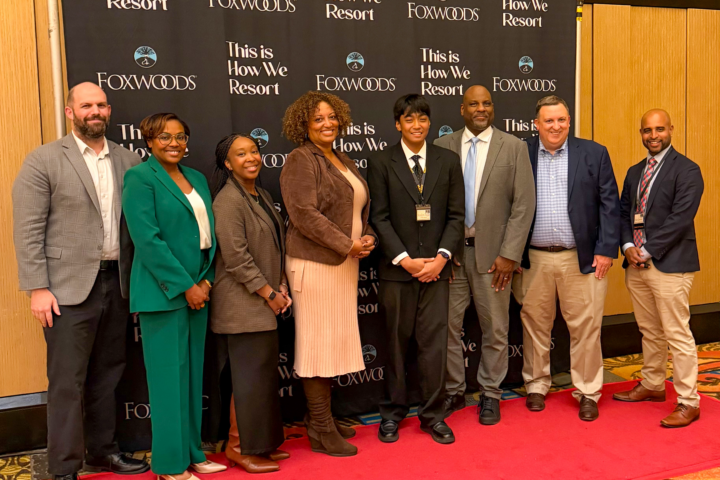
Electric Boat was proud to serve as a scholarship sponsor for the Dr. Martin Luther King, Jr. Scholarship Trust Fund at its 45th Annual Scholarship Awards Dinner. More than 600 community members gathered to celebrate this year’s extraordinary cohort of 2026 MLK Scholars. These 13 outstanding students were recognized for their academic excellence, leadership, character,...Continue reading→
Building the Future: EB’s New Central Distribution Hub
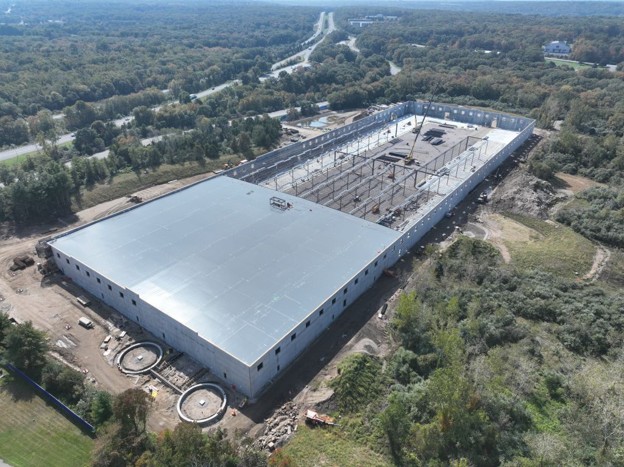
In April, Electric Boat (EB) began construction on the new central distribution hub for its warehousing, shipping, and receiving operations at 45 Frontage Road in North Stonington, CT. Since then, the 480,000‑square‑foot next‑generation warehouse facility has quickly taken shape. All wall panels are now complete, and construction is ahead of schedule. The facility will celebrate...Continue reading→
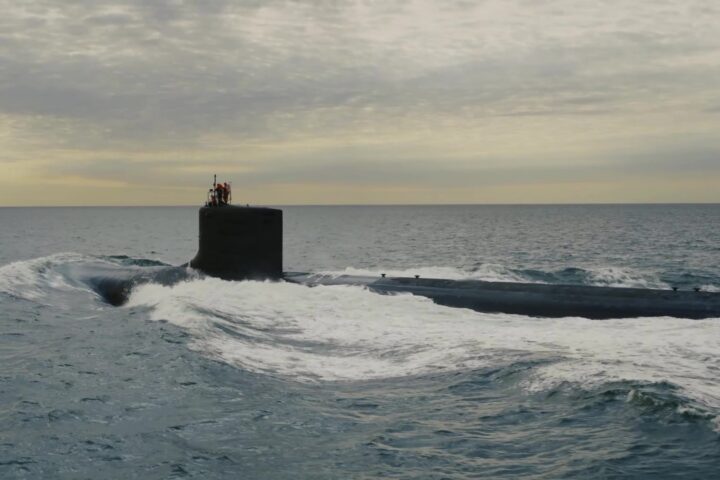
Delivering the Future
Some imagine the future. We deliver it now.
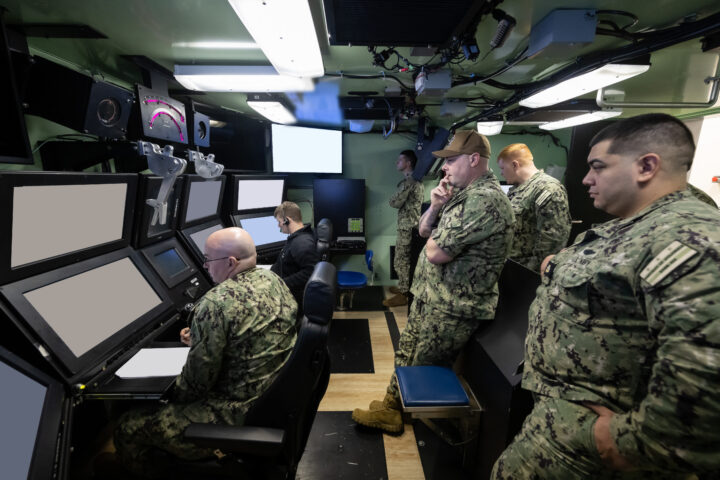
State-of-the-Art Simulator Prepares District of Columbia Crew for its Mission
As construction of the District of Columbia (SSBN 826) continues apace in EB’s South Yard Assembly Building, the sailors who will soon be at the controls are spending hours in a dynamic, high-tech simulator learning the intricacies of operating the 21,000-ton, first-in-class boomer. The Columbia Ship Control Operator Trainer (CSCOT) is a replica of the...Continue reading→
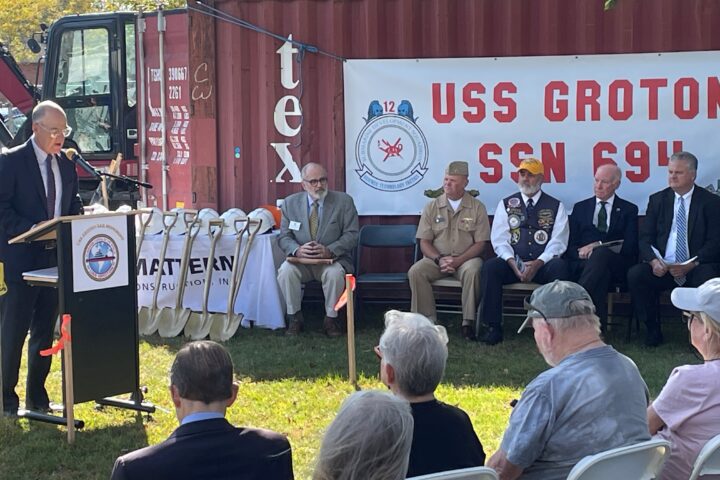
Groundbreaking Ceremony Marks Start of USS Groton Sail Monument
Fifty years after the USS Groton (SSN‑694) first launched, dozens gathered outside the Groton Public Library Oct. 9 to celebrate the groundbreaking of the USS Groton Sail Monument. The $6.6 million project—three decades in the making—will honor the men and women who design, build, operate and maintain the Navy’s submarines, as well as the families...Continue reading→

A Celebration of Heart, Community and Victory
2026 American Heart Association Eastern Connecticut Heart Walk Recap Saturday, October 3, 2026 | UConn Avery Point The 2026 American Heart Association Eastern Connecticut Heart Walk at UConn Avery Point was nothing short of extraordinary. Under bright autumn skies, 26 incredible Electric Boat teams and 151 walkers came together with passion, purpose, and unstoppable energy...Continue reading→
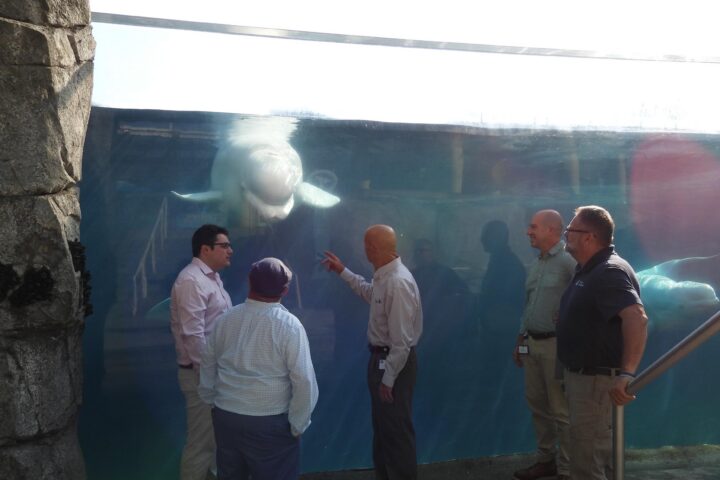
Quonset Point Donation Will Help Keep Mystic Aquarium’s Belugas Cool
Juno, the Mystic Aquarium’s convivial, photo-bombing Beluga whale, will continue swimming in cool comfort thanks to an unlikely chain of events that began 40 miles east in an Electric Boat industrial building at Quonset Point. That’s where EB’s Russ Tatro and Chris Logan were going over plans with a vendor, Carrier Corp., to replace Building...Continue reading→
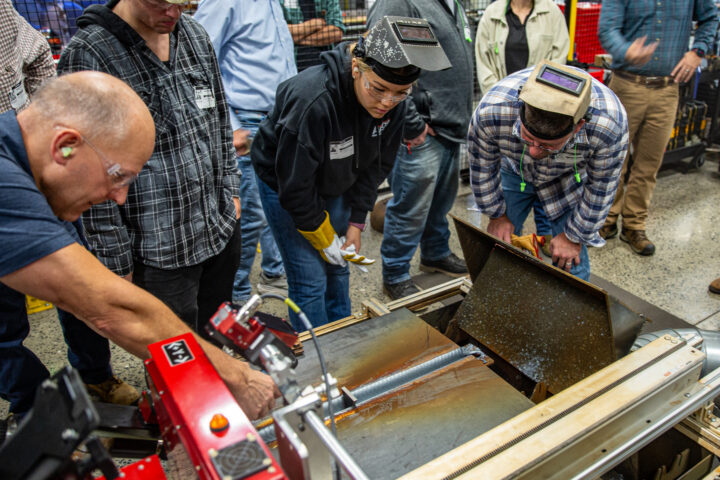
EB Team Visits Hypertherm as Part of Drive Toward Modern, Efficient Shipbuilding
A team from Groton and Quonset Point headed to New Hampshire-based Hypertherm Associates this week to get a closer look at a modern automated plasma gouging process designed to streamline hull fabrication. The visit was part of a broader effort across Electric Boat to bring more advanced, state‑of‑the‑art manufacturing tools into the shipyard. EB plans...Continue reading→
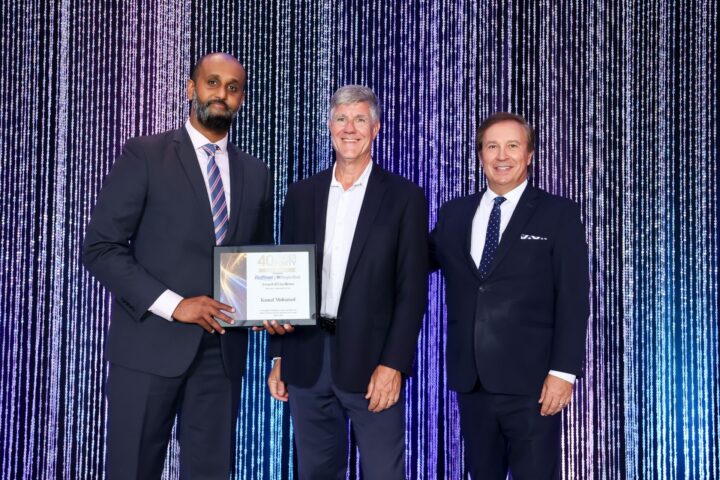
Kamal Mohamed Recognized as 2026 Hartford Business Journal 40 Under Forty Award Recipient
The Hartford Business Journal (HBJ) 40 Under Forty Awards recognize outstanding young professionals in the Greater Hartford area who are excelling in their industries through their leadership roles. They are driven by success, motivated by challenges and are role models for their peers. These individuals are part of an outstanding class of upcoming business leaders...Continue reading→
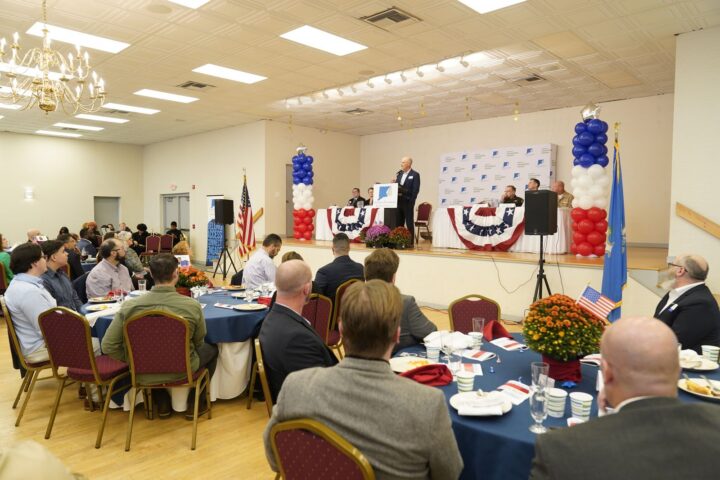
Electric Boat Joins Regional Leaders for Military Appreciation Breakfast
Electric Boat employees joined military and community leaders for the Chamber of Commerce of Eastern Connecticut’s annual Military Appreciation Breakfast on Sept. 30 at Ocean Beach Park’s Port ‘N’ Starboard. The event provided more than 120 complimentary seats to active-duty service members from the Navy, Coast Guard and Connecticut National Guard. General Dynamics Electric Boat...Continue reading→