
By Randy Coble, GD Land Systems, Sterling Heights, Michigan
August 20, 2018
Editors Note: Thanks to Randy Coble of GD Land Systems for sharing the stories of three “Rosies.”
Not every hero wears a uniform. Not every trailblazer gets a street named in their honor. But those who’ve benefited from what they’ve done remember their contributions and celebrate their legacy.
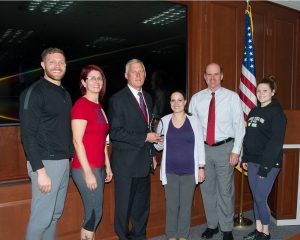
That’s one way to describe the three 90-something women who recently gathered in a conference room at our Sterling Heights site to share their stories of being original Rosie the Riveters.
Even if you’re not sure of what it means, chances are you’ve seen the iconic Rosie image at right. She represented the 19 million American women who worked in factories and shipyards during World War II when a large portion of the male population entered military service.
Many Rosies, as they’ve come to be known, produced the munitions and built the tanks and planes on which servicemen depended in combat. In the decades since the end of the war in 1945, Rosie the Riveter and the real-life women she represented have become powerful symbols of female empowerment.
Clara Belle Hunter Doutly, Helen Seitz Jedele, and Mary Ranelli are three of those women. Clara and Mary worked at Briggs Manufacturing in Detroit. Helen worked at Willow Run, the massive aircraft construction facility built by Ford Motor Company in southeastern Michigan.
Together, the three helped produce thousands of military aircraft used to achieve victory in Europe and Japan.
Among the war materiel the trio worked on – Clara and Helen as riveters and Mary as a “bucker” (the riveter’s partner who held a bucking bar in place behind the metal that was being riveted together) – was the B-24 Liberator. At more than 19,000 units, it remains the most-produced bomber in history and was a key part of the Allied victory in World War II.
The workforce at Willow Run and its supply chain partners, including Briggs Manufacturing, were so prolific that, at its peak, the plant produced at least a bomber an hour.
“That’s just unheard of,” was how Dionna Harvell, representing Sterling Heights’ DNA2 (Dynamics Network of African Americans, an employee resource group), put it. “These amazing women did amazing work. They’re a part of history and they paved the way for women like me to work in the defense industry.”
Here some highlights of Clara’s, Helen’s and Mary’s stories:
Clara
Wearing a Rosie scarf and proudly proclaiming to be 97 years young, Clara was not at a loss for words, mixing tales of her wartime work with stories, jokes and life lessons learned from her childhood and, especially, her mother.
Example: “What do you mean old? I’ve just been around a long time,” she grinned.
Born in 1921 in Detroit, she worked at Briggs Manufacturing as a riveter during World War II. Before and after the war, Briggs produced automobiles and automobile bodies, primarily for Ford, as well as a line of bathtubs and other bathroom fixtures.
Fun facts for Detroit Tigers fans out there: The owner of Briggs Manufacturing was Walter Briggs, who also owned the baseball team from 1935-52. He was responsible for renovating and expanding the Tigers’ original venue – Navin Field – and renamed it Briggs Stadium. Later, the field was renamed Tiger Stadium and stood as a Detroit icon until its demolition in 2008-09. After attending a two-week riveting school, Clara took her place on the line, making $1.99 an hour, “which was a lot of money back then,” she reminisced. She and her colleagues produced everything from aircraft gun turrets and doors, wing components and bomb bay doors to tank hulls and ambulances.
She was confident in her ability to produce just as good of a product as anyone else, man or woman.
“I was taught to look a person in the eye. Be sure of yourself,” she said. “I can do it if you can do it.”
“One time, the foreman was standing there and staring at me,” she said. “The foreman wasn’t supposed to just be standing around. So I told him, ‘Look, if you ain’t got nothing to do but look, you can come over and help me.’ He took off.”
She also offered these words of advice to the audience: “Don’t be ashamed of yourself and be positive thinking. Negative thinking will get you nowhere. Live in hope, have peace in affliction and live faith in prayer.”
Mary
Born in Italy, this 94-year-old came to the United States when she was 10 years old. At 18 in 1942, she joined the workforce at Briggs, serving as a bucker to the riveters and helping construct the nosecones of bomber aircraft. The work mattered, she reflected.
“We were very conscientious about our work because we thought of the young men who would be flying in those planes,” she said. “It was a good job, and I made a lot of good friends.”
When the war ended, she married. Mary and her husband went on to share 71 years of life together and had two children along the way.
Helen
Born in 1922 on a farm in Saline, Michigan – not far from the Willow Run plant where she later would help build the B-24 – Helen is 96 years old today. She told stories of growing up and working hard on the family farm, including helping her father with the cleaning and cooking after losing her mother at a young age.
When she wasn’t riveting for 99 cents an hour – “which was great money because growing up, it was the Depression, and there no money; we lived good, but there was no money ever” – she struck up a pen pal correspondence through her pastor with the man who later became her husband.
He was serving the Army and, when he got orders for Seattle, they packed up and headed for the state of Washington. There, Helen worked in a grocery store until the day that her landlord heard that she had experience as a riveter. That led Helen back to the assembly line — this time, helping build the B-17 Flying Fortress at Boeing Aircraft.
As it is wont to do, the Army came calling again. After a transfer to Oklahoma, Helen’s husband deployed to Europe, supporting General George Patton’s Third Army and taking part in the famous Battle of the Bulge in December 1944. While he served overseas, Helen returned to her hometown.
“I loved the work,” she said. “I enjoyed the work at the bomber plant because I knew, at the end of the day, I’d get some money,” she joked. “I made a lot of good friends. It was a good job.”
She used some of her earnings to buy a new bedroom suite, which she still has today.
A much-deserved tip of the Land Systems cap to Clara, Helen, and Mary — thank you for your contributions to freedom’s victory over tyranny and for setting an example for generations of women to follow.
Delivering the Future
Some imagine the future. We deliver it now.
State-of-the-Art Simulator Prepares District of Columbia Crew for its Mission
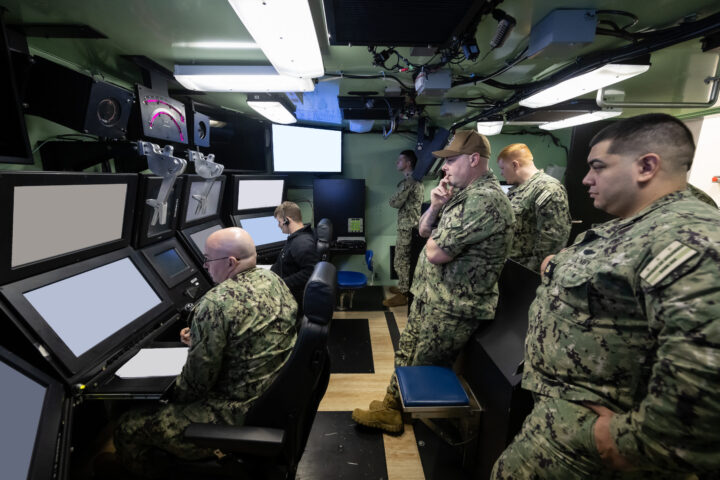
As construction of the District of Columbia (SSBN 826) continues apace in EB’s South Yard Assembly Building, the sailors who will soon be at the controls are spending hours in a dynamic, high-tech simulator learning the intricacies of operating the 21,000-ton, first-in-class boomer. The Columbia Ship Control Operator Trainer (CSCOT) is a replica of the...Continue reading→
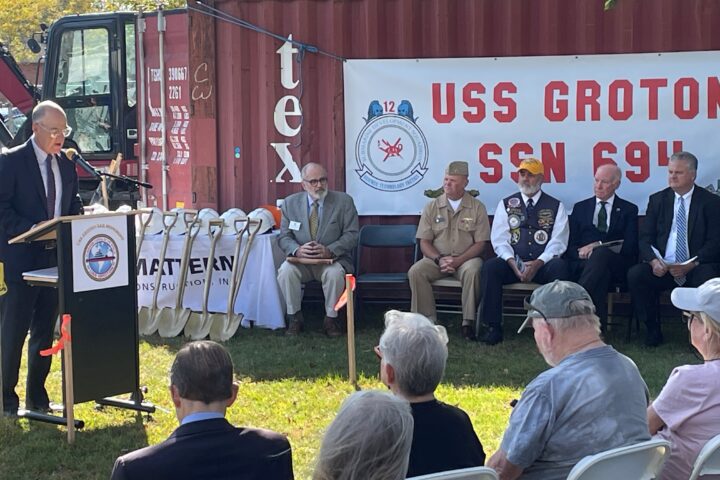
Groundbreaking Ceremony Marks Start of USS Groton Sail Monument
Fifty years after the USS Groton (SSN‑694) first launched, dozens gathered outside the Groton Public Library Oct. 9 to celebrate the groundbreaking of the USS Groton Sail Monument. The $6.6 million project—three decades in the making—will honor the men and women who design, build, operate and maintain the Navy’s submarines, as well as the families...Continue reading→

A Celebration of Heart, Community and Victory
2026 American Heart Association Eastern Connecticut Heart Walk Recap Saturday, October 3, 2026 | UConn Avery Point The 2026 American Heart Association Eastern Connecticut Heart Walk at UConn Avery Point was nothing short of extraordinary. Under bright autumn skies, 26 incredible Electric Boat teams and 151 walkers came together with passion, purpose, and unstoppable energy...Continue reading→
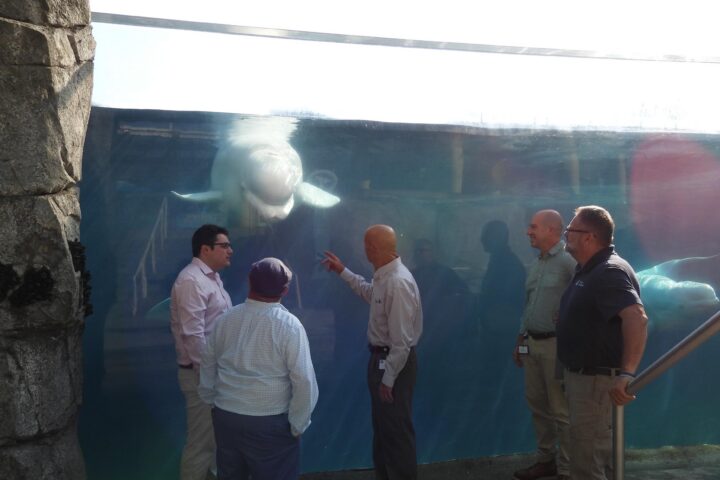
Quonset Point Donation Will Help Keep Mystic Aquarium’s Belugas Cool
Juno, the Mystic Aquarium’s convivial, photo-bombing Beluga whale, will continue swimming in cool comfort thanks to an unlikely chain of events that began 40 miles east in an Electric Boat industrial building at Quonset Point. That’s where EB’s Russ Tatro and Chris Logan were going over plans with a vendor, Carrier Corp., to replace Building...Continue reading→
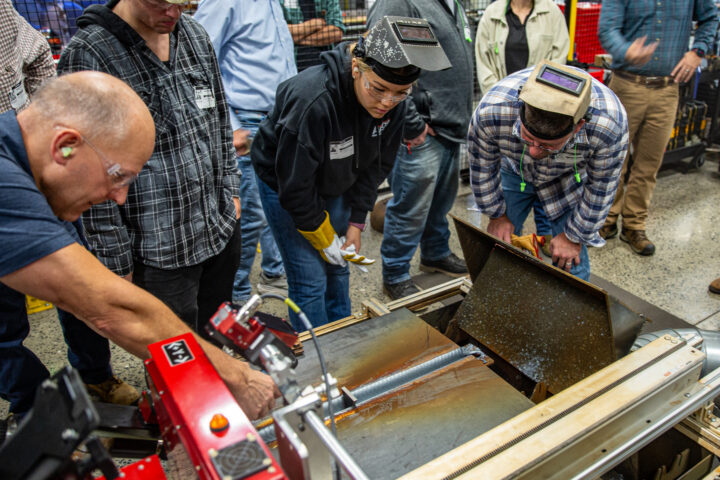
EB Team Visits Hypertherm as Part of Drive Toward Modern, Efficient Shipbuilding
A team from Groton and Quonset Point headed to New Hampshire-based Hypertherm Associates this week to get a closer look at a modern automated plasma gouging process designed to streamline hull fabrication. The visit was part of a broader effort across Electric Boat to bring more advanced, state‑of‑the‑art manufacturing tools into the shipyard. EB plans...Continue reading→
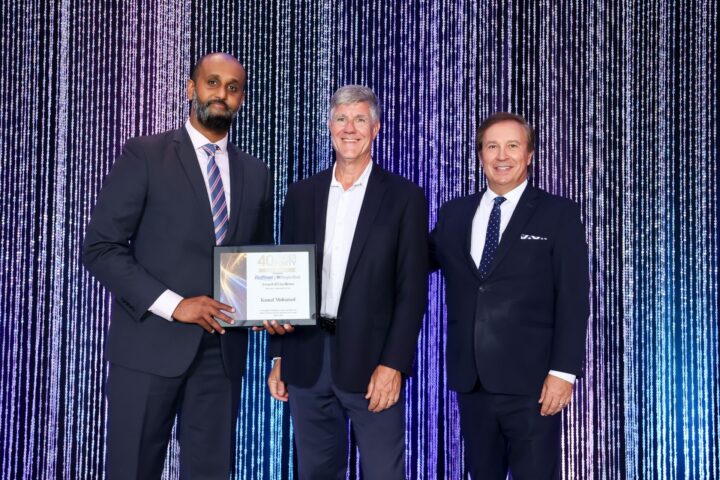
Kamal Mohamed Recognized as 2026 Hartford Business Journal 40 Under Forty Award Recipient
The Hartford Business Journal (HBJ) 40 Under Forty Awards recognize outstanding young professionals in the Greater Hartford area who are excelling in their industries through their leadership roles. They are driven by success, motivated by challenges and are role models for their peers. These individuals are part of an outstanding class of upcoming business leaders...Continue reading→
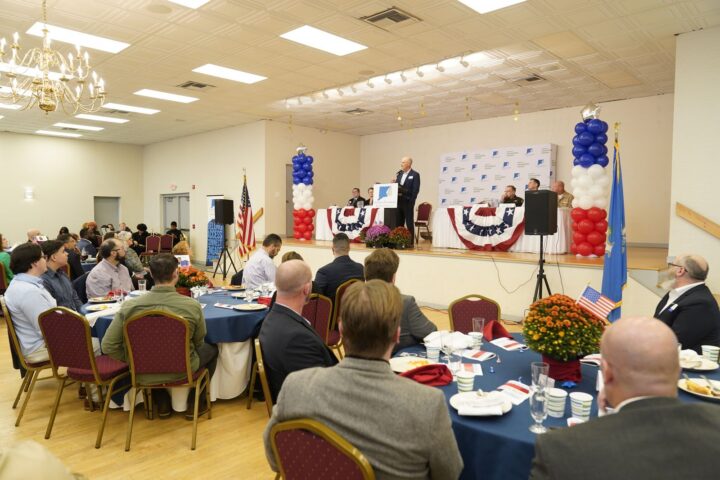
Electric Boat Joins Regional Leaders for Military Appreciation Breakfast
Electric Boat employees joined military and community leaders for the Chamber of Commerce of Eastern Connecticut’s annual Military Appreciation Breakfast on Sept. 30 at Ocean Beach Park’s Port ‘N’ Starboard. The event provided more than 120 complimentary seats to active-duty service members from the Navy, Coast Guard and Connecticut National Guard. General Dynamics Electric Boat...Continue reading→

One Week Left—Let’s Claim the Torch! AHA Eastern Connecticut Heart Walk: Final Countdown
We are just one week away from the 2026 AHA Eastern Connecticut Heart Walk on October 3, 2026, at UConn Avery Point and this is our moment to finish strong. We’ve built incredible momentum, and now we’re within striking distance of something big. Right now, Electric Boat is holding second place, behind Mohegan Sun by...Continue reading→
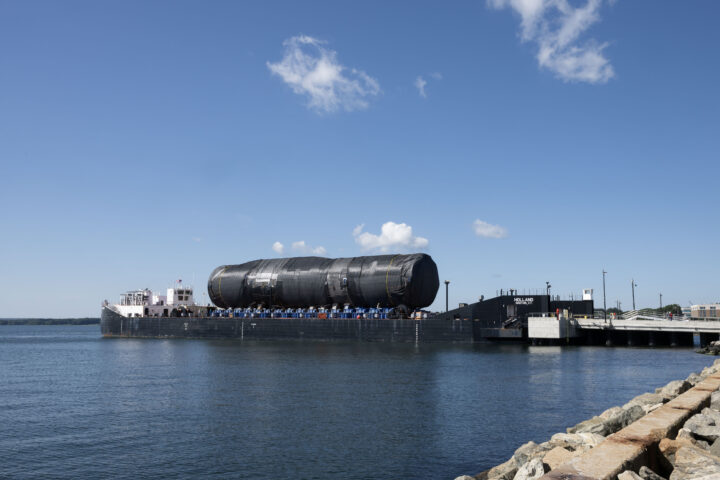
803 Section 2B/5 Transported from Quonset Point to Groton
PCU Arizona’s (SSGN 803) Section 2B/5 was successfully delivered to Groton from Quonset Point. At 184 feet in length, this section – which includes the Virginia Payload Module (VPM) – is the largest Virginia-class shipment ever transported. Arizona, the first submarine to incorporate VPM, will be about 460 feet long upon final construction. Section 2B/5...Continue reading→