
Hi everyone, today is Wednesday, September 30. On today’s podcast, we’re going to focus on what we need to do to keep ourselves healthy as we continue to live with COVID-19. There are three people joining me today – Pete Baker, President of our Metal Trades Council, along with EB’s Dr. Hurley and Dr. Andrews.
Throughout the summer, EB averaged about one case of COVID-19 a week in our employees. Since September 1, we have logged 25 new cases at Electric Boat. I think it’s safe to say COVID is making a comeback in New England. For context, a few cases were employees stationed away from our major sites, while the rest were split between Groton, Quonset Point and New London. Compared with earlier in the pandemic, we’ve seen more asymptomatic cases, that is, people are being tested as positive but they may not have symptoms, but the majority of folks do have symptoms. We’re seeing a mix where folks are getting tested because of symptoms, or contact with co-workers, so we continue to do our contact tracing, particularly with co-workers and family members who have tested positive. We’re also conducting new hire screenings and we’ve seen some positive cases from those screenings.
In a moment I’m going to ask the docs to weigh in on what the science and epidemiology is telling them about COVID at this point in time, but first, I want to reinforce how important it is to continue to practice our established COVID safety measures. Keep a physical distance from other people, sanitize your hands frequently and wear a mask. I know we’re seven months into COVID, and just like you, people are getting fatigued, I feel fatigued, but wearing a mask works and will help keep you, your colleagues and your family safe.
To reinforce how important masks are, we’ve been conducting mask checks (we called it a mask blitz) last week at the gates over shift changes. Let me be clear about this—a mask is required PPE at all Electric Boat facilities. There is no excuse for not wearing a mask, and we’re now going to start doing periodic mask checks in the shipyard to ensure we’re all compliant.
So Pete, welcome to the podcast. I’d like to say thanks to you and your leadership team for your great partnership all the while we’ve been dealing with COVID, and even just last week taking part in our recent mask checks. What have you been telling your folks in the MTC about the importance of being safe during COVID?
Pete Baker:
First, thank you for the opportunity to participate in this podcast. The Metal Trades Council is very concerned with the continued spread of COVID-19, and with the flu season just starting this could be a deadly combination. We are encouraging people to get their flu shots, wear a mask, and practice social distancing whenever possible.
Appreciate that. I know we talked this morning – you are doing some encouraging through your newsletter. What is the newsletter and where can people find it?
The newsletter has been around for 40 years, and just recently we started a website – it’s http://www.mtcnlc.org and the newsletter “Labor Views” is posted there starting today. (If you have trouble accessing the site, please use your personal device.)
If you’re a member of the MTC, you’re going to see someone you know and love with a mask on, so be sure to look for that picture. And, I couldn’t agree more, this is important that we’re working together towards the same goal of keeping everybody healthy. Let’s talk about it from the perspective of whether your folks have any questions about getting their hands on supplies, such as hand sanitizer and masks, what should they do?
Pete Baker:
First, I would like to thank our janitorial staff. Everybody’s time is very precious, and those people have been working a ton of hours, long days, seven days a week for months on end keeping the facilities clean and sanitized. They’re doing a heck of a job, and I want to thank them for their efforts. If people have problems with supplies, whether its hand sanitizer or masks, they can always go to their steward, an MTC safety rep, company safety rep, their supervisor or the Facilities Department directly.
And I know from my own checking on this, we’re amply stocked with everything we need to address COVID and the recurrence of it here as we enter the fall. Thanks Pete, appreciate that. Another important health measure we should all take is to get a flu shot. I’ve gotten mine; I want everyone to get a flu shot. It’s even more critical this year than ever before. I’m an engineer, not a doctor, so I’ve asked our resident experts, Dr.’s Hurley and Andrews, to give us the facts. To start, Dr. Hurley, why is it so important for everyone to get a flu shot this year?
Dr. Hurley:
The short answer is that getting a flu shot this year may actually save your life. Why? Because if you get one disease, it makes you more susceptible to the other. Since we only have one vaccine, namely the “flu shot,” it’s imperative that you protect yourself from influenza this year.
In a “normal” year, 36 million people get the flu and nearly 24,000-62,000 people die from flu-related diseases. People with chronic health conditions are particularly susceptible to influenza. Often the elderly and children suffer the most. By getting a flu shot, an employee can reduce the chance of contracting the disease as well as any symptoms of the flu when and if they get it. Plus, getting a flu shot protects those around you by not becoming a spreader of influenza.
The big question this year is, “What happens if I get both Flu and COVID-19?” Well, it’s too early to know exactly how much worse that double whammy could be, compared to having each virus on its own. COVID-19 didn’t spread across the US until the end of the 2019-2020 flu season. So there’s not a lot of data yet on people who got both illnesses at the same time.
What we suspect is that if you get both the flu and COVID-19 at the same time, it will be catastrophic to your immune system. In addition, getting infected with one can make you more vulnerable to getting sick with the other one. Once you get infected with the flu or some other respiratory viruses, it weakens your immune system, and it makes you that much more vulnerable to getting a second infection on top of that.
Both COVID-19 and the flu attack the lungs, causing pneumonia, filling the lungs with fluid and causing respiratory failure. The potential for pneumonia would be greater if the body is infected with both the flu and coronavirus at the same time. Having both illnesses simultaneously would increase the risk of long-term impairments to your lungs, heart, brain and muscles.
So get a flu vaccine. This may sound obvious. Yet about half of all Americans don’t get vaccinated against the flu, including most children who are at increased risk of dying from the flu. And since no COVID-19 vaccine is publicly available, the flu shot is the only way you can help inoculate yourself against having both viruses at the same time.
Thanks Doc, good advice. We all know that there are folks here who just won’t get a flu shot. We did the math a few weeks back and determined that only about a third of our people get the vaccine in any given year. There’s a whole bunch of excuses about why people don’t do it. Dr. Andrews, what are some of these myths and help us bust them—what does the actual science say about the flu vaccine?
Dr. Andrews:
Thanks for asking this question. This is one of my favorite topics because there is so much misinformation out there that it is more important than ever to really get the facts right.
The one I hear the most often is, “I got the flu from the flu shot.” That is not possible. You cannot get the flu from the flu vaccine. The vaccine is either inactivated or killed virus or a single protein from the virus. Your body takes two weeks to mount an effective immune response. So if you get exposed to the flu within two weeks of the vaccine, then the vaccine will likely be less effective, and you will still be at risk and get sick, but it’s not from the vaccine itself; it’s just from the virus.
The next one I hear is “I know people who got the shot and still got the flu – so it does not work.” The reality is that influenza is a virus, the organism that causes seasonal flu. However, people get sick with lots of other viruses like rhinovirus, which is the common cold, but people still use the term “the flu.” Sometimes it is not even possible to differentiate which virus is making you sick. Most of the time, it’s not possible for doctors to differentiate which virus is making someone sick. So the term “the flu” is commonly used, but it’s really supposed to only be used for influenza. Some years the vaccine is not a good match to the virus that is circulating in the community. However, even if the vaccine is not a perfect match for people who get vaccinated, they still will have less severe symptoms just from getting vaccinated.
The last one I hear is that “I never get sick and it’s just not that serious if I do.” It is true that most people recover from the flu, but even healthy people can get the flu and develop long-term complications such as pneumonia, hospitalization and even death. Like Dr. Hurley said, last year the estimate was somewhere between 24,000 to 62,000 flu-related deaths in the US just from the seasonal flu.
Thanks Doc, I know in my case I had the flu a long time ago. The last meal I ate before that flu was Chinese food—I couldn’t eat Chinese food for three years. So you don’t want it. I’ve religiously gotten my flu vaccine every year ever since. Hopefully we’ve convinced some people who’ve got all the excuses in the world about why they don’t want to get the flu shot to roll up their sleeve and get it.
We’re going to be doing some things this year thanks to the docs and your teams to make it really easy for employees to get their flu shot, more so than we’ve done before. We’re going to have drive-up clinics along with scheduled and walk-in appointments. I got my shot—I came across Doc Andrews at Quonset Point in the pipe shop; she happened to be doing them so I rolled up my sleeve on the spot and got the shot. It doesn’t get more convenient than that.
Before we close on our medical topics, I think our listeners would appreciate hearing your perspective on what we might be seeing in our region over the remainder of 2020 with regard to COVID. It’s interesting because at the same time that Governor Lamont is preparing to move to Phase 3 of re-opening in Connecticut, allowing increased capacity for restaurants and larger gatherings, earlier this week Governor Raimondo announced that Rhode Island would stay at its current level, so not 15 miles from where we’re sitting right now, we’ve got a significant difference in the way states are behaving with regard to COVID. We’re also seeing schools modify their hybrid schedules when they have positive cases. What are your thoughts on what we can expect through this winter before the vaccine becomes available?
Dr. Hurley
It’s really too early to predict. Certainly most infectious disease experts think it’s going to be a very bad winter. As we talked about earlier, we fear the double whammy of influenza and COVID together.
Since it’s difficult to tell the difference between COVID and the flu, we need to watch both. A couple of ways of tracking and predicting what lies ahead for us is the “Influenza Like Illness” (ILI) Reporting System as reported by the CDC, and the Johns Hopkins COVID web site. This past week, both Rhode Island (1.01%) and Connecticut (1.15%) were just a little bit above 1% for COVID, which is significantly under the Johns Hopkins 5% threshold. And, for influenza-like illnesses, in the New England region, we were at about 1.9%, and it was labeled “Minimal” activity for week ending September 19th. The CDC has shown a slight uptick in ILI in the US for only the 0-4 age group. Interestingly, compared to last year, the US starts from a much lower ILI infection rate than in 2020 compared with 2019. We hope that is a by-product of our good COVID habits of washing hands, covering coughs, wearing masks and social distancing. It has served us well so far. We need to continue to do those things.
Here at Electric Boat, what I can tell you is that the number of COVID cases has undergone an uptick within the past 10 days. We are carefully monitoring whether this is the beginning of a true surge in cases or just a blip. Certainly, with schools partially in session, this creates extra exposures. To be safe, I’d advise everyone to not engage in any additional activities such as might be available under a Connecticut “Phase 3” re-opening.
Thanks Doc Hurley, appreciate that. Doc Andrews, how about some of your perspective?
I really wish I knew the answer to this question; I am very concerned about an uptick in cases particularly as it gets colder and everyone starts going inside. The very act of going inside means that people will be closer, there will be less natural ventilation from the environment or from widows being open and there will be more contact with surfaces. I just think of the difference of having a socially distant picnic at the beach to dinner in my dining room or at a local restaurant. As we head inside, I want to compliment folks who are wearing a mask, but more importantly, wearing it correctly. I see way too many noses peeking through, so please everyone cover your nose. At the same time, as it gets cold and everyone goes inside it’s also the same time that cough and cold season kicks in. So the thought of someone having COVID plus either the flu or even a common cold makes for a possibly deadly combo. Also you mentioned at the beginning of the podcast that people are fatiguing of COVID. Unfortunately, just because we want the virus to go away and life to get back to normal does not mean that we can. COVID fatigue is real, and everyone has to take their own responsibility to not fatigue of COVID and continue to be vigilant with social distancing, hand washing, mask wearing and now, getting a flu vaccine.
Good points Docs. I really appreciate the great work you’ve done to help keep us safe. I really appreciate your time as well today. Pete, thanks for your continued partnership. You and your leadership team have done a great service for your people, and we look forward to working with you as we enter into this next phase of COVID and flu season. Hopefully we can keep everybody safe.
Thank you all for listening; we’ll talk soon.
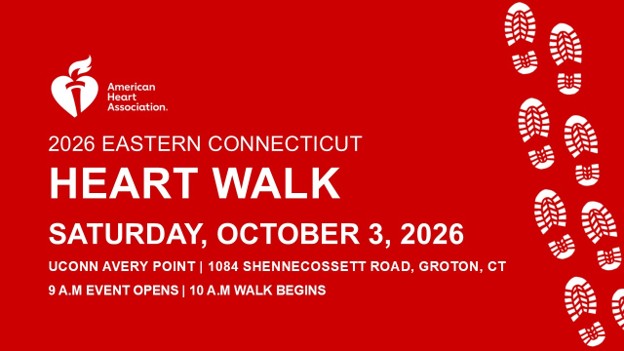
One Week Left—Let’s Claim the Torch! AHA Eastern Connecticut Heart Walk: Final Countdown
We are just one week away from the 2026 AHA Eastern Connecticut Heart Walk on October 3, 2026, at UConn Avery Point and this is our moment to finish strong. We’ve built incredible momentum, and now we’re within striking distance of something big. Right now, Electric Boat is holding second place, behind Mohegan Sun by...Continue reading→
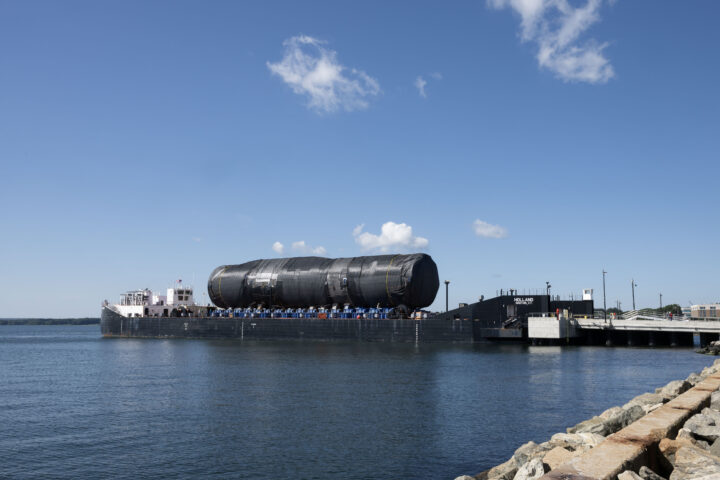
803 Section 2B/5 Transported from Quonset Point to Groton
PCU Arizona’s (SSGN 803) Section 2B/5 was successfully delivered to Groton from Quonset Point. At 184 feet in length, this section – which includes the Virginia Payload Module (VPM) – is the largest Virginia-class shipment ever transported. Arizona, the first submarine to incorporate VPM, will be about 460 feet long upon final construction. Section 2B/5...Continue reading→

Remembering September 11
On September 11, 2001, the Twin Towers of downtown Manhattan’s World Trade Center and the Pentagon in Washington, D.C., were targeted in a series of coordinated attacks that would leave an everlasting imprint on our country’s psyche. As the events unfolded on that Tuesday morning, nearly 3,000 people lost their lives, over 600 were injured...Continue reading→
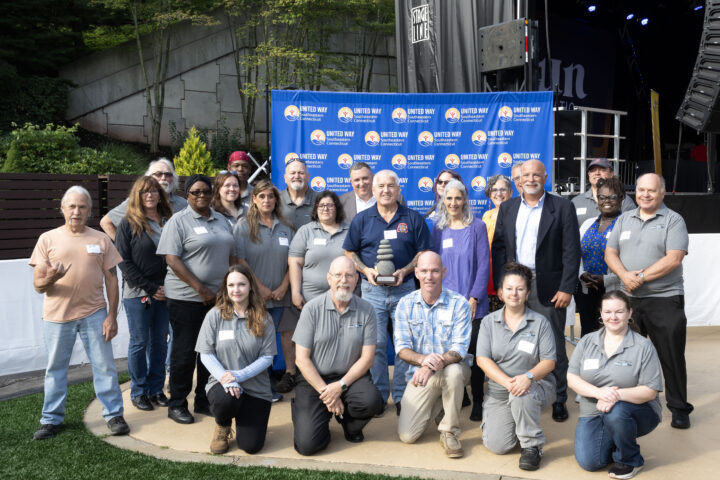
EBECSA Celebrates 75 Years — Nominate EB Employees Past and Present for Recognition
This year, the Electric Boat Employees’ Community Services Association (EBECSA) proudly celebrates its 75th anniversary. EBECSA was founded in 1951 by EB employees who wanted to create a dedicated, organized way to support nonprofit health and human service agencies in the communities where we live and work. What began as a small employee‑driven effort has...Continue reading→
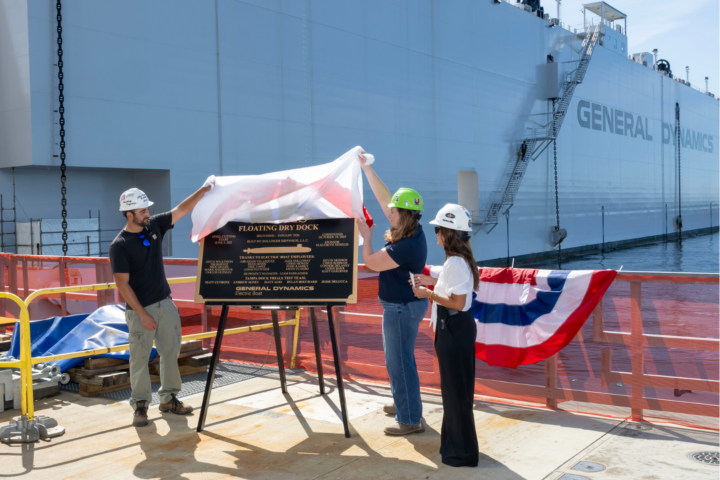
Atlas Plaque Unveiled, Honoring Plank Owners at South Yard Ceremony
Employees who have worked on Atlas, EB’s new state-of-the-art floating dry dock, gathered in the South Yard on Wednesday, Aug. 26, to unveil a new bronze plaque recognizing the contributions of its plank owners. The event celebrated the teams who helped bring Atlas from Bollinger Shipyards in Louisiana to its arrival in Groton earlier this year. Atlas will play...Continue reading→
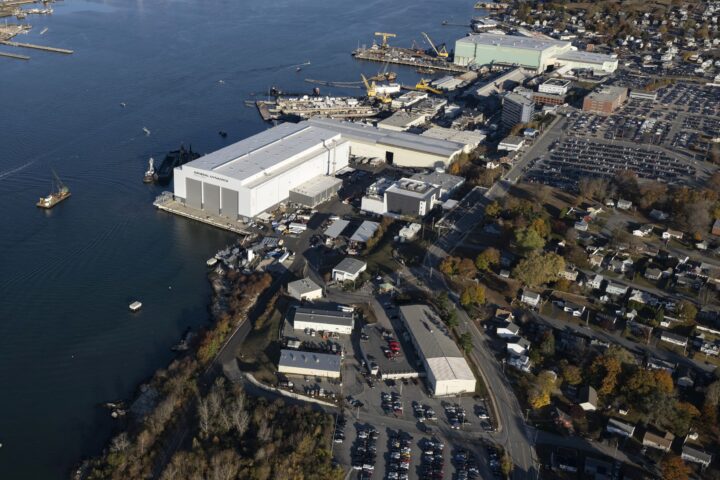
Neighbors Meet with EB to Discuss Noise, Lighting and Other Quality of Life Topics
Nearly twenty neighbors of Electric Boat’s Groton shipyard joined company leaders Aug. 25 for a community conversation focused on their quality‑of‑life concerns related to the South Yard Assembly Building (SYAB) and Atlas, the new floating dry dock. The Mayor of the City of Groton, Jill Rusk, also attended. Residents said they appreciated the chance to talk...Continue reading→
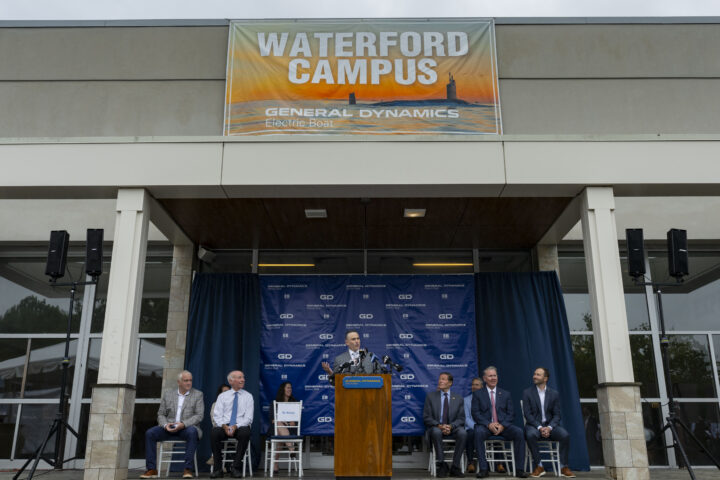
Rayha Report Ep. 26: Waterford Campus Groundbreaking
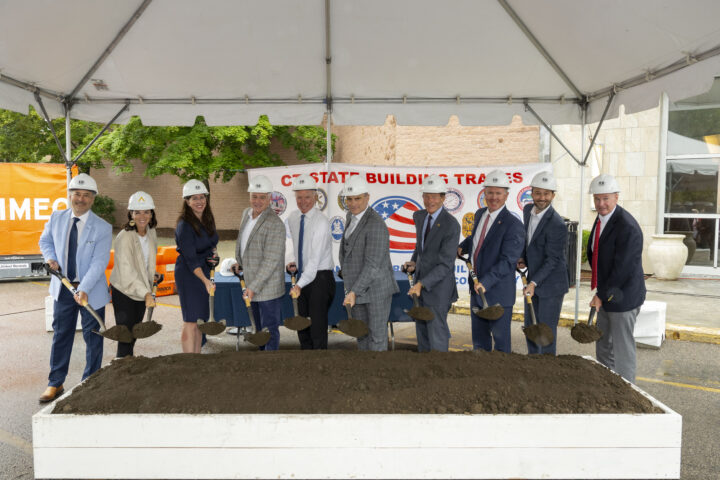
EB President Mark Rayha reports from the groundbreaking of the new Waterford Campus, where innovation, engineering and workforce development will come together to support our mission. The new facility will help train hundreds of shipbuilders daily as EB continues to grow for future production demands.
Waterford Campus Groundbreaking Marks EB’s Next Step in Innovation and Workforce Growth
Electric Boat officially broke ground Friday on the Waterford Campus, launching the transformation of the former Crystal Mall into a center for innovation, engineering and high‑tech workforce development. EB President Mark Rayha underscored how the project will reshape the way the company designs, tests and builds submarines. Innovation is the key, he said. “There’s an opportunity to...Continue reading→
Powering HeartStrong 50: Thank You, EB Teams—Let’s Keep the Momentum Going!
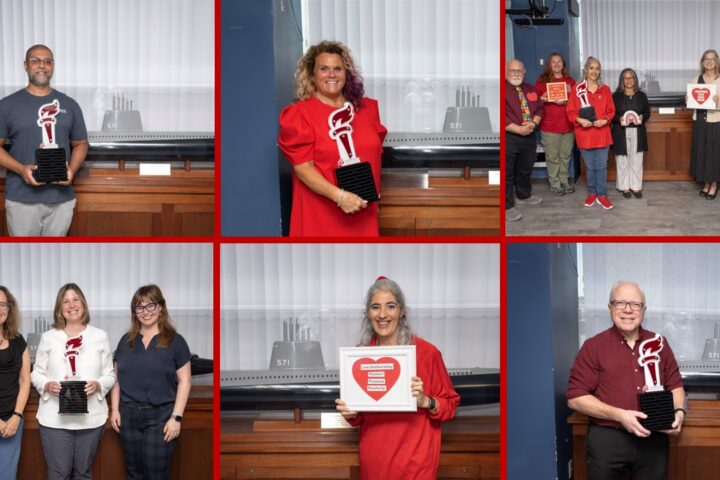
Thank you to our incredible EB Heart Walk teams, our community partners, and everyone who joined the American Heart Association (AHA) Torch Journey photoshoot. Your enthusiasm and dedication made this milestone truly special. Now let’s keep our HeartStrong 50 energy going—our goal is 50 teams and $50,000 raised for the 2026 AHA Eastern Connecticut Heart Walk on October 3 at UConn Avery...Continue reading→
Speed Cameras to be Installed in the City of Groton
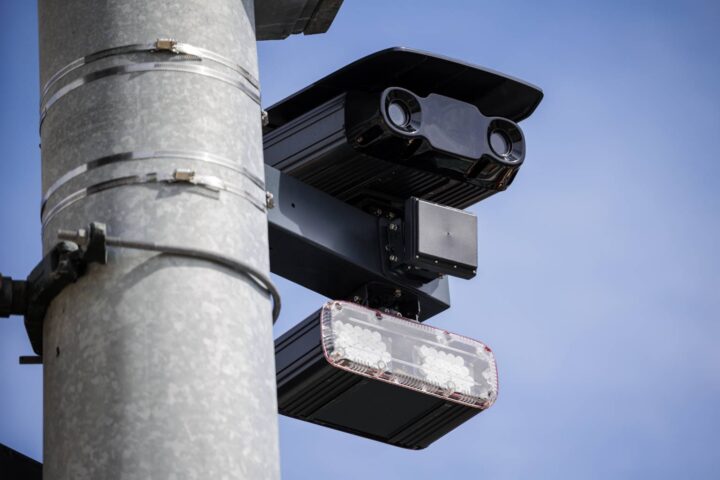
The City of Groton Police Department announced that automated speed enforcement cameras will be installed at several locations throughout the city. The cameras will be installed after the required 30-day public notification period, which began on Aug. 7, 2026. Camera locations: Mitchell Street Thames Street Clarence B. Sharp Highway (Route 349) Police said the purpose...Continue reading→