
On the morning of April 10, 1963, at approximately 9:18 a.m., USS Thresher was lost with all 129 crew and civilian riders on board. Thresher had just completed a nine-month overhaul and modernization availability at Portsmouth Naval Shipyard in which she received new electronic and sonar equipment as well as other upgrades and repairs. She had departed from the shipyard just the day before. Wives and children waved to the crew members, as three tugs nuzzled against her and guided her away from her berth, anxious for them to return after completion of the planned two-day trial.
Conducting several successful shallow dives along the way, Thresher transited east-southeast to her dive point 220 miles off of Cape Cod where the Continental Shelf ends and the ocean’s depth plummets to 8400 feet. As her controlled dive began in 100-foot increments, Thresher sent routine messages to the rescue ship, USS Skylark. At 9:17 a.m., Skylark received a garbled message “…minor difficulties, have positive up-angle, attempting to blow.” Then Thresher went silent. Skylark attempted to regain contact by all means available, but to no avail. Thresher was lost.
Despite the Navy’s rigorous investigation, the exact cause of this tragedy is unknown; however, the following is the likely sequence of events:
•One or more silver-braze piping joints in sea water systems failed, resulting in engine room flooding.
•Due to the ship’s design and system arrangements, the crew was unable to access vital equipment to control the flooding.
•Saltwater spray on electrical components caused electrical panels to short circuit, the reactor plant to shut down and loss of propulsion power.
•The emergency main ballast tank blow system failed to operate properly. Restrictions in the piping system coupled with excessive moisture in the air led to ice formation and subsequently plugged of the airway.
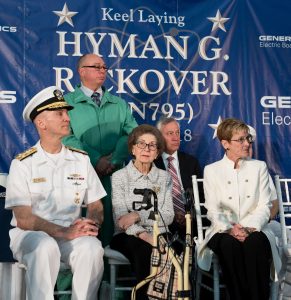
The lives of the families that experienced this tragedy were forever changed. Wives were now widows; children fatherless. You may recall a WIB article I wrote back in October in which I discussed attending the dedication of the Thresher Memorial in Arlington National Cemetery and sitting amongst the surviving family members of the Thresher crew. The experience brought this event full circle in my mind and made me feel a personal, not just professional, tie to the Thresher disaster. The pain of this disaster is still with them–I saw it.
Multiple issues may have contributed to the loss of the 129 lives: perhaps poor workmanship, or testing, or a design or engineering error. Imagine what must have gone through the minds of the folks that worked on Thresher, wondering if it was their work that caused the loss.
This pivotal point in US Navy submarine history marks the event that sparked the inception of the Submarine Safety (SUBSAFE) program. Since the inception of the SUBSAFE program, no SUBSAFE certified submarine has ever been lost. In January of this year, the SUBSAFE, Fly-by-Wire Ship Control System and material condition certification of the PCU Vermont was revoked due to an undocumented condition on the ship. This loss of confidence in our certification process was unprecedented and a stark reminder of just how critical our jobs are to the safety of the ship, her crew, and their families.
We cannot lose sight of the fact that it is the robust material condition that we design into our ships, the expert craftsmanship, the technical rigor of engineering, the comprehensive testing and certified documentation combined with the Special Emphasis Program (SUBSAFE, DSS-SOC and Fly-by-Wire Ship Control System) requirements that provide the assurances that our submarines and their crews will be safe and on mission. We have the responsibility to maintain our vigil on the loss of the USS Thresher every day in all the work that we do, by applying the lessons learned and not losing sight of it despite the many distractions. It is especially tough this year with COVID-19 and all the challenges it brings to us. However, every job you complete, every document you sign, every decision you make, day-to-day, contributes to the material condition of our ships.
It is the sum of all your daily acts, as employees of the greatest submarine builder in the world, which ultimately allows the certification of our ships to go to sea. It allows their safe deployments and allows its sailors and their families to have the sacred trust and confidence that the ship will return safely, every time, no matter what.
Please stay safe and healthy.
Stephen Kirkup,
Director of Quality Assurance and Special Emphasis Programs
Delivering the Future
Some imagine the future. We deliver it now.
State-of-the-Art Simulator Prepares District of Columbia Crew for its Mission
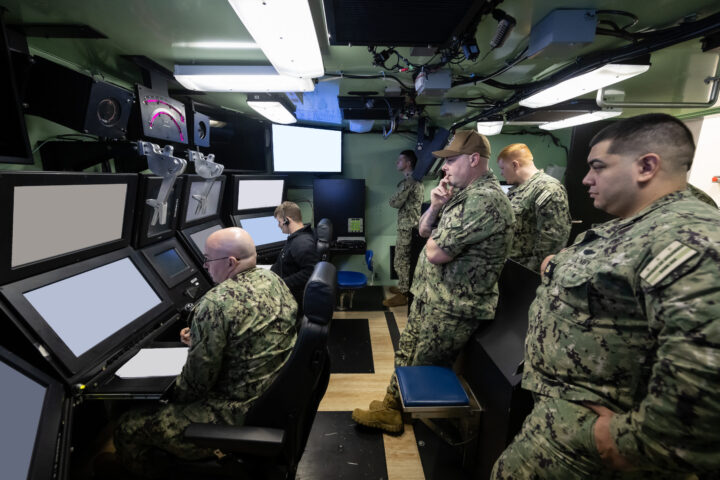
As construction of the District of Columbia (SSBN 826) continues apace in EB’s South Yard Assembly Building, the sailors who will soon be at the controls are spending hours in a dynamic, high-tech simulator learning the intricacies of operating the 21,000-ton, first-in-class boomer. The Columbia Ship Control Operator Trainer (CSCOT) is a replica of the...Continue reading→
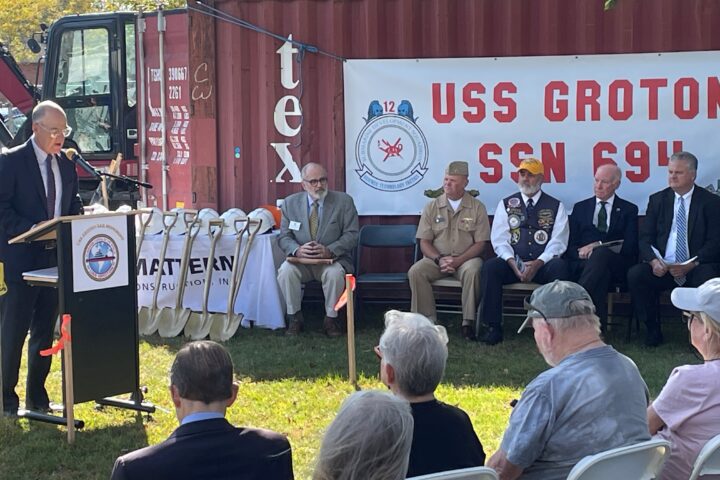
Groundbreaking Ceremony Marks Start of USS Groton Sail Monument
Fifty years after the USS Groton (SSN‑694) first launched, dozens gathered outside the Groton Public Library Oct. 9 to celebrate the groundbreaking of the USS Groton Sail Monument. The $6.6 million project—three decades in the making—will honor the men and women who design, build, operate and maintain the Navy’s submarines, as well as the families...Continue reading→

A Celebration of Heart, Community and Victory
2026 American Heart Association Eastern Connecticut Heart Walk Recap Saturday, October 3, 2026 | UConn Avery Point The 2026 American Heart Association Eastern Connecticut Heart Walk at UConn Avery Point was nothing short of extraordinary. Under bright autumn skies, 26 incredible Electric Boat teams and 151 walkers came together with passion, purpose, and unstoppable energy...Continue reading→
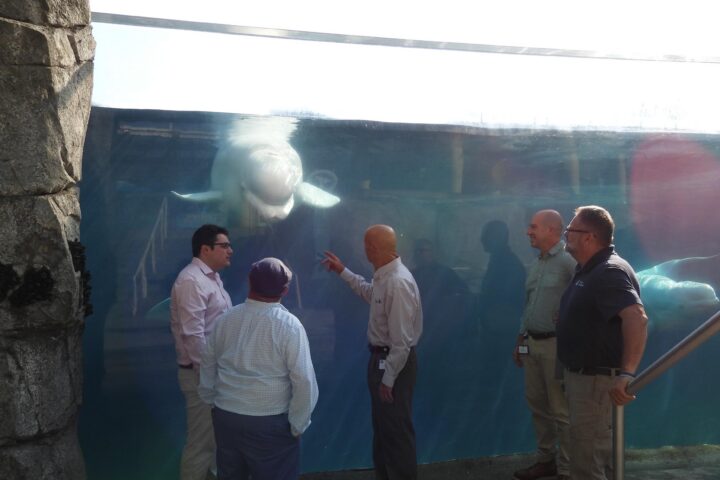
Quonset Point Donation Will Help Keep Mystic Aquarium’s Belugas Cool
Juno, the Mystic Aquarium’s convivial, photo-bombing Beluga whale, will continue swimming in cool comfort thanks to an unlikely chain of events that began 40 miles east in an Electric Boat industrial building at Quonset Point. That’s where EB’s Russ Tatro and Chris Logan were going over plans with a vendor, Carrier Corp., to replace Building...Continue reading→
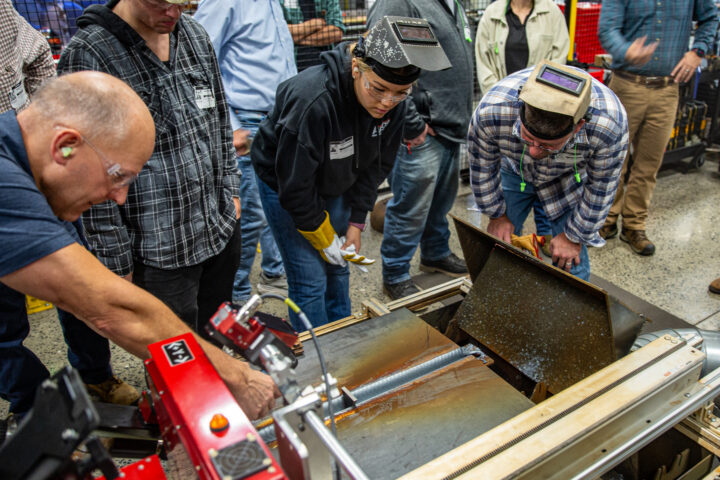
EB Team Visits Hypertherm as Part of Drive Toward Modern, Efficient Shipbuilding
A team from Groton and Quonset Point headed to New Hampshire-based Hypertherm Associates this week to get a closer look at a modern automated plasma gouging process designed to streamline hull fabrication. The visit was part of a broader effort across Electric Boat to bring more advanced, state‑of‑the‑art manufacturing tools into the shipyard. EB plans...Continue reading→
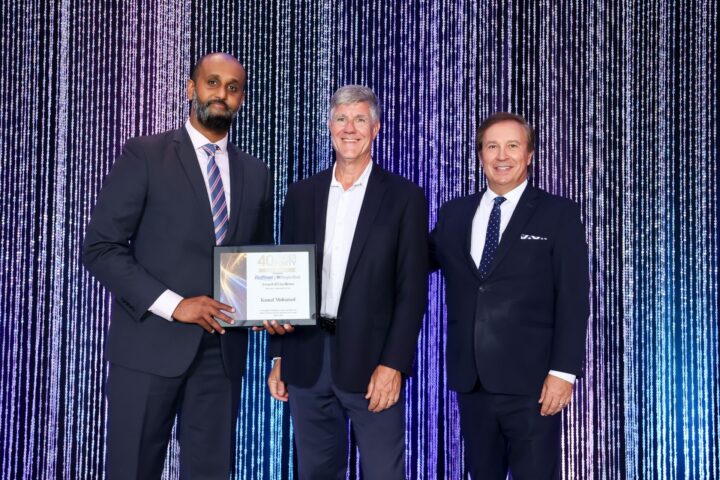
Kamal Mohamed Recognized as 2026 Hartford Business Journal 40 Under Forty Award Recipient
The Hartford Business Journal (HBJ) 40 Under Forty Awards recognize outstanding young professionals in the Greater Hartford area who are excelling in their industries through their leadership roles. They are driven by success, motivated by challenges and are role models for their peers. These individuals are part of an outstanding class of upcoming business leaders...Continue reading→
Electric Boat Joins Regional Leaders for Military Appreciation Breakfast
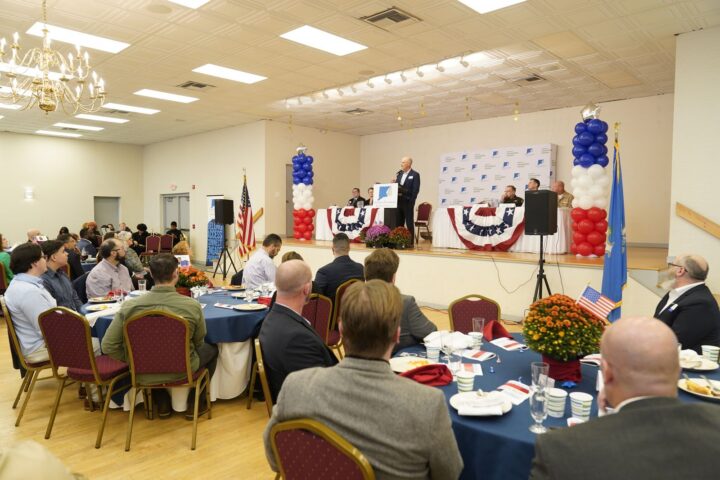
Electric Boat employees joined military and community leaders for the Chamber of Commerce of Eastern Connecticut’s annual Military Appreciation Breakfast on Sept. 30 at Ocean Beach Park’s Port ‘N’ Starboard. The event provided more than 120 complimentary seats to active-duty service members from the Navy, Coast Guard and Connecticut National Guard. General Dynamics Electric Boat...Continue reading→

One Week Left—Let’s Claim the Torch! AHA Eastern Connecticut Heart Walk: Final Countdown
We are just one week away from the 2026 AHA Eastern Connecticut Heart Walk on October 3, 2026, at UConn Avery Point and this is our moment to finish strong. We’ve built incredible momentum, and now we’re within striking distance of something big. Right now, Electric Boat is holding second place, behind Mohegan Sun by...Continue reading→
803 Section 2B/5 Transported from Quonset Point to Groton
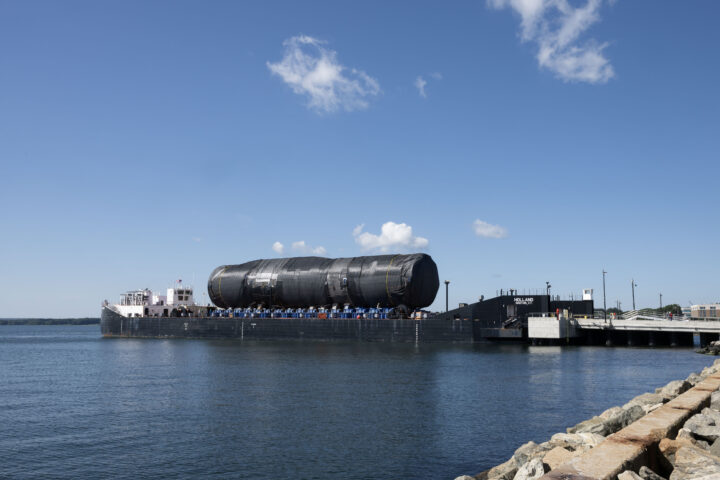
PCU Arizona’s (SSGN 803) Section 2B/5 was successfully delivered to Groton from Quonset Point. At 184 feet in length, this section – which includes the Virginia Payload Module (VPM) – is the largest Virginia-class shipment ever transported. Arizona, the first submarine to incorporate VPM, will be about 460 feet long upon final construction. Section 2B/5...Continue reading→